Primary Assay — Octopus
Den Preference / Site Fidelity
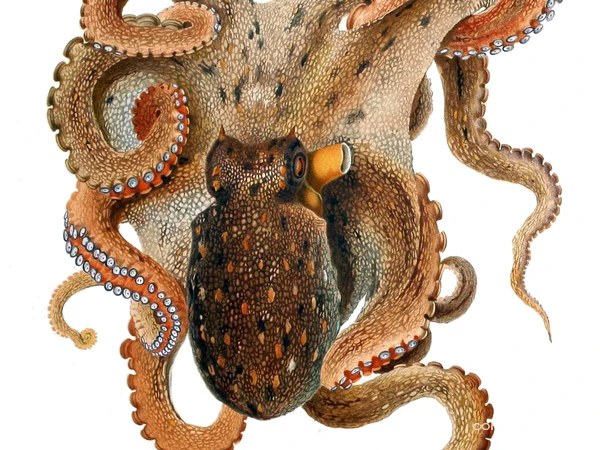
Octopus vulgaris
Octopuses maintain home dens and modify them by collecting shells and debris. Den occupancy time, switching frequency, and modification behavior reveal individual personality and spatial attachment.

Quantitative Output
Measured Parameters
Every parameter is automatically tracked frame-by-frame in the ConductVision pipeline for Octopus vulgaris.
| Parameter | Unit | Description |
|---|---|---|
| Den occupancy time | h/day | Home-base behavior |
| Den switches | events/week | Exploration vs fidelity |
| Den modification behavior | events | Shell collecting, arranging |
References
Citations for Den Preference / Site Fidelity
- Amodio P, et al. (2019). Grow smart and die young: Why did cephalopods evolve intelligence? Trends Ecol Evol, 34(1), 45-56. PMID: 30446408
Compatible Equipment
Hardware for Octopus Research
Maze System (T-maze/Radial)
Learning and memory testing
Object Interaction Arena
Play behavior observation
Camouflage Substrate System
Body pattern analysis
Den Array Setup
Site fidelity and preference
Seawater Flow-Through System
Cephalopod maintenance
Related Assays
Other Octopus Primary Assays
02
Maze Learning
Octopus vulgaris
Octopuses solve mazes through spatial learning and memory. Trials to criterion, error reduction, path efficiency, and re…
02
Object Play / Exploration
Octopus vulgaris
Octopuses engage in play-like behaviors with objects, including jetting them across tanks and manipulating them with mul…
02
Camouflage / Body Pattern Response
Octopus vulgaris
Octopuses achieve remarkable camouflage through rapid chromatophore-driven pattern changes. Pattern match latency, patte…
Run Den Preference / Site Fidelity on ConductVision
Our team will configure the protocol, camera rig, and analysis pipeline for your octopus facility.