Behavioral Tracking for Planarian
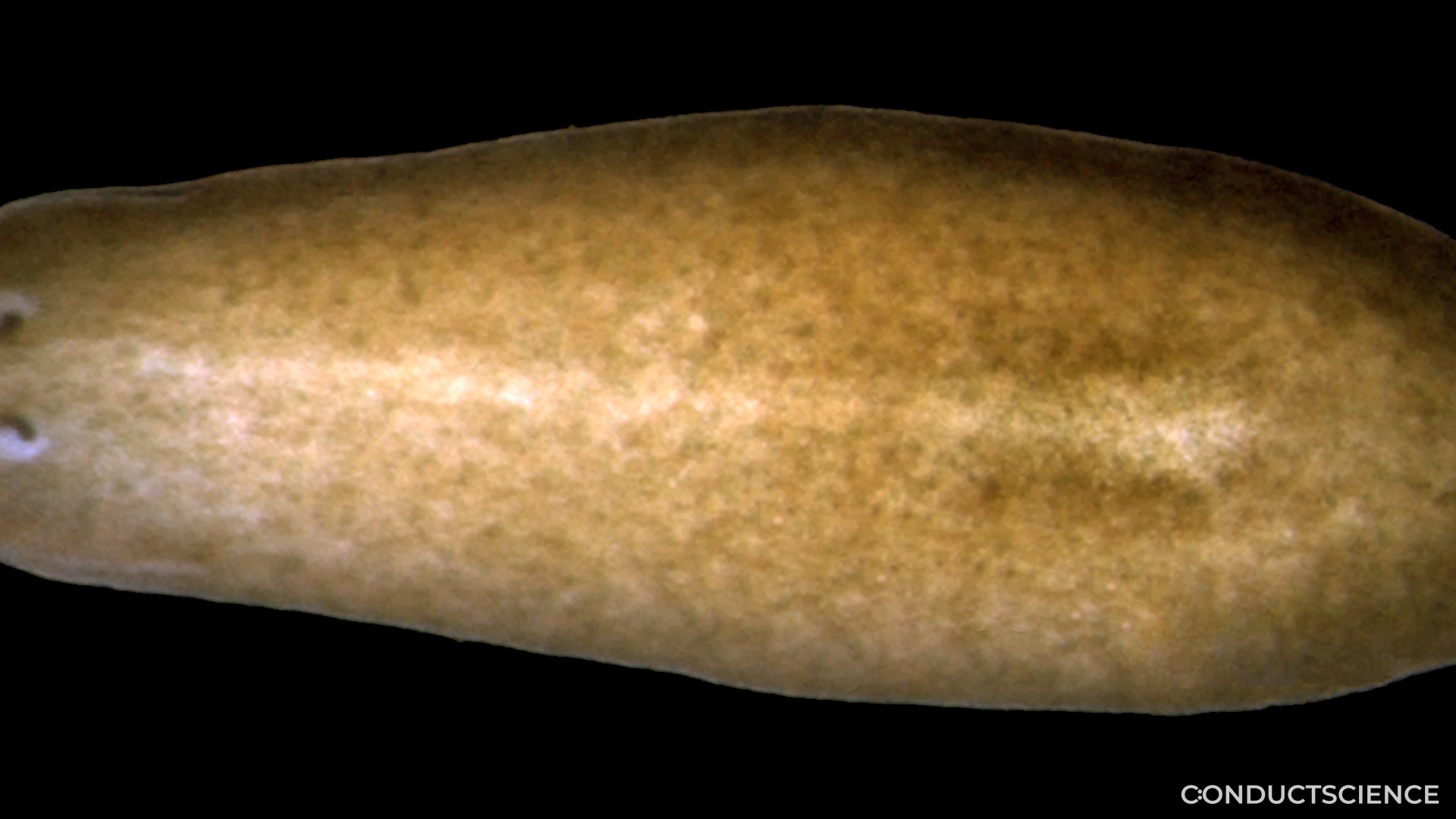
Schmidtea mediterranea
ConductVision enables automated tracking of planarian phototaxis, chemotaxis, gliding locomotion, and behavioral regeneration after decapitation with quantitative precision.

Why Planarians in Behavioral Research
Planarians (Schmidtea mediterranea, Dugesia japonica) are uniquely powerful models combining behavioral neuroscience with regenerative biology. Their ability to regenerate an entire head — including the brain — and recover learned behaviors makes them unparalleled for studying the biological basis of memory. Phototaxis, chemotaxis, and locomotion assays provide quantifiable behavioral endpoints for toxicology screening and neuropharmacology.
Shomrat T, et al. (2013). An automated training paradigm reveals long-term memory in planarians and its persistence through head regeneration. J Exp Biol, 216(Pt 20), 3799-3810. PMID: 23821717
Ireland D, et al. (2020). Dugesia japonica is the best suited of three planarian species for high-throughput toxicology screening. Chemosphere, 253, 126718. PMID: 32298908
Rejo L, et al. (2023). Optimization and calibration of behavioural tests on different species of planaria. Environ Toxicol Pharmacol, 101, 104189. PMID: 37348774
What We Measure in Planarian
Validated assays with quantitative parameter tracking for Schmidtea mediterranea.
Scototaxis assay measuring innate light avoidance behavior. Planarians exhibit robust negative phototaxis mediated by both ocular and extraocular photoreceptors, providing a key endpoint for visual system regeneration studies.
| Parameter | Unit | Description |
|---|---|---|
| Light-avoidance score | % time in dark | Scototaxis strength |
| Latency to reach dark zone | s | Avoidance speed |
| Light-zone entries | count | Exploration vs avoidance balance |
Birkholz TR, et al. (2017). The planarian TRPA1 homolog mediates extraocular behavioral responses to near-ultraviolet light. J Exp Biol, 220(14), 2616-2625. PMID: 28495872
Inoue T, et al. (2004). Morphological and functional recovery of the planarian photosensing system during head regeneration. Zoolog Sci, 21(3), 275-283. PMID: 15056922
Gradient-based attraction assay measuring directional movement toward chemical cues. Chemotaxis index and approach latency quantify olfactory processing and auricle function.
| Parameter | Unit | Description |
|---|---|---|
| Chemotaxis index (CI) | -1 to +1 | Attractant vs control zone |
| Directional displacement | mm | Movement toward source |
| Approach latency | s | Time to first approach |
Almazan EMP, et al. (2021). Regeneration of Planarian Auricles and Reestablishment of Chemotactic Ability. Front Cell Dev Biol, 9, 777951. PMID: 34901022
Dual-gait analysis of normal ciliary gliding and the escape-specific scrunching gait. Scrunching — a recently discovered escape behavior — involves rhythmic body contractions at higher speeds than gliding.
| Parameter | Unit | Description |
|---|---|---|
| Gliding velocity | mm/s | Normal ciliary locomotion |
| Scrunch frequency | Hz | Escape gait contraction rate |
| Scrunch amplitude | % body length | Contraction magnitude |
| Gait transition latency | s | Time to switch from gliding to scrunching |
Cochet-Escartin O, et al. (2015). Scrunching: a novel escape gait in planarians. Phys Biol, 12(5), 056010. PMID: 26356147
Sabry Z, et al. (2019). Pharmacological or genetic targeting of TRP channels can disrupt the planarian escape response. PLoS ONE, 14(12), e0226104. PMID: 31805147
Longitudinal tracking of behavioral recovery following head amputation. Measures the return of phototaxis, conditioned responses, and locomotion as the brain regenerates — a paradigm unique to planarians.
| Parameter | Unit | Description |
|---|---|---|
| Days to phototaxis recovery | days | Functional vision return |
| Memory retention post-regeneration | % baseline | Conditioned response preservation |
| Locomotion re-establishment | days | Motor function return |
Shomrat T, et al. (2013). An automated training paradigm reveals long-term memory in planarians and its persistence through head regeneration. J Exp Biol, 216(Pt 20), 3799-3810. PMID: 23821717
Inoue T, et al. (2004). Morphological and functional recovery of the planarian photosensing system during head regeneration. Zoolog Sci, 21(3), 275-283. PMID: 15056922
More Behavioral Tests for Planarian
Thermotaxis
Key Parameters: Preferred temperature (°C), gradient position score
Henry J, et al. (2022). PMID: 36169081
ConductScience Hardware for Planarian Research
Planarian Tracking Camera System
Automated phototaxis and locomotion
Chemotaxis Assay Plate
Gradient-based attraction testing
Dark/Light Choice Arena
Phototaxis preference
Thermal Gradient Plate
Thermotaxis assays
Regeneration Monitoring System
Post-decapitation behavioral recovery
Citations & Further Reading
- Shomrat T, et al. (2013). An automated training paradigm reveals long-term memory in planarians and its persistence through head regeneration. J Exp Biol, 216(Pt 20), 3799-3810. PMID: 23821717
- Ireland D, et al. (2020). Dugesia japonica is the best suited of three planarian species for high-throughput toxicology screening. Chemosphere, 253, 126718. PMID: 32298908
- Rejo L, et al. (2023). Optimization and calibration of behavioural tests on different species of planaria. Environ Toxicol Pharmacol, 101, 104189. PMID: 37348774
- Birkholz TR, et al. (2017). The planarian TRPA1 homolog mediates extraocular behavioral responses to near-ultraviolet light. J Exp Biol, 220(14), 2616-2625. PMID: 28495872
- Inoue T, et al. (2004). Morphological and functional recovery of the planarian photosensing system during head regeneration. Zoolog Sci, 21(3), 275-283. PMID: 15056922
- Almazan EMP, et al. (2021). Regeneration of Planarian Auricles and Reestablishment of Chemotactic Ability. Front Cell Dev Biol, 9, 777951. PMID: 34901022
- Cochet-Escartin O, et al. (2015). Scrunching: a novel escape gait in planarians. Phys Biol, 12(5), 056010. PMID: 26356147
- Sabry Z, et al. (2019). Pharmacological or genetic targeting of TRP channels can disrupt the planarian escape response. PLoS ONE, 14(12), e0226104. PMID: 31805147
Other Model Systems
Discuss Your Planarian Research
Tell us about your models, assays, and experimental goals — we’ll show you how ConductVision fits your workflow.