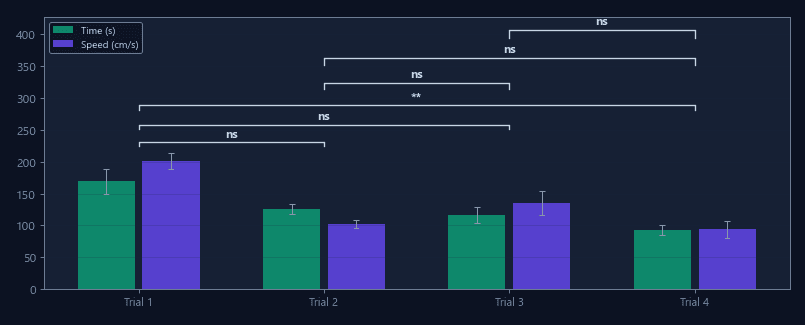
Traversal metrics
Start-to-end traversal time, average speed, speed variability, and number of pauses per trial.
CSVJSON
Automated motor coordination scoring on the balance beam
Quantify traversal time, foot slips, and motor coordination from standard video — replacing manual stopwatch-and-counter protocols.
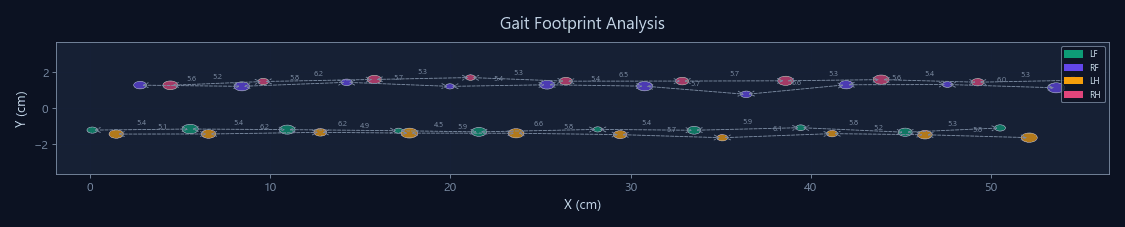
The balance beam test requires an observer to simultaneously time traversal, count foot slips, and rate overall coordination. Fast foot slips are easy to miss, and subjective rating scales introduce variability across scorers and sessions.
ConductVision tracks paw position relative to beam edges at 30 fps. Foot slips are detected as paw excursions below the beam surface, traversal time is calculated from beam entry to exit, and overall coordination is scored objectively from kinematic features.
Start-to-end traversal time, average speed, speed variability, and number of pauses per trial.
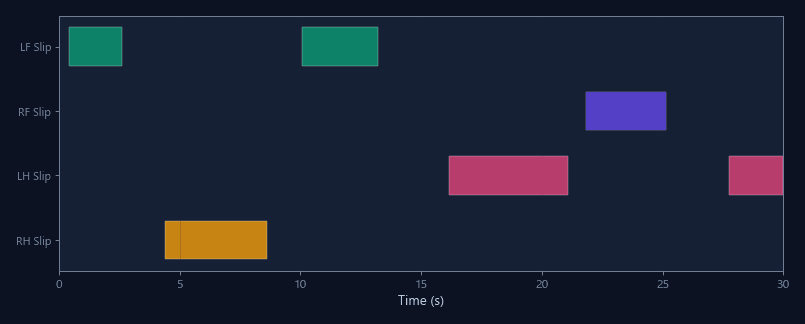
Each foot slip event with timestamp, paw identity (left/right, fore/hind), and slip magnitude.
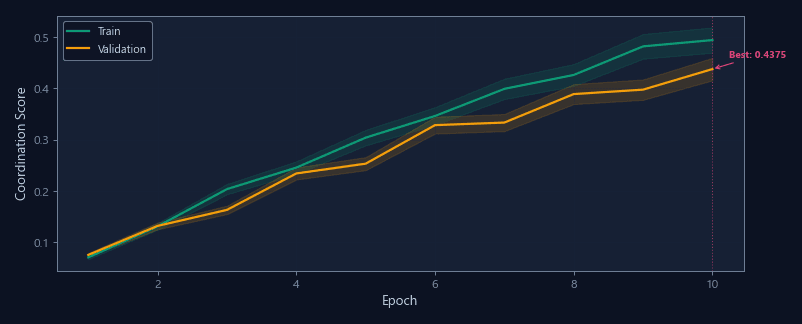
Composite score integrating traversal speed, slip rate, and pause frequency into a single motor coordination index.
Longitudinal balance beam testing tracks motor decline in ALS, Huntington, and Parkinson models with objective metrics that detect subtle changes before gross impairment.
Beam walk performance after experimental stroke quantifies unilateral motor deficits and recovery trajectory over weeks.
Beam walk sensitivity to sedation, ataxia, and motor impairment enables dose-response motor safety profiling.
Cerebellar mutants show characteristic beam walk deficits — wider beam widths reveal graded impairment.
| Feature | ConductVision | Typical systems |
|---|---|---|
| Foot slip detection | Automated at 30 fps | Manual live count |
| Traversal timing | Frame-accurate start/end | Manual stopwatch |
| Coordination scoring | Objective kinematic composite | Subjective 0-4 scale |
| Paw-specific slip data | Yes — per-paw identification | Total slip count only |
| Batch processing | Unlimited sessions overnight | One session per scorer at a time |
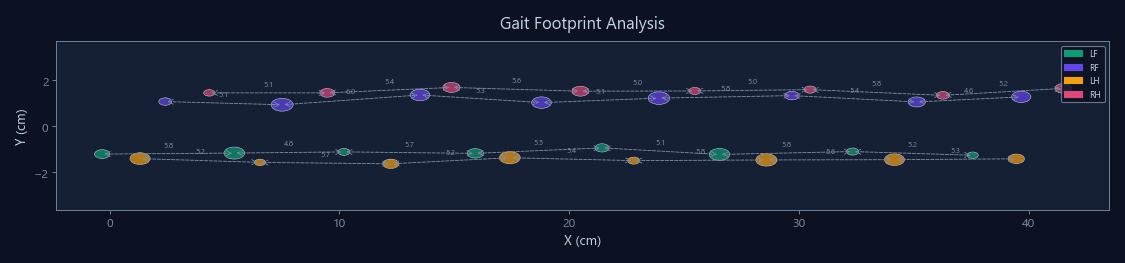
HMM-based stride detection from standard video with per-paw metrics — no treadmill or pressure plate required.
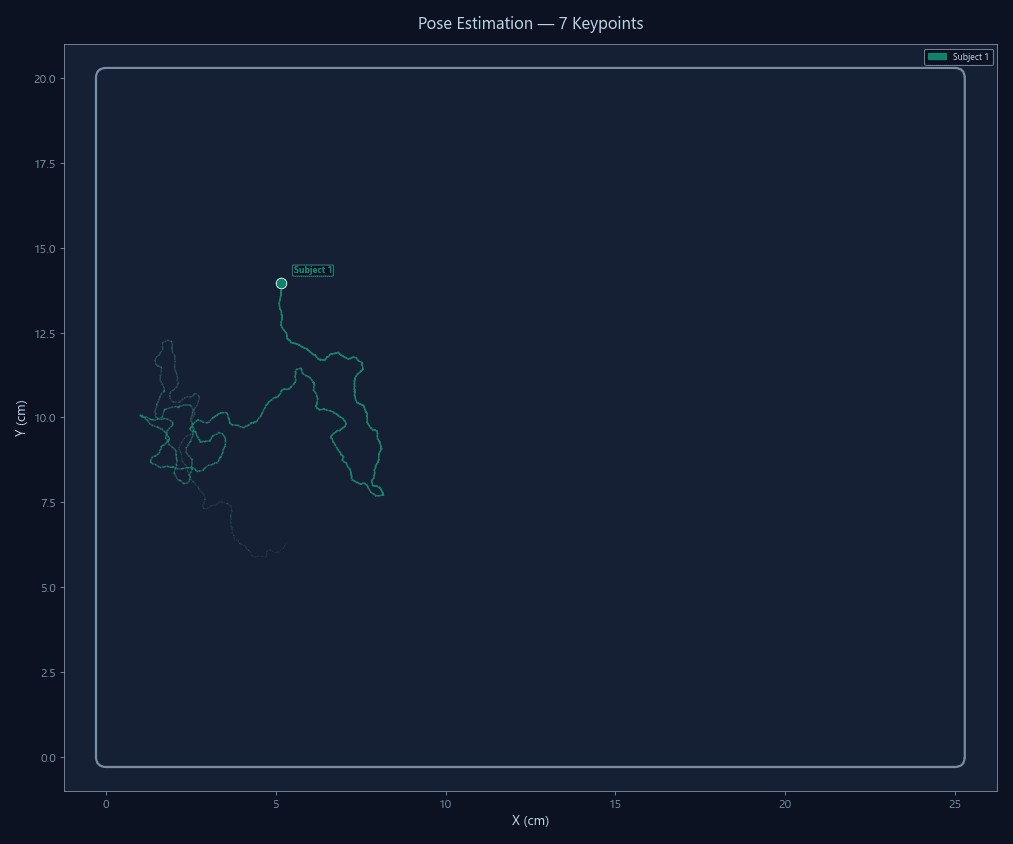
Multi-keypoint body part tracking — head, paws, tail, body center — with pretrained and custom model support.
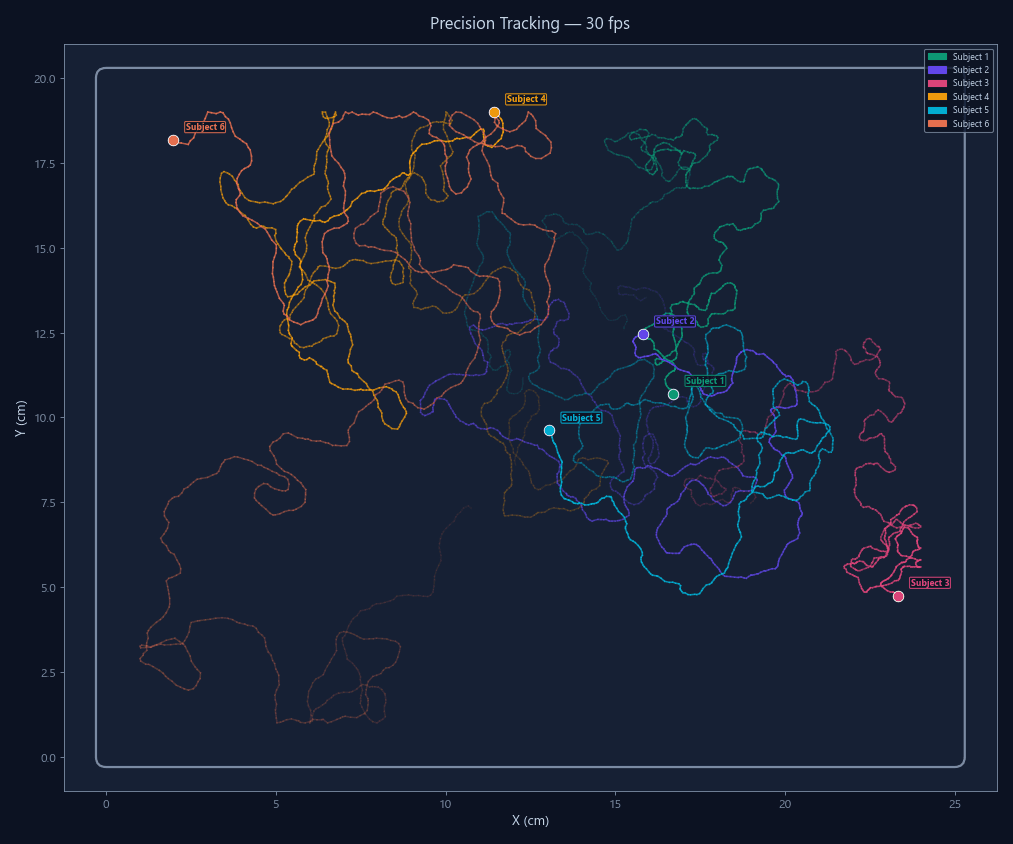
High-resolution 30 fps tracking that captures sub-second behavioral events conventional systems miss.
Upload beam walk recordings and get automated foot slip counts and coordination scores.