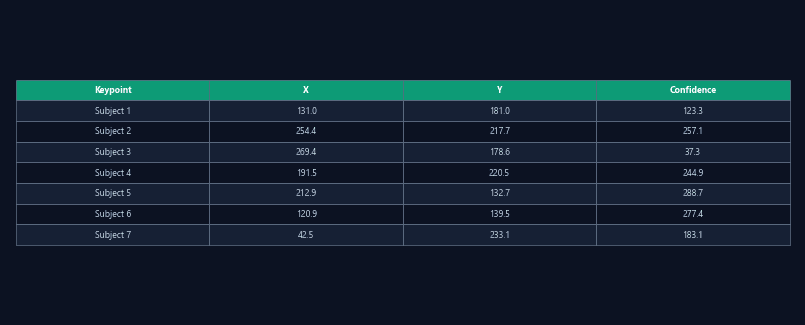
Per-keypoint coordinates
X/Y position and confidence score for each keypoint — head, body center, tail base, and four paws — at every frame. Enables post-hoc computation of any body-part-derived measure.
CSVJSON
Keypoint-level tracking of body parts across species and paradigms
Go beyond center-of-mass — track head direction, paw placement, tail position, and body orientation frame by frame.
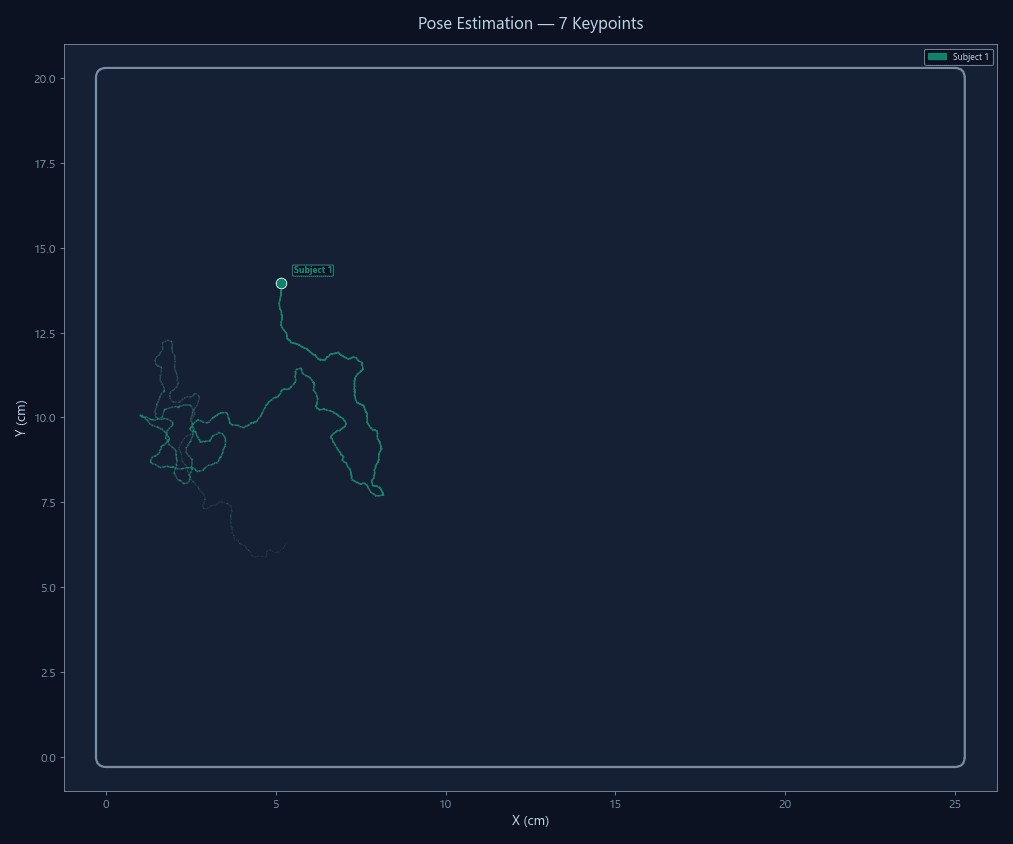
A single centroid coordinate cannot represent the complexity of rodent posture and movement. Head direction is lost, making it impossible to determine what the animal is investigating. Paw placement is invisible, preventing gait quantification from standard video. Postural changes — hunching, stretching, twisting — are collapsed into a single point.
ConductVision tracks 7+ body keypoints — head, body center, tail base, and four paws — using SuperAnimal pretrained models. Custom keypoint configurations can be trained for specialized preparations. All keypoint coordinates are exported per frame for downstream analysis.
X/Y position and confidence score for each keypoint — head, body center, tail base, and four paws — at every frame. Enables post-hoc computation of any body-part-derived measure.
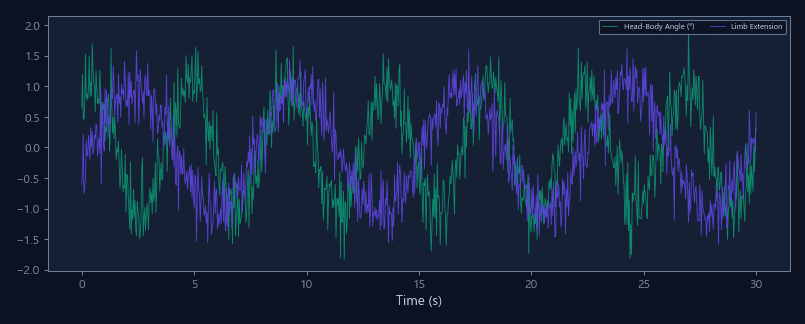
Head-body angle, body axis orientation, limb extension, and tail curvature computed from keypoint geometry. Pre-computed for common analyses.
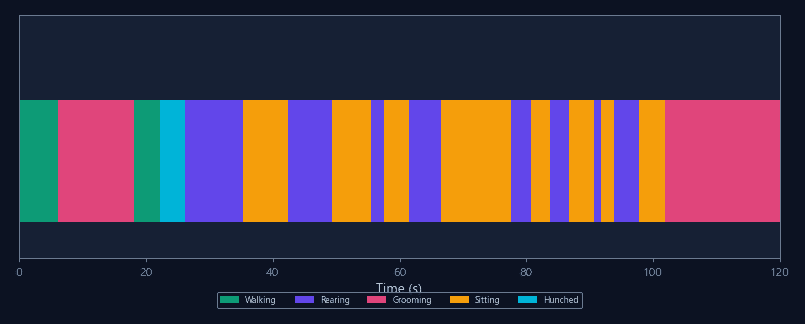
Discrete posture labels — rearing, grooming, hunched, stretched attend — assigned per frame from keypoint configurations.
Track where the animal is looking, not just where its body center is located. Head direction at T-maze or Y-maze choice points reveals vicarious trial-and-error and decision dynamics.
Track individual paw positions frame by frame for stride length, stance width, and step sequence analysis from standard overhead or side video.
Quantify postural abnormalities — asymmetric limb extension, tail deflection, body axis curvature — in stroke, TBI, or neurodegenerative models.
Compute heading direction, turning rate, and angular velocity from body axis orientation. Detect ipsiversive and contraversive turning in unilateral lesion models.
| Feature | ConductVision | Typical systems |
|---|---|---|
| Tracking resolution | 7+ keypoints per animal | Single centroid |
| Species coverage | Mouse, rat, and custom species | Species-specific licenses |
| Pretrained model availability | SuperAnimal models included | Requires manual annotation and training |
| Custom keypoint training | Supported — GUI-based annotation | Limited or not available |
| Head direction output | Computed from head-body axis | Not available from centroid |
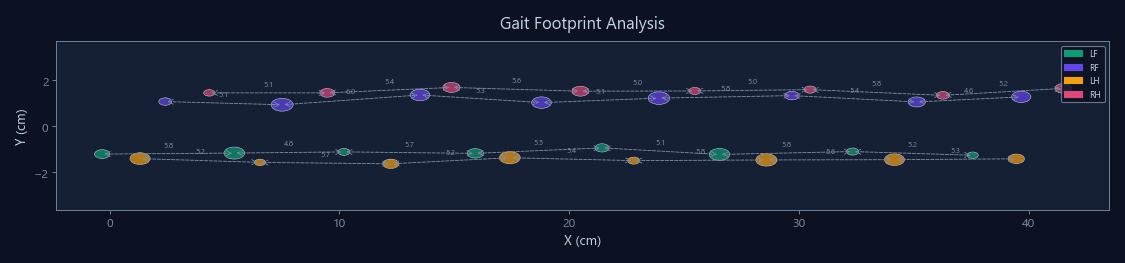
HMM-based stride detection from standard video with per-paw metrics — no treadmill or pressure plate required.
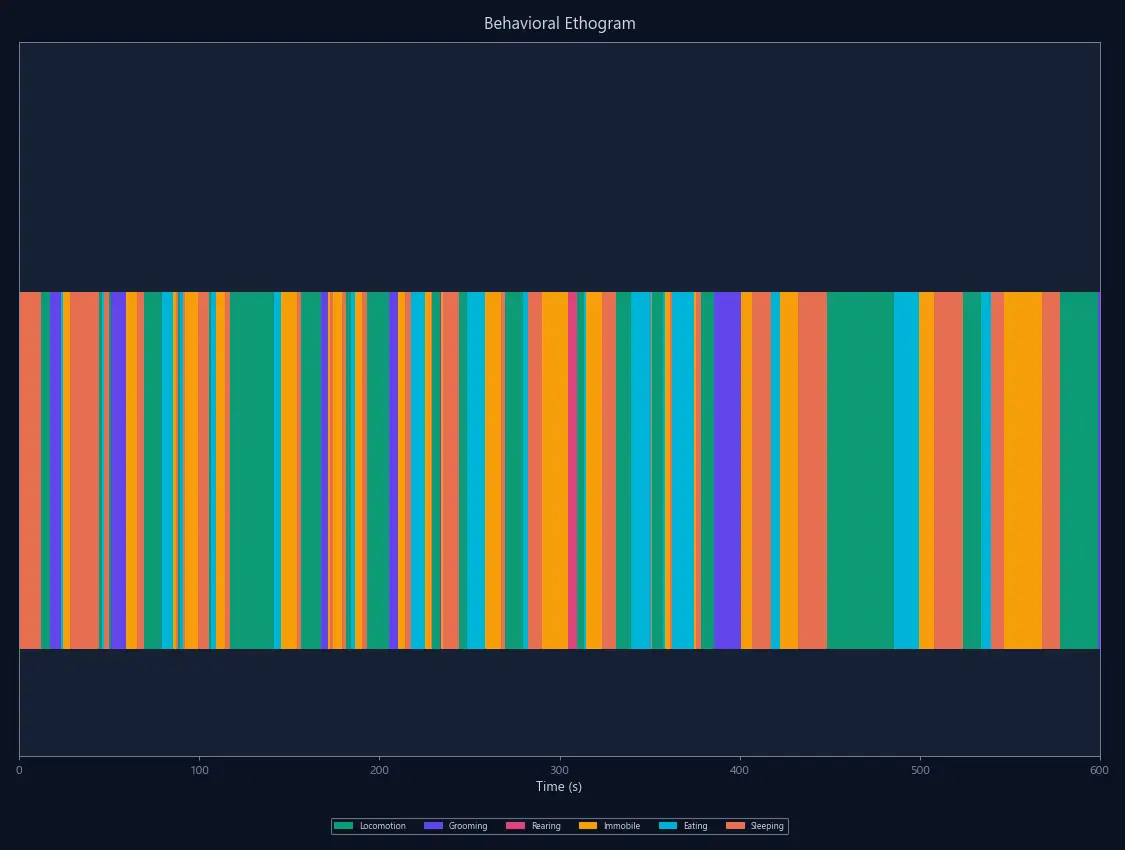
ML-powered frame-level behavioral classification with temporal smoothing and custom classifier training.
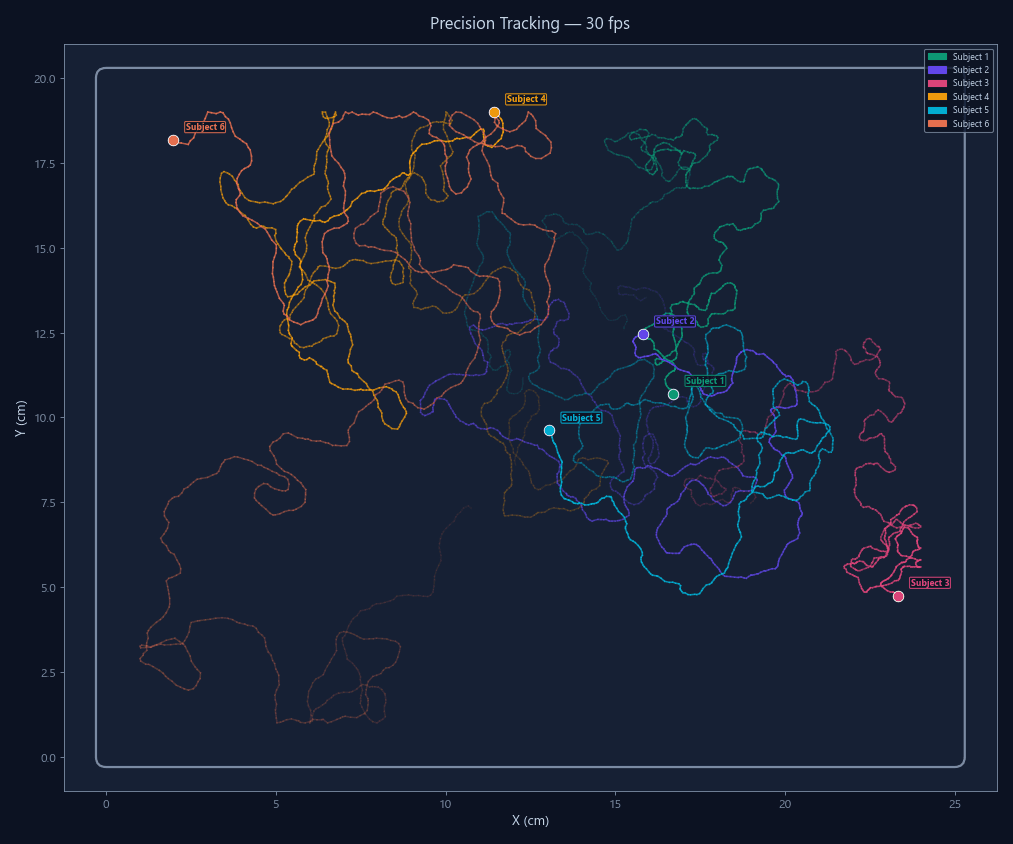
High-resolution 30 fps tracking that captures sub-second behavioral events conventional systems miss.
See head direction, paw placement, and postural dynamics extracted from your existing video.