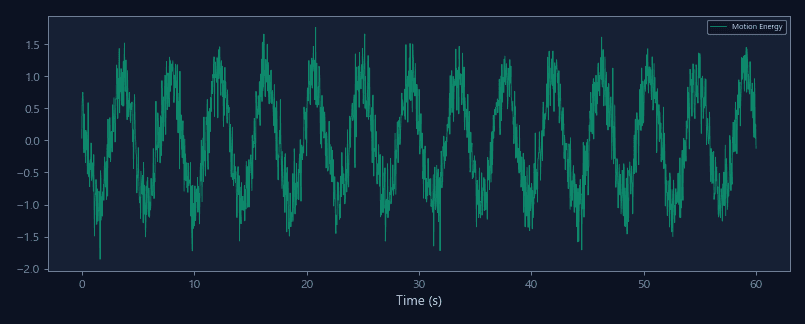
Frame-level motion energy trace
Continuous motion energy value per frame — total pixel change normalized by animal area. Plotted as a time series for visual inspection.
CSVJSON
Continuous activity measurement below tracking resolution
Frame-differencing motion energy captures grooming, tremor, twitching, and other in-place behaviors that centroid-based tracking misses entirely.
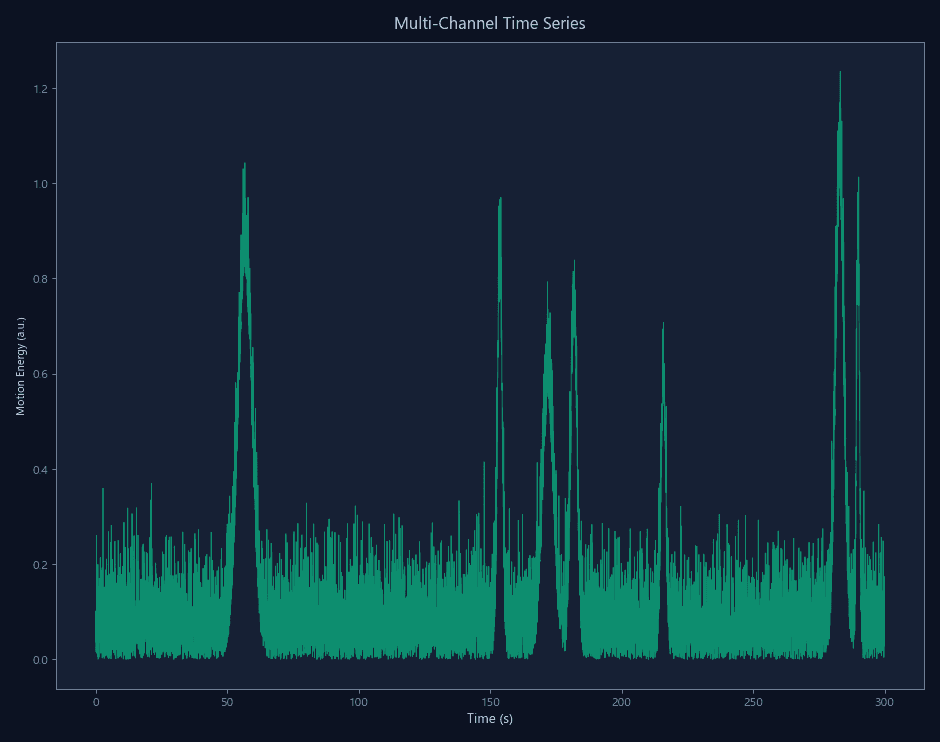
Coordinate-based tracking measures locomotion — distance traveled, velocity, zone entries. But many important behaviors happen in place: grooming, tremor, head bobbing, convulsions. The centroid barely moves during these events, so tracking systems report the animal as "stationary."
ConductVision computes frame-to-frame pixel intensity differences across the entire frame or within defined ROIs. The resulting continuous motion energy signal captures all movement regardless of whether the animal changes position.
Continuous motion energy value per frame — total pixel change normalized by animal area. Plotted as a time series for visual inspection.
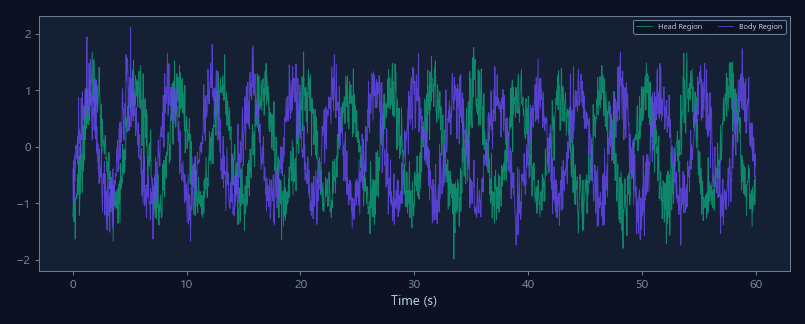
Separate motion energy traces for user-defined ROIs — e.g., head region, body region, tail region — enabling body-part-specific activity quantification.
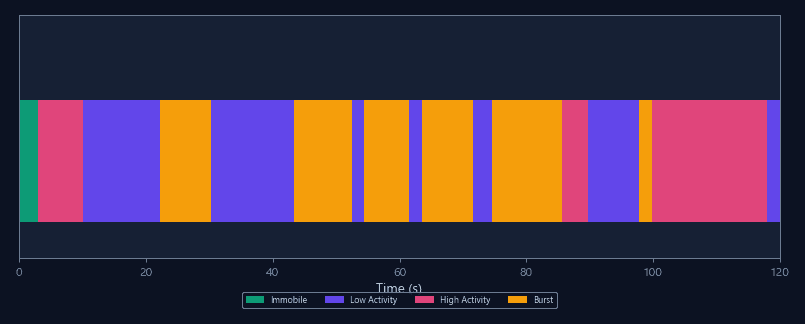
Thresholded motion energy assigns frames to activity states: immobile, in-place active, or locomoting — resolving the freezing/grooming ambiguity.
Seizure events produce characteristic high-amplitude motion energy spikes. Automated detection replaces manual Racine scale scoring.
High motion energy with low centroid displacement identifies grooming bouts. Duration and frequency are stress-sensitive measures.
Sustained low motion energy indicates sleep. Brief motion energy bursts during low-activity periods indicate micro-arousals.
Resting tremor produces low-amplitude, rhythmic motion energy oscillations detectable in frequency domain analysis.
| Feature | ConductVision | Typical systems |
|---|---|---|
| In-place movement detection | Yes — pixel-level sensitivity | Not detected (centroid-only) |
| Tracking model required | No — model-free analysis | Requires trained detection model |
| ROI-specific analysis | Configurable body regions | Whole-body only |
| Freezing vs. grooming | Distinguished by motion energy | Both classified as stationary |
| Temporal resolution | Per-frame (33 ms) | Per-second or per-bin |
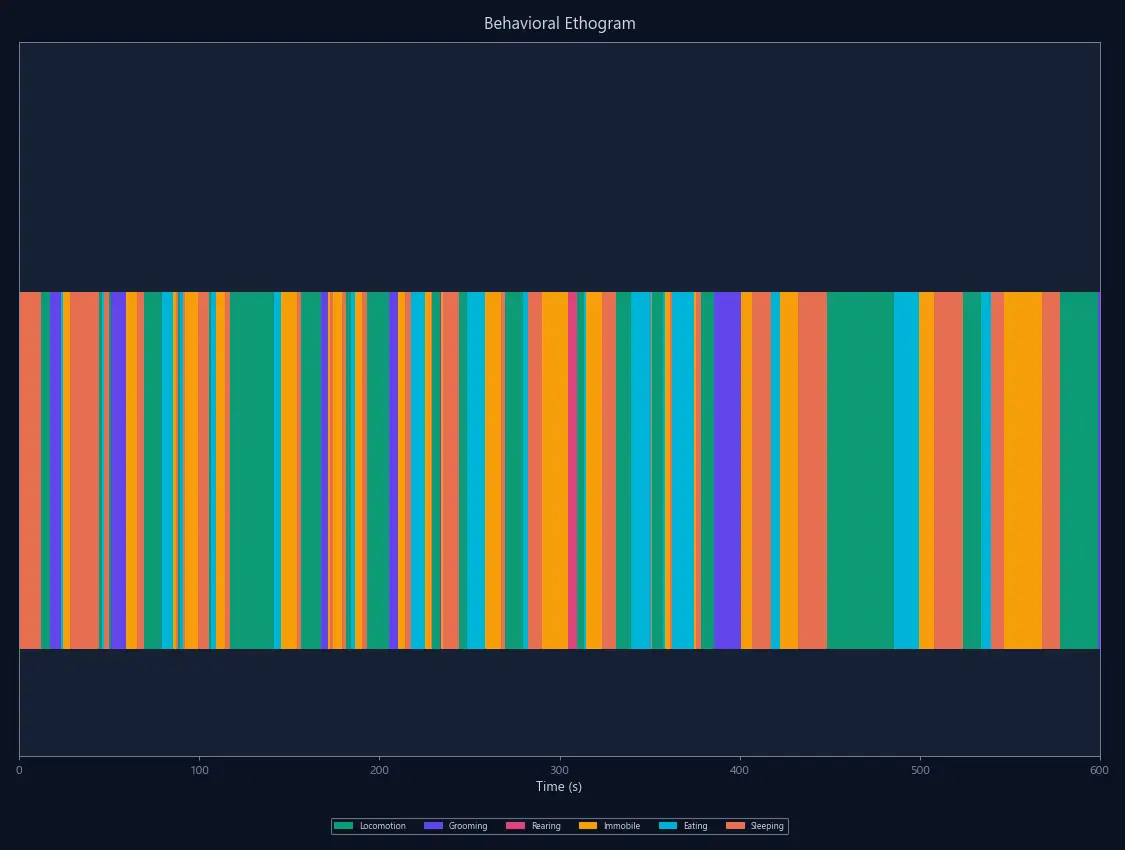
ML-powered frame-level behavioral classification with temporal smoothing and custom classifier training.
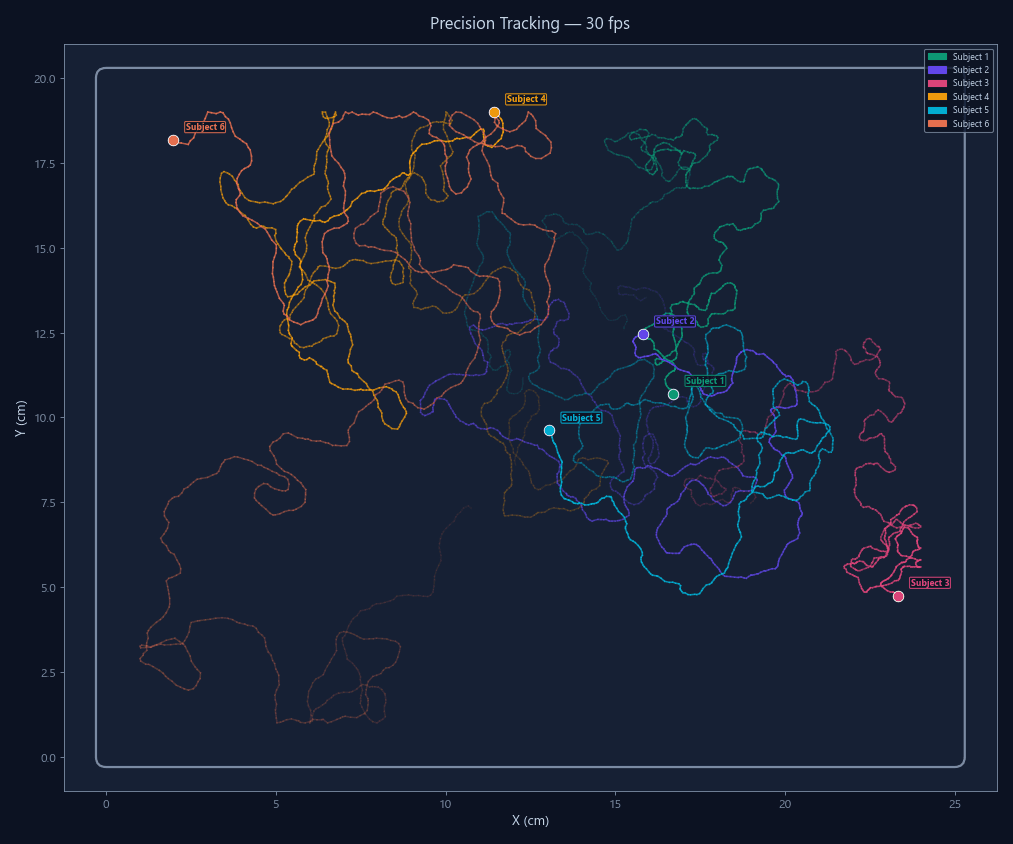
High-resolution 30 fps tracking that captures sub-second behavioral events conventional systems miss.
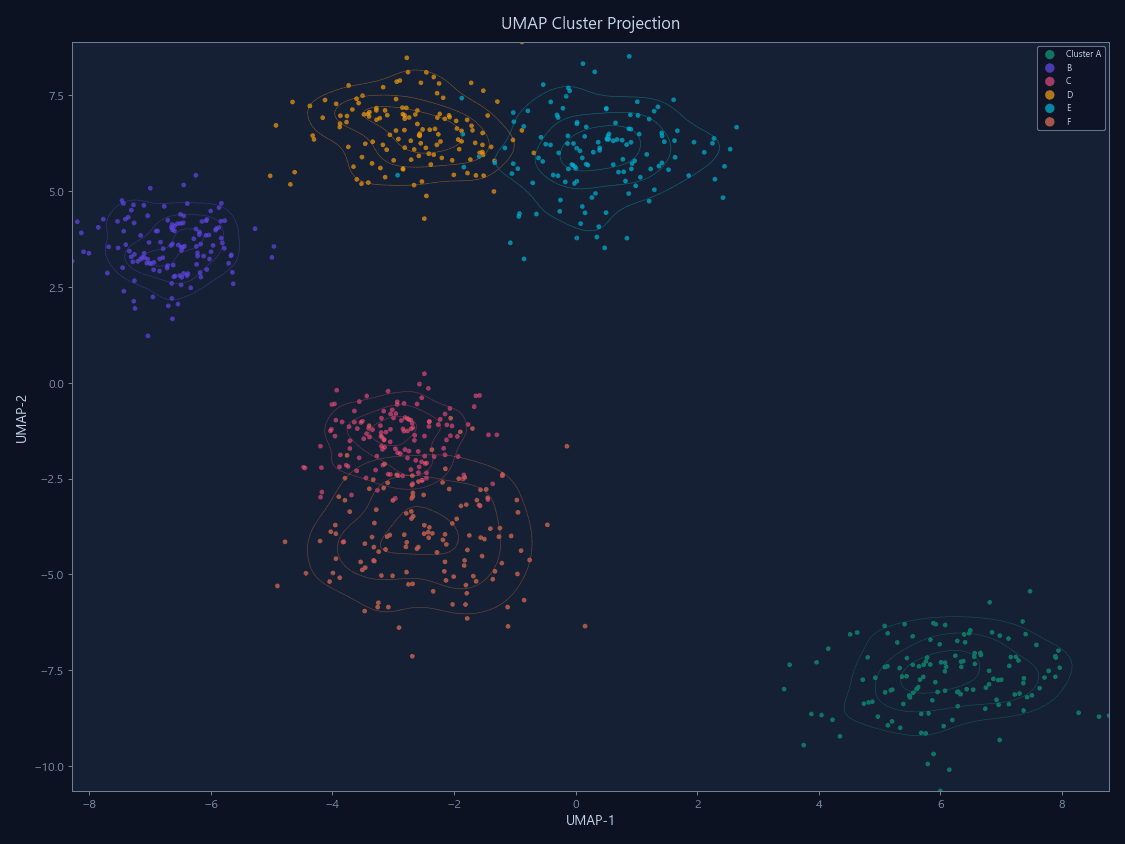
Unsupervised behavioral clustering reveals structure without predefined ethograms — UMAP visualization and novel behavior flagging.
Upload a recording and compare motion energy to coordinate-based activity — see what you have been missing.