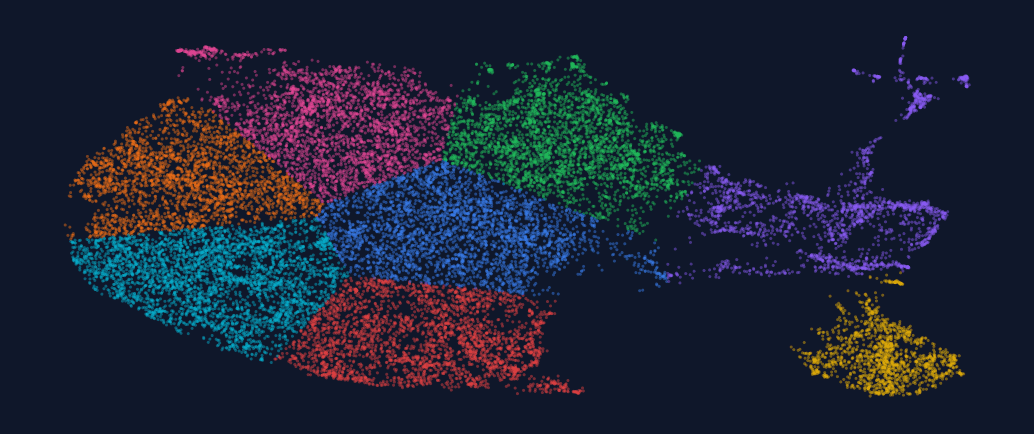
Behavioral cluster assignments per frame
Each frame assigned to a behavioral cluster without predefined labels. Cluster identities are consistent within and across sessions for direct comparison.
CSV
Identify behavioral patterns your scoring rubric doesn't include
Unsupervised clustering reveals behavioral structure you didn't define in advance — find phenotypes, drug effects, and strain differences in unbiased fashion.
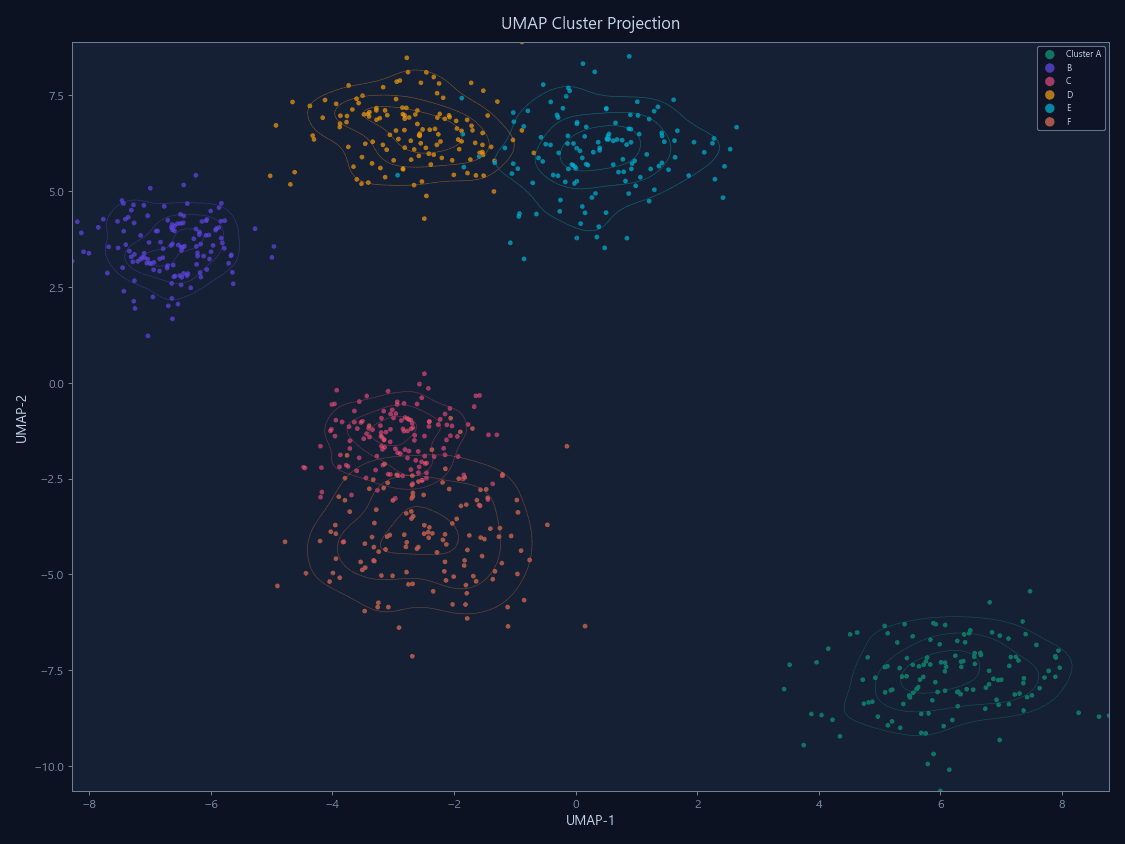
Supervised behavioral scoring only detects behaviors you define in advance. Subtle phenotypes, unexpected drug effects, and novel behavioral states are invisible when observers score only what their rubric includes. This confirmation bias limits discovery and can cause meaningful behavioral differences to go unreported.
ConductVision embeds behavioral features into a low-dimensional space using UMAP and identifies clusters without any predefined labels. Novel behavioral states are flagged automatically. Cross-condition comparisons reveal phenotypic differences that standard ethograms would miss.
Each frame assigned to a behavioral cluster without predefined labels. Cluster identities are consistent within and across sessions for direct comparison.
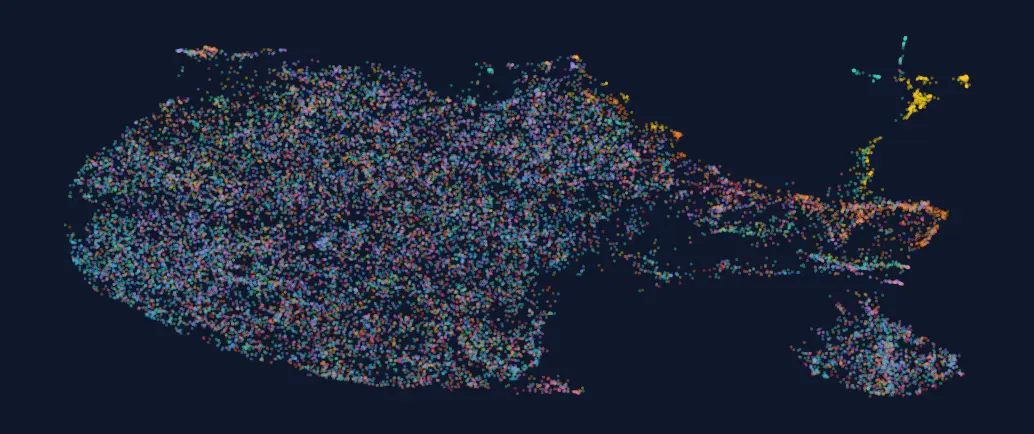
Low-dimensional embedding coordinates for each frame, color-coded by cluster, condition, or time. Publication-ready UMAP visualizations exported as images.
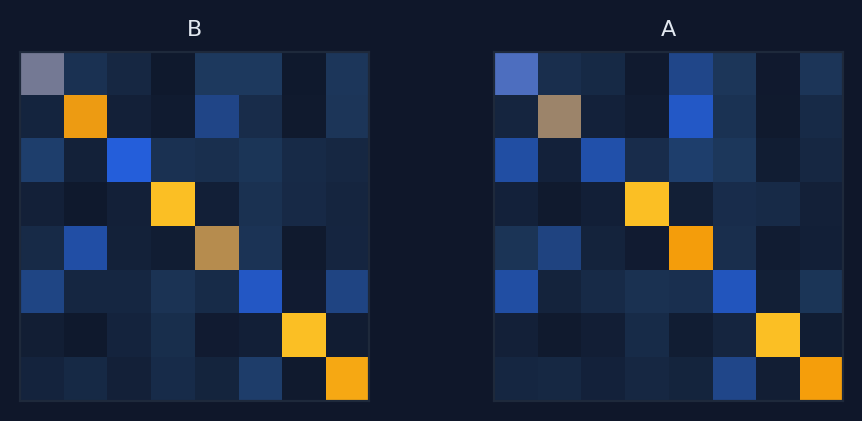
Markov transition matrix between behavioral clusters. Reveals sequential structure — which behavioral states follow which — and how transitions differ across conditions.
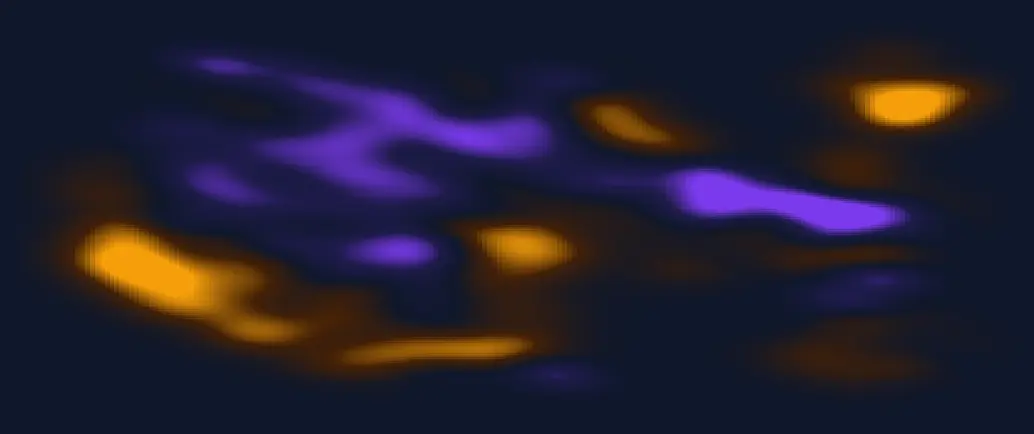
Group-level kernel density estimates over the UMAP manifold with permutation testing. Reveals localized regions where one condition occupies behavioral microstates more frequently than another.
Screen compounds for behavioral effects without specifying which behaviors to look for. Unsupervised clustering detects any behavioral shift relative to vehicle control.
Discover behavioral signatures that discriminate disease model from control without prior hypotheses. Identified clusters can be characterized post-hoc and validated in independent cohorts.
Compare behavioral repertoires across strains or genotypes using unbiased embedding. Detect strain-specific behavioral motifs that standard ethograms do not include.
Characterize the full behavioral profile of a novel compound. Identify which behavioral clusters are expanded, compressed, or newly introduced relative to control.
Detect subtle behavioral shifts following traumatic brain injury without predefined endpoints. Unsupervised embedding reveals injury-associated behavioral microstates that conventional motor scoring misses.
| Feature | ConductVision | Typical systems |
|---|---|---|
| Discovery mode | Unsupervised — no predefined labels | Supervised — scores only predefined behaviors |
| Observer bias | Eliminated — data-driven clustering | Present — scorer selects what to score |
| Novel behavior detection | Automatic flagging | Not possible with fixed ethogram |
| Ethogram required | No — categories emerge from data | Yes — must define behaviors in advance |
| Cross-condition comparison | UMAP overlay with statistical testing | Limited to predefined measures |
| Density mapping | Kernel density estimation with permutation testing | Not available |
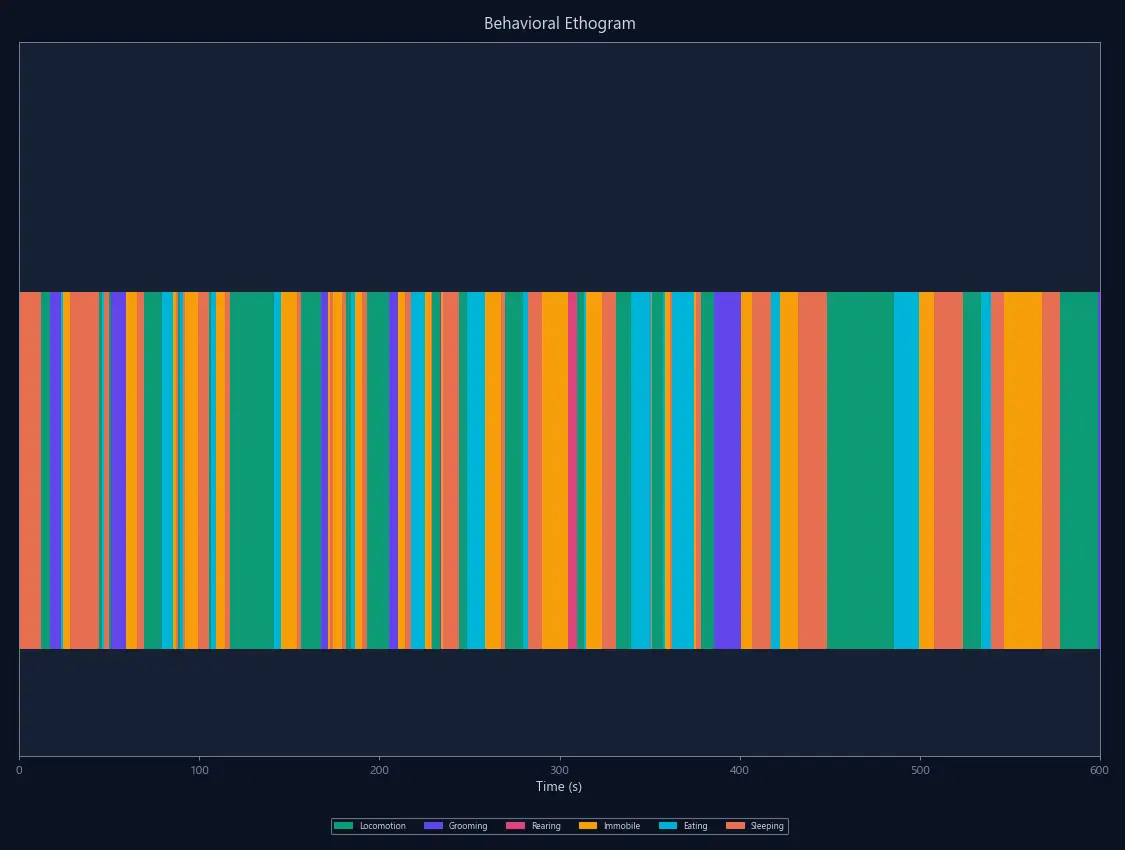
ML-powered frame-level behavioral classification with temporal smoothing and custom classifier training.
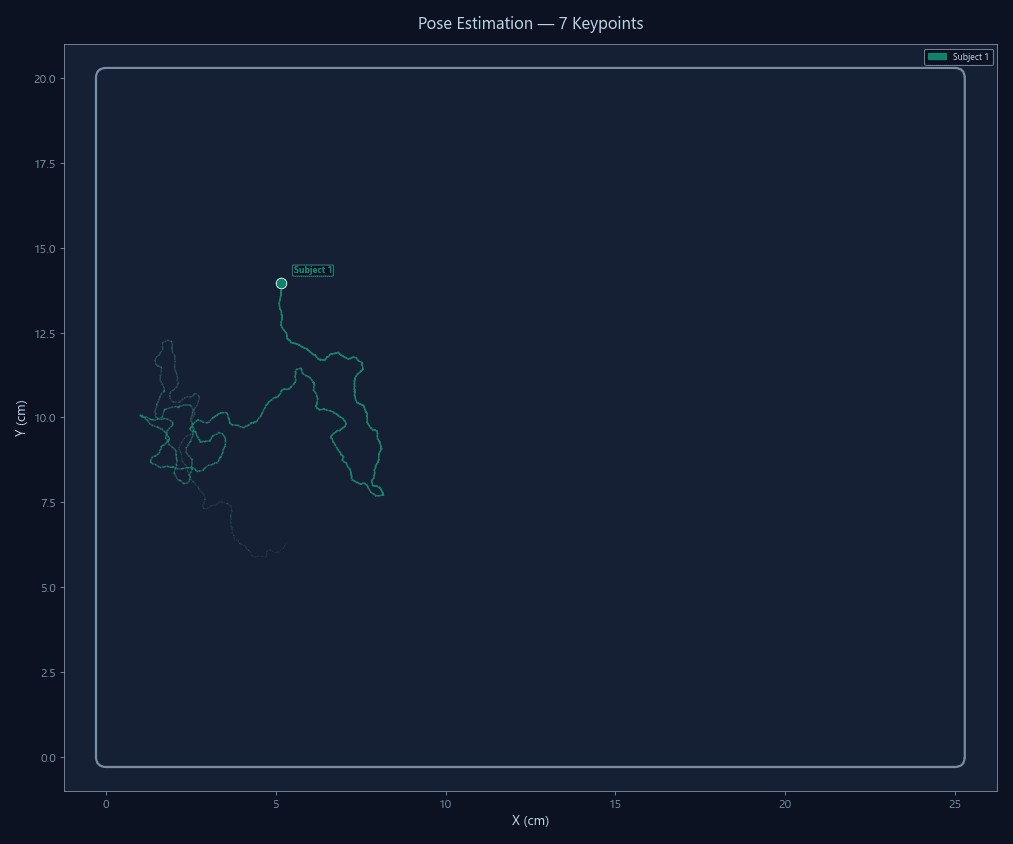
Multi-keypoint body part tracking — head, paws, tail, body center — with pretrained and custom model support.
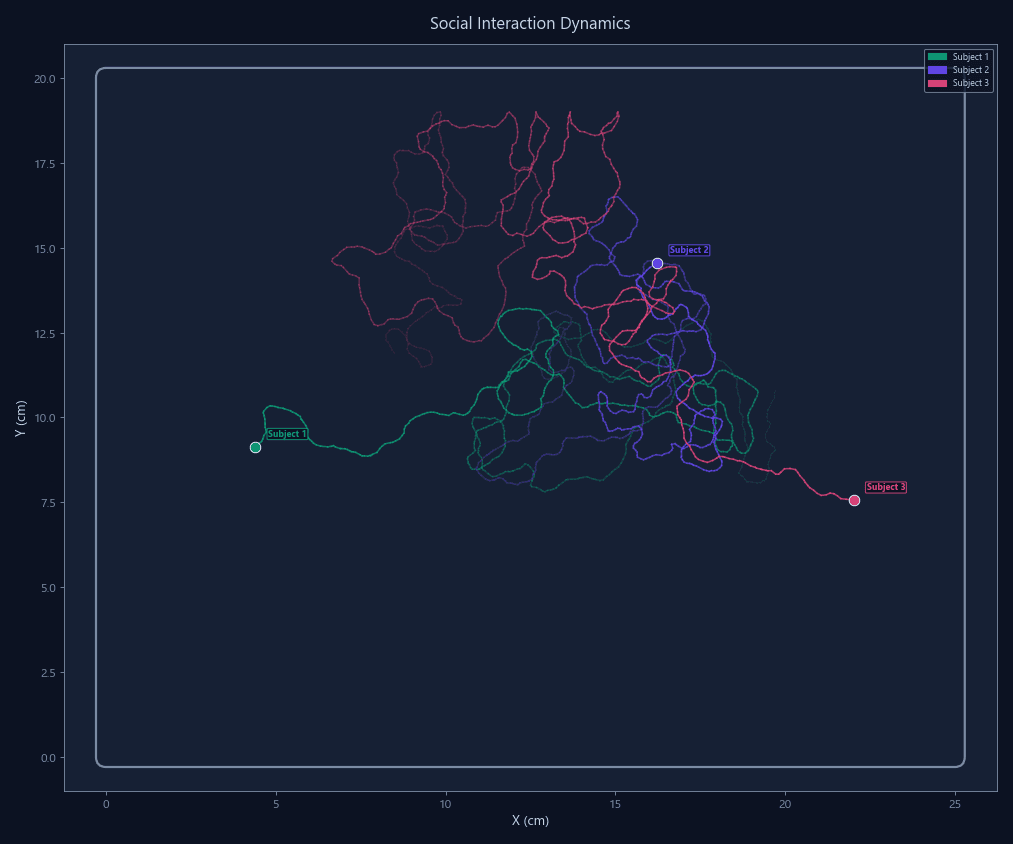
Continuous automated scoring of all pairwise social interactions — approach, contact, following, avoidance — for up to 4 animals.
Upload recordings from two conditions and see unsupervised clustering reveal behavioral differences you did not define.