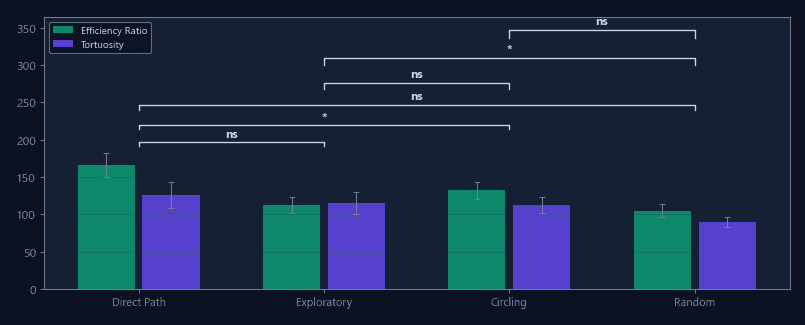
Path efficiency indices
Gallagher proximity, Whishaw index, path efficiency ratio (ideal/actual distance), and initial heading error per trial.
CSVJSON
Quantify navigation strategy, not just destination
Gallagher proximity, Whishaw index, and heading error reveal how animals search — not just whether they find the target.
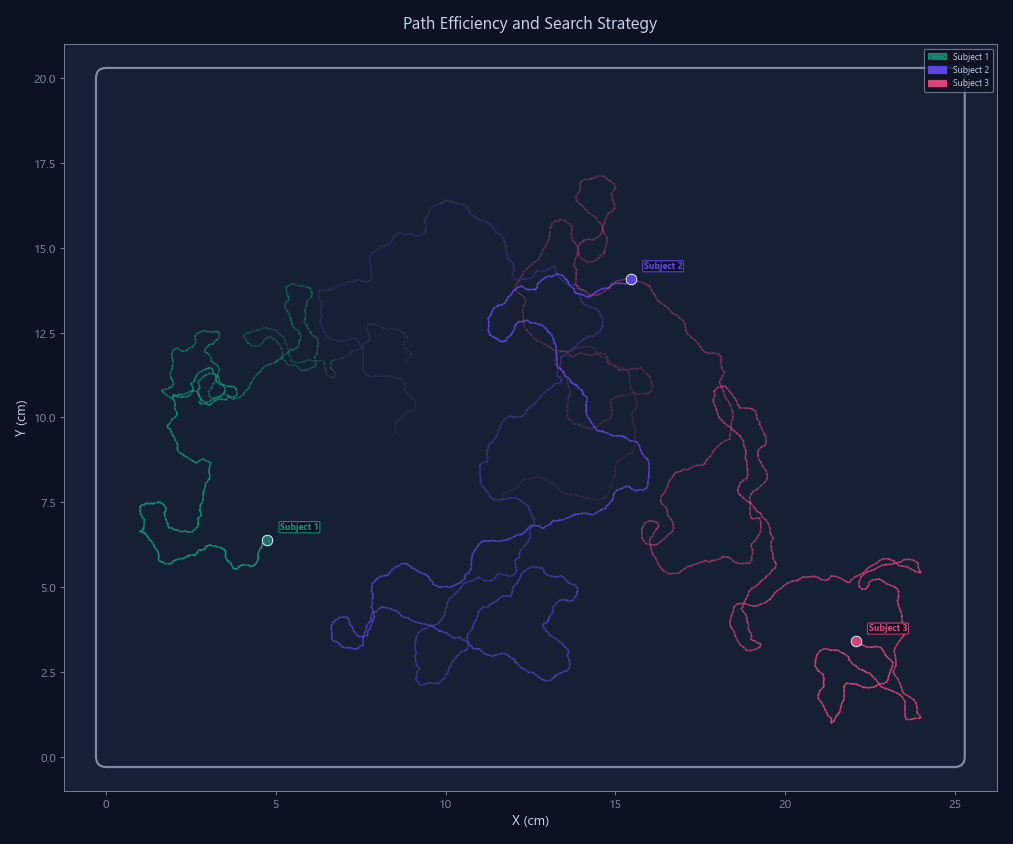
An animal that swims directly to a hidden platform and one that circles the perimeter before stumbling upon it may have similar latencies. Only path analysis reveals whether the animal is using spatial memory, visual guidance, or random search.
ConductVision calculates Gallagher proximity (cumulative distance from goal), Whishaw corridor index (percentage of path within ideal corridor), path efficiency ratio, and initial heading error — the standard battery of spatial navigation measures.
Gallagher proximity, Whishaw index, path efficiency ratio (ideal/actual distance), and initial heading error per trial.
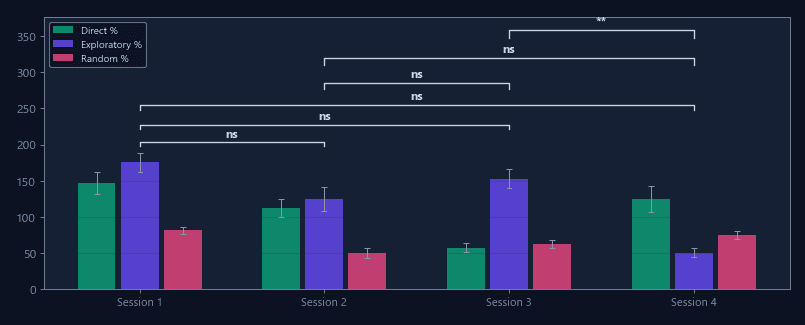
Each trial classified as direct, focal, scanning, chaining, thigmotaxis, or random based on trajectory features.
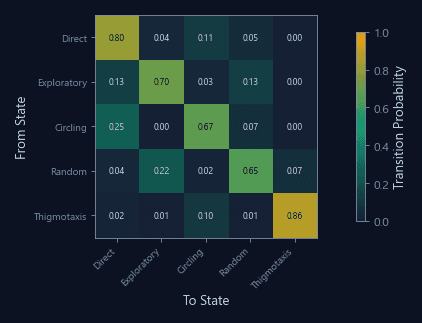
Multi-trial strategy transition matrix showing learning progression from random to spatial strategies across training days.
Path efficiency indices reveal learning trajectory more sensitively than latency alone. Strategy progression shows when animals transition from random to spatial search.
Probe trial search strategies distinguish spatial memory (direct/focal search near target) from procedural memory (serial search of holes).
Path efficiency in the radial arm maze captures whether animals use optimal win-shift strategy or revisit previously baited arms.
Aged animals revert from spatial to non-spatial strategies. Strategy classification tracks this regression quantitatively across age groups.
| Feature | ConductVision | Typical systems |
|---|---|---|
| Gallagher proximity measure | Built-in, automatic | Custom R/Python scripts required |
| Whishaw corridor index | Built-in, configurable corridor | Rarely available |
| Search strategy classification | 6 strategies, automatic | Manual expert classification |
| Multi-trial progression | Strategy transition matrix | Trial-by-trial manual coding |
| Heading error analysis | Initial and cumulative heading error | Not typically available |
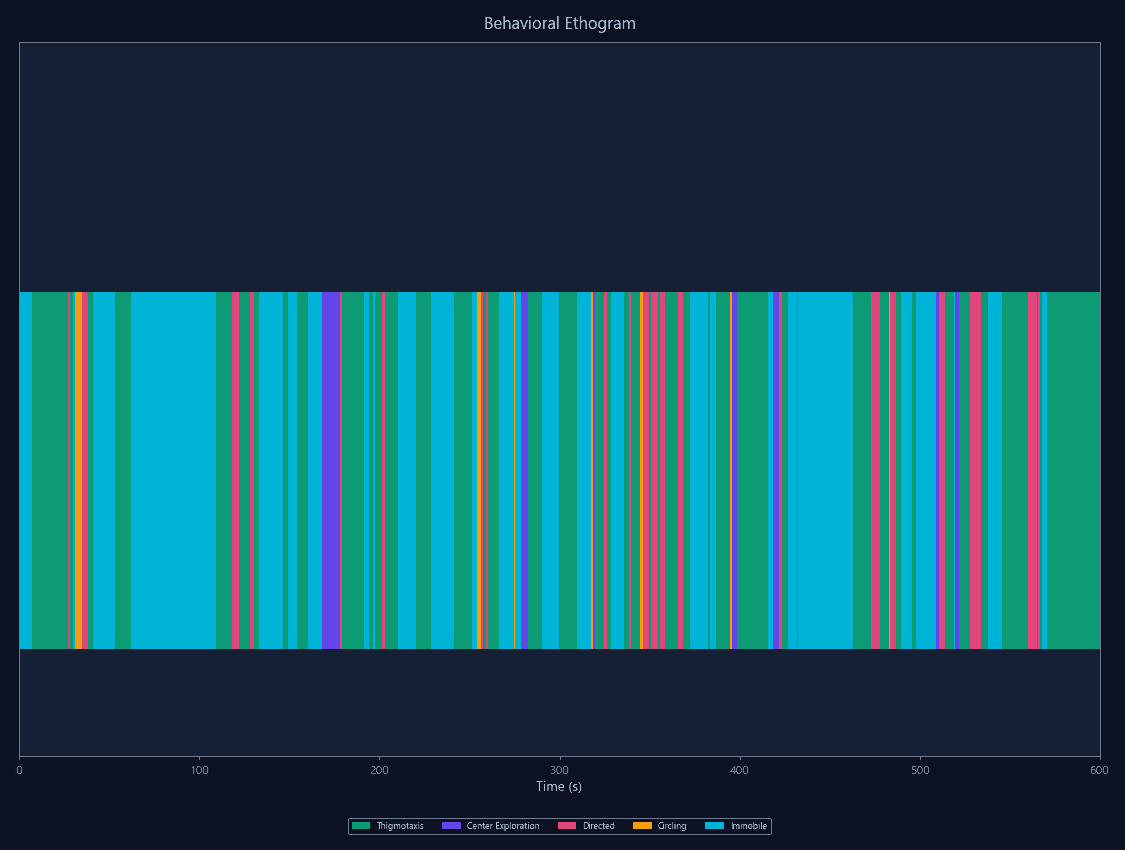
Automated spatial movement strategy classification with 8 locomotor pattern types.
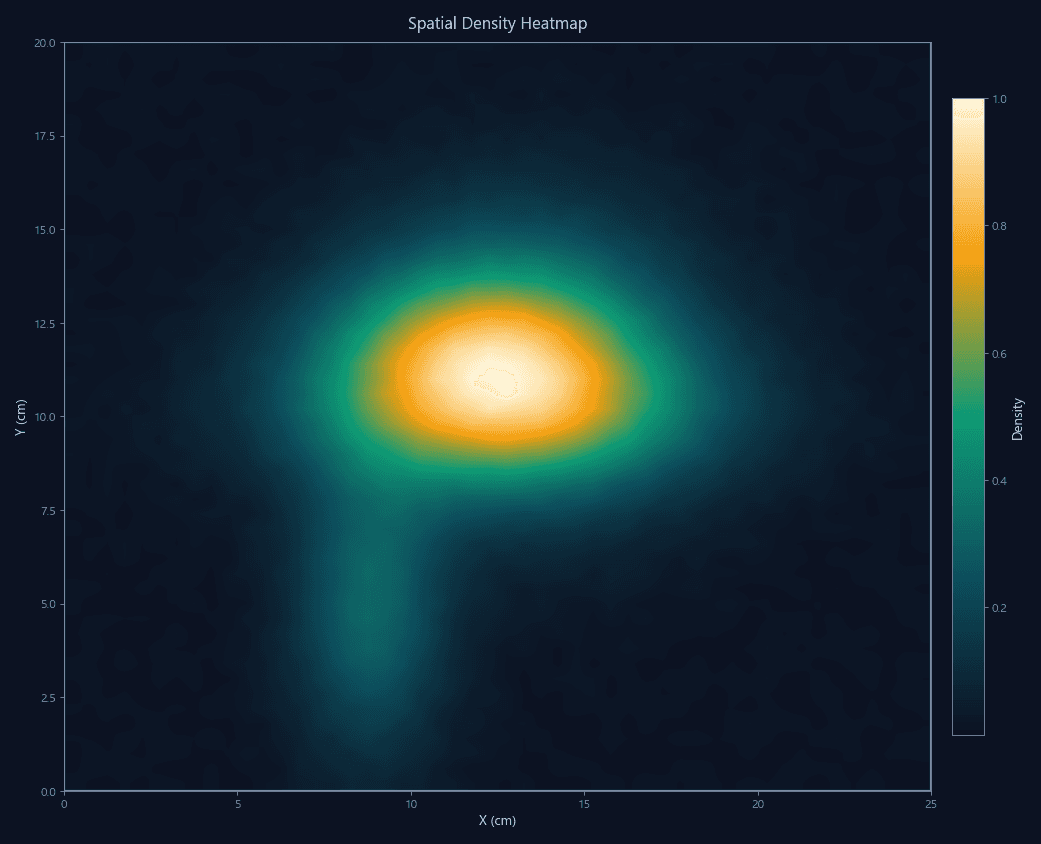
Configurable spatial zones with automated dwell time, entry count, and heatmap analysis for any arena.
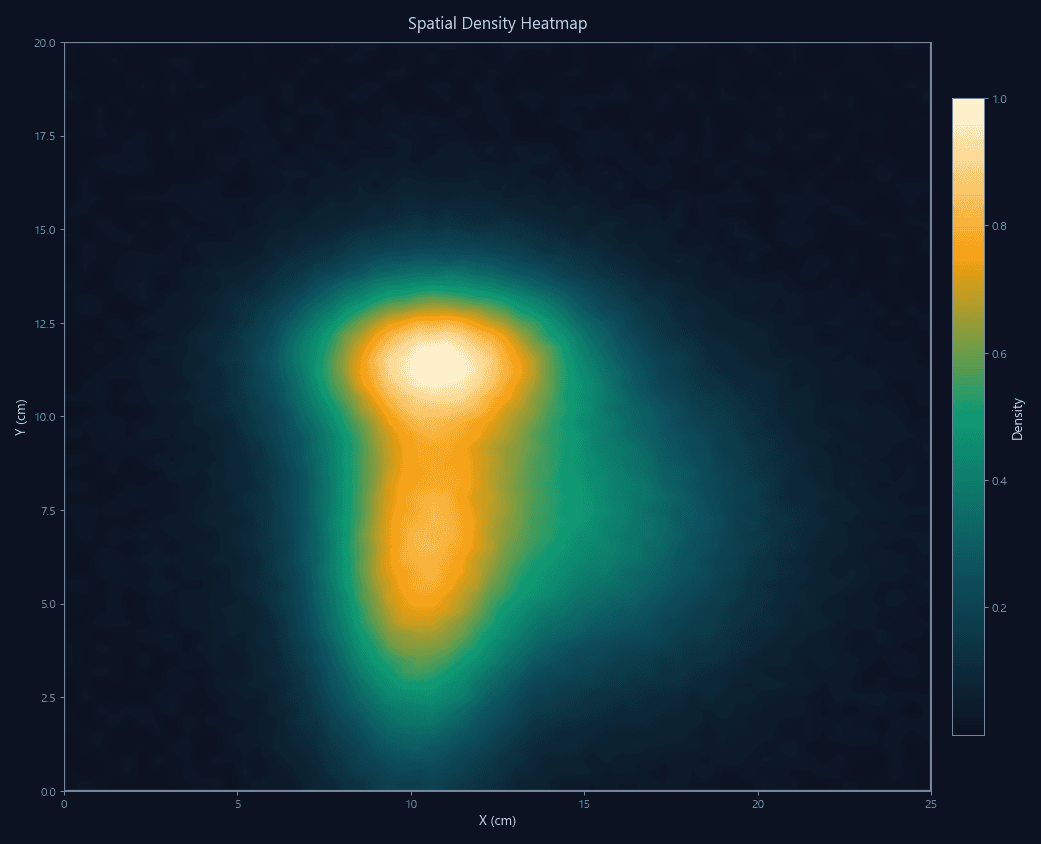
Real-time spatial occupancy heatmaps with color-coded density overlays on the arena view.
Upload water maze or Barnes maze recordings for automatic path efficiency analysis.