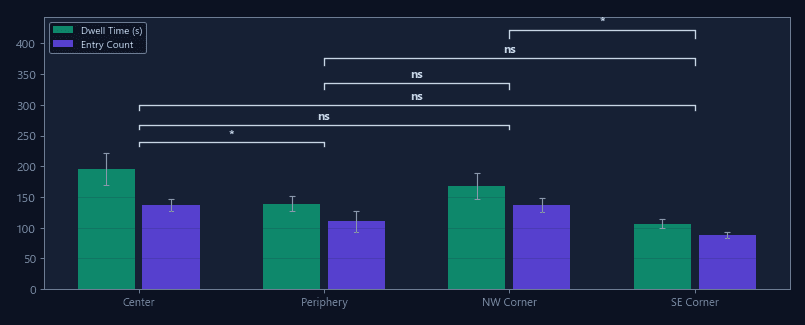
Zone dwell time and entry count
Time spent in each defined zone, number of entries, and latency to first entry — reported per zone per subject.
CSV
Configurable spatial analysis across any arena layout
Define zones as grids, quadrants, or custom polygons — then extract dwell time, entry counts, and transition matrices automatically.
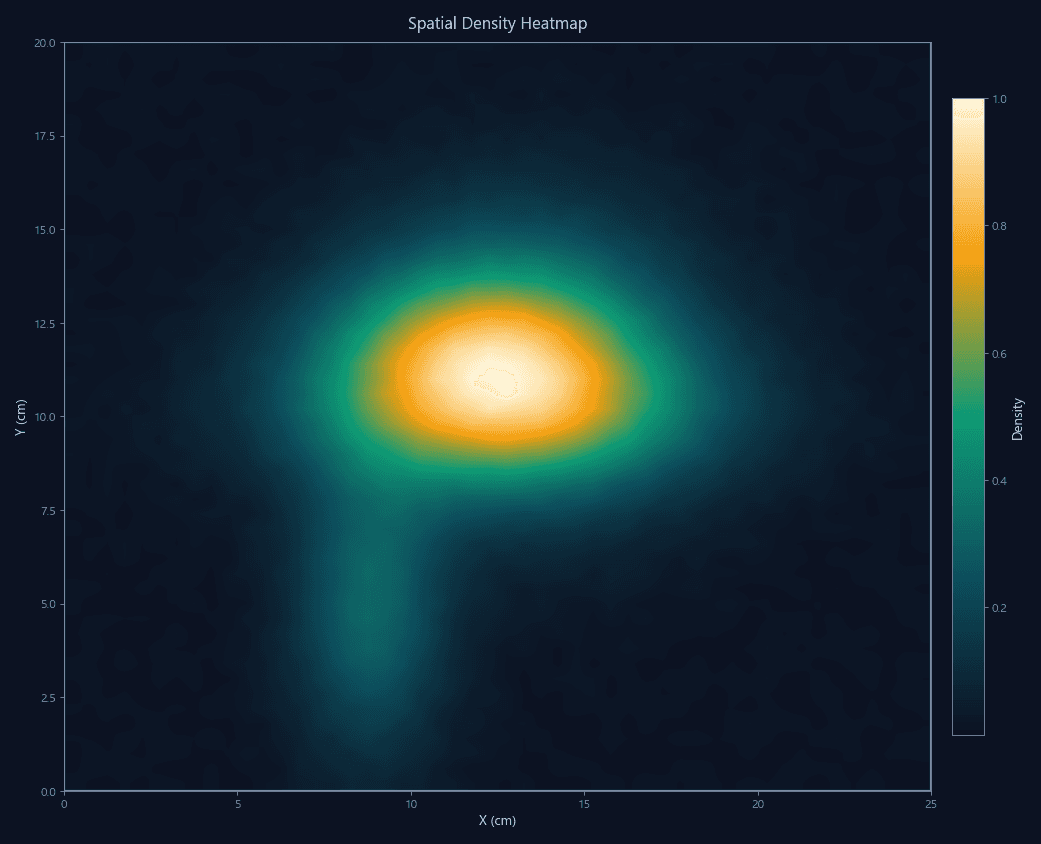
Most tracking tools provide only preset zone layouts — center/periphery for open field, left/right for place preference. Custom zone shapes require manual post-processing or are not supported.
ConductVision supports configurable grids (any row/column count), quadrant detection, and custom polygon regions of interest — all defined in the GUI and applied to frame-level data.
Time spent in each defined zone, number of entries, and latency to first entry — reported per zone per subject.
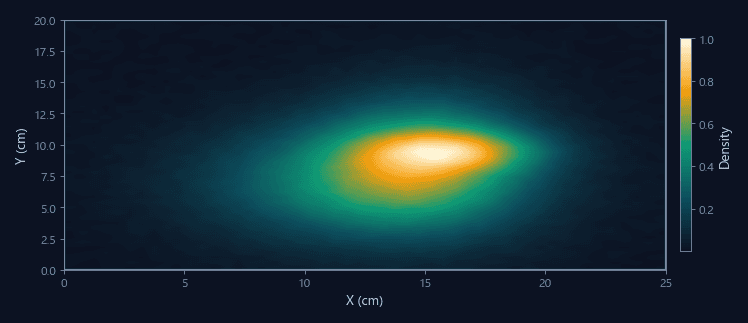
Position density maps showing occupancy distribution across the arena. Exportable as images or raw density matrices.
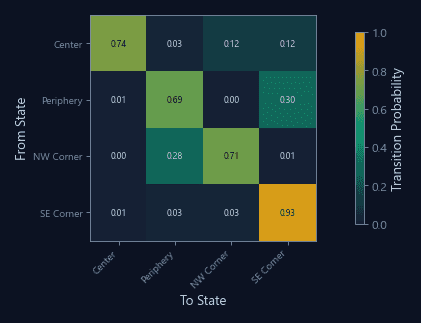
Frequency and probability of transitions between all zone pairs. Reveals spatial preferences and sequential patterns in exploration.
Quantify center vs. periphery time as an anxiety-related measure. Grid analysis reveals spatial patterns beyond the simple center/edge dichotomy.
Define drug-paired and vehicle-paired compartments with precise polygon boundaries. Automatically compute preference scores across conditioning and test sessions.
Standard quadrant occupancy analysis during probe trials. Configure platform zone radius to measure proximity and crossing count.
Define open arms, closed arms, and center zone. Extract time, entries, and head-dip events per zone for anxiety-related behavioral profiling.
| Feature | ConductVision | Typical systems |
|---|---|---|
| Zone types | Grid, quadrant, custom polygon | Preset center/periphery only |
| Grid flexibility | Any N×M configuration | Fixed grid sizes |
| Transition matrix | Automatic, all zone pairs | Manual post-processing |
| Heatmap export | Built-in, per-session | Requires external tools |
| Zone resolution | Per-frame assignment | Time-binned |
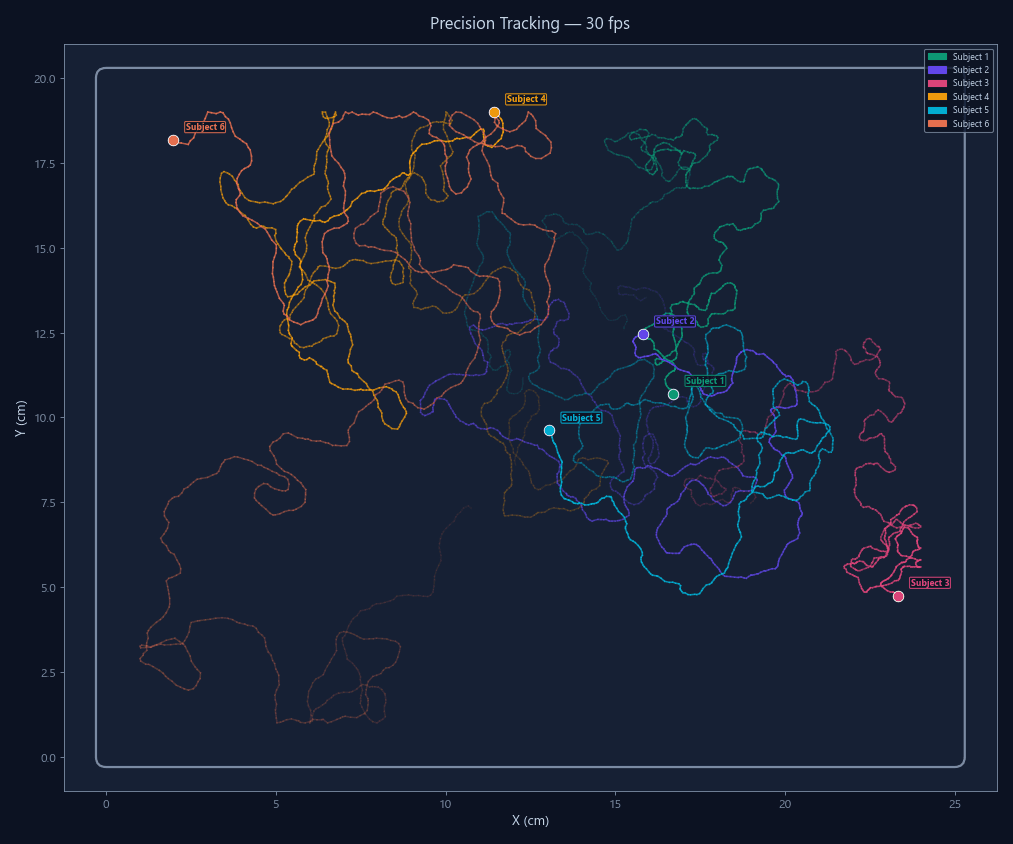
High-resolution 30 fps tracking that captures sub-second behavioral events conventional systems miss.
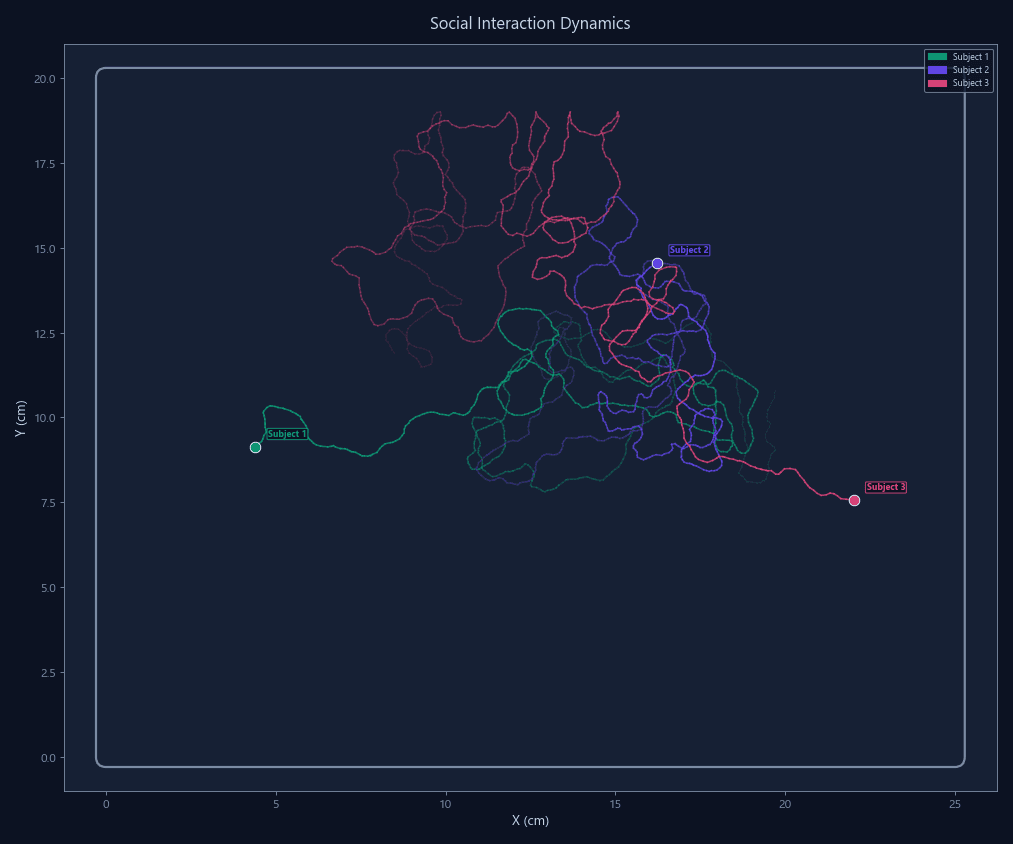
Continuous automated scoring of all pairwise social interactions — approach, contact, following, avoidance — for up to 4 animals.
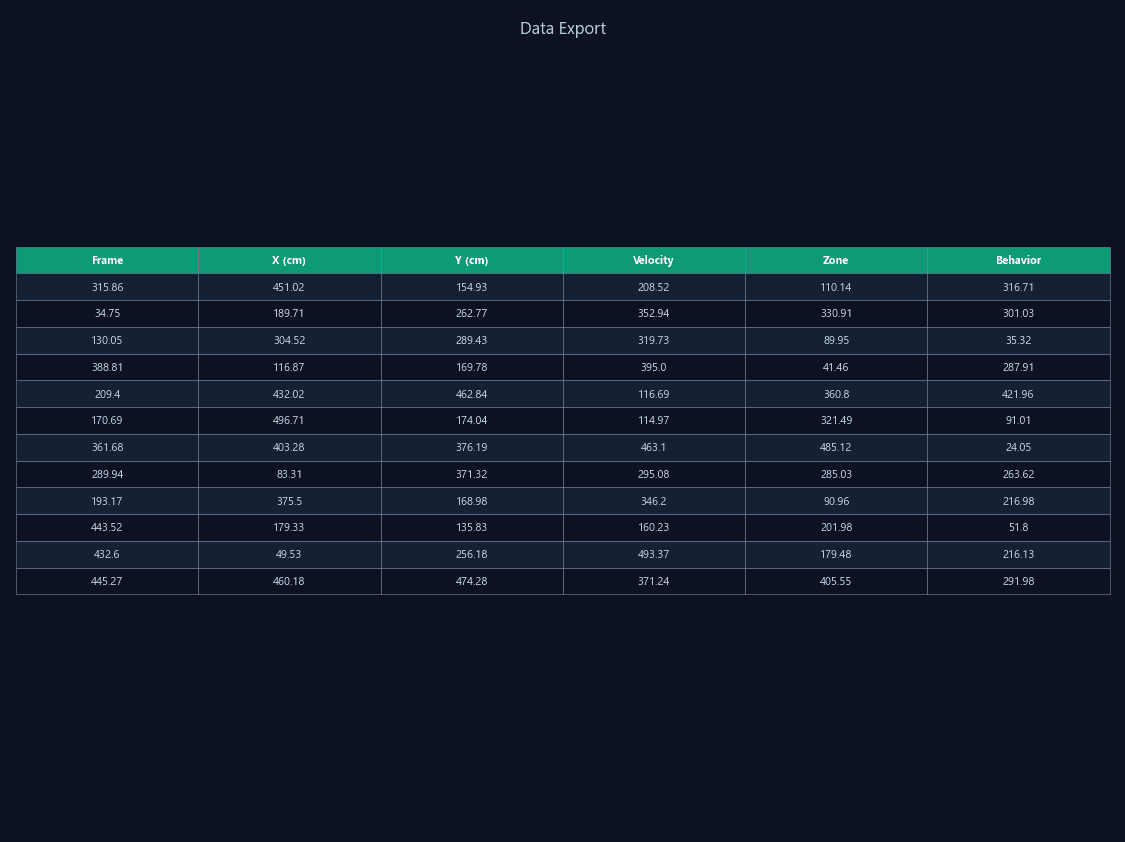
Standard CSV/JSON export compatible with any statistical software or analysis pipeline.
Download the trial, draw your zones on any arena image, and export occupancy data immediately.