Autism social attention eye tracking and movement research
Support respectful developmental research by measuring observable social-attention task behavior without presenting video measures as diagnosis.
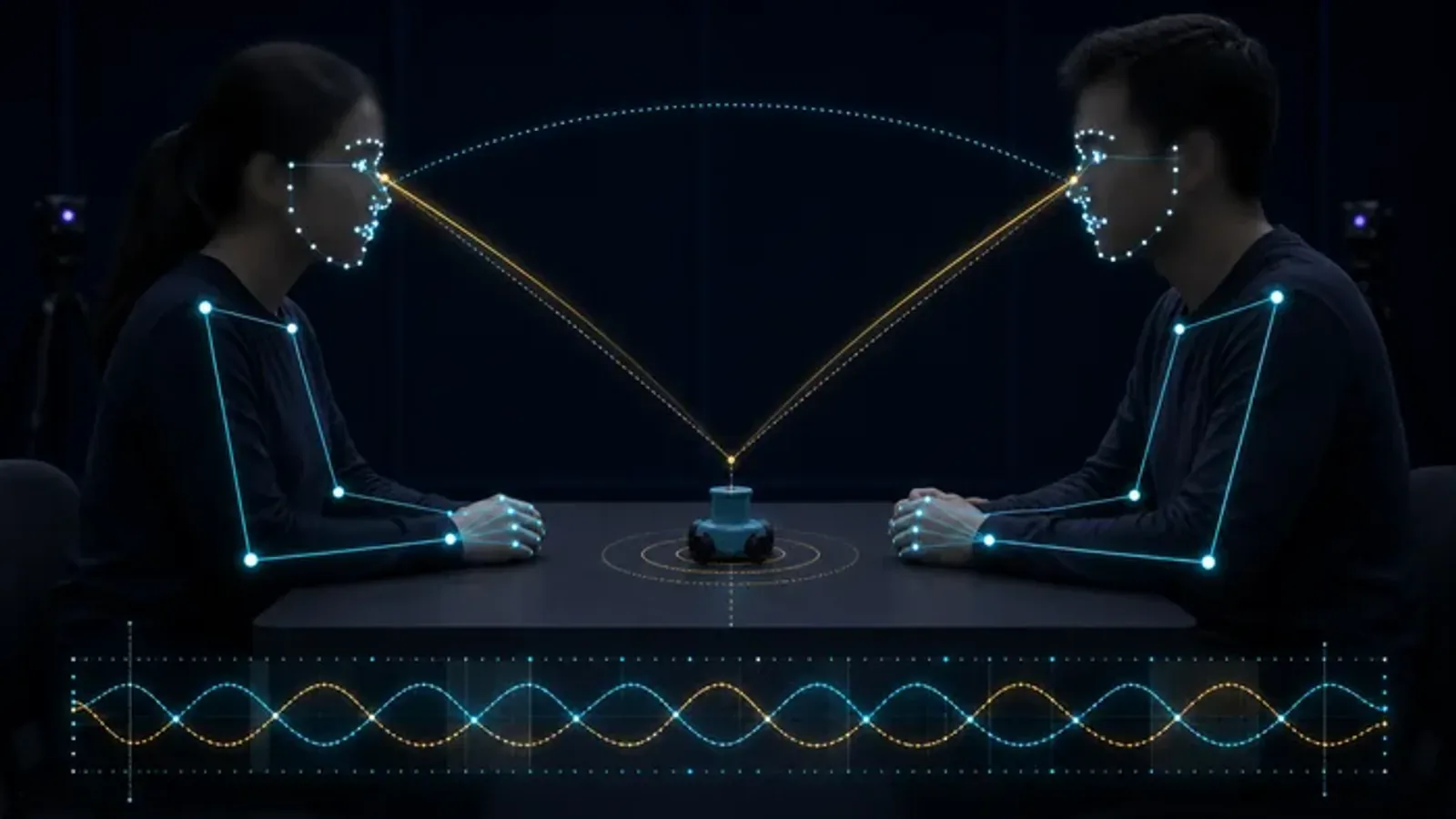
What the camera can measure
These outputs are designed for study comparison, rater review, and statistical analysis. They are not diagnostic claims.
Gaze orientation event
head/face orientation toward person or target object
Gesture response timing
hand/arm movement after prompt or social cue
Shared-target interval
participant and partner orientation to the same object
Review confidence
occlusion, face visibility, and rater flagging
Build the task around your protocol
ConductVision works best when the task, camera setup, annotations, and export fields are defined before the first participant visit.
Task presets
- joint attention prompt
- gaze orientation
- gesture response
- turn-taking task
- play-based interaction
Researcher annotations
- task prompt
- caregiver role
- target object
- rater confidence
- review flags
Export fields
- orientation events
- gesture timing
- target looks
- interaction segments
- review notes
Camera setup
Wide, privacy-conscious view of participant, researcher or caregiver, and target objects.
Metrics, video signals, and comparators
What is established
Social attention, gaze orientation, and joint attention tasks are studied in developmental and autism research.
What ConductVision quantifies
ConductVision measures observable orientation, timing, and interaction events that researchers can review and code.
What still needs validation
Diagnostic interpretation, screening claims, and developmental classification are outside the measurement output and require qualified clinical assessment.
Reviewable data for analysis teams
Exports are built for study notebooks, statistical analysis, and rater review. The video remains available for audit when the protocol allows it.
Scientific context for the task family
These links point to the measurement areas researchers commonly use when validating a protocol.
Research-use measurement note
ConductVision outputs are research-use measurements unless a customer has completed their own clinical validation, regulatory review, and intended-use controls. The study team remains responsible for consent, privacy, camera calibration, rater review, and clinical interpretation.
Adjacent human movement pages
Cerebral palsy motor function
Measure child-friendly walking, reaching, balance, and gross motor tasks with rater review.
Open pageFacial affect and mental health research
Measure facial expression dynamics, speaking-task affect, blunted expression proxies, and review flags.
Open pageTelemedicine movement assessment
Guide home video capture, quality checks, task review, and exportable movement measures.
Open pageReaction time and psychomotor slowing
Measure reaction time, initiation latency, movement speed, vigilance lapses, and task consistency.
Open pageBring autism and social attention into a real study protocol
Share the task, participant population, camera constraints, and outcomes you need to compare. We will help map what can be measured and what needs validation.