Physical therapy outcome tracking from repeat movement tasks
Track functional tasks and therapeutic exercises with reviewable video measures that complement therapist ratings and patient-reported outcomes.
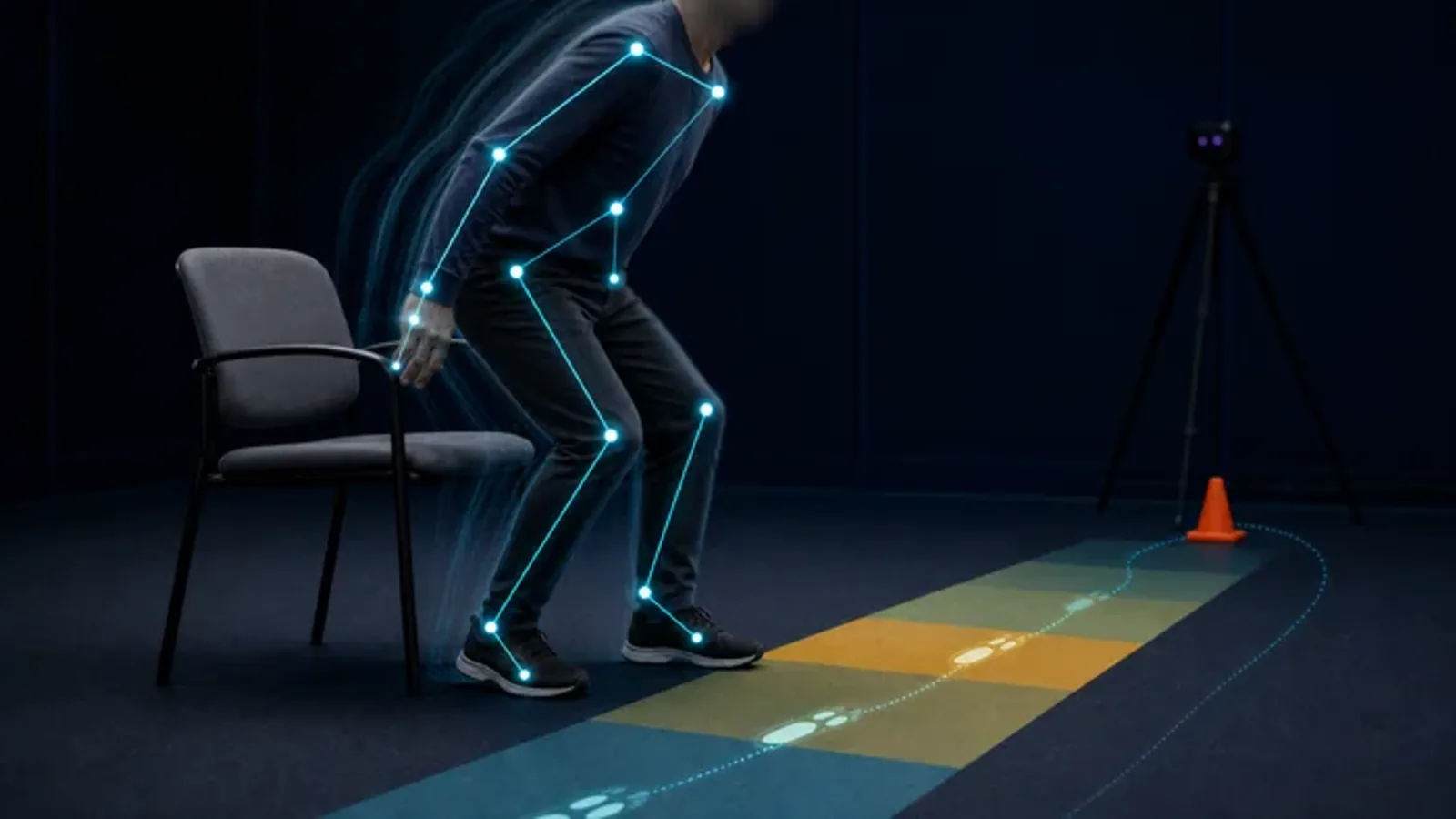
What the camera can measure
These outputs are designed for study comparison, rater review, and statistical analysis. They are not diagnostic claims.
Repetition quality
joint path, tempo, range, and completion state
Range of motion proxy
joint angle over time from visible landmarks
Task tempo
eccentric/concentric phase timing and pauses
Compensation flag
trunk lean, asymmetry, or off-plane movement
Build the task around your protocol
ConductVision works best when the task, camera setup, annotations, and export fields are defined before the first participant visit.
Task presets
- range of motion
- sit-to-stand
- step-up
- squat
- home exercise repetition
Researcher annotations
- exercise prescription
- visit number
- pain or fatigue score
- therapist review
- home or clinic setting
Export fields
- repetition count
- ROM proxy
- tempo
- compensation flags
- visit comparison
Camera setup
Camera angle selected for the target joint or whole-body task, with consistent framing across visits.
Metrics, video signals, and comparators
What is established
PT outcomes often combine functional tests, range-of-motion measures, exercise performance, and patient-reported outcomes.
What ConductVision quantifies
ConductVision measures visible repetitions, timing, range proxies, and compensation flags that researchers can compare across visits.
What still needs validation
Exercise-specific thresholds, joint-angle accuracy, and clinical progress definitions require protocol validation.
Reviewable data for analysis teams
Exports are built for study notebooks, statistical analysis, and rater review. The video remains available for audit when the protocol allows it.
Scientific context for the task family
These links point to the measurement areas researchers commonly use when validating a protocol.
Research-use measurement note
ConductVision outputs are research-use measurements unless a customer has completed their own clinical validation, regulatory review, and intended-use controls. The study team remains responsible for consent, privacy, camera calibration, rater review, and clinical interpretation.
Adjacent human movement pages
Orthopedic recovery
Measure step-downs, squats, range of motion, gait compensation, and side-to-side recovery.
Open pageTelemedicine movement assessment
Guide home video capture, quality checks, task review, and exportable movement measures.
Open pageStroke rehabilitation
Track reaching, trunk compensation, gait asymmetry, and repetition quality across recovery visits.
Open pageFrailty and aging mobility
Measure gait speed, chair rise, balance, and short mobility tasks across aging cohorts.
Open pageBring physical therapy outcomes into a real study protocol
Share the task, participant population, camera constraints, and outcomes you need to compare. We will help map what can be measured and what needs validation.