Stroke rehabilitation movement analysis from standard video
Measure upper-limb and walking tasks used in stroke rehabilitation research, with video outputs that remain available for therapist and rater review.
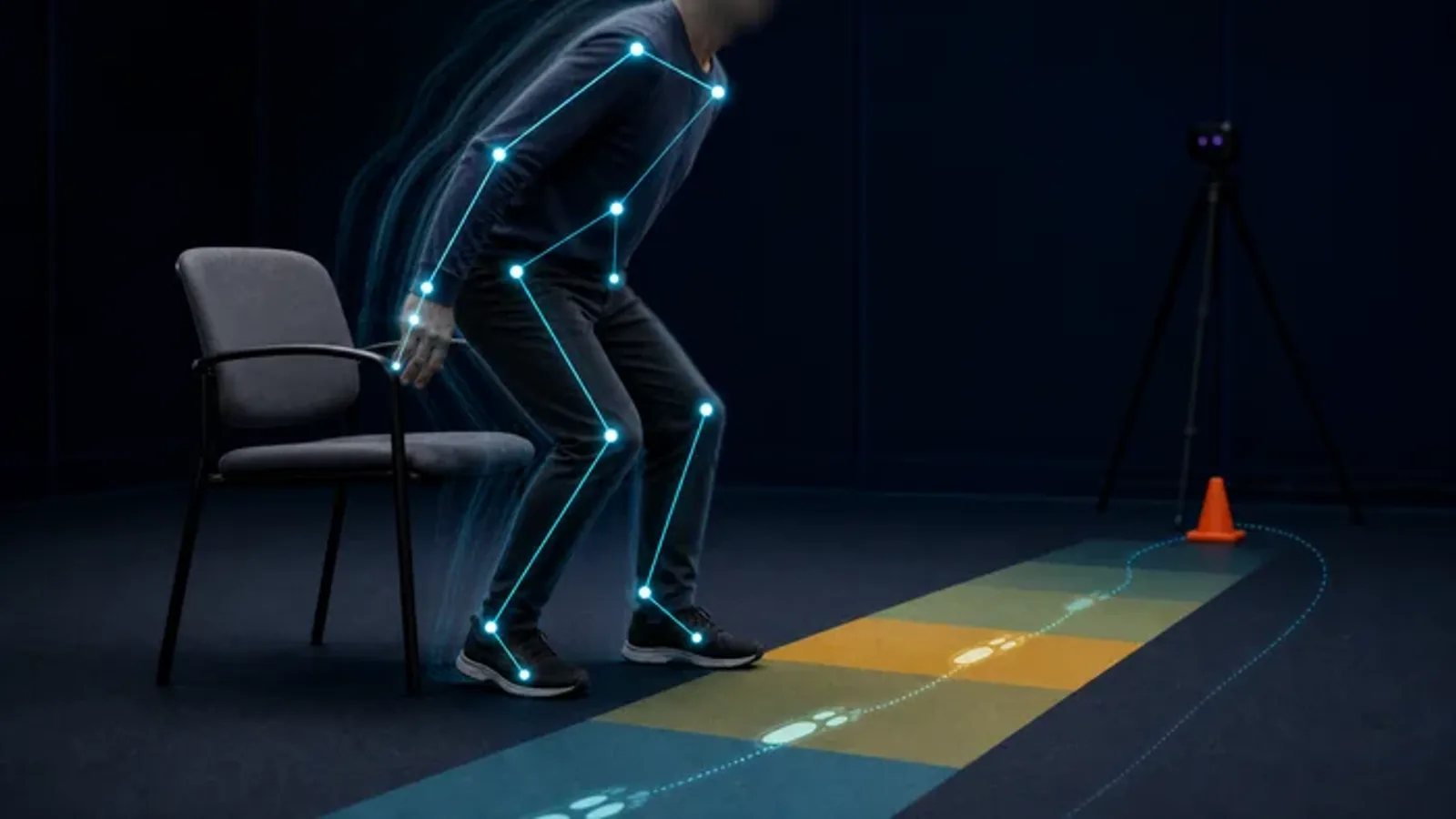
What the camera can measure
These outputs are designed for study comparison, rater review, and statistical analysis. They are not diagnostic claims.
Reach duration
hand path from rest to target contact
Trunk compensation
trunk lean and shoulder displacement during reach
Path smoothness
hand trajectory, velocity, and movement interruptions
Gait asymmetry
left/right stance, swing, and step timing
Build the task around your protocol
ConductVision works best when the task, camera setup, annotations, and export fields are defined before the first participant visit.
Task presets
- seated reaching
- reach-to-grasp
- sit-to-stand
- short walkway gait
- turning
Researcher annotations
- affected side
- time since stroke
- therapy dose
- assistive device
- rater notes
Export fields
- reach duration
- trunk compensation
- hand path
- gait asymmetry
- task repetitions
Camera setup
Frontal or oblique camera for upper-limb tasks; sagittal or diagonal view for gait and transfers.
Metrics, video signals, and comparators
What is established
Upper-limb reaching, task timing, gait asymmetry, and functional movement scales are established outcomes in stroke rehabilitation research.
What ConductVision quantifies
ConductVision turns visible arm, trunk, and gait motion into repeatable measurements that can be reviewed alongside therapist ratings.
What still needs validation
Mapping video-derived measures to impairment scales or responder definitions requires cohort-specific validation and rater agreement checks.
Reviewable data for analysis teams
Exports are built for study notebooks, statistical analysis, and rater review. The video remains available for audit when the protocol allows it.
Scientific context for the task family
These links point to the measurement areas researchers commonly use when validating a protocol.
Research-use measurement note
ConductVision outputs are research-use measurements unless a customer has completed their own clinical validation, regulatory review, and intended-use controls. The study team remains responsible for consent, privacy, camera calibration, rater review, and clinical interpretation.
Adjacent human movement pages
Hand function and dexterity
Measure peg placement, finger tapping, reach-to-grasp, hand path, and object interaction timing.
Open pagePhysical therapy outcomes
Measure range of motion, exercise form, repetition quality, task timing, and visit-to-visit progress.
Open pageFall risk and postural sway
Measure timed mobility, turning, sit-to-stand phases, and quiet-stance sway during repeat visits.
Open pageDigital biomarkers in clinical trials
Plan fit-for-purpose video outcomes for gait, tremor, range of motion, dexterity, and remote visits.
Open pageBring stroke rehabilitation into a real study protocol
Share the task, participant population, camera constraints, and outcomes you need to compare. We will help map what can be measured and what needs validation.