Vestibular balance assessment from head, gaze, and gait tasks
Quantify visible balance, head motion, and gait behavior during vestibular research tasks selected by the study team.
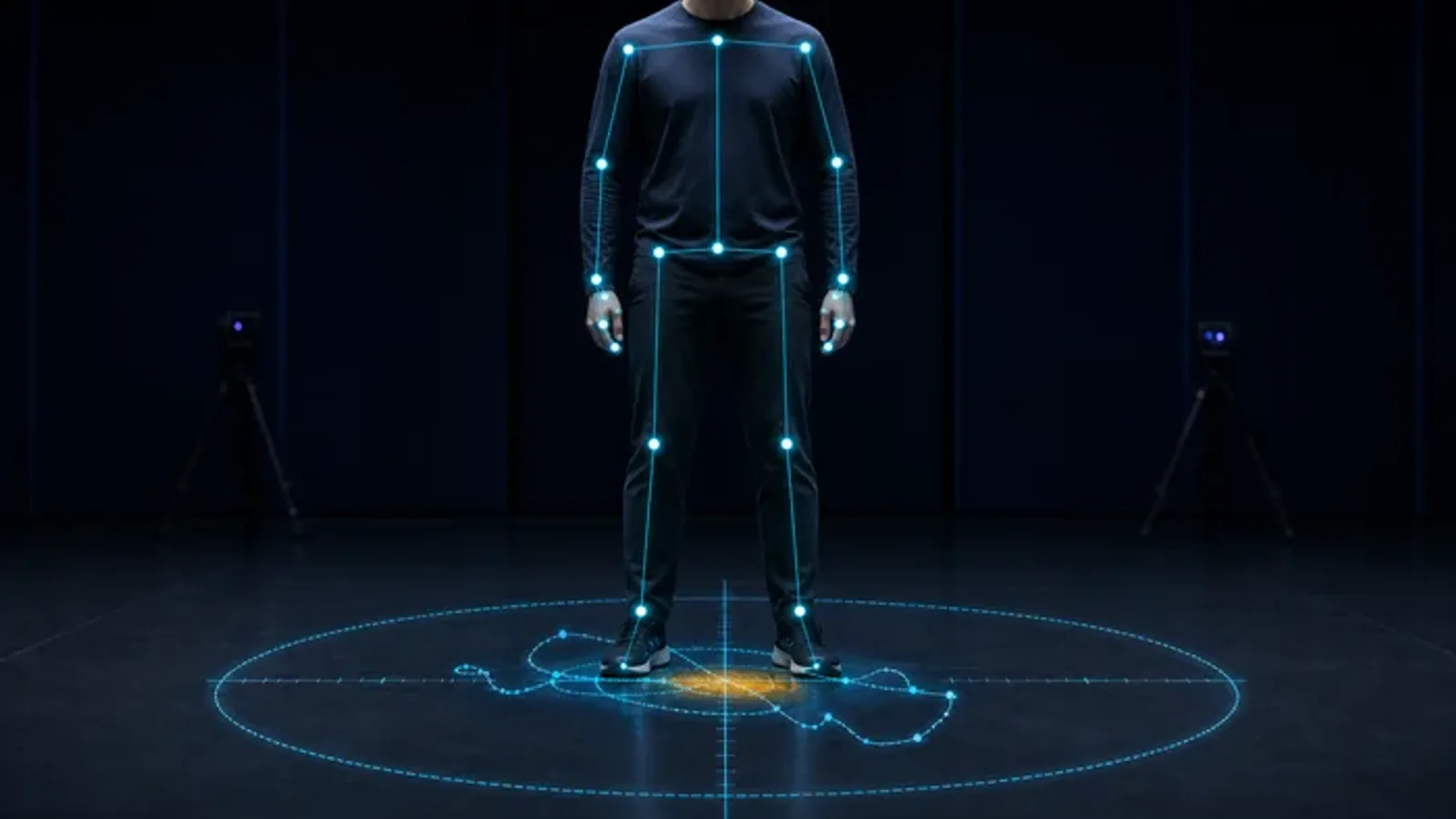
What the camera can measure
These outputs are designed for study comparison, rater review, and statistical analysis. They are not diagnostic claims.
Head-turn timing
head orientation changes relative to target instruction
Trunk sway
trunk center motion during stance or head turns
Dynamic gait time
step timing and path progress with head movement
Target orientation
head and gaze-direction proxy toward marked target
Build the task around your protocol
ConductVision works best when the task, camera setup, annotations, and export fields are defined before the first participant visit.
Task presets
- head-turn stance
- gaze stabilization
- tandem walk
- dynamic gait
- visual target task
Researcher annotations
- vestibular task condition
- target distance
- symptom pairing
- support surface
- safety stop
Export fields
- head angle
- trunk sway
- stance time
- gait timing
- target-orientation events
Camera setup
Full-body view with head and trunk visible; visual target location should be marked in the recording.
Metrics, video signals, and comparators
What is established
Vestibular research commonly uses balance, gaze stabilization, head movement, and dynamic gait task families.
What ConductVision quantifies
ConductVision measures visible head, trunk, stance, and gait behavior so researchers can review task execution and export timing.
What still needs validation
Vestibular diagnosis, VOR interpretation, and symptom causality require clinical assessment and protocol-specific validation.
Reviewable data for analysis teams
Exports are built for study notebooks, statistical analysis, and rater review. The video remains available for audit when the protocol allows it.
Scientific context for the task family
These links point to the measurement areas researchers commonly use when validating a protocol.
Research-use measurement note
ConductVision outputs are research-use measurements unless a customer has completed their own clinical validation, regulatory review, and intended-use controls. The study team remains responsible for consent, privacy, camera calibration, rater review, and clinical interpretation.
Adjacent human movement pages
Fall risk and postural sway
Measure timed mobility, turning, sit-to-stand phases, and quiet-stance sway during repeat visits.
Open pageSports concussion return-to-play
Measure balance, dual-task gait, head control, and landing symmetry during recovery protocols.
Open pageTelemedicine movement assessment
Guide home video capture, quality checks, task review, and exportable movement measures.
Open pageStroke rehabilitation
Track reaching, trunk compensation, gait asymmetry, and repetition quality across recovery visits.
Open pageBring vestibular disorders into a real study protocol
Share the task, participant population, camera constraints, and outcomes you need to compare. We will help map what can be measured and what needs validation.