ConductVision Organoid Monitor
Follow each organoid through fusion and fragmentation
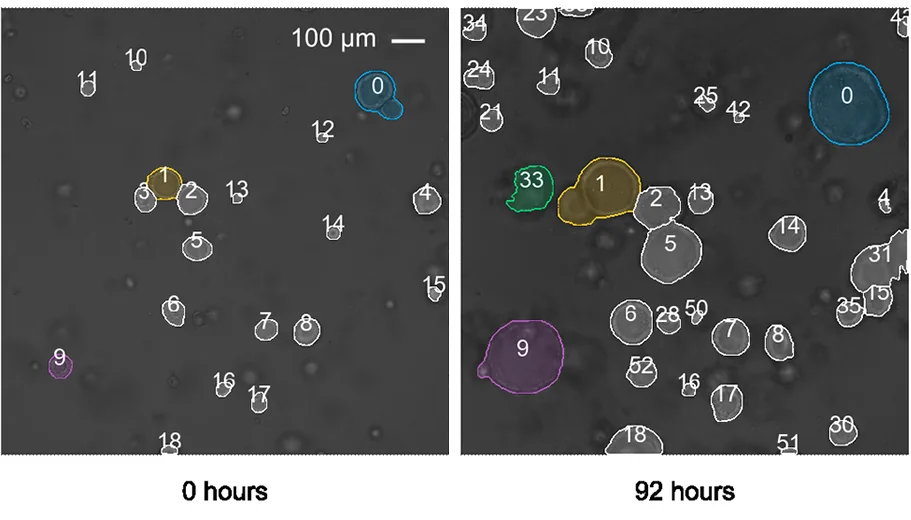
In a pilot, ConductVision follows each organoid under its own ID and logs each fusion, fragmentation or collapse with a video clip.
Measures
What a pilot tracks
Identity
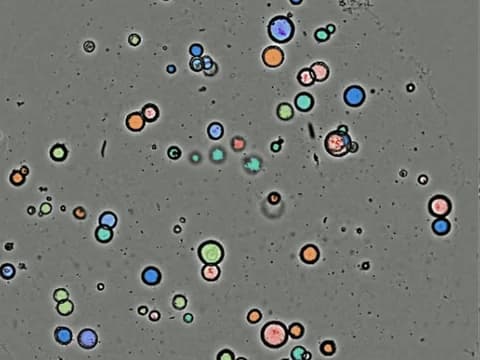
- An ID for every visible organoid, built from its plate, well and organoid number
- Position, outline and confidence in every frame
Movement
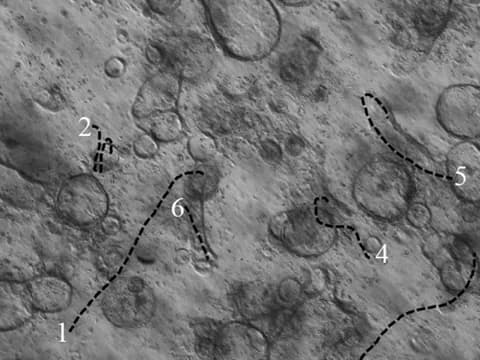
- Position, distance and speed
- Direction, rotation and drift
- Movement relative to neighbors
Before measuring movement, a pilot aligns the frames so camera and plate motion do not count as organoid movement.
Contact
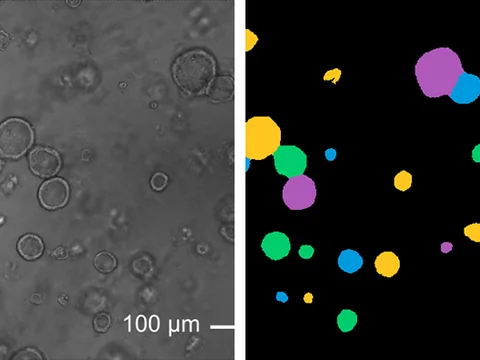
- Distance to the nearest neighbor
- Contact events and how long they last
- Clustering and aggregates
Structural collapse
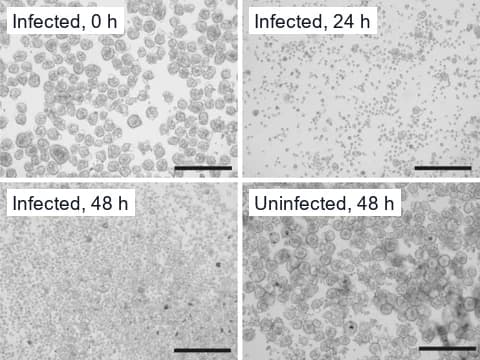
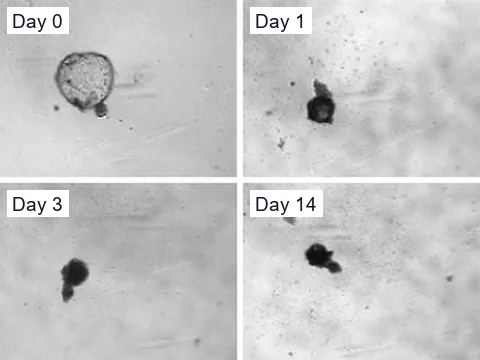
- An abrupt loss of area, roundness or boundary
- Sudden flattening, texture change or disappearance
Each structural collapse comes with its clip and the measurements from before and after it.
Between time points
What happens between time points
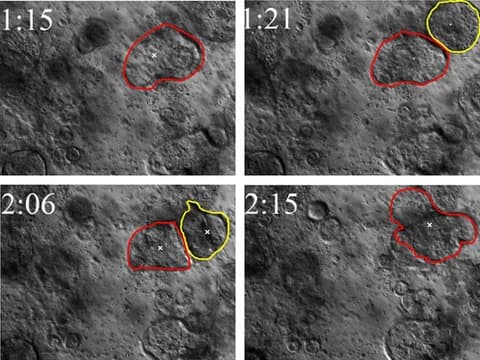
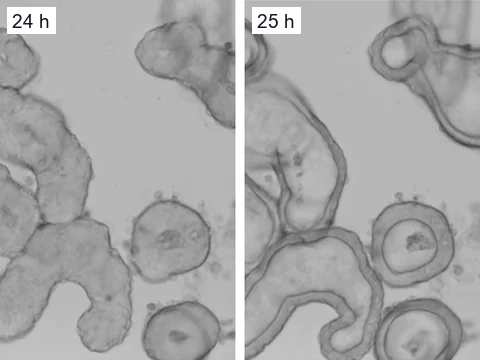
Hof and colleagues saw organoids migrate, rotate and fuse with neighbors over up to 7 days of imaging.1 Images taken days apart miss those events and the order they came in.
Over a four-day microscope time-lapse, OrganoID correctly matched over 89% of the organoids it identified from one time step to the next.2 Your pilot checks ConductVision's own tracking and reports a confidence for every track.
Lineage
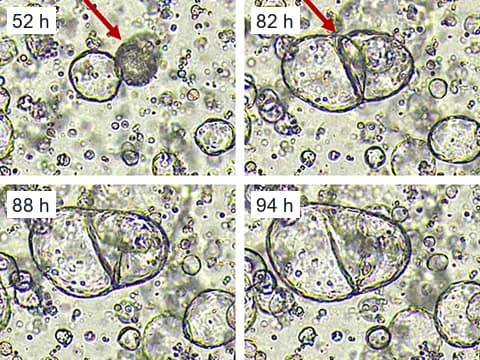
Fusion and fragmentation keep their history
When two organoids fuse, the merged structure gets a new ID that records both parents. When an organoid breaks apart, each fragment records the organoid it came from. The original IDs stay in the data, with their measurements from before the event.
Unusual events
Unusual events, saved with clips
A pilot flags a change that departs from the organoid's own history, its neighbors, matched controls or the rest of the experiment. Each flag links to its video clip. When an event starts, such as an organoid fragmenting, the camera images that well more often until it ends.
Camera specification
The camera tracking needs
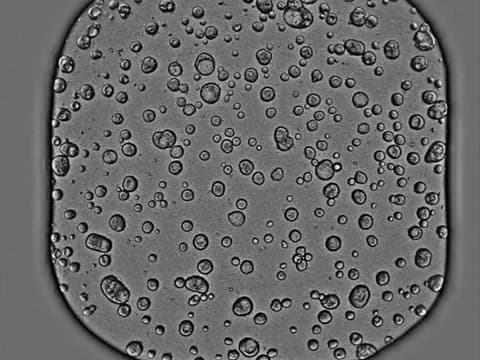
Tracking needs every organoid in view at every time point.
Field of view
- Each whole well, in one image or in tiles joined into one
With the whole well in view, an organoid that moves stays in the record.
Timing
- A full stack of every well every 5 to 15 minutes
- An image a minute of a well while an event lasts, without delaying the other wells
OrganoID tracked organoids in images taken every 2 hours, and its tracking accuracy held when frames were dropped to simulate a 12-hour interval.2 So tracking does not set the interval, and a pilot images every 5 to 15 minutes to date events and responses closely.
Deliverables
What the pilot delivers
- An ID and a track for every visible organoid
- A record of every fusion and fragmentation, with parent and new IDs
- A time-stamped event log
- A video clip for every event
Questions labs ask
Does a structural collapse mean the organoid died?
Not necessarily. The camera sees the change in shape. Whether the organoid died needs your own assay.
References
- Hof L, Moreth T, Koch M, et al. (2021). Long-term live imaging and multiscale analysis identify heterogeneity and core principles of epithelial organoid morphogenesis. BMC Biology.
- Matthews JM, Schuster B, Kashaf SS, et al. (2022). OrganoID: A versatile deep learning platform for tracking and analysis of single-organoid dynamics. PLOS Computational Biology.
- Deben C, De La Hoz EC, Compte ML, et al. (2023). OrBITS: label-free and time-lapse monitoring of patient derived organoids for advanced drug screening. Cellular Oncology.
- Pierzchalska M, Panek M, Grabacka M (2019). The migration and fusion events related to ROCK activity strongly influence the morphology of chicken embryo intestinal organoids. Protoplasma.
- Stroulios G, Brown T, Moreni G, et al. (2022). Apical-out airway organoids as a platform for studying viral infections and screening for antiviral drugs. Scientific Reports.
- Gulieva RE, Ahmadvand P, Freedman BS (2025). A novel rapalog shows improved safety vs. efficacy in a human organoid model of polycystic kidney disease. Stem Cell Reports.
- Yan H, Wu T, Li X, et al. (2024). Establishment of the microscope incubation system and its application in evaluating tumor treatment effects through real-time live cellular imaging. Frontiers in Bioengineering and Biotechnology.
- Lefferts JW, Kroes S, Smith MB, et al. (2024). OrgaSegment: deep-learning based organoid segmentation to quantify CFTR dependent fluid secretion. Communications Biology.
Track organoid events in a pilot
Tell us your organoid type, your plates and the events you want caught.