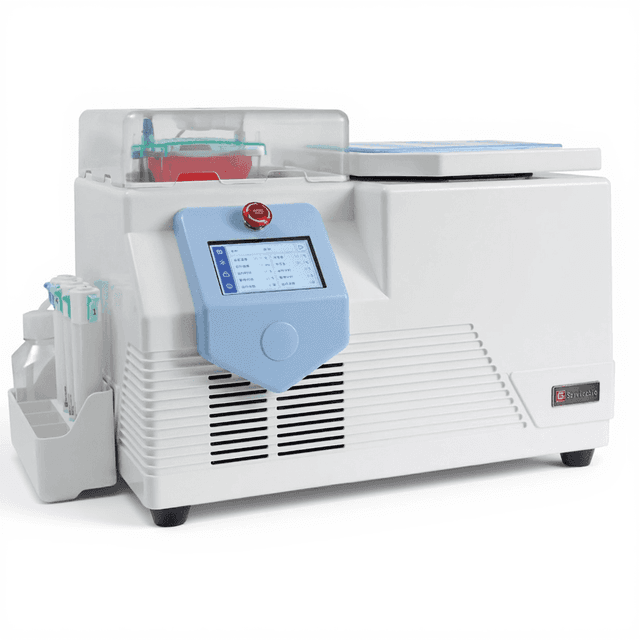
3D and Rocking Shaker
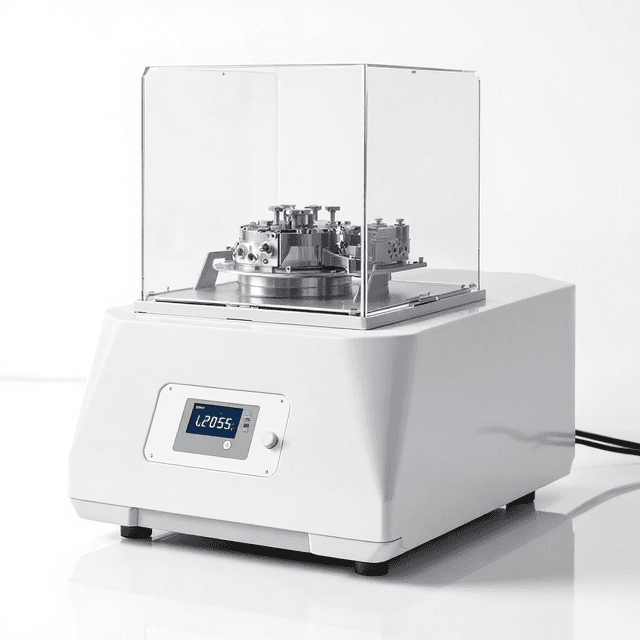
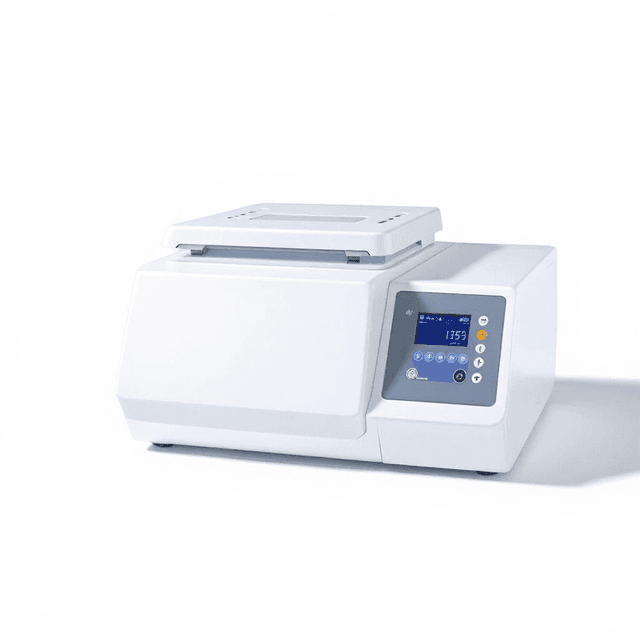
Benchtop 3D orbital shaker with 9° angle, 10-70 rpm speed range, and 5 kg capacity for cell culture and mixing applications.
| Automation Level | semi-automated |
| Item No. | 8032422100 |
| Oscillation Mode | 3D orbital |
| Angle | 9° |
| Max. Load(With attachment) | 5kg |
| Speed Range | 10~70rpm |

The 3D and Rocking Shaker provides controlled orbital agitation for cell culture, extraction procedures, and mixing applications requiring gentle to moderate agitation. Operating with a 3D orbital motion at a fixed 9° angle, this benchtop instrument delivers consistent mixing action across a speed range of 10-70 rpm with precise digital control through LCD display interface.
Designed for continuous or timed operation up to 99 hours 59 minutes, the shaker accommodates up to 5 kg maximum load with various attachment configurations. The DC motor system provides reliable performance in standard laboratory conditions (5-40°C, 80% RH) with RS232 connectivity for integration into automated workflows or data logging systems.
How It Works
The 3D orbital shaker generates mixing action through a motor-driven platform that moves in a three-dimensional orbital pattern at a fixed 9° angle. The DC motor system converts rotational motion into the characteristic orbital movement, creating gentle but effective agitation that promotes mixing without excessive shear forces that could damage delicate samples or cell cultures.
The orbital motion pattern ensures that samples experience consistent agitation throughout the container, promoting uniform mixing and preventing stratification. The controlled speed range of 10-70 rpm allows researchers to optimize agitation intensity for specific applications, from gentle cell culture maintenance to more vigorous extraction procedures. The LCD display provides real-time monitoring of speed and timing parameters, while the programmable timer enables automated operation for extended protocols.
Features & Benefits
Automation Level
- semi-automated
Item No.
- 8032422100
Oscillation Mode
- 3D orbital
Angle
- 9°
Max. Load(With attachment)
- 5kg
Speed Range
- 10~70rpm
Speed And Timer Display
- LCD
Time Range
- 1min~99h59min
Operation Mode
- Continuous/timed operation
Working Environment
- 5~40°C, 80%RH
Motor Input
- IP21
Connection Interface
- RS232
Motor Type
- DC motor
Motor Output
- 40W
Protection Type
- 24W
Brand
- ConductScience
Research Domain
- Analytical Chemistry
- Cell Biology
- Environmental Monitoring
- Food Science
- Microbiology
- Pharmaceutical QC
Weight
- 15.66 kg
Dimensions
- L: 10.6 mm
- W: 36.0 mm
- H: 43.0 mm
Comparison Guide
| Feature | This Product | Typical Alternative | Advantage |
|---|---|---|---|
| Motion Type | 3D orbital at fixed 9° angle | Linear reciprocating or variable angle platforms | Consistent orbital motion ensures reproducible mixing conditions across all protocols without angle adjustment variables |
| Speed Range | 10-70 rpm with digital control | Basic models often limited to 20-60 rpm with analog controls | Lower minimum speed accommodates gentle cell culture protocols while digital precision ensures reproducible conditions |
| Load Capacity | 5 kg maximum load | Entry-level units typically support 2-3 kg loads | Higher capacity enables simultaneous processing of multiple samples or larger volume containers for increased throughput |
| Timer Range | 1 minute to 99 hours 59 minutes | Many basic models limited to shorter duration or continuous operation only | Extended timer capability supports long-term cultivation and extraction protocols without manual intervention |
| Display System | LCD display for speed and timer | Analog controls with limited parameter visibility | Real-time digital monitoring enables precise protocol documentation and parameter verification during operation |
| Connectivity | RS232 interface included | Basic models lack data connectivity options | Digital interface enables laboratory automation integration and automated data logging for regulated environments |
This shaker combines 3D orbital motion with digital control and connectivity features typically found in higher-end laboratory equipment. The 5 kg load capacity and extended timer range provide operational flexibility, while the RS232 interface supports modern laboratory automation requirements.
Practical Tips
Verify speed accuracy monthly using a handheld tachometer or strobe light, comparing displayed RPM to actual orbital frequency.
Why: Speed accuracy directly affects mixing efficiency and protocol reproducibility.
Clean platform surfaces with appropriate laboratory disinfectants and inspect attachment points for wear or looseness after heavy use.
Why: Contamination and loose fittings can compromise sample integrity and create safety hazards.
Balance loads symmetrically across the platform and secure all vessels to prevent shifting during operation.
Why: Unbalanced loads cause excessive vibration and can damage the motor bearings over time.
If orbital motion becomes irregular, check for platform obstructions and verify that total load weight is within the 5 kg specification.
Why: Overloading or mechanical interference can cause motor strain and inconsistent motion patterns.
Record ambient temperature and humidity conditions when protocols are sensitive to environmental variations.
Why: Environmental conditions can affect mixing efficiency and sample behavior, particularly for temperature-sensitive reactions.
Ensure adequate clearance around the unit during operation and never attempt to stop the platform manually while running.
Why: The orbital motion creates a moving mechanical hazard that could cause injury or equipment damage if contacted.
Start protocols at lower speeds and gradually increase to optimal settings to minimize sample splashing and foam formation.
Why: Gradual acceleration prevents sample loss and reduces stress on biological samples during mixing initiation.
Keep the RS232 connection port covered when not in use to prevent dust accumulation and maintain connectivity reliability.
Why: Port contamination can cause communication errors and interfere with automated control functions.
Setup Guide
What’s in the Box
- 3D orbital shaker main unit
- Universal platform attachment (typical)
- Power cord
- RS232 interface cable (typical)
- User manual and operating instructions
- Warranty documentation
Warranty
ConductScience provides a standard one-year manufacturer warranty covering defects in materials and workmanship, with technical support available for installation, operation, and maintenance guidance.
Compliance
References
Background reading relevant to this product:
What types of vessels and containers can be accommodated on this shaker?
The platform attachment system can accommodate various vessel types including culture flasks, microplates, beakers, and extraction bottles, provided the total load remains within the 5 kg maximum capacity. Consult product datasheet for specific platform attachment options.
How does the fixed 9° angle affect mixing performance compared to variable angle shakers?
The 9° angle provides optimal balance between gentle agitation for cell cultures and effective mixing for extraction procedures. This fixed angle eliminates variability and ensures consistent results across protocols.
Can the RS232 interface be used for automated protocol control?
Yes, the RS232 connection enables remote control of speed and timing parameters through laboratory automation systems, allowing integration into larger experimental workflows.
What is the minimum stable operating speed for sensitive cell culture applications?
The minimum speed is 10 rpm, which provides gentle agitation suitable for most mammalian cell culture applications without excessive mechanical stress.
How does the orbital diameter compare to other shaking platforms?
Consult product datasheet for specific orbital diameter specifications, as this parameter affects mixing efficiency and is critical for protocol standardization.
What maintenance is required for long-term reliability?
Regular cleaning of platform surfaces, periodic inspection of motor bearings, and verification of speed accuracy are recommended. The DC motor system requires minimal maintenance compared to brush-type motors.
Can this shaker operate in CO2 incubator environments?
The operating temperature range of 5-40°C and 80% RH rating make it suitable for most incubator conditions, though consult product specifications for CO2 compatibility and condensation resistance.
How precise is the timer function for time-sensitive protocols?
The digital timer provides minute-level precision for durations up to 99 hours 59 minutes, suitable for most laboratory protocols requiring timed agitation cycles.
Have a question about this product?
Upgrade Options