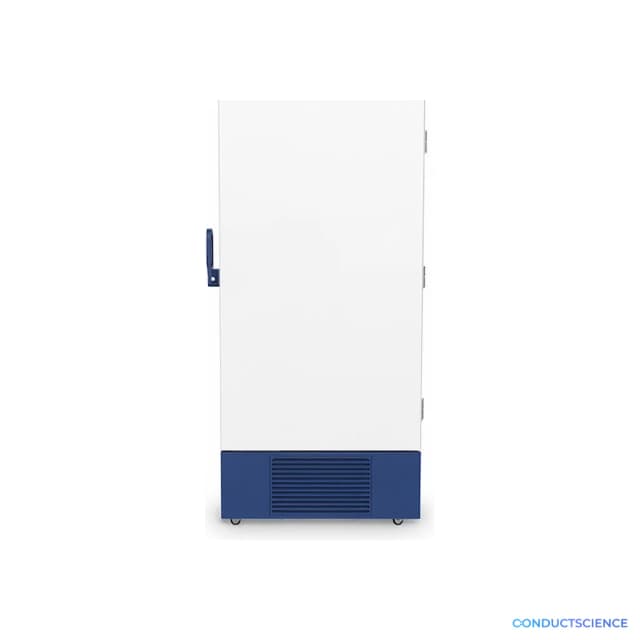
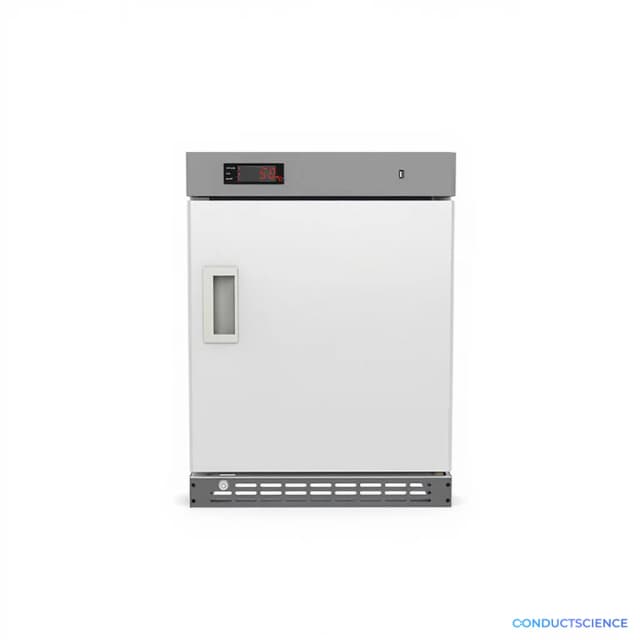
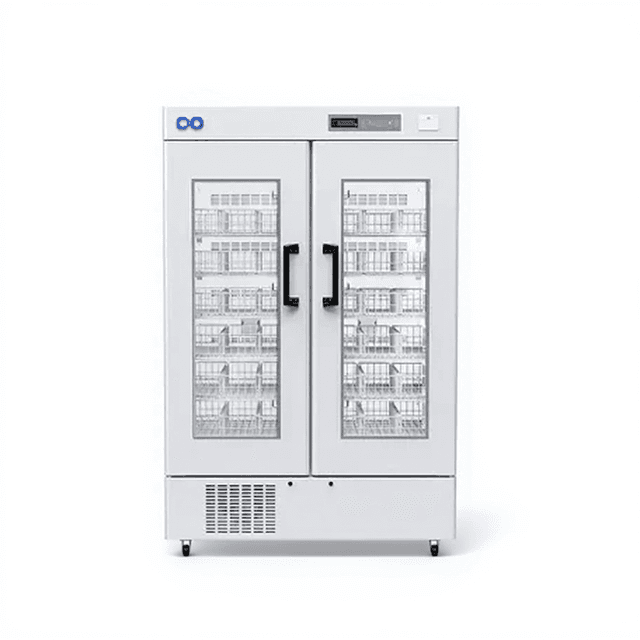
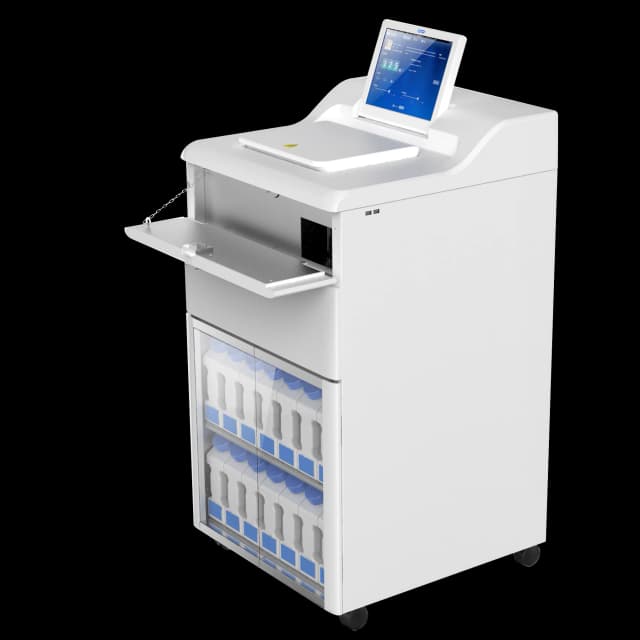
86℃ Freezer 60L 128L
Compact ultra-low temperature freezer providing -86°C storage in 60L or 128L capacity options for biological specimens and temperature-sensitive materials.
| Automation Level | manual |

The 86℃ Freezer provides reliable ultra-low temperature storage for biological specimens, reagents, and sensitive materials requiring preservation at -86°C. This compact unit offers dual capacity options (60L or 128L) in a space-efficient design, making it suitable for laboratories with limited floor space. The freezer maintains consistent ultra-low temperatures essential for long-term storage of enzymes, antibodies, cell lines, tissue samples, and other temperature-sensitive biological materials.
With dimensions of 35.0 x 43.0 x 40.0 cm and 82 kg weight (shipping), this freezer provides laboratory-grade cooling performance in a benchtop-compatible form factor. The unit supports various storage applications requiring ultra-low temperature preservation, from routine reagent storage to critical biospecimen banking protocols.
How It Works
The ultra-low temperature freezer operates using a cascade refrigeration system with two separate refrigeration circuits working in series. The first stage typically uses R404A or similar refrigerant to achieve intermediate cooling, while the second stage employs R508B or comparable ultra-low temperature refrigerant to reach -86°C. The compressor system cycles refrigerant through evaporator coils within the insulated chamber, extracting heat to maintain consistent ultra-low temperatures.
Temperature uniformity is maintained through strategic airflow design and high-density insulation systems. Internal sensors monitor temperature conditions and provide feedback to the control system, which adjusts compressor operation to compensate for thermal loads from door openings or ambient temperature changes. The freezer chamber design minimizes temperature fluctuations that could compromise stored materials.
Features & Benefits
Automation Level
- manual
Research Domain
- Analytical Chemistry
- Cancer Research
- Cell Biology
- Immunology
- Microbiology
- Pharmaceutical QC
Weight
- 82.0 kg
Dimensions
- L: 35.0 mm
- W: 43.0 mm
- H: 40.0 mm
Comparison Guide
| Feature | This Product | Typical Alternative | Advantage |
|---|---|---|---|
| Storage Capacity | 60L or 128L options available | Entry-level models often offer single fixed capacity | Allows laboratories to select appropriate storage volume for current needs and future expansion. |
| Footprint Efficiency | 35 x 43 x 40 cm compact design | Larger benchtop units require more laboratory space | Maximizes storage per unit of valuable laboratory bench space occupied. |
| Installation Requirements | Benchtop-compatible 82 kg unit | Floor-standing units require dedicated floor space | Enables ultra-low temperature storage without committing permanent floor space in crowded laboratories. |
| Temperature Range | -86°C operating temperature | Standard freezers operate at higher temperatures | Provides ultra-low temperatures required for long-term biological specimen preservation. |
The 86℃ Freezer combines ultra-low temperature performance with compact design, offering dual capacity options in a space-efficient form factor suitable for laboratories requiring -86°C storage without floor-standing unit commitments.
Practical Tips
Organize samples in clearly labeled storage boxes and maintain detailed inventory logs to minimize door opening time.
Why: Reduces temperature fluctuations and preserves sample integrity during routine access.
Clean condenser coils monthly and inspect door seals quarterly for proper sealing.
Why: Maintains optimal cooling efficiency and prevents temperature instability from component degradation.
Verify temperature accuracy annually using certified reference thermometers placed throughout the storage chamber.
Why: Ensures temperature uniformity and compliance with storage protocols for critical samples.
Install appropriate ventilation around the unit and ensure electrical circuits can handle startup current requirements.
Why: Prevents overheating and electrical issues during compressor cycling.
Monitor temperature recovery patterns after door openings to identify potential cooling system issues early.
Why: Enables proactive maintenance before system failures that could compromise stored samples.
Implement continuous temperature monitoring with alarm systems connected to off-site notifications.
Why: Provides immediate notification of temperature excursions that could affect sample viability.
Setup Guide
What’s in the Box
- Main freezer unit (typical)
- Power cord (typical)
- User manual and documentation (typical)
- Storage racks or shelving (typical)
- Temperature calibration certificate (typical)
- Warranty registration materials (typical)
Warranty
ConductScience provides standard manufacturer warranty coverage for one year from date of delivery, including technical support for installation and operational guidance.
Compliance
References
Background reading relevant to this product:
What is the temperature stability and uniformity throughout the storage chamber?
Temperature uniformity depends on load configuration and door opening frequency. Consult product datasheet for specific stability specifications and recommended loading patterns.
How long does temperature recovery take after door openings?
Recovery time varies with door opening duration and ambient conditions. Minimize door opening time and frequency to maintain sample integrity.
What power requirements are needed for installation?
Consult product datasheet for specific electrical requirements including voltage, amperage, and circuit specifications for proper installation.
Can the unit be integrated with laboratory monitoring systems?
Integration capabilities depend on available communication interfaces. Contact technical support for compatibility with specific monitoring systems.
What maintenance procedures are required for reliable operation?
Regular maintenance includes condenser cleaning, door seal inspection, and temperature verification. Follow manufacturer maintenance schedule for optimal performance.
How does this compare to larger floor-standing ultra-low freezers?
This compact unit trades storage capacity for space efficiency while maintaining -86°C performance. Consider sample volume requirements versus available laboratory space.
What backup power considerations are needed?
Ultra-low freezers require substantial power during operation. Evaluate UPS capacity and backup power systems based on power consumption specifications.
Have a question about this product?