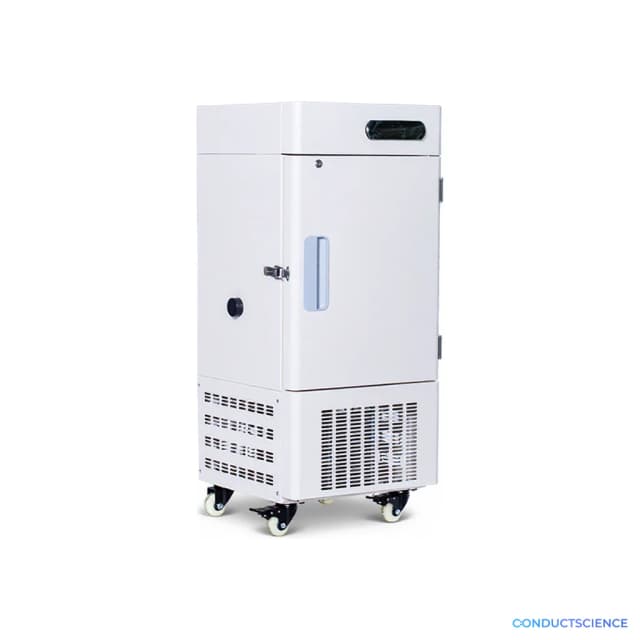
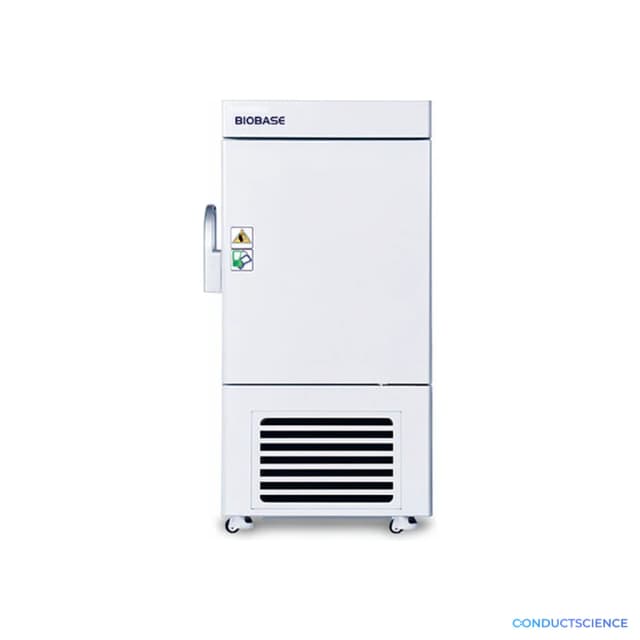
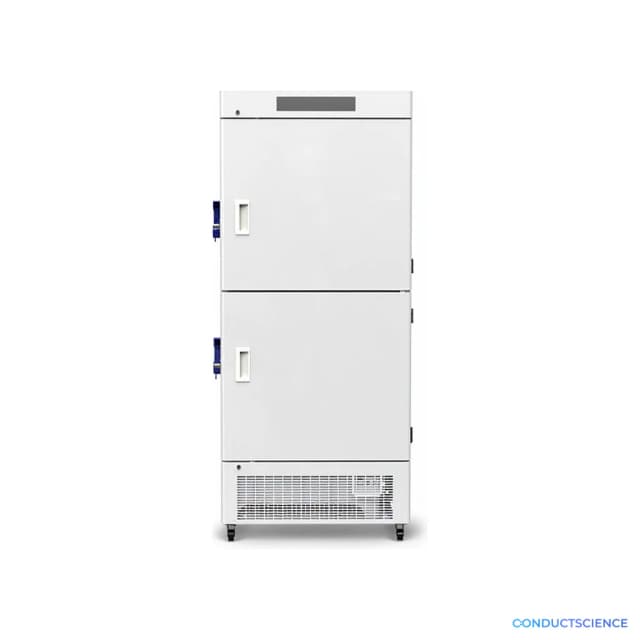
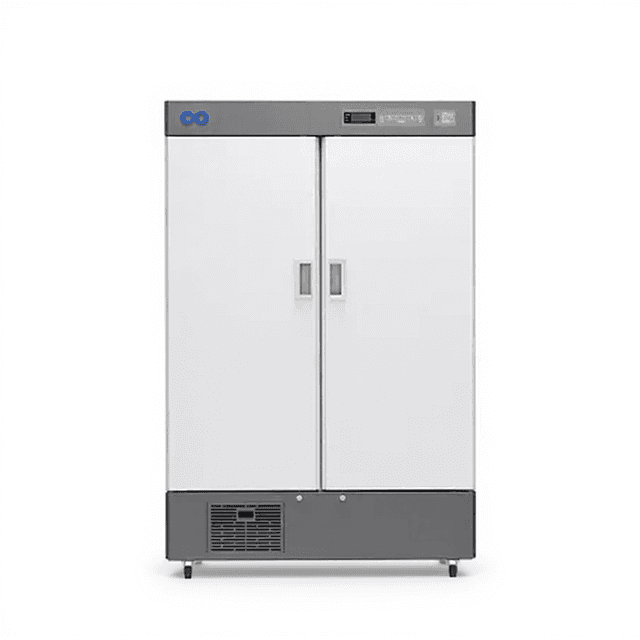
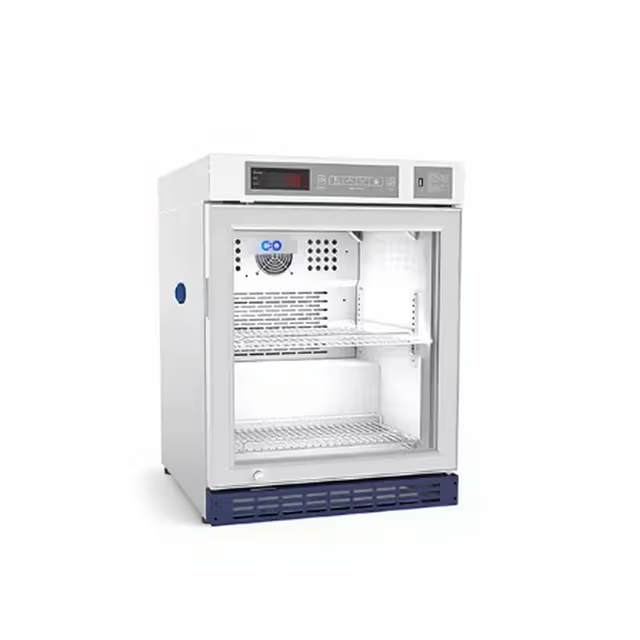
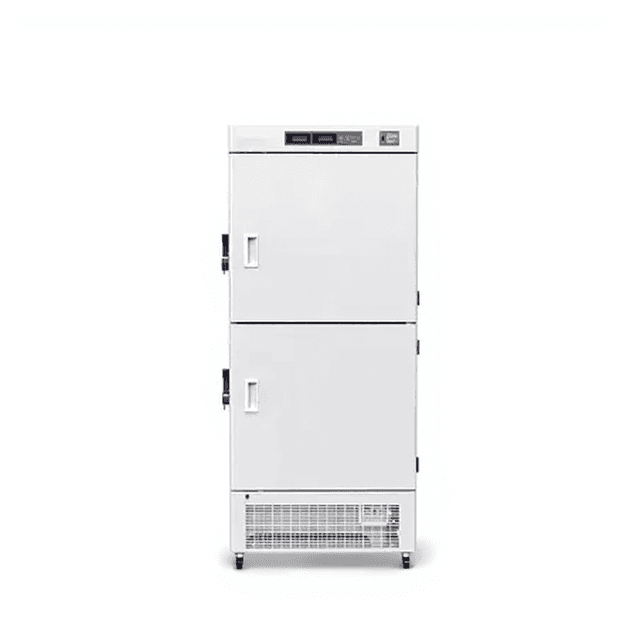
Ultra-Low Temperature Freezer -86°C, 408-838L, Touchscreen
Ultra-low temperature freezer providing -86°C storage with microprocessor control, multiple capacity options, and comprehensive temperature monitoring for critical biological sample preservation.

Louise Corscadden, PhD
Director of Science · ConductScience
Ask Louise about Ultra-Low Temperature Freezer -86°C, 408-838L, Touchscreen fit, setup, configuration, or quote prep.
Already working with us? Sign in to connect this with My Scientist.
Key Specifications
Full details →- Model fit
- Configured during quote
- SKU family
- BIO-0959
- Shipping box
- 118.0 x 60.6 x 57.5 cm
- Ordering
- Online checkout and quote request available
- Category
- Lab Equipment
- Build notes
- Confirm accessories, station layout, and support needs before purchase
The -86°C Freezer provides ultra-low temperature storage for critical biological samples requiring preservation at temperatures down to -86°C. This microprocessor-controlled freezer features a 7-inch LCD touch screen interface and offers multiple capacity options (408L, 588L, 838L) to accommodate varying laboratory storage requirements. The system maintains temperature uniformity within ±4°C throughout the storage compartment and provides temperature stability within ±6°C.
Recovery performance is optimized for laboratory workflows, with recovery times to -75°C ranging from 16-35 minutes depending on capacity. The comprehensive alarm system includes audible and visual alerts for high and low temperatures, sensor faults, and condenser blockage conditions. Temperature accuracy of ±0.1°C ensures precise environmental control for temperature-sensitive specimens and reagents.
How It Works
The -86°C freezer operates using a cascade refrigeration system that achieves ultra-low temperatures through sequential cooling stages. The microprocessor control system continuously monitors internal temperature using precision sensors and adjusts compressor operation to maintain the setpoint within ±0.1°C accuracy. The refrigeration cycle removes heat from the storage compartment through multiple heat exchangers, allowing the system to reach and maintain temperatures as low as -86°C.
Temperature uniformity is maintained through strategic air circulation patterns that distribute cold air evenly throughout the storage volume. The 7-inch LCD touch screen provides real-time temperature display and system status monitoring, while integrated alarm systems detect deviations from normal operating parameters. The control system automatically initiates corrective actions when temperature excursions are detected, ensuring sample integrity during storage.
Features & Benefits
Shipping weight
- 235.5 lb
Shipping box
- L: 118.0 cm
- W: 60.6 cm
- H: 57.5 cm
| Feature | This Product | Typical Alternative | Advantage |
|---|---|---|---|
| Temperature Range | -40°C to -86°C operating range | Entry-level models often limited to -80°C minimum | Extended temperature range provides flexibility for diverse sample storage requirements and research protocols |
| Temperature Accuracy | ±0.1°C precision control | Standard models typically offer ±0.5°C to ±1°C accuracy | Enhanced precision ensures optimal preservation conditions for temperature-sensitive biological samples |
| User Interface | 7-inch LCD touch screen display | Basic models often use LED displays or simple digital interfaces | Intuitive touch screen interface simplifies system monitoring and parameter adjustment |
| Capacity Options | Multiple capacity configurations (408L, 588L, 838L) | Limited capacity options in standard product lines | Flexible capacity selection accommodates laboratories with varying storage volume requirements |
| Temperature Uniformity | ±4°C uniformity throughout storage volume | Standard units may have larger temperature gradients | Consistent temperature distribution ensures uniform sample preservation conditions across all storage locations |
This ultra-low temperature freezer offers precise temperature control with ±0.1°C accuracy and multiple capacity options to suit diverse laboratory requirements. The microprocessor control system with LCD touch screen interface provides advanced monitoring capabilities compared to basic freezer designs.
Practical Tips
Verify temperature accuracy using NIST-traceable reference thermometers at multiple locations within the storage compartment.
Why: Ensures measurement accuracy and supports regulatory compliance for temperature-sensitive storage applications.
Clean condenser coils regularly and monitor for dust accumulation that can affect cooling efficiency.
Why: Proper heat exchange is critical for maintaining ultra-low temperatures and preventing system overload.
Minimize door opening time and frequency to maintain temperature stability and reduce recovery time.
Why: Extended door openings cause significant temperature excursions that may compromise sample integrity.
Monitor recovery times after door openings and compare to specifications to assess system performance.
Why: Extended recovery times may indicate refrigeration system issues or excessive heat load.
Document temperature mapping results and maintain calibration records for quality assurance purposes.
Why: Temperature documentation supports sample integrity verification and regulatory compliance requirements.
Ensure adequate ventilation around the unit and avoid blocking air intake and exhaust areas.
Why: Proper ventilation prevents overheating and maintains optimal refrigeration system performance.
Pre-cool samples and storage containers before placing them in the freezer when possible.
Why: Reduces thermal load on the system and minimizes temperature excursions during sample loading.
Setup Guide
What’s in the Box
- Ultra-low temperature freezer unit
- Power cord (typical)
- User manual and documentation (typical)
- Temperature monitoring accessories (typical)
- Shelving and storage accessories (typical)
Warranty
ConductScience provides comprehensive warranty coverage including manufacturer warranty and technical support for troubleshooting and maintenance guidance. Extended service plans and calibration services are typically available for long-term laboratory operations.
Compliance
References
Background reading relevant to this product:
What is the temperature recovery time after door opening?
Recovery time to -75°C ranges from 16 minutes (smaller capacity) to 35 minutes (larger capacity) depending on the specific model and ambient conditions.
How uniform is the temperature throughout the storage compartment?
Temperature uniformity is maintained within ±4°C throughout the storage volume, ensuring consistent preservation conditions for all stored samples.
What alarm functions are included for sample protection?
The system includes audible and visual alarms for high and low temperature conditions, sensor fault detection, and condenser blockage alerts to protect sample integrity.
Can the system maintain temperature during power fluctuations?
Consult product datasheet for backup power specifications and temperature hold time during power interruptions.
What is the expected cooldown time from ambient to operating temperature?
Initial cooldown to -80°C from ambient temperature requires 117-229 minutes depending on capacity, with larger units requiring longer cooldown periods.
How accurate is the temperature control system?
The microprocessor control system maintains temperature accuracy within ±0.1°C and stability within ±6°C during normal operation.
What interface options are available for data logging?
The 7-inch LCD touch screen provides system monitoring and control; consult product datasheet for data logging and connectivity specifications.
Have a question about this product?
Have a question? Just ask.
Send it over and we'll email you a personalized answer — no call, no scheduling.
Prefer to talk it through?
Upgrade Options