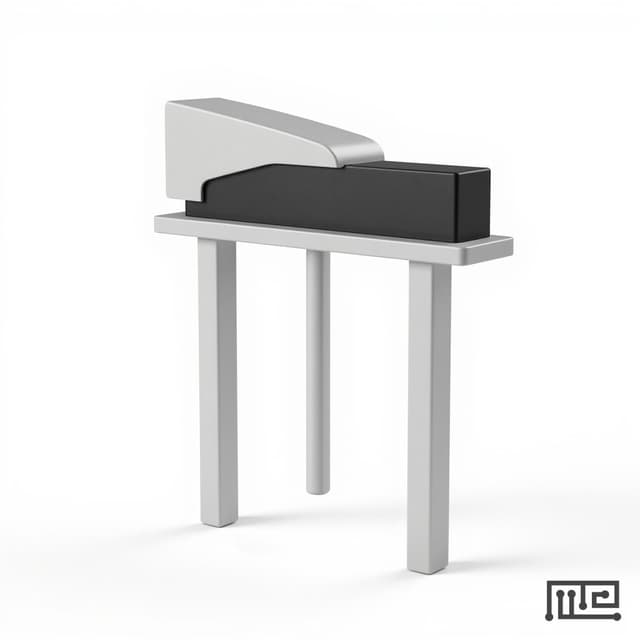
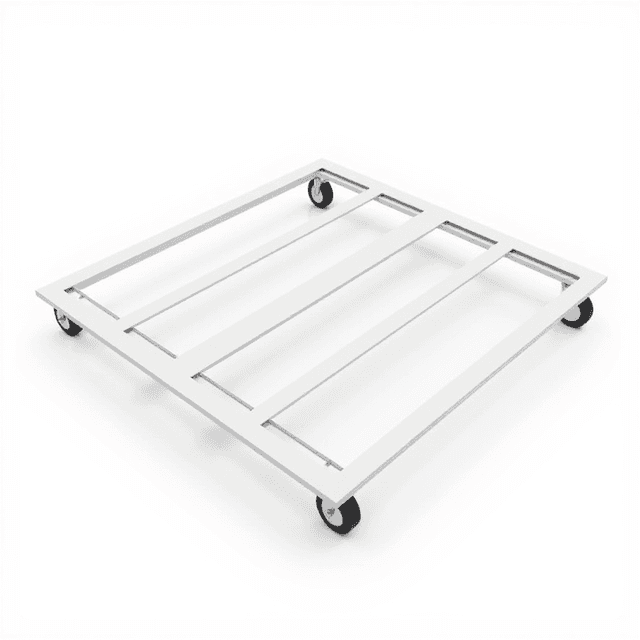
Adjustable Height for Balance Beam
Adjustable height balance beam apparatus for evaluating motor coordination, balance, and motor learning in laboratory animals through beam traversal tasks.

Louise Corscadden, PhD
Director of Science · ConductScience
Ask Louise about Adjustable Height for Balance Beam fit, setup, configuration, or quote prep.
Already working with us? Sign in to connect this with My Scientist.
Key Specifications
Full details →- Model fit
- Mouse, Rat
- SKU family
- ME-4608
- Shipping box
- 43.2 x 38.0 x 27.9 cm
- Ordering
- Online checkout and quote request available
- Category
- Maze Accessories
- Build notes
- Confirm accessories, station layout, and support needs before purchase
The Balance Beam apparatus is a narrow "walking bridge" for mice and rats to walk across to test sensorineural balance and coordination. The beam generally sits between two elevated platforms with platforms to hold either mice or rats. Interchangeable beams can be used for thinner and thinner intervals.
How It Works
The balance beam test exploits the natural tendency of rodents to avoid elevated surfaces while requiring them to traverse a narrow pathway to reach a goal location. The apparatus challenges the animal's postural control system, which integrates vestibular, visual, and proprioceptive inputs to maintain balance during locomotion. Motor cortex, cerebellum, and brainstem circuits coordinate to produce the precise limb movements required for successful beam traversal.
The adjustable height feature modulates task difficulty by increasing the aversive consequences of balance errors. Higher elevations increase anxiety and require greater precision in motor control, engaging additional neural circuits involved in fear processing and risk assessment. This height-dependent modulation allows researchers to titrate task difficulty to match experimental objectives and subject capabilities.
Performance metrics include traversal time, number of foot slips, and frequency of falls, providing quantitative measures of motor function. The apparatus enables detection of subtle motor deficits that may not be apparent in less challenging motor tasks, making it particularly valuable for assessing mild impairments or early-stage disease processes.
Features & Benefits
Behavioral Construct
- Motor Coordination
- Balance
- Motor Learning
- Postural Control
- Risk Assessment
Automation Level
- manual
Research Domain
- Addiction Research
- Aging Research
- Behavioral Pharmacology
- Learning and Memory
- Motor Function
- Neurodegeneration
- Neuroscience
Species
- Mouse
- Rat
Compatible Tracking Software
- ConductVision
Shipping weight
- 21.0 lb
Shipping box
- L: 43.2 cm
- W: 38.0 cm
- H: 27.9 cm
| Feature | This Product | Typical Alternative | Advantage |
|---|---|---|---|
| Height Adjustability | Adjustable height mechanism for variable task difficulty | Many balance beams feature fixed heights requiring multiple apparatus for different difficulty levels | Enables progressive testing protocols and reduces equipment costs by replacing multiple fixed-height beams. |
| Construction Quality | Durable construction suitable for repeated laboratory use | Entry-level models may use lighter materials with reduced stability | Ensures consistent testing conditions and extends apparatus lifespan in high-throughput research environments. |
| Setup Flexibility | Portable design with stable support structure | Some models require permanent mounting or have limited portability | Allows efficient use of laboratory space and easy relocation between testing areas. |
| Safety Features | Designed for safe height adjustment and stable operation | Basic models may lack integrated safety considerations | Reduces risk of apparatus failure during testing and supports animal welfare requirements. |
This adjustable height balance beam provides research flexibility through variable task difficulty settings while maintaining the durability and stability required for consistent behavioral testing protocols.
Practical Tips
Verify height settings with a ruler or measuring device before each testing session to ensure consistency across trials.
Why: Height variations can significantly impact task difficulty and confound experimental results.
Clean the beam surface with ethanol between subjects and inspect the height adjustment mechanism regularly for smooth operation.
Why: Consistent surface conditions prevent grip variations that could affect performance measurements.
Begin habituation sessions at the lowest height setting and gradually increase elevation over multiple days.
Why: Progressive height increases reduce anxiety and allow animals to develop appropriate motor strategies.
Record environmental conditions including temperature and lighting during each session for data analysis.
Why: Environmental factors can influence animal motivation and performance on balance tasks.
If animals refuse to traverse the beam, reduce height and verify that goal areas provide adequate motivation.
Why: Task avoidance can indicate excessive difficulty or insufficient motivation rather than motor impairment.
Position adequate padding beneath the entire beam length and monitor animals continuously during elevated height testing.
Why: Falls from elevated heights can cause injury and compromise both animal welfare and data integrity.
Standardize trial duration limits and establish criteria for trial termination to maintain consistent protocols.
Why: Consistent stopping criteria prevent data bias from prolonged trials and reduce animal stress.
Setup Guide
What’s in the Box
- Balance beam apparatus with adjustable height mechanism (typical)
- Support posts and mounting hardware (typical)
- Assembly instructions and user manual (typical)
- Height adjustment tool (typical)
Warranty
ConductScience provides a standard one-year manufacturer warranty covering defects in materials and workmanship, along with technical support for setup and operation questions.
Compliance
What height range is available with the adjustment mechanism?
Consult the product datasheet for specific height adjustment specifications and range limits suitable for your experimental protocols.
What beam width is optimal for detecting motor deficits in rodents?
Beam width should challenge balance while allowing traversal - typically 12-28mm for mice and 15-35mm for rats, though specific dimensions should be verified from product specifications.
How do I standardize testing conditions across sessions?
Maintain consistent height settings, environmental conditions, and timing protocols while ensuring the beam surface is clean and dry before each session.
Can this apparatus accommodate different species sizes?
The adjustable height feature allows adaptation to different species, though beam width and length specifications should be verified for compatibility with your target species.
What safety considerations are important during testing?
Provide adequate padding beneath the beam, monitor animals continuously during testing, and establish criteria for stopping trials if animals show signs of distress or repeated falls.
How do I quantify performance on the balance beam?
Standard metrics include traversal time, number of foot slips, falls, and time to initiate movement, which can be recorded manually or via video analysis.
What is the recommended habituation protocol?
Typically begin with the beam at floor level for initial habituation, then gradually increase height over multiple sessions while allowing animals to explore the apparatus.
Have a question about this product?
Have a question? Just ask.
Send it over and we'll email you a personalized answer — no call, no scheduling.
Prefer to talk it through?