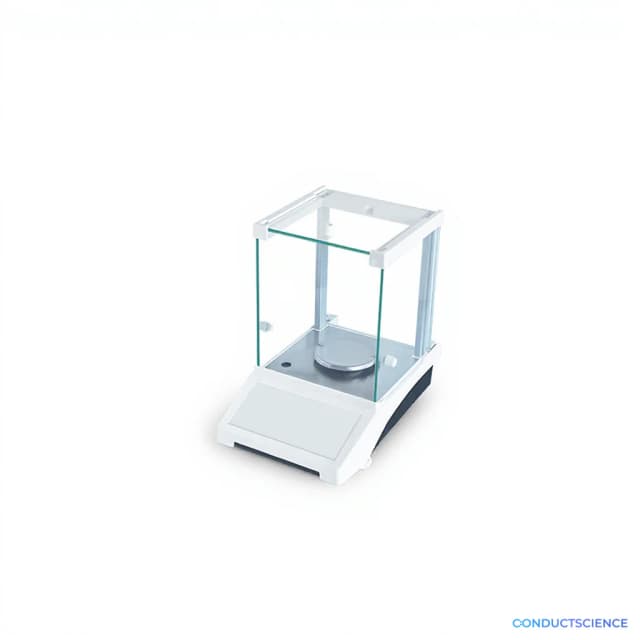
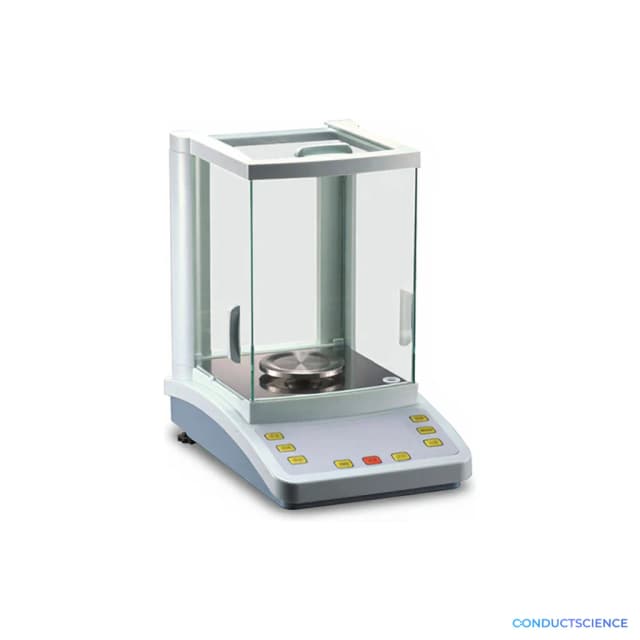
BA-B Series Electronic Analytical Balance(External Calibration)
External calibration analytical balance offering 0.1 mg readability across multiple capacity ranges from 50g to 220g for precise quantitative measurements.
| Automation Level | manual |
| BA604B | BA1004B |
| BA1104B | BA1204B |
| BA1604B | BA2004B |
| BA2104B | BA2204B |
| 0~60g | 0~100g |

The BA-B Series Electronic Analytical Balance provides precision weighing capabilities for quantitative analytical work requiring 0.1 mg readability. This external calibration balance features multiple capacity options ranging from 50g to 220g with consistent 0.1 mg precision across all models. The φ90mm scale platform accommodates standard laboratory vessels and samples with 4-8 second stabilization times depending on model configuration.
Designed for routine analytical measurements in research and quality control environments, the balance integrates into workflows requiring precise mass determination for sample preparation, reagent dispensing, and quantitative analysis protocols. The external calibration system allows user-controlled accuracy verification using certified reference weights.
How It Works
The analytical balance operates on electromagnetic force compensation principles, where the gravitational force exerted by the sample generates a proportional electromagnetic counterforce. An internal position sensor detects any displacement of the weighing pan from its null position, triggering a feedback control system that adjusts electromagnetic current to restore equilibrium. This current magnitude directly correlates to the applied mass, enabling digital readout with 0.1 mg resolution.
External calibration involves placing certified reference weights on the weighing platform to verify measurement accuracy across the operating range. The balance compares measured values against known mass standards, allowing users to assess drift and implement corrections as needed. The φ90mm platform provides sufficient surface area for standard laboratory glassware while minimizing air current effects that could compromise measurement stability.
Features & Benefits
Automation Level
- manual
BA604B
- BA1004B
BA1104B
- BA1204B
BA1604B
- BA2004B
BA2104B
- BA2204B
0~60g
- 0~100g
0~110g
- 0~120g
0~160g
- 0~200g
0~210g
- 0~220g
Readability
- 0.1mg
Scale Size
- Φ90mm
Stable Time
- 4s
6s
- 6~8s
Repeat Ability
- 0.2mg
Brand
- ConductScience
Research Domain
- Analytical Chemistry
- Cell Biology
- Environmental Monitoring
- Food Science
- Materials Science
- Pharmaceutical QC
Capacity
- 0~50g
Weight
- 11.97 kg
Dimensions
- L: 34.0 mm
- W: 35.0 mm
- H: 21.5 mm
Comparison Guide
| Feature | This Product | Typical Alternative | Advantage |
|---|---|---|---|
| Readability Resolution | 0.1 mg across all capacity ranges | Entry-level models often provide 1 mg readability with analytical performance limited to higher-end units | Enables quantitative analysis requiring sub-milligram precision across diverse sample sizes and applications. |
| Capacity Range Options | Eight models spanning 50g to 220g capacity | Limited model selection often requires choosing between low capacity/high precision or high capacity/reduced precision | Allows selection of optimal capacity for specific applications while maintaining consistent analytical performance. |
| Stabilization Time | 4-8 seconds depending on model | Budget models frequently require 15-30 seconds for stable readings | Improves workflow efficiency and sample throughput in routine analytical procedures. |
| Platform Size | φ90mm weighing surface | Smaller platforms may limit vessel compatibility while larger platforms can reduce stability | Optimizes balance between sample accommodation flexibility and measurement precision for standard laboratory glassware. |
| Repeatability Specification | 0.2 mg across all models | Lower-cost balances often specify repeatability at 2-5x the readability resolution | Ensures consistent quantitative results supporting reliable analytical data generation and method validation. |
The BA-B Series combines analytical-grade 0.1 mg readability with practical capacity options and efficient stabilization times. External calibration capability provides measurement traceability while maintaining cost-effectiveness for routine quantitative analysis applications.
Practical Tips
Perform calibration verification using multiple weights spanning your typical measurement range, not just a single check weight.
Why: Multi-point verification detects linearity errors and provides confidence across the entire operating range.
Clean the weighing platform with a soft brush and appropriate solvent after each use, avoiding harsh chemicals that could damage the surface.
Why: Residue buildup can cause measurement drift and contamination of subsequent samples.
Allow samples to reach room temperature before weighing and use weighing vessels to minimize direct contact with the platform.
Why: Temperature differences create air currents that destabilize readings, while weighing vessels prevent contamination and facilitate sample transfer.
Record environmental conditions (temperature, humidity) along with measurement data for quality control documentation.
Why: Environmental monitoring helps identify sources of measurement variability and supports data integrity requirements.
If readings drift or show poor repeatability, check leveling, verify absence of air currents, and ensure adequate warm-up time.
Why: Most balance performance issues stem from environmental factors or insufficient thermal equilibration.
Use appropriate personal protective equipment when weighing hazardous materials and ensure adequate ventilation in the balance area.
Why: Chemical exposure risks exist during sample handling, and balance enclosures can concentrate vapors.
Establish a regular calibration schedule based on usage frequency and critical measurement requirements rather than arbitrary time intervals.
Why: Usage-based calibration schedules optimize measurement reliability while minimizing unnecessary downtime.
Setup Guide
What’s in the Box
- BA-B Series analytical balance (main unit)
- External power adapter
- User manual and calibration procedures
- Calibration certificate (typical)
- Leveling feet adjustment tool (typical)
- Draft shield components (typical)
Warranty
ConductScience provides a standard one-year manufacturer warranty covering defects in materials and workmanship, with technical support for calibration procedures and operational guidance.
Compliance
What certified weights are required for external calibration verification?
Use NIST-traceable or equivalent certified weights appropriate for your measurement range. For example, a 100g capacity model should be calibrated with weights spanning the operating range (e.g., 10g, 50g, 100g). Consult product datasheet for specific calibration weight recommendations.
How frequently should external calibration be performed?
Calibration frequency depends on usage and quality requirements. Daily verification with a single check weight is common for routine use, with full multi-point calibration performed weekly or monthly. Critical applications may require more frequent verification.
What environmental conditions affect measurement accuracy?
Temperature fluctuations, air currents, vibrations, and humidity changes can impact measurement stability. Maintain stable room temperature (±2°C), minimize air movement around the balance, and allow thermal equilibration after sample placement.
Can the balance interface with laboratory information management systems?
Consult product datasheet for available data connectivity options. Many analytical balances offer RS-232 or USB interfaces for automated data logging and integration with LIMS systems.
What is the minimum sample weight for reliable measurements?
For 0.1 mg readability, minimum sample weight should typically be at least 10-20 mg to achieve acceptable relative uncertainty. Smaller samples may require specialized micro-analytical techniques or higher resolution balances.
How does this compare to internal calibration balances?
External calibration provides user control over calibration standards and frequency but requires manual intervention. Internal calibration offers automated verification but relies on built-in reference weights that cannot be independently verified.
Have a question about this product?