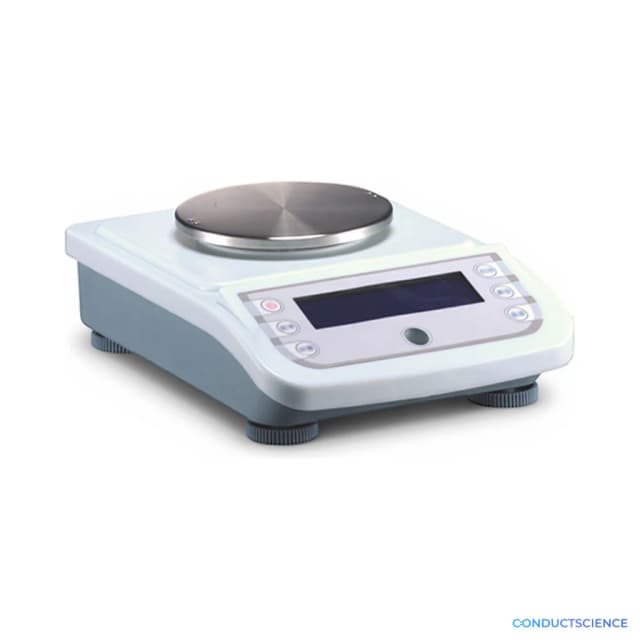
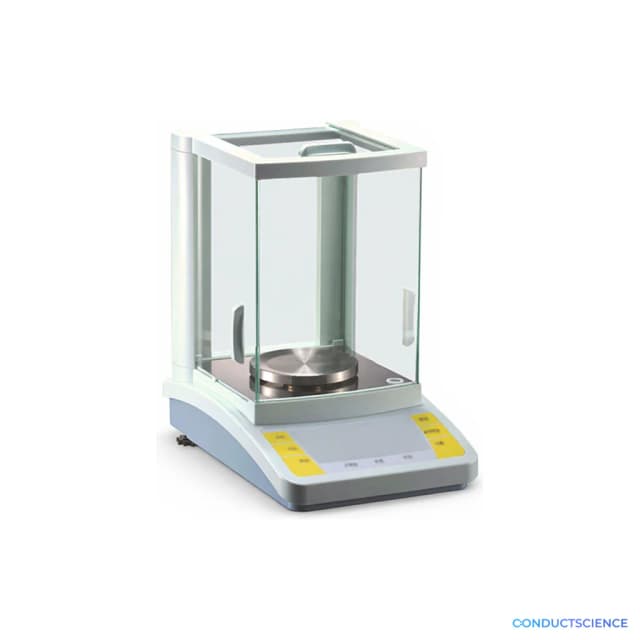
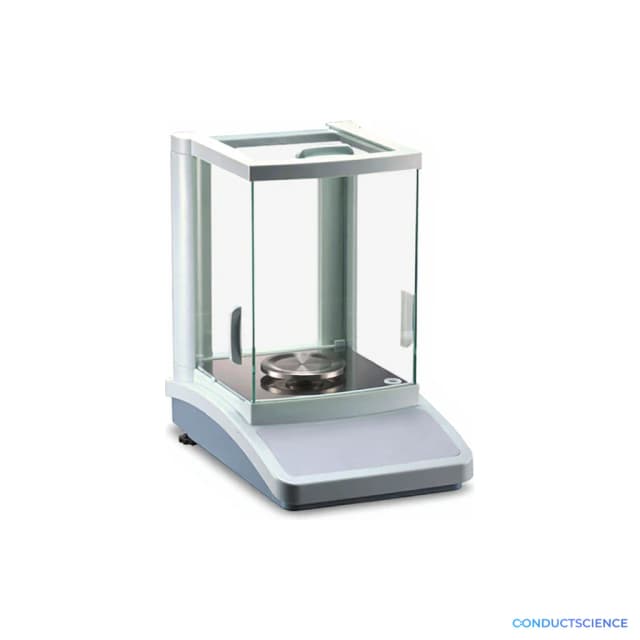
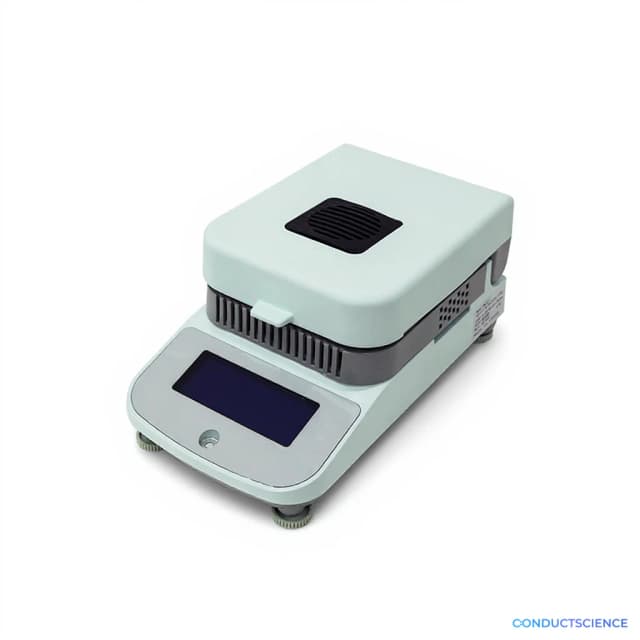
Large-scale Electronic Balance
High-capacity electronic balance series offering precision weighing from 40 kg to 300 kg capacity for research and analytical applications requiring accurate mass measurements of large samples.

Louise Corscadden, PhD
Director of Science · ConductScience
Ask Louise about Large-scale Electronic Balance fit, setup, configuration, or quote prep.
Already working with us? Sign in to connect this with My Scientist.
Key Specifications
Full details →- Model fit
- Configured during quote
- SKU family
- BIO-0346
- Shipping box
- 42.0 x 43.6 x 38.0 cm
- Ordering
- Online checkout and quote request available
- Category
- Balances
- Build notes
- Confirm accessories, station layout, and support needs before purchase
The Large-scale Electronic Balance is a high-capacity precision weighing instrument designed for research and analytical applications requiring accurate mass measurements of substantial samples. This balance series offers multiple capacity options ranging from 40 kg to 300 kg, accommodating diverse laboratory workflows from bulk material preparation to large specimen analysis.
The instrument provides precise mass determination capabilities essential for quantitative research protocols where sample weight is a critical parameter. The electronic design ensures consistent performance and data integrity across extended measurement sessions, supporting both routine analytical procedures and specialized research applications requiring high-capacity weighing functionality.
How It Works
The Large-scale Electronic Balance operates using electromagnetic force restoration technology, where an electromagnetic coil generates a force to counteract the gravitational force acting on the sample. When a sample is placed on the weighing pan, the displacement is detected by a position sensor, which triggers the control system to adjust the electromagnetic force until equilibrium is restored.
The electronic load cell converts the mechanical force into an electrical signal, which is then processed by the internal microprocessor to calculate and display the mass reading. The digital signal processing eliminates mechanical wear points and provides enhanced stability compared to traditional mechanical balance systems.
Internal calibration algorithms compensate for environmental factors such as temperature variations and vibrations, ensuring measurement accuracy across the full capacity range. The electronic system enables rapid stabilization times and consistent reproducibility for high-throughput weighing applications.
Features & Benefits
Automation Level
- manual
Readability
- Scale Size(mm)
BE40000L
- 0~40000g
BE50000L
- 0~50000g
BE60000L
- 0~60000g
BE100000L
- 0~100000g
BE150000L
- 0~150000g
BE200000L
- 0~200000g
BE300000L
- 0~300000g
BE50000L-10
- 0~50000g
BE60000L-10
- 0~60000g
BE100000L-10
- 0~100000g
BE150000L-10
- 0~150000g
Brand
- ConductScience
Research Domain
- Analytical Chemistry
- Environmental Monitoring
- Food Science
- Industrial Hygiene
- Materials Science
- Pharmaceutical QC
Power/Voltage
- External Size(W*D*H)mm
Weight
- Package Size(W*D*H)mm
Shipping weight
- 88.18 lb
Shipping box
- L: 42.0 cm
- W: 43.6 cm
- H: 38.0 cm
| Feature | This Product | Typical Alternative | Advantage |
|---|---|---|---|
| Capacity Range | 40 kg to 300 kg across multiple models | Entry-level models often limited to single capacity options | Single product line accommodates diverse sample sizes without requiring multiple instrument purchases. |
| Technology Type | Electronic electromagnetic force restoration | Mechanical systems require manual calibration and adjustment | Electronic design provides consistent accuracy without mechanical drift or wear-related maintenance. |
| Power Configuration | External power supply design | Internal power supplies generate heat affecting stability | External power reduces thermal interference for improved measurement stability during extended use. |
| Model Options | Standard and 10g increment variants available | Fixed increment options vary by manufacturer | Multiple increment options allow selection based on specific application precision requirements. |
This balance series provides electronic precision weighing across a broad capacity range with external power supply design for thermal stability. The multiple capacity and increment options accommodate diverse research applications requiring high-capacity mass measurements with electronic accuracy and reliability.
Practical Tips
Use certified reference weights that span at least 10-90% of the selected capacity range for comprehensive calibration verification.
Why: Full-range calibration ensures accuracy across the entire measurement span for diverse sample masses.
Clean the weighing platform with appropriate solvents based on sample type and allow complete drying before measurements.
Why: Residual materials or moisture can affect mass readings and cause measurement drift.
Allow samples to equilibrate to room temperature before weighing to minimize thermal effects on measurement accuracy.
Why: Temperature differences between samples and environment create air currents that affect weighing stability.
If readings drift or become unstable, check for air currents, vibrations, or electromagnetic interference sources nearby.
Why: Environmental disturbances are the most common cause of measurement instability in precision balances.
Record environmental conditions and balance identification during critical measurements for traceability documentation.
Why: Complete measurement records support quality assurance requirements and facilitate troubleshooting if questions arise.
Ensure the weighing platform is properly secured and samples are stable before releasing to prevent sudden load changes.
Why: Sudden impacts or load shifts can damage the internal load cell and affect long-term accuracy.
Position the balance away from heating vents, windows, and high-traffic areas to minimize environmental disturbances.
Why: Consistent environmental conditions are essential for maintaining measurement repeatability and accuracy.
Document all calibration activities including reference weight certificates and environmental conditions during calibration.
Why: Comprehensive calibration records support regulatory compliance and enable trend analysis of balance performance.
Setup Guide
What’s in the Box
- Large-scale electronic balance main unit
- External power supply and cable
- Weighing platform
- User manual and documentation
- Calibration certificate (typical)
- Leveling feet and hardware (typical)
Warranty
ConductScience provides standard one-year manufacturer warranty covering defects in materials and workmanship, with technical support available for calibration and operational guidance.
Compliance
What is the measurement repeatability for the different capacity models?
Consult product datasheet for specific repeatability specifications for each capacity range, as performance varies with load and environmental conditions.
Can the balance interface with laboratory information management systems?
Data connectivity options depend on the specific model configuration. Consult product datasheet for available communication interfaces and software compatibility.
How frequently should calibration be performed?
Calibration frequency depends on usage intensity and regulatory requirements, typically ranging from monthly to annually. Establish calibration intervals based on measurement criticality and drift monitoring.
What environmental conditions affect measurement accuracy?
Temperature variations, air currents, vibrations, and electromagnetic interference can impact readings. Maintain stable environment with minimal air movement and vibration isolation.
Is the balance suitable for hazardous material weighing?
Consult product datasheet for specific environmental ratings and chemical compatibility information based on your application requirements.
What is the maximum sample size that can be accommodated?
Platform dimensions determine maximum sample geometry. Consult product datasheet for weighing platform specifications and load distribution requirements.
How does performance compare to mechanical platform scales?
Electronic design provides superior repeatability, faster stabilization, and reduced maintenance compared to mechanical systems, with digital readout eliminating operator reading errors.
Have a question about this product?
Have a question? Just ask.
Send it over and we'll email you a personalized answer — no call, no scheduling.
Prefer to talk it through?