BE Series Electronic Balance
Precision analytical balance series offering capacities from 200g to 2000g with readabilities down to 0.01g for accurate mass measurements in research laboratories.

Louise Corscadden, PhD
Director of Science · ConductScience
Ask Louise about BE Series Electronic Balance fit, setup, configuration, or quote prep.
Already working with us? Sign in to connect this with My Scientist.
Key Specifications
Full details →- Model fit
- Configured during quote
- SKU family
- BIO-0348
- Shipping box
- 14.37 x 10.43 x 6.69 cm
- Ordering
- Online checkout and quote request available
- Category
- Balances
- Build notes
- Confirm accessories, station layout, and support needs before purchase
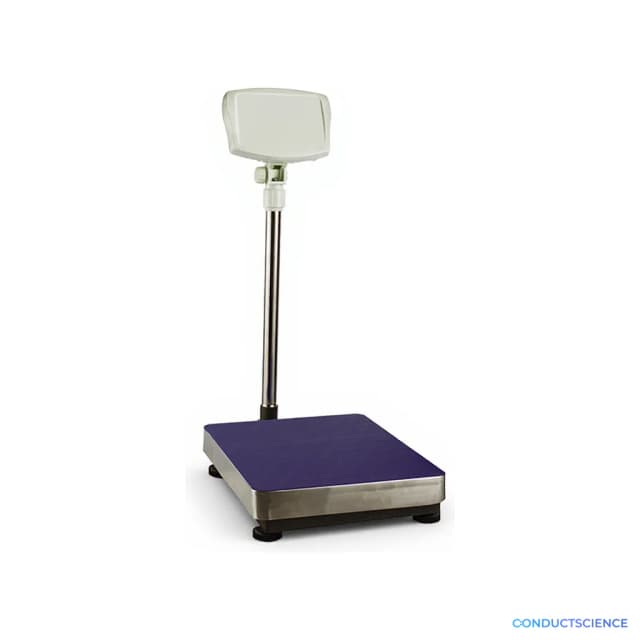
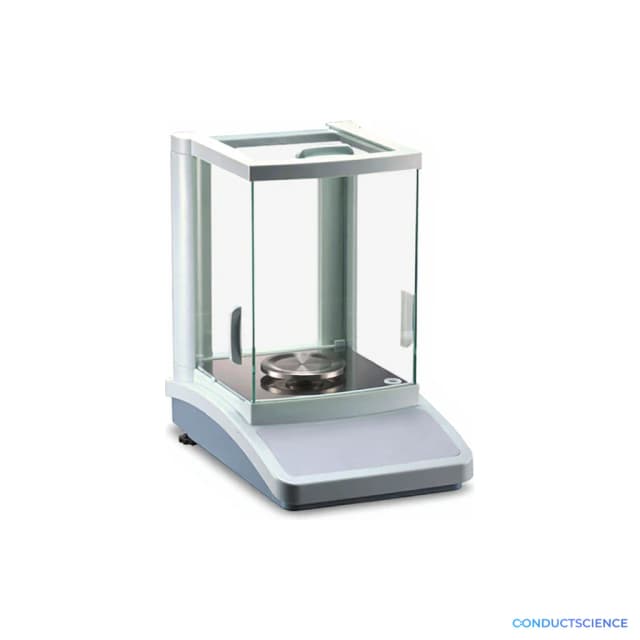
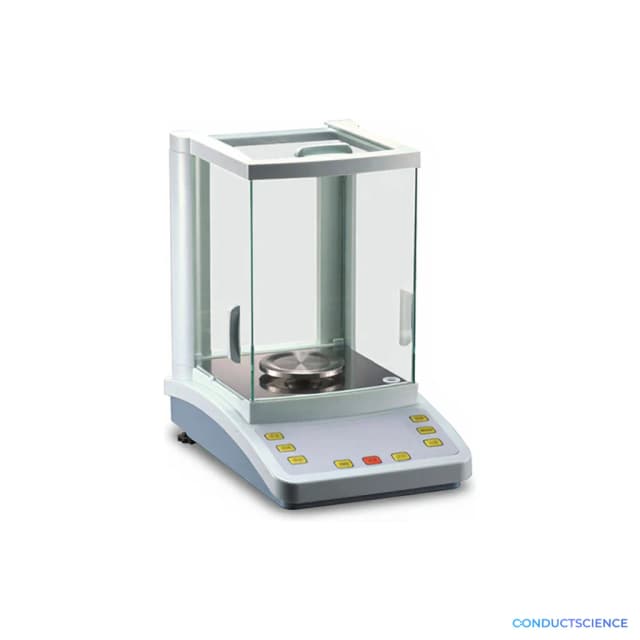
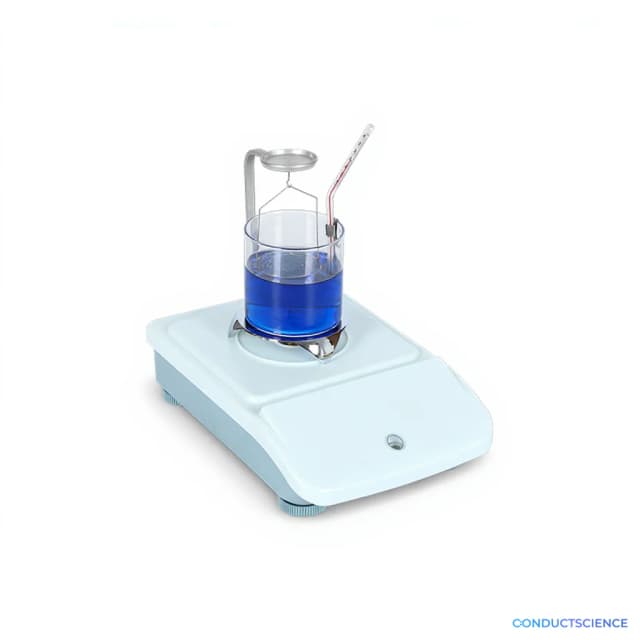
The BE Series Electronic Balance is a precision analytical instrument designed for accurate mass measurements in research and analytical laboratories. Available in multiple capacity configurations ranging from 200g to 2000g with readabilities of 0.01g, 0.03g, and 0.1g, this balance provides the measurement precision required for quantitative analysis protocols. The unit features a compact footprint of 365×265×170mm, making it suitable for standard laboratory benchtops.
Each model designation (BE2001, BE2002, BE3002, BE5001, BE8001, BE10001, BE10002, BE16001, BE20002) corresponds to specific capacity and readability combinations to match different analytical requirements. The balance is engineered for routine weighing tasks where consistent accuracy and reliable performance are essential for experimental reproducibility.
How It Works
The BE Series operates using electromagnetic force restoration technology, where the mass placed on the weighing pan creates a force that displaces a coil within a magnetic field. This displacement is detected by a position sensor, which triggers a compensating current through the coil to restore the original position. The magnitude of this compensating current is directly proportional to the applied mass, enabling precise weight determination.
The balance incorporates internal calibration mechanisms and temperature compensation to maintain measurement accuracy across varying environmental conditions. Digital signal processing filters vibration interference and provides stable readings for consistent analytical results.
Features & Benefits
Automation Level
- manual
0.01g
- 0.01g
2.3kg
- 365*265*170mm
BE2002
- 0~200g
BE3002
- 0~300g
BE10002
- 0~1000g
BE20002
- 0~2000g
0.03g
- 0.03g
BE2001
- 0~200g
0.1g
- 0.1g
BE5001
- 0~500g
BE8001
- 0~800g
BE10001
- 0~1000g
BE16001
- 0~1600g
Brand
- ConductScience
Research Domain
- Analytical Chemistry
- Environmental Monitoring
- Food Science
- Materials Science
- Microbiology
- Pharmaceutical QC
Capacity
- Readability
Shipping weight
- 7.69 lb
Shipping box
- L: 14.37 cm
- W: 10.43 cm
- H: 6.69 cm
| Feature | This Product | Typical Alternative | Advantage |
|---|---|---|---|
| Capacity Range | 200g to 2000g across nine models | Entry-level balances often offer fewer capacity options | Allows laboratories to select optimal capacity for specific applications while maintaining consistent operation across different models |
| Readability Options | 0.01g, 0.03g, and 0.1g readability available | Basic models typically offer single readability per capacity | Provides measurement precision appropriate for different analytical requirements without requiring multiple balance types |
| Compact Design | 365×265×170mm footprint | Analytical balances often require larger bench space | Maximizes available benchtop space while maintaining adequate weighing chamber volume for routine sample containers |
| Model Selection | Nine distinct models covering different capacity/readability combinations | Limited model options requiring capacity or accuracy compromises | Enables precise matching of balance specifications to analytical requirements without over-specifying or under-performing |
The BE Series offers comprehensive capacity and readability options in a standardized design platform. The multiple model configurations allow laboratories to optimize balance selection for specific applications while maintaining operational consistency across the analytical workflow.
Practical Tips
Use certified reference weights that span the working range of your analyses, not just the balance capacity maximum.
Why: This ensures accuracy verification across the actual measurement range used in experimental protocols.
Clean the weighing pan and chamber regularly with appropriate solvents, avoiding harsh chemicals that may damage internal components.
Why: Residue buildup can cause measurement drift and cross-contamination between samples.
Allow samples to reach room temperature before weighing, especially when removed from refrigerated storage.
Why: Temperature differences create air currents that affect reading stability and introduce measurement error.
If readings drift or fluctuate, check for vibration sources, air currents, and static electricity accumulation.
Why: Environmental factors are the most common causes of unstable balance performance in laboratory settings.
Record environmental conditions (temperature, humidity) with critical measurements for data traceability.
Why: Environmental documentation supports measurement uncertainty calculations and analytical method validation.
Use appropriate weighing containers and avoid direct contact between corrosive chemicals and the balance components.
Why: Chemical exposure can damage the balance mechanism and compromise measurement accuracy.
Setup Guide
What’s in the Box
- BE Series electronic balance (typical)
- Power adapter (typical)
- Weighing pan (typical)
- Draft shield assembly (typical)
- User manual (typical)
- Calibration certificate (typical)
Warranty
ConductScience provides a standard one-year manufacturer warranty covering defects in materials and workmanship, with technical support available for installation and operational guidance.
Compliance
What is the minimum sample size that can be accurately measured on the BE2002 model?
The BE2002 offers 0.01g readability, making it suitable for samples where measurement uncertainty at the milligram level is acceptable. Consult the product datasheet for specific accuracy specifications and minimum weighing requirements.
How frequently should calibration be performed?
Calibration frequency depends on usage patterns, environmental conditions, and analytical requirements. Daily calibration checks are recommended for critical analytical work, with full calibration using certified weights performed weekly or per laboratory SOP.
Can the balance interface with laboratory information management systems?
Consult the product datasheet for available data interface options and communication protocols supported by specific BE Series models.
What environmental conditions are required for optimal performance?
Precision balances require stable temperature (typically ±2°C), minimal vibration, and protection from air currents. Consult specifications for detailed environmental operating ranges.
How does the balance handle static electricity from plastic samples?
Static charges can affect weighing accuracy. Use anti-static measures such as ionizing devices or anti-static weighing chambers when handling plastic materials or working in low humidity conditions.
What is the typical measurement time for stable readings?
Stabilization time varies with sample properties and environmental conditions. Most measurements stabilize within 3-10 seconds under normal laboratory conditions with proper technique.
Have a question about this product?
Have a question? Just ask.
Send it over and we'll email you a personalized answer — no call, no scheduling.
Prefer to talk it through?
Upgrade Options