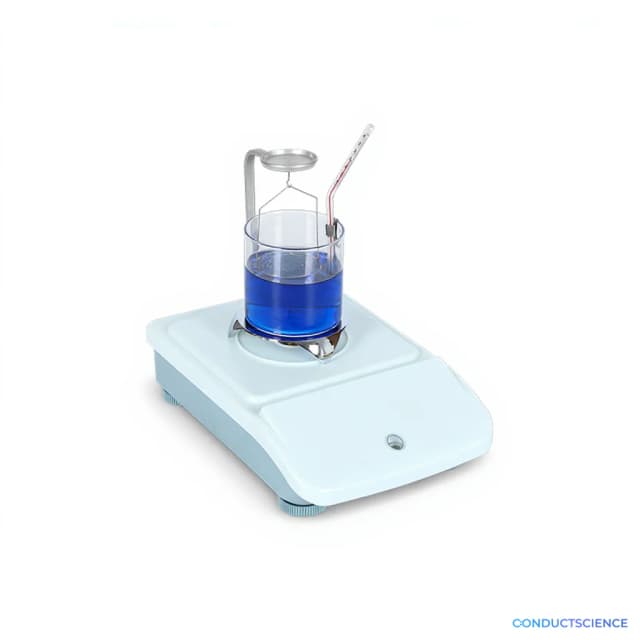
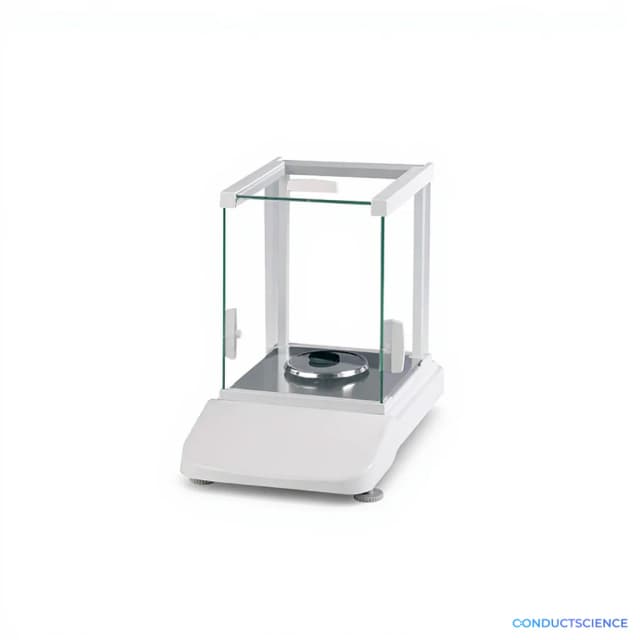
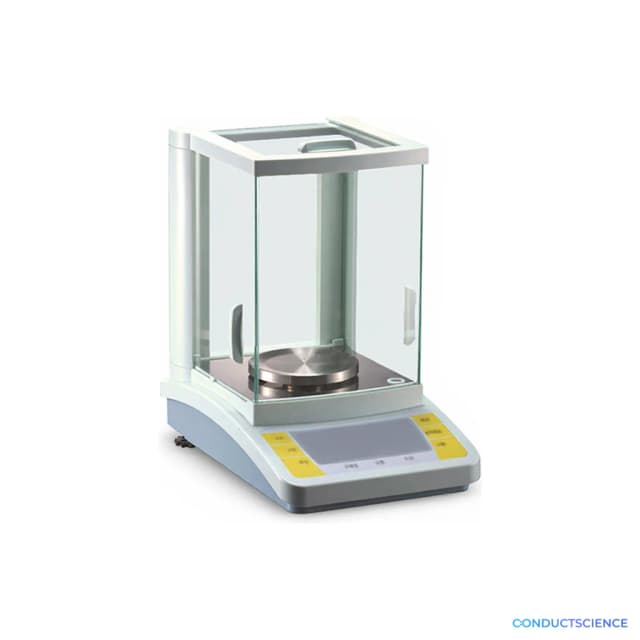
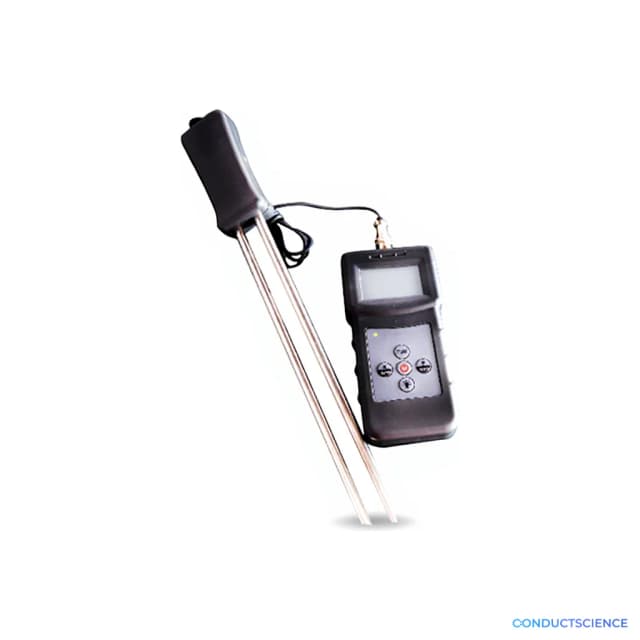
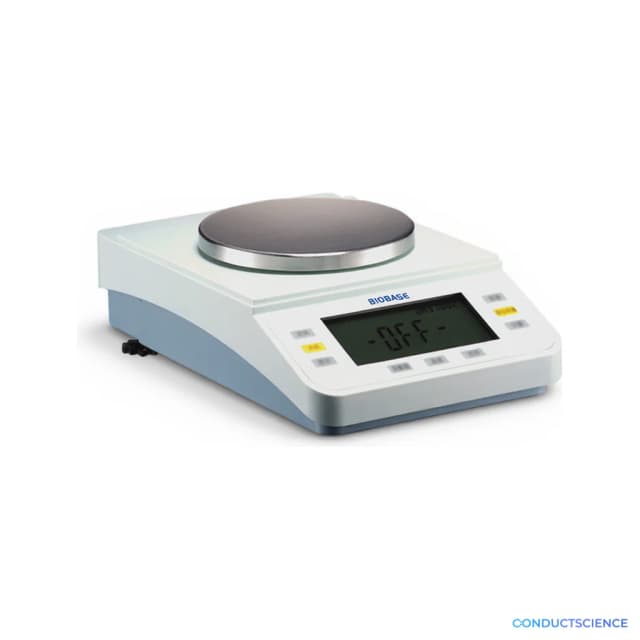
BM-50 Series Rapid Moisture Meter
Precision moisture analyzer combining halogen heating and analytical weighing for rapid moisture content determination in 50g samples with 0.1-0.3% accuracy.

Louise Corscadden, PhD
Director of Science · ConductScience
Ask Louise about BM-50 Series Rapid Moisture Meter fit, setup, configuration, or quote prep.
Already working with us? Sign in to connect this with My Scientist.
Key Specifications
Full details →- Model fit
- Configured during quote
- SKU family
- BIO-0345
- Shipping box
- 36.8 x 46.5 x 33.5 cm
- Ordering
- Online checkout and quote request available
- Category
- Balances
- Build notes
- Confirm accessories, station layout, and support needs before purchase
The BM-50 Series Rapid Moisture Meter is a precision analytical balance designed for rapid moisture content determination in solid and semi-solid samples. This halogen heating system combines weighing and drying functions to deliver moisture percentage measurements with 0.1-0.3% accuracy across a temperature range of 50-180°C. The instrument accommodates samples up to 50g on a 90mm diameter scale platform with 0.001-0.01g readability depending on model variant.
The system employs thermogravimetric analysis principles, continuously monitoring sample weight loss during controlled heating to calculate moisture content in real-time. With its compact desktop design and integrated heating chamber, the BM-50 provides laboratory-grade moisture analysis without requiring separate drying ovens or extended equilibration times. The instrument operates reliably in ambient temperatures from 10-30°C, making it suitable for routine quality control and research applications requiring rapid sample turnaround.
How It Works
The BM-50 Series operates on thermogravimetric analysis principles, using controlled heating to drive off moisture while continuously monitoring sample weight loss. A halogen heating element positioned above the sample chamber provides uniform radiant heating across the 90mm scale platform. The integrated analytical balance measures sample weight with 0.001-0.01g precision, depending on model variant, enabling accurate detection of moisture loss during the drying process.
Temperature control ranges from 50-180°C, allowing optimization for different sample types while preventing thermal decomposition of heat-sensitive materials. The system calculates moisture percentage in real-time by comparing initial sample weight to the dried weight after equilibrium is reached. Internal algorithms compensate for ambient temperature variations and provide automatic endpoint detection when weight loss stabilizes.
The instrument's rapid heating capability and continuous weight monitoring enable moisture determinations typically completed within 5-15 minutes, compared to traditional oven methods requiring hours of drying time. Sample containment within the heated chamber prevents moisture reabsorption during analysis while maintaining measurement accuracy.
Features & Benefits
Automation Level
- semi-automated
BM-50-5
- BM-50-1
Weight Readability
- 0.01g
0.005g
- 0.001g
Repeatability Standard Deviation
- 0.01g
0.05g
- 0.002g
Linear Error
- 0.01g
Moisture Percentage Accuracy
- 0.3%
0.2%
- 0.1%
Scale Size
- Φ90mm
Temperature Capacity
- 50~180°C
50~180°C
- 50~180°C
Ambient Temperature
- 10~30°C
10~30°C
- 10~30°C
Brand
- ConductScience
Research Domain
- Analytical Chemistry
- Environmental Monitoring
- Food Science
- Industrial Hygiene
- Materials Science
- Pharmaceutical QC
Capacity
- 50g
Shipping weight
- 4.1 lb
Shipping box
- L: 36.8 cm
- W: 46.5 cm
- H: 33.5 cm
| Feature | This Product | Typical Alternative | Advantage |
|---|---|---|---|
| Sample Capacity | 50g maximum sample size | Entry-level models typically offer 10-20g capacity | Larger samples provide better representativeness for heterogeneous materials and reduce sampling error. |
| Weight Readability | 0.001g to 0.01g depending on model variant | Basic models often limited to 0.01g or 0.1g readability | Higher precision enables accurate moisture measurement in low-moisture samples and improves detection limits. |
| Temperature Range | 50-180°C operational range | Limited models may offer narrower temperature ranges | Wide temperature range accommodates diverse sample types from heat-sensitive materials to high-temperature applications. |
| Moisture Accuracy | 0.1-0.3% moisture percentage accuracy | Standard instruments typically achieve 0.5-1.0% accuracy | Higher accuracy supports stringent quality control requirements and research applications demanding quantitative precision. |
| Scale Platform Size | 90mm diameter platform | Compact models often use smaller platforms | Larger platform enables uniform sample distribution and consistent heating across the entire sample area. |
| Heating Technology | Halogen heating system | Basic models may use infrared or resistive heating | Halogen heating provides rapid, uniform temperature distribution for faster equilibration and consistent results. |
The BM-50 Series combines high sample capacity with precision weighing and controlled halogen heating for accurate moisture determination. The instrument's temperature range and measurement precision support both routine quality control and research applications requiring quantitative moisture analysis.
Practical Tips
Perform zero calibration with an empty sample pan before each analysis session and verify accuracy using certified moisture standards weekly.
Why: Regular calibration ensures measurement traceability and compensates for environmental drift affecting balance sensitivity.
Distribute samples evenly across the pan surface and avoid overloading beyond 50g capacity to ensure uniform heating.
Why: Even distribution promotes consistent moisture release and prevents localized overheating that could affect accuracy.
Clean the sample chamber and pan regularly with appropriate solvents and inspect the halogen heating element for damage or contamination.
Why: Clean heating elements provide consistent temperature control while preventing cross-contamination between samples.
If measurements show poor repeatability, check for air currents around the instrument and verify ambient temperature is within 10-30°C range.
Why: Environmental disturbances affect both weighing precision and sample drying consistency during analysis.
Allow sufficient equilibration time for endpoint detection and validate drying completeness by extending analysis time for critical samples.
Why: Incomplete drying leads to underestimated moisture content while excessive heating may decompose sample components.
Use appropriate sample pans and avoid samples containing flammable solvents or compounds that may decompose explosively at elevated temperatures.
Why: Safe operating practices prevent equipment damage and ensure operator safety during high-temperature analysis cycles.
Develop standard operating procedures specific to your sample types including temperature settings, sample size, and endpoint criteria.
Why: Standardized methods improve reproducibility between operators and provide consistent results over time.
Use moisture reference materials that match your sample matrix and moisture range for the most accurate calibration verification.
Why: Matrix-matched standards account for differences in heat transfer and moisture release characteristics between sample types.
Setup Guide
What’s in the Box
- BM-50 Series Moisture Analyzer main unit
- Power adapter and cord
- Sample pans (typical)
- Pan handle (typical)
- User manual and quick start guide
- Calibration certificate (typical)
Warranty
ConductScience provides a standard one-year manufacturer warranty covering defects in materials and workmanship, with technical support for calibration and operational guidance.
Compliance
What sample preparation is required for accurate moisture determination?
Samples should be homogenized and distributed evenly across the pan surface within the 50g capacity limit. For heterogeneous materials, use representative subsampling and consider particle size reduction to ensure uniform heating and moisture release.
How do I select the appropriate drying temperature for my samples?
Start with manufacturer recommendations for your sample type within the 50-180°C range. Heat-sensitive materials may require lower temperatures (50-80°C) while inorganic samples can use higher temperatures. Validate against known standards for your specific application.
What is the typical analysis time compared to conventional oven methods?
The halogen heating system typically completes moisture analysis within 5-15 minutes depending on sample type and moisture content, compared to several hours required for traditional oven drying methods.
How frequently should the instrument be calibrated?
Perform zero calibration daily and accuracy verification weekly using certified reference materials. For critical applications, verify calibration more frequently based on your laboratory's quality control requirements.
Can the instrument handle volatile compounds other than water?
The system measures total volatile loss during heating, which may include water and other volatile compounds. For water-specific determination, validate that your temperature settings minimize interference from other volatile components.
What environmental conditions affect measurement accuracy?
Maintain ambient temperature between 10-30°C and minimize air currents that could affect the balance or sample drying. Place the instrument away from heat sources and vibration sources that could impact weighing precision.
How does the repeatability compare across the different model variants?
Repeatability standard deviation ranges from 0.002g for higher precision variants to 0.01g for standard models. Select the appropriate model based on your required measurement precision and sample moisture levels.
What data output and recording capabilities are available?
Consult product datasheet for specific data logging, connectivity, and output format options available with your model variant, as these features may vary between different configurations.
Have a question about this product?
Have a question? Just ask.
Send it over and we'll email you a personalized answer — no call, no scheduling.
Prefer to talk it through?
Accessories
Enhance your setup with compatible accessories