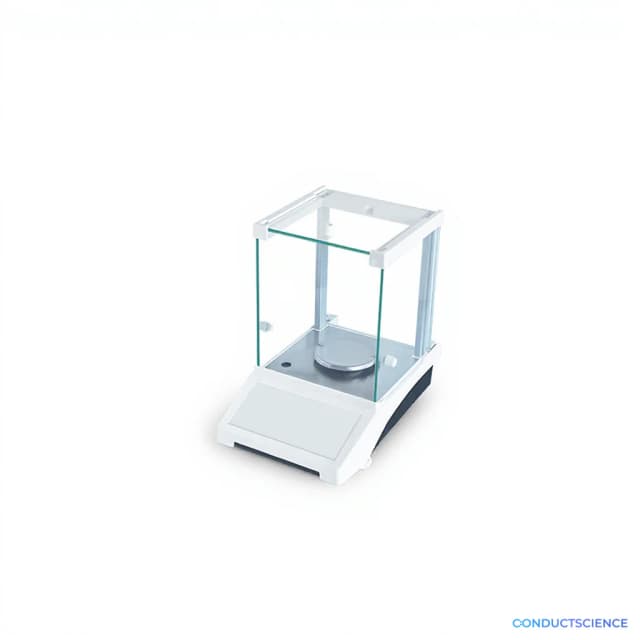
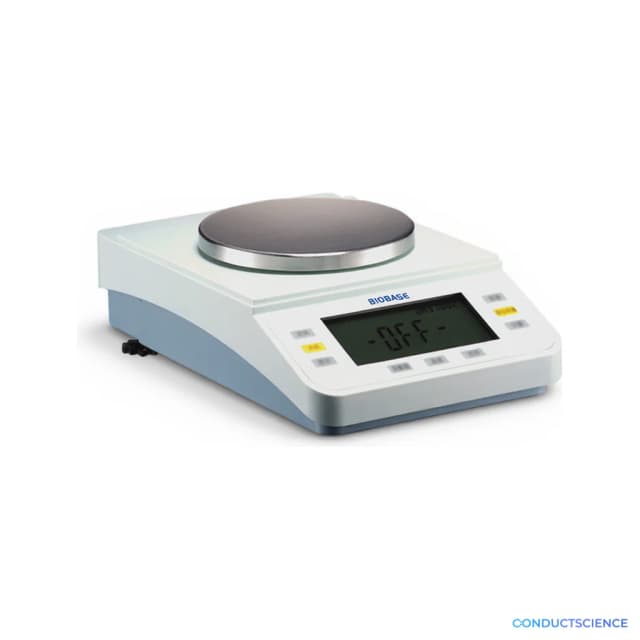
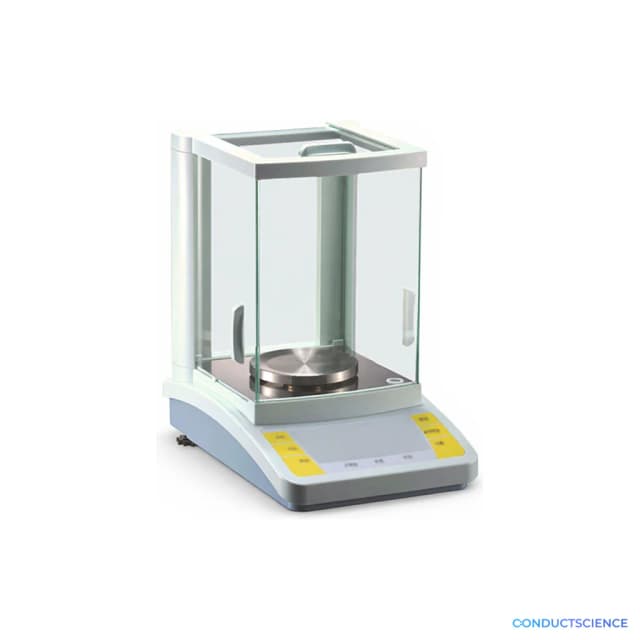
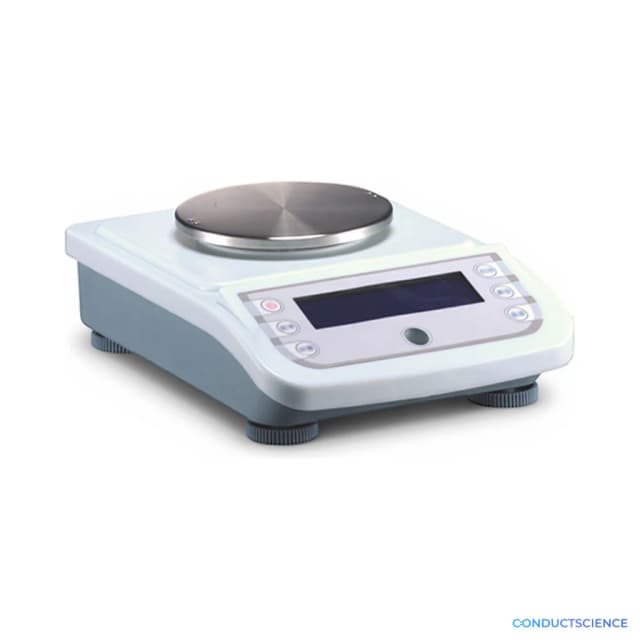
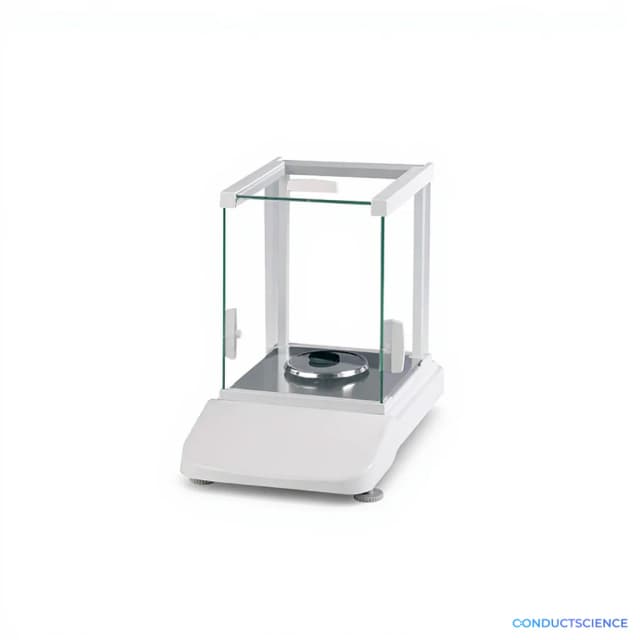
BA-C Automatic Electronic Analytical Balance(Internal Calibration)
Precision analytical balance with internal calibration system, offering sub-milligram readability for accurate laboratory weighing applications.

Louise Corscadden, PhD
Director of Science · ConductScience
Ask Louise about BA-C Automatic Electronic Analytical Balance(Internal Calibration) fit, setup, configuration, or quote prep.
Already working with us? Sign in to connect this with My Scientist.
Key Specifications
Full details →- Model fit
- Configured during quote
- SKU family
- BIO-0352
- Shipping box
- 34.0 x 35.0 x 21.5 cm
- Ordering
- Online checkout and quote request available
- Category
- Balances
- Build notes
- Confirm accessories, station layout, and support needs before purchase
The BA-C Automatic Electronic Analytical Balance with internal calibration provides precision weighing capabilities for laboratory applications requiring sub-milligram accuracy. This analytical balance features internal calibration functionality, eliminating the need for external calibration weights and ensuring consistent measurement accuracy over time.
The balance incorporates a stable measurement platform with rapid settling time and precise readability for quantitative analytical work. Multiple capacity configurations accommodate diverse laboratory weighing requirements, from small sample preparation to routine analytical measurements. The internal calibration system automatically maintains measurement accuracy according to programmed intervals or on-demand activation.
How It Works
The analytical balance operates on the principle of electromagnetic force restoration, where the sample mass is counterbalanced by an electromagnetically generated force. A position sensor detects displacement of the weighing pan, and a servo-controlled electromagnetic coil generates a restoring force proportional to the sample mass. This force is measured and converted to a digital mass reading.
Internal calibration utilizes a built-in reference mass that is automatically positioned on the weighing cell at programmed intervals. The system compares the measured response to the known reference mass and applies correction factors to maintain accuracy. Temperature sensors monitor thermal variations that could affect measurement precision, triggering automatic calibration cycles when needed.
The electromagnetic force restoration system provides rapid response to mass changes while maintaining measurement stability. Digital signal processing filters environmental vibrations and air currents, allowing the balance to achieve specified readability within the stated settling time.
Features & Benefits
Automation Level
- semi-automated
BA1004C
- BA1204C
BA1604C
- BA2004C
BA2204C
- BA1003C
BA2003C
- BA3003C
0~100g
- 0~120g
0~160g
- 0~200g
0~220g
- 0~100g
0~200g
- 0~300g
Readability
- 0.1mg
Scale Size
- φ90mm
Stable Time
- 4s
6s
- 6~8s
Repeat Ability
- 0.2mg
Brand
- ConductScience
Research Domain
- Analytical Chemistry
- Environmental Monitoring
- Food Science
- Materials Science
- Microbiology
- Pharmaceutical QC
Capacity
- 0~60g
Shipping weight
- 5.0 lb
Shipping box
- L: 34.0 cm
- W: 35.0 cm
- H: 21.5 cm
| Feature | This Product | Typical Alternative | Advantage |
|---|---|---|---|
| Calibration Method | Internal automatic calibration system | External calibration weights requiring manual intervention | Eliminates handling errors and maintains accuracy without operator dependency |
| Readability | 0.1mg precision | Entry-level models often provide 1mg readability | Enables accurate measurement of smaller sample quantities for trace analysis |
| Settling Time | 4-second stabilization | Basic analytical balances may require 8-15 seconds | Improves measurement throughput and laboratory productivity |
| Repeatability | 0.2mg consistency | Standard models typically offer 0.5-1mg repeatability | Provides more reliable results for critical quantitative analyses |
| Capacity Options | Multiple configurations from 60g to 300g | Single capacity models limit application flexibility | Allows selection of optimal capacity for specific laboratory requirements |
The BA-C series combines internal calibration convenience with analytical precision, offering 0.1mg readability and rapid 4-second settling across multiple capacity configurations. The electromagnetic force restoration technology provides superior repeatability and stability compared to entry-level analytical balances.
Practical Tips
Schedule automatic internal calibration during periods of stable environmental conditions, typically early morning before laboratory activities begin.
Why: Temperature stability ensures more accurate calibration baseline establishment.
Clean the weighing pan and chamber weekly with lint-free cloths and appropriate solvents, ensuring complete drying before use.
Why: Residue buildup can affect measurement accuracy and cause drift in readings.
Allow samples and containers to equilibrate to room temperature before weighing to minimize buoyancy effects.
Why: Temperature differences create air currents and density variations that affect measurement precision.
If readings appear unstable, check for air currents, vibrations, or electrostatic charges on samples and containers.
Why: Environmental disturbances are the most common cause of analytical balance measurement variability.
Record multiple measurements for critical samples and calculate statistical parameters to assess measurement reliability.
Why: Statistical analysis helps identify outliers and provides confidence intervals for analytical results.
Use appropriate personal protective equipment when handling samples and avoid overloading the balance beyond specified capacity.
Why: Overloading can damage the measurement cell and compromise accuracy of subsequent measurements.
Setup Guide
What’s in the Box
- BA-C analytical balance main unit
- Weighing pan and draft shield (typical)
- Power adapter (typical)
- User manual and calibration certificate (typical)
- Adjustable feet and leveling hardware (typical)
Warranty
ConductScience provides standard manufacturer warranty coverage including one year parts and labor protection with technical support for calibration and operational guidance.
Compliance
How frequently should internal calibration be performed?
Internal calibration frequency depends on usage patterns and environmental stability. Typically configured for daily automatic calibration or triggered by temperature changes exceeding specified thresholds. High-precision applications may require more frequent calibration intervals.
What environmental conditions affect measurement accuracy?
Temperature fluctuations, air currents, vibrations, and humidity changes can impact measurement precision. Maintain stable temperature within ±2°C, minimize air movement, and allow thermal equilibration time after power-up or environmental changes.
Can the balance interface with laboratory information systems?
Interface capabilities vary by model configuration. Consult product datasheet for available communication ports such as RS-232, USB, or Ethernet for data transfer to LIMS or other laboratory software systems.
What is the minimum sample size for accurate measurement?
Minimum weighable sample depends on repeatability specifications and acceptable measurement uncertainty. With 0.2mg repeatability, reliable measurements typically require sample masses at least 10 times the repeatability value, or approximately 2mg minimum.
How does the electromagnetic force restoration system compare to mechanical balances?
Electromagnetic systems provide faster settling times, better repeatability, and no mechanical wear compared to traditional analytical balances. Digital signal processing also enables better vibration filtering and environmental compensation.
What maintenance procedures are required?
Regular cleaning of weighing pan and chamber, verification with certified reference weights, and periodic professional calibration service. Internal calibration system reduces routine maintenance requirements compared to external weight-dependent systems.
Have a question about this product?
Have a question? Just ask.
Send it over and we'll email you a personalized answer — no call, no scheduling.
Prefer to talk it through?
Upgrade Options