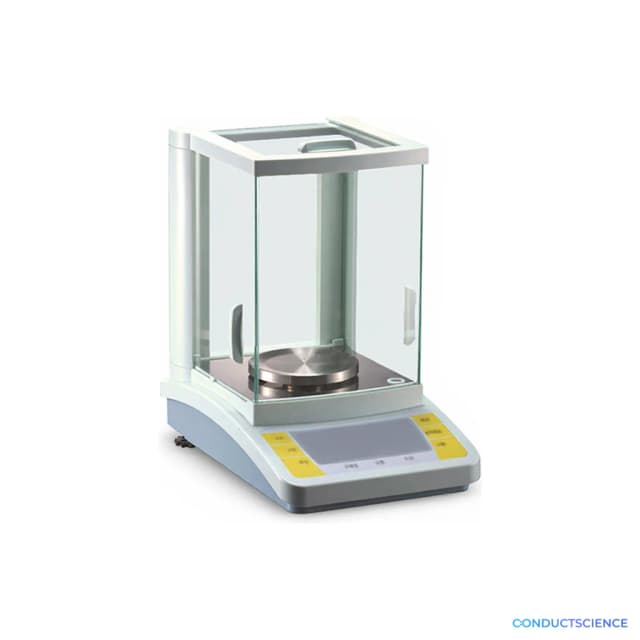
BA-N Automatic Electronic Analytical Balance(Internal Calibration)
Analytical balance with 0.1mg readability, internal calibration, and draft shield protection for precise mass measurements in quantitative analysis applications.

Louise Corscadden, PhD
Director of Science · ConductScience
Ask Louise about BA-N Automatic Electronic Analytical Balance(Internal Calibration) fit, setup, configuration, or quote prep.
Already working with us? Sign in to connect this with My Scientist.
Key Specifications
Full details →- Model fit
- Configured during quote
- SKU family
- BIO-0351
- Shipping box
- 6.89 x 6.5 x 3.15 cm
- Ordering
- Online checkout and quote request available
- Category
- Balances
- Build notes
- Confirm accessories, station layout, and support needs before purchase
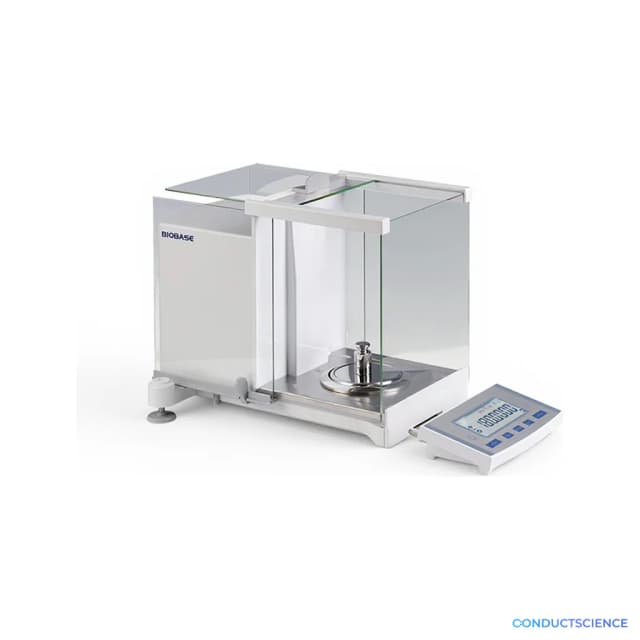
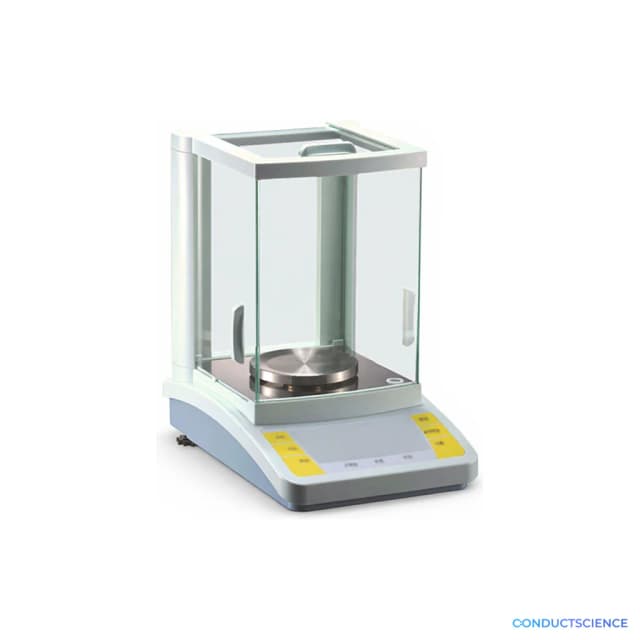
The BA-N Automatic Electronic Analytical Balance provides precise mass measurements with 0.1 mg readability across multiple capacity ranges up to 210g. This internal calibration analytical balance features a windshield-protected weighing chamber and stabilizes readings within 3 seconds, designed for quantitative analytical work requiring sub-milligram precision.
The instrument incorporates an 80mm diameter weighing pan within a draft shield measuring 175×165×230mm internal dimensions, providing protection from air currents during sensitive measurements. RS232C interface enables data logging and integration with laboratory information systems for automated record keeping and analysis workflows.
How It Works
The BA-N analytical balance operates using electromagnetic force restoration technology. An electromagnet generates a force that counteracts the gravitational force acting on the sample, with the current required to maintain equilibrium being proportional to the sample mass. This principle enables high-resolution mass measurements with minimal mechanical wear compared to traditional mechanical balance systems.
Internal calibration maintains measurement accuracy through automated adjustment using a built-in calibration weight. The system periodically verifies and corrects for drift in the measurement system without requiring external calibration weights. The draft shield minimizes air current effects that could destabilize readings, while vibration-dampening design elements reduce environmental interference.
Digital signal processing converts the analog measurement signal to a stable digital readout with 0.1mg resolution. The 3-second stabilization time reflects the instrument's ability to achieve measurement equilibrium rapidly while maintaining precision specifications across the full measurement range.
Features & Benefits
Automation Level
- semi-automated
BA1104N
- BA1204N
BA2004N
- BA2104N
0~110g
- 0~120g
0~200g
- 0~210g
Readability
- 0.1mg
Scale Size
- Φ80mm
Stable Time
- ≤3s
Repeat ability
- ±0.0002g
Liner
- ±0.0003g
Work Space Height
- 230mm
Calibration
- Internal cal
Draft Shield Inner Size
- 175*165*230mm
Interface
- RS232C
Brand
- ConductScience
Research Domain
- Analytical Chemistry
- Clinical Diagnostics
- Environmental Monitoring
- Food Science
- Materials Science
- Pharmaceutical QC
Capacity
- 0~100g
Shipping weight
- 1.08 lb
Shipping box
- L: 6.89 cm
- W: 6.5 cm
- H: 3.15 cm
| Feature | This Product | Typical Alternative | Advantage |
|---|---|---|---|
| Readability Resolution | 0.1mg across all capacity ranges | Entry-level models often provide 1mg readability with fewer capacity options | Sub-milligram resolution enables precise analytical work including microanalysis and trace quantification |
| Calibration System | Internal automated calibration | External calibration weights required for many analytical balances | Reduces calibration weight management and maintains accuracy without additional equipment |
| Stabilization Speed | ≤3 seconds to stable reading | Basic models often require 5-10 seconds for stabilization | Accelerates measurement throughput in high-volume analytical workflows |
| Draft Shield Design | 175×165×230mm internal working space | Smaller draft shields limit sample container options | Accommodates larger sample containers while maintaining environmental protection |
| Data Interface | RS232C communication port | Manual recording required on basic balance models | Enables automated data logging and laboratory system integration |
| Measurement Repeatability | ±0.0002g precision specification | Lower-cost balances often specify ±0.0005g or higher | Improved precision supports critical analytical measurements requiring tight error tolerances |
The BA-N balance combines 0.1mg readability with internal calibration automation and rapid 3-second stabilization for efficient analytical workflows. The generous draft shield working space and RS232C interface support both manual and automated laboratory operations across multiple capacity ranges.
Practical Tips
Perform internal calibration after any significant temperature change or when moving the balance to ensure measurement accuracy.
Why: Temperature variations affect the electromagnetic force restoration system calibration.
Clean the weighing pan and draft shield regularly with appropriate solvents, ensuring complete drying before use.
Why: Residue buildup can affect measurement accuracy and introduce contamination between samples.
Allow samples and containers to reach thermal equilibrium with the balance environment before measurement.
Why: Temperature differences create air currents that destabilize readings despite draft shield protection.
Record multiple measurements for critical samples and calculate statistical parameters to assess measurement uncertainty.
Why: Replicate measurements provide confidence intervals and identify potential systematic errors.
If readings drift or fail to stabilize, check for air current sources and verify the balance is properly leveled.
Why: Environmental factors are the most common cause of measurement instability in analytical balances.
Use appropriate sample containers and avoid placing chemicals directly on the weighing pan surface.
Why: Chemical spills can damage the weighing mechanism and create safety hazards in the laboratory.
Document calibration dates and verification measurements to maintain traceability records for quality assurance.
Why: Calibration documentation supports analytical method validation and regulatory compliance requirements.
Setup Guide
What’s in the Box
- BA-N analytical balance main unit
- Draft shield assembly
- Weighing pan (80mm diameter)
- Power adapter
- RS232C interface cable (typical)
- User manual and operation guide
- Calibration certificate (typical)
Warranty
ConductScience provides a standard one-year manufacturer warranty covering defects in materials and workmanship, with technical support available for calibration procedures and operational guidance.
Compliance
What is the minimum sample size that can be accurately measured?
The balance provides 0.1mg readability with ±0.0002g repeatability, making it suitable for samples as small as 1-2mg with acceptable precision for most analytical applications.
How often should internal calibration be performed?
Internal calibration frequency depends on usage and environmental conditions, typically daily for routine analytical work or before critical measurements to maintain accuracy specifications.
Can the balance interface with LIMS systems?
Yes, the RS232C interface enables data transfer to laboratory information management systems and other data logging applications with appropriate software configuration.
What environmental conditions affect measurement accuracy?
Temperature fluctuations, air currents, vibration, and humidity changes can impact readings. The draft shield minimizes air current effects, but stable environmental conditions optimize performance.
Is external calibration weight verification recommended?
While internal calibration maintains routine accuracy, periodic verification with certified external weights confirms measurement traceability for quality assurance protocols.
What is the difference between the capacity options?
Models range from 100g to 210g maximum capacity while maintaining the same 0.1mg readability and precision specifications across all variants.
How does repeatability compare to linearity specifications?
Repeatability (±0.0002g) measures consistency of multiple measurements of the same sample, while linearity (±0.0003g) indicates accuracy across the full measurement range.
Have a question about this product?
Have a question? Just ask.
Send it over and we'll email you a personalized answer — no call, no scheduling.
Prefer to talk it through?
Accessories
Enhance your setup with compatible accessories
Frequently Bought Together