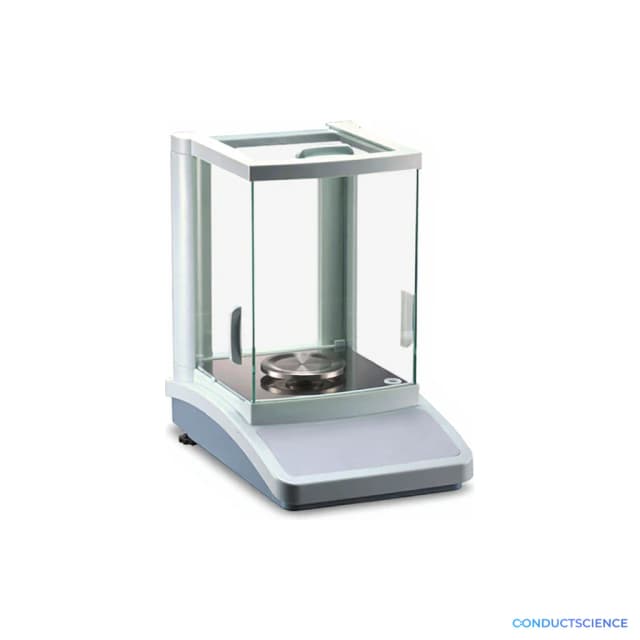
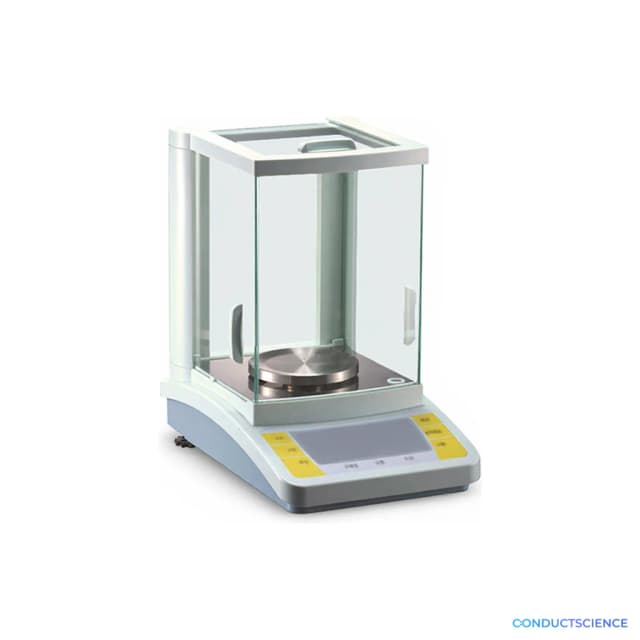
BE-G/N Classic Electronic Balance
Electronic analytical balance for precise mass measurements in laboratory research applications.
| Automation Level | manual |

The BE-G/N Classic Electronic Balance provides precise mass measurements for laboratory applications requiring accurate weighing capabilities. This analytical balance serves as a fundamental tool for quantitative research protocols across multiple scientific disciplines where mass determination is critical to experimental accuracy.
Designed for research environments, this electronic balance supports routine weighing procedures in analytical chemistry, sample preparation, and materials characterization workflows. The balance enables researchers to conduct gravimetric analyses, prepare standard solutions, and perform mass-based calculations essential to laboratory operations.
How It Works
Electronic balances operate on the principle of electromagnetic force restoration, where an electromagnet generates a force to counteract the gravitational force acting on the sample. When a sample is placed on the weighing pan, the balance detects the resulting displacement and generates an electromagnetic force to restore the pan to its null position.
The balance measures the current required to generate this compensating force, which is directly proportional to the mass of the sample. Internal calibration weights and digital signal processing ensure measurement accuracy and stability across the operating range.
Features & Benefits
Automation Level
- manual
Research Domain
- Analytical Chemistry
- Environmental Monitoring
- Food Science
- Materials Science
- Microbiology
- Pharmaceutical QC
Weight
- 29.98 kg
Dimensions
- L: 42.0 mm
- W: 43.6 mm
- H: 38.0 mm
Comparison Guide
| Feature | This Product | Typical Alternative | Advantage |
|---|---|---|---|
| Measurement Technology | Electronic force restoration design | Basic models may use strain gauge technology | Electromagnetic systems provide better long-term stability and accuracy retention. |
| Display Interface | Digital numerical readout | Entry-level units may have basic LCD displays | Clear numerical display eliminates reading interpretation errors and improves measurement consistency. |
| Calibration Support | Calibration weight compatibility | Lower-cost models may lack calibration provisions | Regular calibration capability ensures measurement accuracy meets research requirements over time. |
| Construction Design | Laboratory-grade electronic balance | Consumer-grade scales lack precision components | Research-oriented design provides the stability and accuracy required for quantitative laboratory work. |
This electronic balance offers electromagnetic measurement technology with digital readout and calibration support. The design prioritizes measurement accuracy and stability for research applications requiring precise mass determination.
Practical Tips
Perform calibration at the same time each day when the laboratory temperature is stable.
Why: Consistent environmental conditions improve calibration accuracy and measurement reproducibility.
Clean the weighing pan and chamber with appropriate solvents after each use session.
Why: Residue accumulation can affect measurement accuracy and cause drift over time.
Allow samples to reach room temperature before weighing to minimize air current effects.
Why: Temperature differences create convection currents that introduce measurement variability.
Use anti-static measures when weighing powders or low-density materials.
Why: Static charges can cause sample adhesion to containers and erratic weight readings.
Check balance level indicators if measurements appear unstable or drift continuously.
Why: Improper leveling affects the electromagnetic force restoration system and measurement accuracy.
Record environmental conditions during critical weighing sessions for data quality documentation.
Why: Environmental records support measurement traceability and help identify sources of variability.
Position the balance away from chemical fume hoods and volatile reagents.
Why: Chemical vapors can corrode internal components and affect electronic circuit stability.
Setup Guide
What’s in the Box
- BE-G/N electronic balance main unit
- Power adapter (typical)
- Weighing pan (typical)
- User manual and documentation (typical)
- Calibration certificate (typical)
Warranty
ConductScience provides standard manufacturer warranty coverage including technical support for instrument setup and operation guidance.
Compliance
What is the measurement readability and capacity range of this balance?
Consult the product datasheet for specific readability, capacity, and measurement range specifications.
How frequently should calibration be performed?
Calibration frequency depends on usage intensity and accuracy requirements. Daily calibration is recommended for critical quantitative work, with periodic calibration using certified reference weights.
What environmental conditions affect measurement accuracy?
Temperature fluctuations, air currents, vibration, and humidity changes can impact measurement stability. Position the balance away from HVAC outlets and high-traffic areas.
Can this balance interface with laboratory information systems?
Data output capabilities should be confirmed by consulting the product specifications to determine available connectivity options.
What maintenance procedures are required?
Regular cleaning of the weighing chamber and pan, periodic calibration verification, and protection from chemical vapors extend instrument life and maintain accuracy.
How does this compare to mechanical analytical balances?
Electronic balances typically offer improved stability, digital readouts eliminating parallax errors, and tare functions not available in mechanical designs.
Have a question about this product?