Bird/Mammal Radial Maze
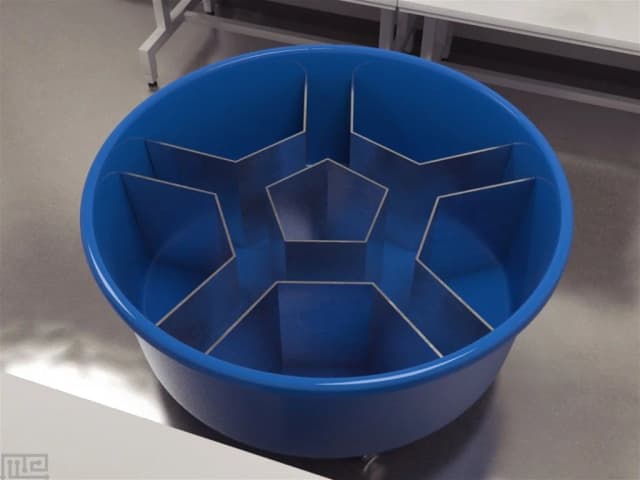
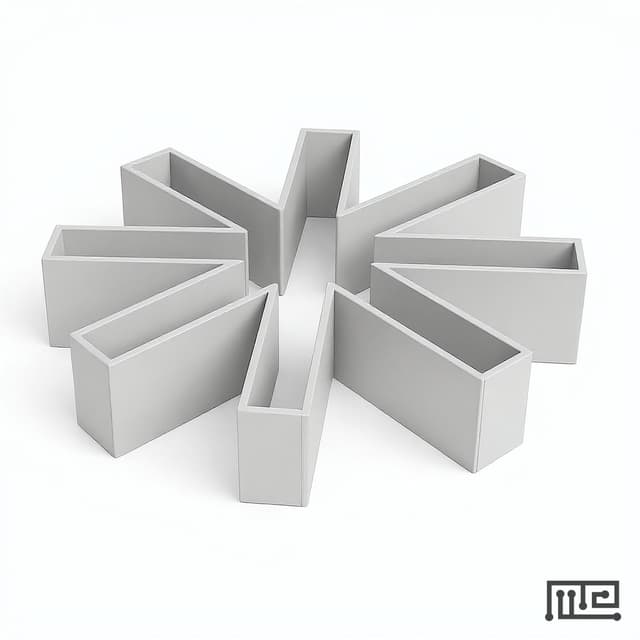
Multi-arm radial maze apparatus for evaluating spatial learning, working memory, and foraging behavior in birds and mammals.
| Automation Level | manual |
| Species | Bird, Gerbil, Hamster, Rabbit, Mouse, Rat, Guinea pig |

The Bird/Mammal Radial Maze is a specialized behavioral apparatus designed for assessing spatial learning, working memory, and foraging behavior in avian and mammalian research subjects. This maze consists of multiple arms radiating from a central platform, allowing researchers to evaluate cognitive function through controlled spatial navigation tasks.
The apparatus enables systematic investigation of hippocampal-dependent learning processes and spatial memory consolidation across diverse species. Researchers utilize this tool to examine cognitive deficits in neurodegenerative disease models, assess the effects of pharmacological interventions on learning capacity, and characterize species-specific spatial navigation strategies.
How It Works
The radial maze operates on the principle of spatial reference memory and working memory assessment through controlled foraging behavior. The apparatus presents subjects with multiple arm choices radiating from a central platform, each potentially containing food rewards or other reinforcement.
During testing, animals must navigate to rewarded arms while avoiding previously visited locations within a session (working memory component) or remembering consistently baited arms across sessions (reference memory component). The maze design exploits natural foraging instincts while providing quantitative measures of cognitive performance through arm entry patterns, latencies, and error frequencies.
Spatial learning is assessed by measuring the subject's ability to efficiently locate rewards using distal environmental cues, while working memory is evaluated through within-session performance as animals must track which arms have been visited to maximize reward acquisition.
Features & Benefits
Behavioral Construct
- spatial learning
- working memory
- reference memory
- foraging behavior
- cognitive flexibility
Automation Level
- manual
Research Domain
- Aging Research
- Anxiety and Depression
- Behavioral Pharmacology
- Learning and Memory
- Neurodegeneration
- Neuroscience
Species
- Bird
- Gerbil
- Hamster
- Rabbit
- Mouse
- Rat
- Guinea pig
Weight
- 6.06 kg
Dimensions
- L: 65.0 mm
- W: 36.0 mm
- H: 27.0 mm
Comparison Guide
| Feature | This Product | Typical Alternative | Advantage |
|---|---|---|---|
| Arm Configuration | Multi-arm radial design accommodating birds and mammals | Many mazes designed for single species with fixed arm numbers | Enables comparative cognitive studies across diverse research models with consistent methodology. |
| Species Adaptability | Suitable for both avian and mammalian subjects | Most behavioral mazes designed specifically for rodents | Facilitates cross-species cognitive comparisons and expands research applications. |
| Memory Assessment Types | Evaluates both working and reference memory components | Single memory type assessment in simpler maze designs | Provides comprehensive cognitive profiling within a single testing protocol. |
| Modular Construction | Configurable arm number and maze complexity | Fixed maze configurations with limited customization | Allows protocol optimization for different cognitive loads and experimental requirements. |
This radial maze provides flexible cognitive assessment capabilities across multiple species with configurable complexity levels. The design enables comprehensive evaluation of spatial learning and memory processes within standardized behavioral protocols.
Practical Tips
Conduct testing at consistent times of day when subjects are most active to maintain reliable motivation levels.
Why: Circadian rhythms affect cognitive performance and foraging behavior in most research species.
Inspect arm connections and platform stability weekly to prevent structural changes that could affect navigation patterns.
Why: Maze geometry consistency is critical for valid spatial learning assessment across testing sessions.
Record both successful and unsuccessful arm entries to calculate comprehensive error rates and choice strategies.
Why: Complete behavioral records enable detailed analysis of cognitive strategies beyond simple accuracy measures.
Verify arm accessibility and reward placement before each testing session to ensure consistent experimental conditions.
Why: Blocked arms or misplaced rewards can invalidate spatial memory assessments and create false cognitive deficits.
If subjects show persistent side bias, rotate maze orientation between sessions while maintaining environmental cue relationships.
Why: Side preferences can mask genuine spatial learning abilities and confound memory assessment results.
Ensure all maze edges are smooth and arm heights appropriate for subject size to prevent injury during navigation.
Why: Physical discomfort or injury risk can alter natural exploration behavior and compromise cognitive assessment validity.
Setup Guide
What’s in the Box
- Central platform section (typical)
- Radial arm components (typical)
- Assembly hardware and connectors (typical)
- Barrier inserts for arm blocking (typical)
- Setup and protocol guide (typical)
- Cleaning and maintenance instructions (typical)
Warranty
ConductScience provides a standard one-year manufacturer warranty covering defects in materials and workmanship, along with technical support for setup and protocol optimization.
Compliance
References
Background reading relevant to this product:
What is the optimal number of arms for different research applications?
Eight-arm configurations are standard for basic spatial memory assessment, while 12 or 16-arm versions provide increased cognitive load for detecting subtle deficits in disease models.
How should the maze be oriented relative to environmental cues?
Position the maze consistently relative to distal visual landmarks, maintaining the same orientation across all testing sessions to enable spatial learning based on environmental geometry.
What baiting protocols are most effective for working memory assessment?
Use all arms baited at session start with no rebaiting within trials, requiring subjects to track visited locations to maximize reward efficiency.
How frequently should the maze be cleaned between subjects?
Clean all surfaces with ethanol solution between each subject to eliminate olfactory cues that could influence navigation strategies.
What parameters should be measured during testing?
Record arm entries, entry latencies, working memory errors (revisits), reference memory errors (unbaited arm entries), and total trial duration for comprehensive cognitive assessment.
How does this compare to water maze testing?
The radial maze assesses discrete choice-based navigation with minimal physical stress, while water maze testing evaluates continuous spatial navigation under mild stress conditions.
Have a question about this product?
Accessories
Enhance your setup with compatible accessories