ConductVision
$1,490 per yearA 5-year license is $3,990 in total.
The same license also scores standard tests such as the open field, the elevated plus maze, the Y-maze and the Barnes maze. Results export as CSV files.
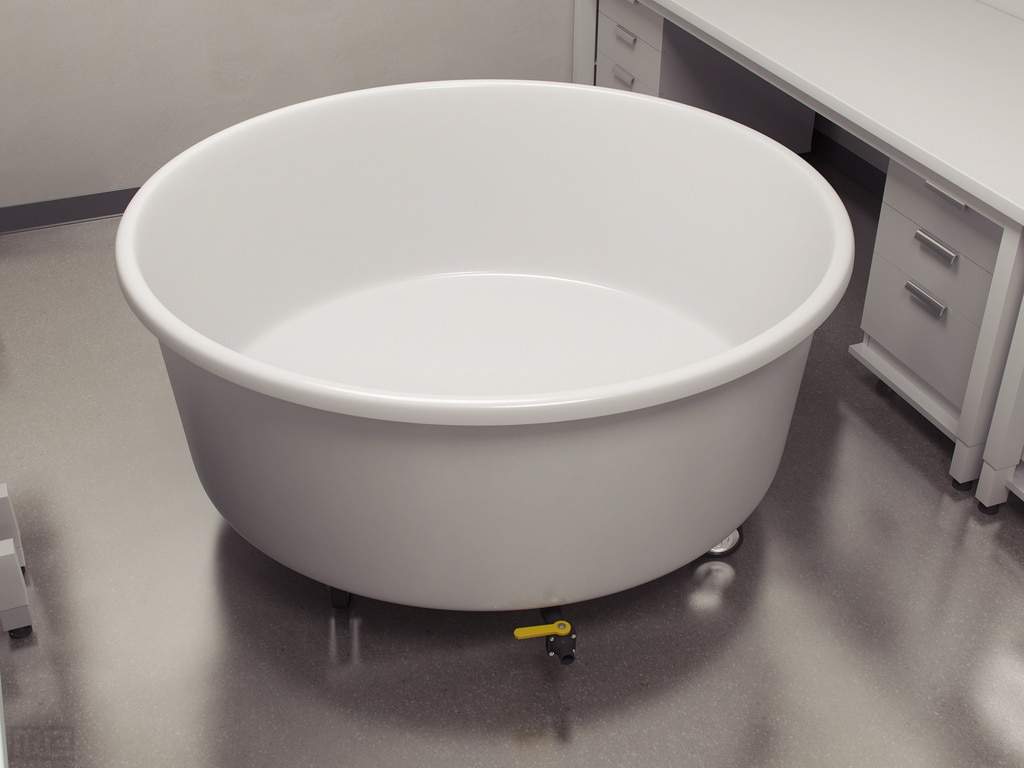
Gold standard circular water maze for assessing spatial learning and memory in rodents through hippocampal-dependent navigation tasks.

Director of Science · ConductScience
Ask Louise about Morris Water Maze fit, setup, configuration, or quote prep.
Already working with us? Sign in to connect this with My Scientist.
“Dissociable Structural and Functional Hippocampal Outputs via Distinct Subiculum Cell Classes”
The water maze (tank: ∼1.2 m diameter, Maze Engineers, Cambridge, MA) was maintained at 24°C, with water made opaque through addition of non-toxic white tempera paint.
Maze Engineers, the maker named in the paper, is part of ConductScience.
Last counted
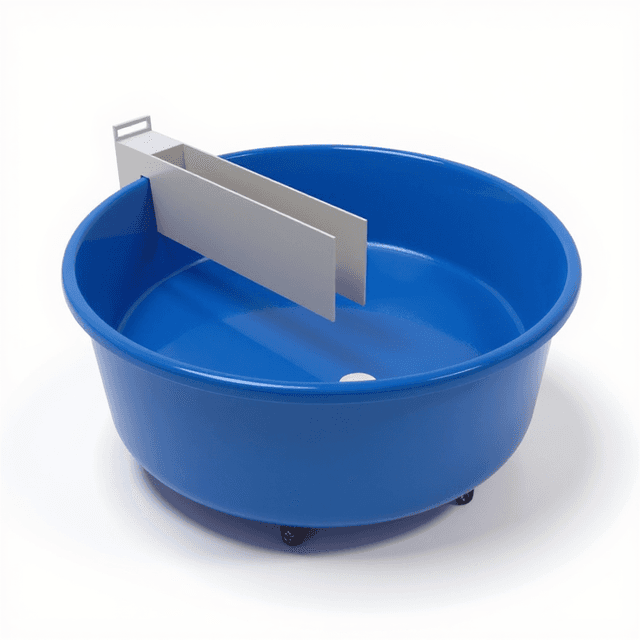
The Morris Water Maze is the gold standard behavioral apparatus for assessing spatial learning and memory in rodents. Originally developed by Richard Morris in 1984, this paradigm exploits the natural aversion of rodents to water and their innate swimming ability to evaluate hippocampal-dependent spatial navigation. The test involves placing animals in a circular pool filled with opaque water containing a hidden platform that provides escape from the water.
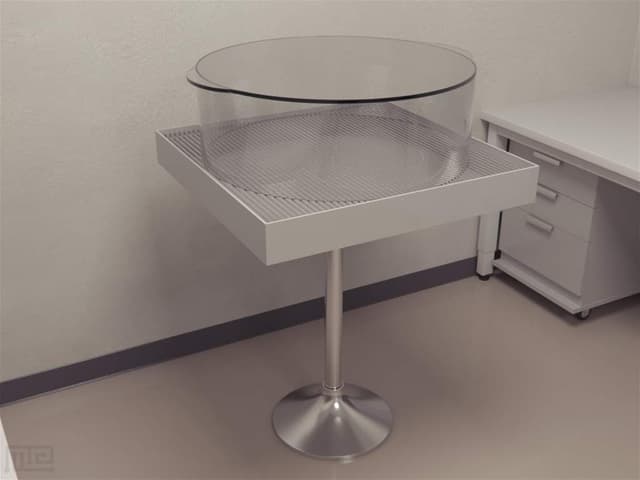
This apparatus features a 1.3-meter diameter circular pool with 0.6-meter walls, accommodating both mice and rats. The water level is maintained at 0.4 meters above the base, with the invisible platform positioned 1 cm below the surface at 0.39 meters height. The platform's silvery-white color ensures it remains concealed beneath the opaque water, while a visible black platform at 0.4 meters height serves for control trials and initial training phases.
The Morris Water Maze operates on the principle that rodents possess an innate aversion to water and will actively seek an escape platform. During acquisition trials, animals are placed at various starting positions around the pool perimeter and must navigate to locate the hidden platform using distal visual cues positioned around the testing room. The opaque water prevents animals from seeing the platform directly, forcing reliance on spatial memory and cognitive mapping rather than local visual or olfactory cues.
The hippocampus constructs a cognitive map of the spatial environment through integration of visual landmarks, allowing animals to develop allocentric spatial representations. Performance is measured through latency to platform, path length, swimming speed, and search strategies. Probe trials, conducted with the platform removed, assess memory consolidation by measuring time spent in the target quadrant where the platform was previously located.
Multiple task variants can be implemented using the same apparatus, including reference memory tasks (fixed platform location), working memory protocols (changing platform positions), and reversal learning paradigms. The silvery-white invisible platform and black visible platform allow researchers to alternate between spatial memory testing and control conditions within the same experimental session.
These IDs come from the Measurement Method Ontology (MMO) and NCBI Taxonomy. Use them in data records and methods sections.
MMO:0000402NCBITaxon:10090 NCBITaxon:10116 | Measurement | 4 Ft (Mouse) | 5ft (Intermediate) | 6 Ft (Rat) |
|---|---|---|---|
| Diameter | 120 cm | 155 cm | 180 cm |
| Height | 81 cm | 89 cm | 76 cm |
| Feature | This Product | Typical Alternative | Advantage |
|---|---|---|---|
| Pool Diameter | 1.3 meters | Entry-level models often range from 1.0-1.2 meters | Larger diameter provides more spatial area for complex navigation strategies and reduces wall-hugging behavior. |
| Platform System | Dual platforms (visible black, invisible silvery-white) | Basic models may include only one platform type | Enables within-session comparison of spatial versus sensorimotor performance without apparatus changes. |
| Wall Height | 0.6 meters | Standard models typically offer 0.4-0.5 meter walls | Higher walls prevent escape attempts while providing better overhead tracking visibility. |
| Species Compatibility | Optimized for both mouse and rat testing | Many models are species-specific | Single apparatus accommodates diverse research programs without requiring separate equipment purchases. |
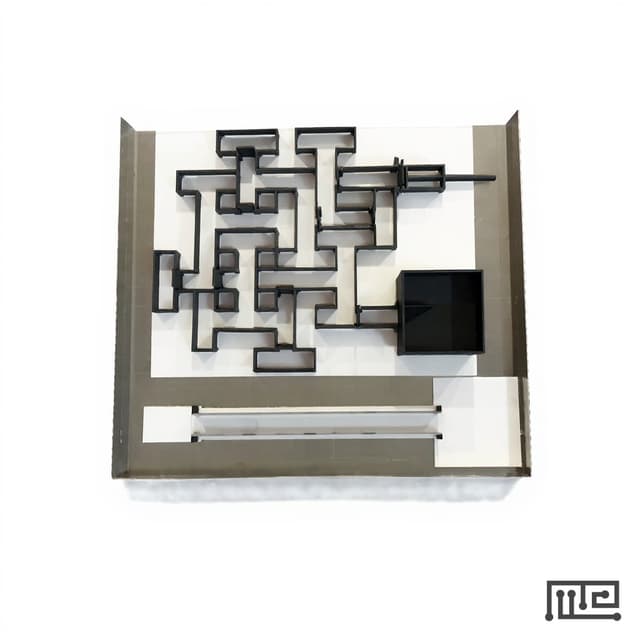
| Configuration Flexibility | Compatible with T-Maze, RAM, Y-Maze, Plus Maze variants | Standard models are limited to basic circular configuration | Multiple paradigms possible with same base apparatus, expanding experimental capabilities. |
| Customization Options | Available upon request | Fixed configurations with limited modification options | Accommodates specific research requirements and novel experimental protocols. |
This Morris Water Maze provides comprehensive spatial learning assessment capabilities through its dual platform system, species-flexible design, and configuration versatility. The 1.3-meter diameter and 0.6-meter walls offer optimal dimensions for robust behavioral phenotyping across multiple experimental paradigms.
| Model | Size | SKU | Listed price | Status | Shipping box |
|---|---|---|---|---|---|
| 4 Ft (Mouse) | Diameter 120 cm · Height 81 cm | 3101-01 (+1) | $1,490.00 | Available | 200.0 × 200.0 × 100.0 cm |
| 5ft (Intermediate) | Diameter 155 cm · Height 89 cm | 3101-04 (+1) | $1,690.00 – $1,790.00 | Available | 200.0 × 200.0 × 100.0 cm |
| 6 Ft (Rat) | Diameter 180 cm · Height 76 cm | 3101-02-WHITE (+2) | $1,990.00 | Available | 200.0 × 200.0 × 100.0 cm |
Verify platform height daily using a ruler to ensure the invisible platform remains exactly 1 cm below water surface.
Why: Platform depth consistency is critical for standardized escape latencies and motivation levels.
Clean pool walls weekly with mild detergent to remove biofilm buildup that could provide tactile navigation cues.
Why: Wall cleanliness maintains reliance on distal visual cues rather than proximal tactile information.
Randomize starting positions across trials while maintaining equal representation of all quadrant entry points.
Why: Balanced start positions prevent development of response strategies that bypass spatial memory formation.
Record ambient room temperature and lighting conditions with each session to identify environmental variables affecting performance.
Why: Environmental consistency ensures that performance changes reflect experimental manipulations rather than testing conditions.
If animals show excessive floating behavior, reduce trial duration and increase inter-trial intervals to maintain motivation.
Why: Floating indicates learned helplessness that compromises spatial learning assessment.
Monitor animals continuously during trials and have towels readily available for immediate drying after platform location.
Why: Rapid drying prevents hypothermia and reduces stress that could influence subsequent trial performance.
Conduct probe trials at consistent time intervals after acquisition to standardize memory consolidation assessment.
Why: Timing consistency enables comparison of memory strength across different experimental groups.
Replace water opacity agents when platform becomes visible from any angle to maintain spatial memory requirements.
Why: Platform visibility compromises the cognitive demands of the task and invalidates spatial memory assessment.
ConductScience provides a one-year manufacturer warranty covering materials and workmanship defects, with technical support for setup and protocol optimization.
Background reading relevant to this product:
What is the Morris Water Maze?
The Morris Water Maze is a behavioral apparatus used to assess spatial learning and memory in rodents. Animals navigate a circular pool of opaque water to locate a hidden submerged platform, relying on external visual cues for orientation.
How does the Morris Water Maze work?
Rodents are placed in a water-filled circular pool where they must swim to find a hidden platform below the surface. Over repeated trials, researchers measure escape latency, path length, and swim patterns to quantify spatial memory acquisition and recall.
What research applications use the Morris Water Maze?
The Morris Water Maze is widely used in Alzheimer's disease research, drug screening for cognitive enhancers, and studies of hippocampal-dependent spatial memory. It is also applied in neurotoxicology and traumatic brain injury models.
Each paper below used this product. Under each title is the paper’s own sentence naming the equipment it used.
Imaging in the Morris water maze (MWM) was performed in a circular maze (120 cm in diameter; Maze Engineers) filled with water mixed with nontoxic white paint (Acrylic white paint – Blick).
The Morris water maze (MazeEngineers) consisted of a cued phase to test the physical ability of the mice to complete the task, followed by a training/spatial learning phase and finally, a spatial memory test phase (16).
...GWI exposure model. The MWM consisted of a pool 160 cm diameter and 60 cm in height (Maze Engineers, Skokie, IL, USA) filled with water opaqued with non-toxic white tempera (Blick Art Materials,...
...for 30 minutes before testing. The Morris water maze is a large plastic tank (~132 cm diameter, Maze Engineers, Skokie, IL) filled with tap water maintained at 22 °C and made opaque with white tempera paint.
...area of 100 cm2 (10 × 10 cm) and a height of 10 cm. Both the MWM and T-Insert were built by Maze Engineers and housed at the Garrison Institute of Aging (GIA) behavioral facility at TTUHSC.
Briefly, mice were placed in a circular pool (122cm in diameter, blue polyethylene, made by Maze Engineers) filled with water made with non-toxic chalk.
...a commercially-obtained circular mouse swimming pool measuring 5 ft in diameter and 31 cm deep (Maze Engineers, MA, USA) was filled with tap water mixed with non-toxic water-based white paint.
A hidden platform (12.6 cm in diameter, 1 cm below water surface, ConductScience) was placed in the quadrant opposite of entry quadrant.
...at 4 weeks post-TBI at the San Francisco VA Animal Behavior Core Facility. A swimming pool (Maze Engineers) filled with opaque water was monitored using video tracking software, Ethovision XT13 (Noldus),...
...120 cm MWM pool (Maze engineers, Cambridge, MA), Heater (Maze engineers), Platform (30cm, Maze engineers), Gantry (Maze engineers)...
...RAWM test was performed in a circular pool (diameter = 121 cm, depth 75 cm, Fig 1A and 1B) (MazeEngineers, Boston, MA).
The water maze (tank: ∼1.2 m diameter, Maze Engineers, Cambridge, MA) was maintained at 24°C, with water made opaque through addition of non-toxic white tempera paint.
The pool was made by Maze Engineers (Cambridge, MA), and measured 120 cm in diameter and 81 cm in height.
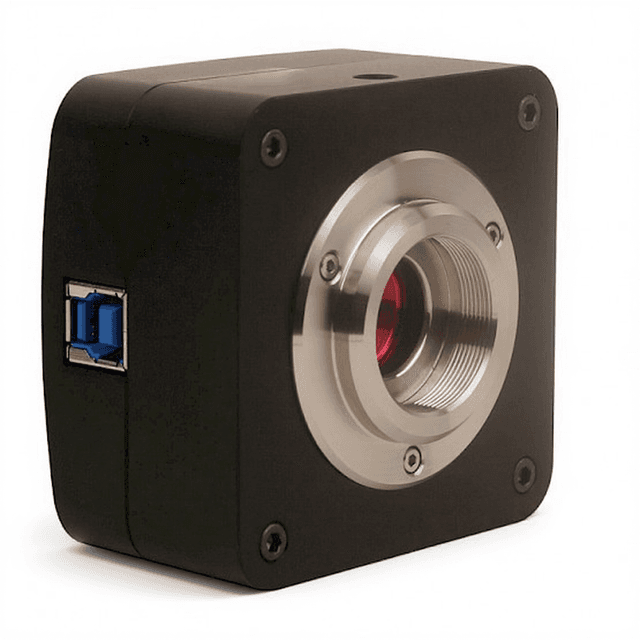
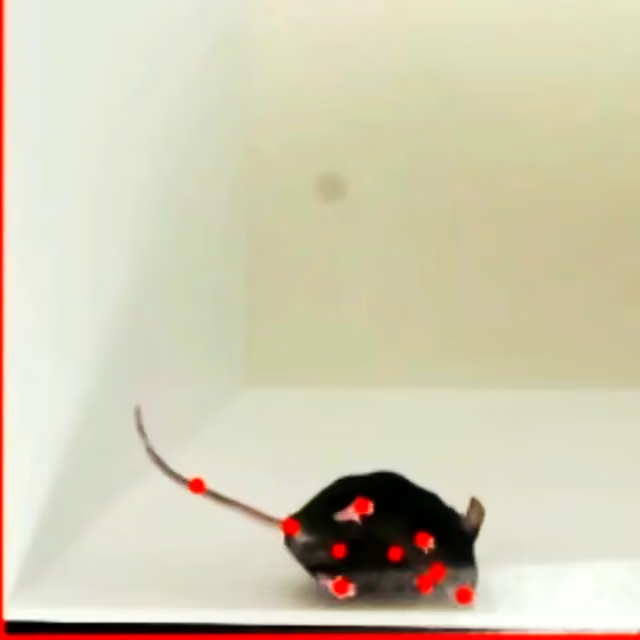
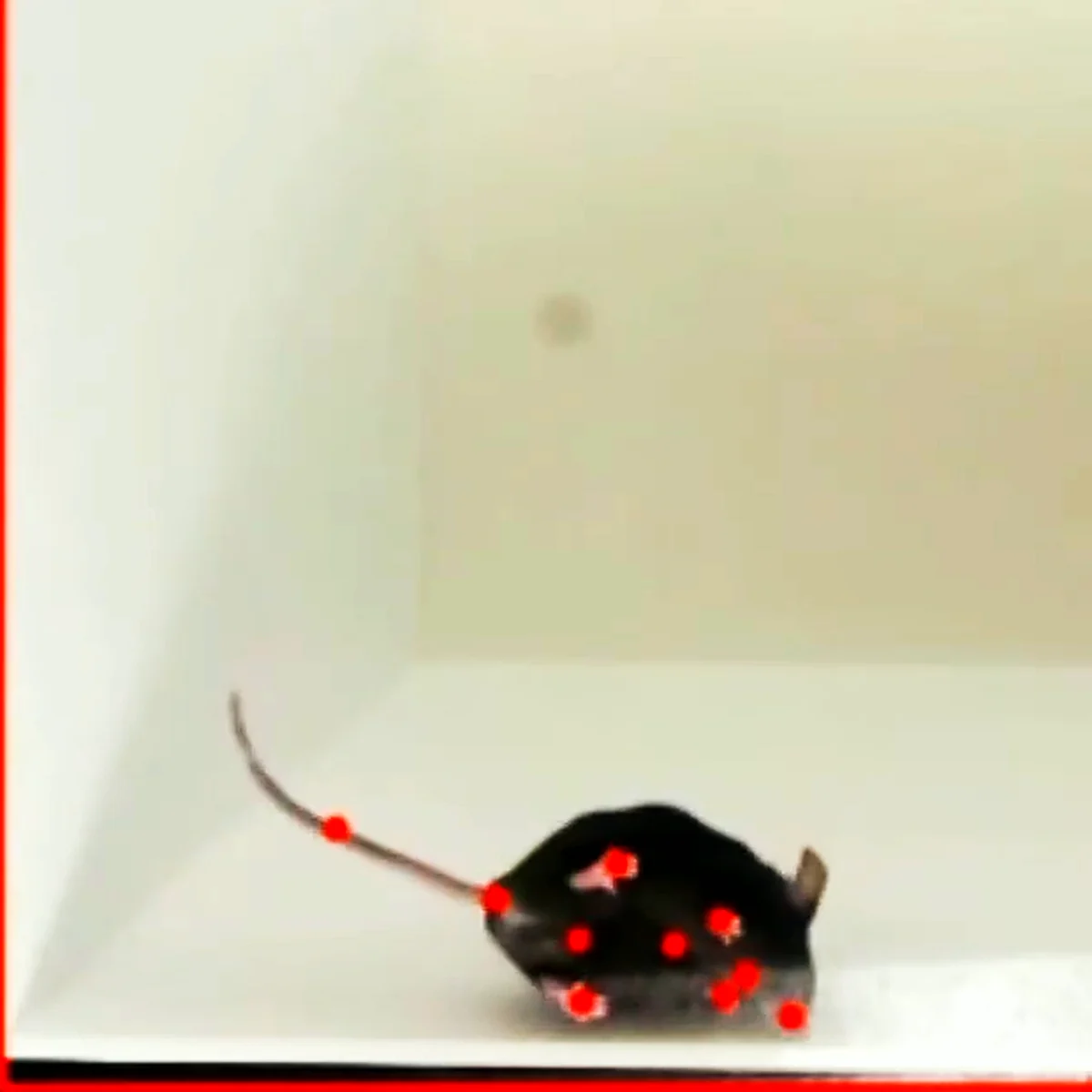
ConductVision is our video-tracking software. Record your sessions on video, and it reports the measures listed below.
A 5-year license is $3,990 in total.
The same license also scores standard tests such as the open field, the elevated plus maze, the Y-maze and the Barnes maze. Results export as CSV files.
Send it over and we'll email you a personalized answer, with no call or scheduling.
Prefer to talk it through?
Enhance your setup with compatible accessories
Creator Insights
Richard G. M. Morris is a British neuroscientist and Professor of Neuroscience at the University of Edinburgh, where much of his career has been spent studying how the brain forms and stores memories. A Fellow of the Royal Society, his research centers on the hippocampus, spatial learning, and the synaptic mechanisms — including NMDA-receptor-dependent long-term potentiation — that underlie memory formation and consolidation. He developed the water maze in the early 1980s to test whether animals could navigate to a hidden goal using distal spatial cues alone, and the task has since become one of the most widely used assays of hippocampus-dependent spatial memory in neuroscience.
To view Richard G. M. Morris’s publications, visit PubMed.
Are you Richard G. M. Morris? to review your photo and bio, and find out how to submit Creator Insights.
ConductScience celebrates method creators: researchers who, through rigorous and often ingenious experiments, develop the tools that reveal how the brain and body work. These are real scientific discoveries that become everyday instruments for the labs that follow.
Use this apparatus with
Automate path length, quadrant occupancy, platform crossings, and probe trial heatmaps from overhead video.
ConductVision MWM ->Acquisition, visible platform, probe, reversal, and working-memory schedules with metric definitions.
ConductMaze MWM Protocol ->Free tool for escape latency, path efficiency, target quadrant preference, and probe trial summaries.
MWM Analyzer ->§ 1
The Morris Water Maze is a hippocampal-dependent spatial learning task in which rodents learn the location of a hidden escape platform using distal room cues. Morris introduced the task as a way to separate place learning from simple cue approach behavior, and it became the reference assay for spatial memory because the platform can be removed during a probe trial to test memory without reinforcement. 1
The paradigm is widely used in Alzheimer disease, traumatic brain injury, stroke, aging, and pharmacology because acquisition curves, search strategy, and probe-trial bias can be measured in the same apparatus. 1 The visible-platform control is essential because motor impairment, visual impairment, thermoregulation, and stress reactivity can all masquerade as memory deficits. 2
A strong MWM methods section therefore needs pool size, platform, cue, and tracking details alongside enough protocol context to avoid swim-stress and motor-confound errors. 1
§ 2
Hidden-platform acquisition followed by probe and visible-platform control trials.
Critical methodological constraints
Core MWM metrics ConductVision scores from swim trajectories.
Escape Latency
Acquisition curve
Path Length
Motor-normalized learning
Target Quadrant Time
Probe memory
Platform Crossings
Spatial precision
Thigmotaxis
Search strategy control
+ Additional metrics: swim speed, heading error, cumulative search error, annulus crossings, quadrant entropy, floating time, and path efficiency.
A simple probe-trial index: target quadrant time divided by total quadrant time.
§ 3
Representative acquisition and probe output from a hidden-platform study.
§ 4
Limitations of the paradigm, methodological caveats, and current directions.
Variables that can shift Morris Water Maze results apart from the effect under study.
Latency increases when animals swim slowly. Report path length and swim speed before calling a latency change a memory deficit.3
Floating and passive coping reduce apparent search. Track immobility separately from spatial navigation.
Visual impairment can impair cue-based navigation. Visible-platform performance is the practical control.
Cold water changes motivation and physiology. Keep temperature constant and monitor vulnerable strains or aged animals.
Chaining, circling, and wall-hugging can reduce latency without true place learning. Strategy labels help separate these cases.
MWM is powerful because it couples acquisition with a probe trial, but it is also stressful and motor-loaded. 1 Studies involving injury, aging, frailty, or motor phenotypes should report visible-platform controls, swim speed, and path-based endpoints before interpreting latency as cognition. 2
Use Barnes Maze when swimming stress, hypothermia, motor impairment, or repeated longitudinal testing would confound MWM interpretation. 1
No. Latency should be paired with path length, swim speed, thigmotaxis, and probe-trial measures because latency can improve through non-spatial strategies.
Many protocols use 4 to 6 acquisition days with several trials per day, then a probe trial after criterion or the final acquisition day. Match schedule to strain, age, and manipulation.
Quarterly editorial review of emerging Morris Water Maze methodology. Q2 2026
Automated strategy labels are increasingly reported with latency to distinguish spatial search from chaining and thigmotaxis.
AD, TBI, and stroke studies increasingly combine MWM with dry-land spatial tasks to separate memory from motor and stress effects.
Reviewers expect visible-platform controls when treatments plausibly affect motor function, vision, or motivation.
Thermal management and posture-aware scoring are becoming standard for aged and injured cohorts.
§ 5
10 selected methods and validation studies of the Morris Water Maze, from any lab.