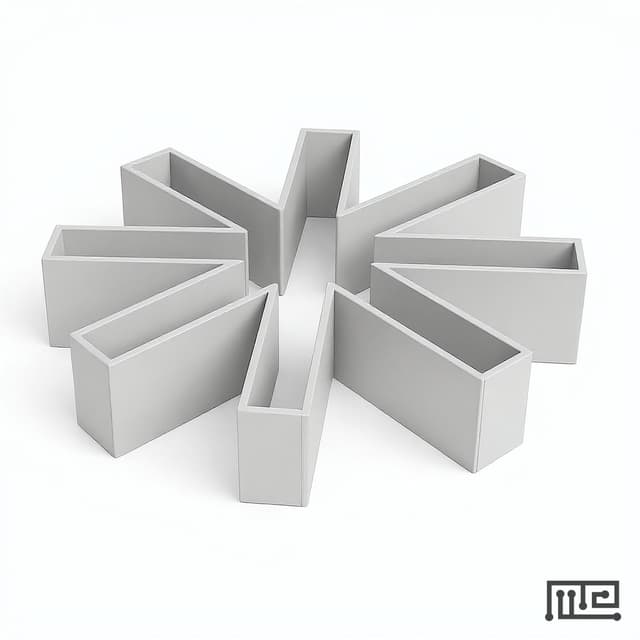
Morris Water Maze Float Platform
Dual platform system (floating and fixed) for Morris water maze spatial learning experiments in mice and rats, available in multiple colors for varied experimental protocols.

Louise Corscadden, PhD
Director of Science · ConductScience
Ask Louise about Morris Water Maze Float Platform fit, setup, configuration, or quote prep.
Already working with us? Sign in to connect this with My Scientist.
Key Specifications
Full details →- Model fit
- Mouse, Rat
- SKU family
- ME-3158/3159
- Shipping box
- 43.2 x 38.0 x 27.9 cm
- Ordering
- Online checkout and quote request available
- Category
- Behavioral Mazes
- Build notes
- Confirm accessories, station layout, and support needs before purchase
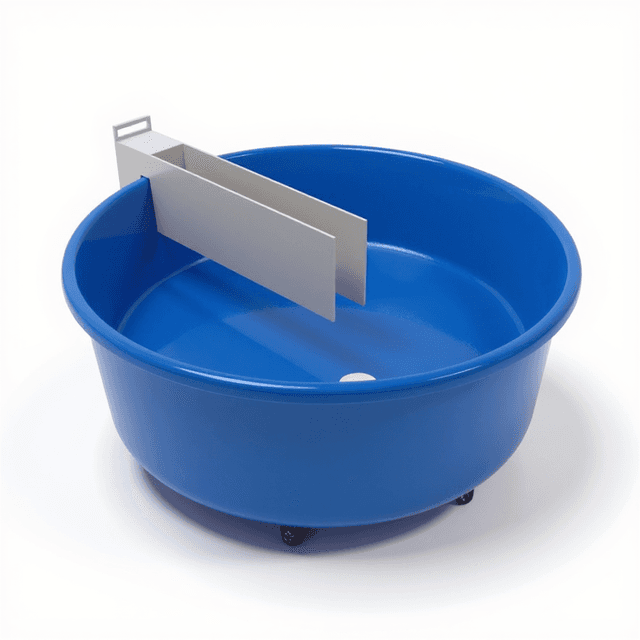
The Morris Water Maze Float Platform is a precision-engineered platform system designed for spatial learning and memory assessment in laboratory rodents. This platform set includes both floating and fixed platform configurations, enabling researchers to conduct comprehensive spatial navigation experiments that evaluate hippocampal function and cognitive performance.
Available in multiple colors to accommodate different experimental protocols and lighting conditions, these platforms serve as the critical escape target in Morris water maze paradigms. The dual platform design allows for flexible experimental approaches, including acquisition trials with fixed platforms and probe trials with floating platforms, providing researchers with standardized tools for investigating spatial memory formation, retention, and retrieval in mouse and rat models.
How It Works
The Morris water maze platform system operates on the principle of spatial reference memory, where rodents must navigate to a hidden platform using distal spatial cues. The fixed platform remains in a constant location during acquisition trials, forcing animals to develop a spatial map of the environment and learn the platform's coordinates relative to external landmarks.
During probe trials, the floating platform can be repositioned or removed entirely, allowing researchers to assess the strength and specificity of spatial memory formation. Animals demonstrate learned spatial preference by spending more time in the target quadrant where the platform was previously located, indicating successful encoding of spatial relationships.
The multiple color options enable experimental flexibility, as platform visibility can be manipulated to test different aspects of spatial versus cued navigation. Researchers can use visible platforms to assess motor function and motivation independently from spatial memory, then transition to hidden platforms to isolate hippocampal-dependent spatial learning processes.
Features & Benefits
Behavioral Construct
- Spatial Learning
- Spatial Memory
- Reference Memory
- Navigation
- Hippocampal Function
Automation Level
- manual
Research Domain
- Aging Research
- Behavioral Pharmacology
- Learning and Memory
- Neurodegeneration
- Neuroscience
- Toxicology
Compatible Tracking Software
- ConductVision
Shipping weight
- 21.0 lb
Shipping box
- L: 43.2 cm
- W: 38.0 cm
- H: 27.9 cm
| Feature | This Product | Typical Alternative | Advantage |
|---|---|---|---|
| Platform Configuration | Includes both floating and fixed platforms | Many systems provide only one platform type | Enables comprehensive experimental design with both acquisition and probe trial capabilities in a single purchase |
| Color Options | Seven color choices (Black, Blue, Clear, Grey, Red, White, Yellow) | Basic models often limited to 2-3 color options | Provides experimental flexibility to optimize contrast conditions for different lighting environments and protocol requirements |
| Species Compatibility | Species-optimized sizing for both mouse and rat | Some platforms use one-size-fits-all approach | Ensures appropriate platform-to-body size ratios for reliable spatial navigation behavior across rodent species |
| Platform Mobility | Floating platform allows repositioning during trials | Fixed-only platforms limit experimental flexibility | Supports advanced experimental protocols including probe trials and transfer learning assessments |
This platform system combines standardized Morris water maze design with experimental flexibility through dual platform types and comprehensive color options. The species-specific sizing and floating platform capability support sophisticated spatial learning protocols while maintaining reproducible experimental conditions.
| Model | SKU | Listed price | Status | Shipping box |
|---|---|---|---|---|
| Rat | ME-3159-Y | $690.00 | Available | 43.2 x 38.0 x 27.9 cm |
| Rat | ME-3159-W | $690.00 | Available | 43.2 x 38.0 x 27.9 cm |
| Rat | ME-3159-R | $690.00 | Available | 43.2 x 38.0 x 27.9 cm |
| Rat | ME-3159-E | $690.00 | Available | 43.2 x 38.0 x 27.9 cm |
| Rat | ME-3159-C | $690.00 | Available | 43.2 x 38.0 x 27.9 cm |
| Rat | ME-3159-U | $690.00 | Available | 43.2 x 38.0 x 27.9 cm |
| Rat | ME-3159-B | $690.00 | Available | 43.2 x 38.0 x 27.9 cm |
| Mouse | ME-3158-Y | $590.00 | Available | 43.2 x 38.0 x 27.9 cm |
| Mouse | ME-3158-W | $590.00 | Available | 43.2 x 38.0 x 27.9 cm |
| Mouse | ME-3158-R | $590.00 | Available | 43.2 x 38.0 x 27.9 cm |
| Mouse | ME-3158-E | $590.00 | Available | 43.2 x 38.0 x 27.9 cm |
| Mouse | ME-3158-C | $590.00 | Available | 43.2 x 38.0 x 27.9 cm |
| Mouse | ME-3158-U | $590.00 | Available | 43.2 x 38.0 x 27.9 cm |
| Mouse | ME-3158-B | $590.00 | Available | 43.2 x 38.0 x 27.9 cm |
Practical Tips
Verify platform positioning accuracy using pool grid coordinates before each experimental session.
Why: Consistent platform location is critical for spatial reference memory formation and inter-session reliability.
Inspect platform surface for scratches or texture changes that could provide tactile cues to animals.
Why: Surface irregularities can serve as inadvertent cues that interfere with spatial navigation assessment.
Rotate platform colors between experimental cohorts to prevent color-specific learning effects.
Why: Color rotation ensures that spatial learning assessment is not confounded by color preferences or aversions.
Record platform color and water opacity conditions for each experimental session in metadata.
Why: Platform visibility parameters significantly influence navigation strategies and must be documented for result interpretation.
If animals show platform avoidance, verify water temperature and platform stability before attributing to cognitive deficits.
Why: Physical discomfort or platform instability can produce apparent learning deficits that are actually motivational or sensorimotor issues.
Ensure platform edges are smooth to prevent injury during animal mounting and dismounting.
Why: Sharp edges can cause paw injuries that affect subsequent performance and animal welfare.
Use different platform positions for habituation versus test trials to prevent position-specific learning.
Why: Spatial learning assessment requires that animals learn platform location relative to distal cues, not fixed coordinates.
Setup Guide
What’s in the Box
- One floating platform (species-specific size)
- One fixed platform (species-specific size)
- User manual with setup instructions
Warranty
ConductScience provides a one-year manufacturer warranty covering material defects and construction quality, with technical support for experimental protocol optimization.
Compliance
References
Background reading relevant to this product:
What platform dimensions are appropriate for mouse versus rat experiments?
Platform sizing is species-optimized in the respective mouse (ME-3158) and rat (ME-3159) versions to provide appropriate body support while maintaining standardized escape target size ratios relative to pool dimensions.
How do I determine optimal platform visibility for hidden versus cued trials?
Use high-contrast colors (white/black) against pool background for visible cued trials, and colors matching water opacity for hidden spatial trials. Clear platforms work well when water contains white tempera paint.
What is the recommended platform submersion depth for spatial trials?
Position platform surface 1-2 cm below water surface for hidden trials, ensuring animals cannot see the platform while maintaining shallow enough depth for easy escape upon contact.
How should I clean platforms between experimental sessions?
Rinse platforms with distilled water and dry thoroughly between trials to remove olfactory cues. Use mild detergent for deep cleaning, followed by extensive rinsing to eliminate residual odors.
Can platforms be repositioned during probe trials?
Yes, the floating platform design allows for repositioning or complete removal during probe trials to assess spatial memory specificity and search strategy analysis.
What factors affect platform color selection for experiments?
Consider room lighting conditions, water opacity, and experimental goals. High contrast colors facilitate cued navigation assessment, while matched colors enable isolation of spatial navigation abilities.
How do I validate proper platform installation before trials?
Confirm platform stability, appropriate submersion depth, consistent positioning relative to spatial cues, and verify that escape latencies fall within expected ranges during preliminary testing.
Have a question about this product?
Have a question? Just ask.
Send it over and we'll email you a personalized answer — no call, no scheduling.
Prefer to talk it through?
Accessories
Enhance your setup with compatible accessories
Frequently Bought Together