1 / 5
Rondi Reig Star Maze
SKU ME-3156
$3,290.00
IncludesStandard care
The original Star maze was described in the literature by Dr.
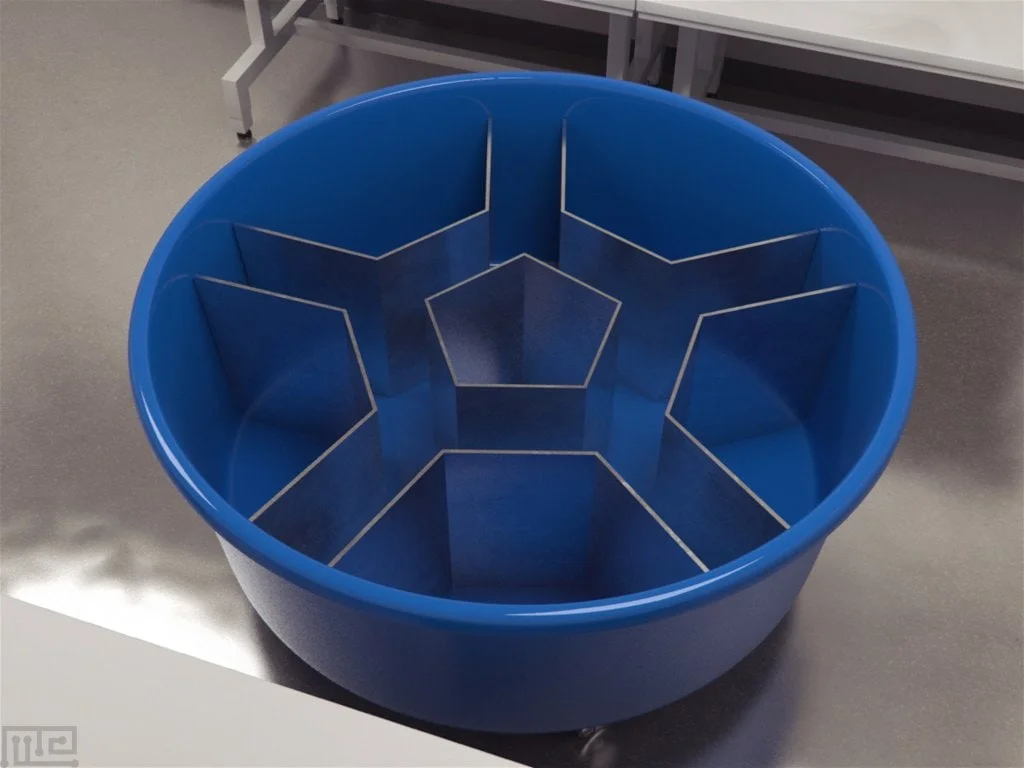
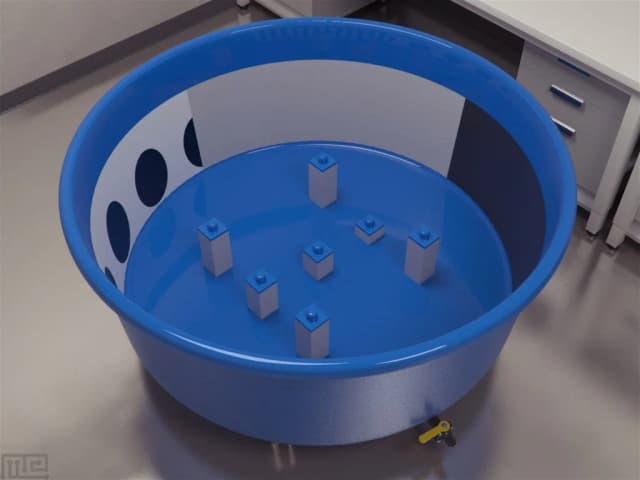
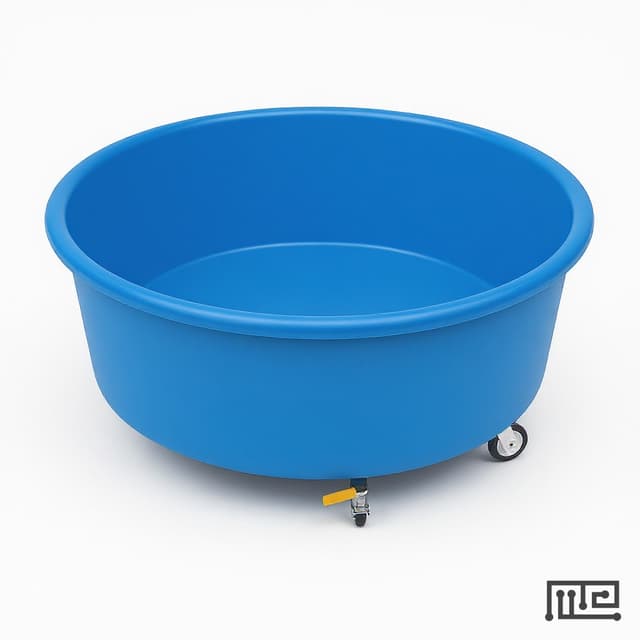
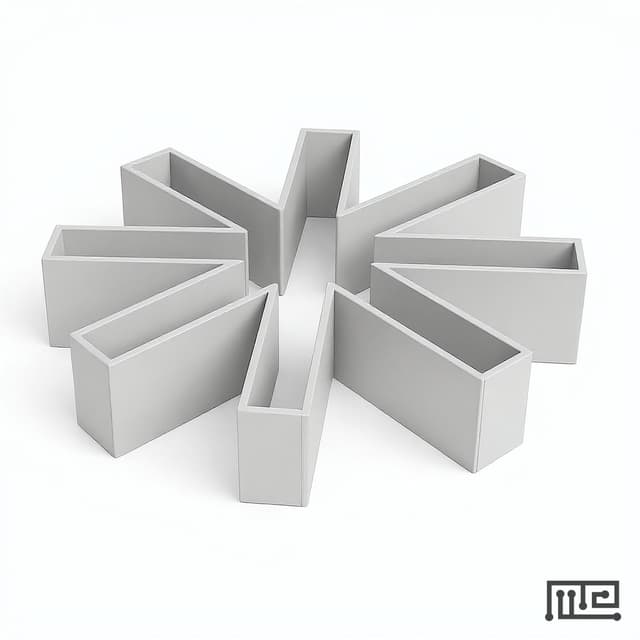
Laure Rondi-Reig as a method to study spatial navigation and its two different orientation systems, allocentric and egocentric navigation. The original maze in the literature utilized a round acrylic arena with a star in the middle. The MazeEngineers iteration takes the Morris Water maze as an external boundary for the Star Maze Task. Inserts are provided to fit your Morris Water Maze, with the added benefit that the classic Morris Water Maze task can be done in addition to the Star maze. The star is made from Stainless steel for long term use and minimization of corrosion.
Scientist guidance

Louise Corscadden, PhD
Director of Science · ConductScience
Ask Louise about Rondi Reig Star Maze fit, setup, configuration, or quote prep.
Already working with us? Sign in to connect this with My Scientist.
Key Specifications
Full details →- Model fit
- rodents
- SKU family
- ME-3155/3156
- Shipping box
- 43.2 x 38.0 x 27.9 cm
- Ordering
- Online checkout and quote request available
- Category
- Behavioral Mazes
- Build notes
- Aluminum
Overview
The Rondi Reig Star Maze is a behavioral research tool developed by Dr. Laure Rondi-Reig for studying spatial navigation in rodents. It combines elements of the Morris Water Maze and T-Maze to simultaneously analyze both allocentric (map-based) and egocentric (route-based) navigation strategies — an ability unique among spatial learning paradigms.
The apparatus features a five-arm star configuration with a central pentagonal ring and radiating alleys. The stainless steel star insert minimizes corrosion and fits within existing Morris Water Maze tanks (4 ft or 6 ft diameter), enabling researchers to run both classic Morris Water Maze and Star Maze tasks.
Key Features
| Feature | Description |
|---|---|
| Five-Arm Star Design | Central pentagonal ring with radiating alleys enables complex navigation paradigms |
| Multiple Navigation Strategies | Simultaneously distinguishes allocentric, sequential-guidance, and sequential-egocentric strategies |
| Morris Water Maze Compatible | Stainless steel inserts fit within existing Morris Water Maze tanks (4 ft or 6 ft) |
| Dual Use | Classic Morris Water Maze and Star Maze tasks in one setup |
| Translational Value | Insights into hippocampal and cerebellar involvement in spatial memory for age-related cognitive decline research |
| Pharmacological & Disease Modeling | Supports drug studies, knock-out mouse phenotyping, and memory disorder models |
Training Protocol
Pre-Training Phase
Rodents start from a fixed alley to locate a hidden escape platform in a designated alley. Water is made opaque with non-toxic agents (powdered milk).
Probe Tests
Starting points are shifted to determine navigation strategy preferences. Three strategy categories are assessed:
- Allocentric (map-based): Relies on external room landmarks; tested with randomized starting points and visible distal cues
- Sequential-guidance: Follows intra-maze cue sequences
- Sequential-egocentric: Depends on body turn sequences; tested under black curtain to remove external cues
Behavioral Parameters
- Time spent mobile vs. freezing
- Latency to first head poke
- Number and total time of head pokes
- Behavioral shifts across days
- Mean number of alleys visited (memory impairment severity indicator)
- Navigation strategy selection (allocentric vs. egocentric)
Applications
- Spatial navigation strategy assessment (allocentric vs. egocentric)
- Hippocampal and cerebellar function research
- Pharmacological intervention testing
- Age-related cognitive decline modeling
- Knock-out mouse behavioral phenotyping
- Memory disorder research
- Developmental and strain-specific behavioral comparisons
Specifications
| Configuration | Details |
|---|---|
| 4 ft Setup | Stainless steel star insert to fit 4 ft Morris Water Maze |
| 6 ft Setup | Stainless steel star insert to fit 6 ft Morris Water Maze |
| Materials | Stainless steel star insert, aluminum alleys |
| Hidden Platform | Escape platform in designated alley |
About the Inventor
Dr. Laure Rondi-Reig — Professor, Sorbonne University, Neuroscience Department. Head of the Cerebellum, Navigation and Memory (CeZaMe) Lab. After completing her studies in Biology and Neurosciences at Pierre and Marie Curie University (UPMC) in Paris, she earned her PhD focusing on the cerebellum role in motor and spatial learning, followed by postdoctoral training at MIT under S. Tonegawa.
Honors: CNRS Bronze Medal (2010), FRM Iagonitzer Prize (2012), SATT Lutech Innovation Prize (2019).
References
- Rondi-Reig, L., et al. (2005). The Star Maze: a new paradigm to characterize multiple spatial navigation strategies. Behavior Research Methods.
- Rondi-Reig, L., et al. (2006). Impaired sequential egocentric and allocentric memories in NMDA receptor KO mice during Star Maze task. Journal of Neuroscience, 26(15), 4071–4081.
- Morris, R. (1984). Developments of a water-maze procedure for studying spatial learning in the rat. Journal of Neuroscience Methods, 11(1), 47–60.
- Packard, M. G., & McGaugh, J. L. (1996). Inactivation of hippocampus or caudate nucleus differentially affects place and response learning. Neurobiology of Learning and Memory, 65, 65–72.
Add-ons and modifications
| Add-on | Price | Details |
|---|---|---|
| 4 Feet | $2,490 | To fit |
| 6 Feet | $3,290 | To fit |
Add any of these to your quote request.
Maze Configuration
- five alleys forming an inner pentagonal ring with additional alley branching from each pentagonal junction
Available Sizes
- ['4 Feet', '6 Feet']
Maze Type
- water maze with submerged escape platform
Number of Branches
- 5
Maze Shape
- star-shaped with pentagonal inner ring
Material
- Aluminum
Species
- rodents
Compatible Tracking Software
- ConductVision
Shipping weight
- 21.0 lb
Shipping box
- L: 43.2 cm
- W: 38.0 cm
- H: 27.9 cm
| Model | SKU | Listed price | Status | Shipping box |
|---|---|---|---|---|
| 6 Feet | ME-3156 | $3,290.00 | Available | 43.2 x 38.0 x 27.9 cm |
| 4 Feet | ME-3155 | $2,490.00 | Available | 43.2 x 38.0 x 27.9 cm |
No Q&A yet. Have a question? Ask below.
Have a question about this product?
Track rodents with ConductVision
ConductVision is our video-tracking software. Record your sessions on video, and it scores standard rodent tests, such as those listed below.
Examples of tests it scores
To check whether ConductVision scores your protocol in this apparatus, ask in your quote request.
Ask a question
Have a question? Just ask.
Send it over and we'll email you a personalized answer — no call, no scheduling.
Personalized email reply
Usually within one business day
Helpful answers published here
Prefer to talk it through?
Accessories
Enhance your setup with compatible accessories
Total: $0.00
Frequently Bought Together
Total: $2,080.00
Creator Insights
Laure Rondi-ReigDesigned the starmaze (2005–2006)Sorbonne Université / CNRS — Institut de Biologie Paris Seine (IBPS), Paris
About the Creator
Laure Rondi-Reig is a CNRS Research Director and professor at Sorbonne Université, where she leads the Cerebellum, Navigation and Memory (CeZaMe) team at the Institut de Biologie Paris Seine. After a PhD on the cerebellum’s role in motor and spatial learning, she carried out postdoctoral work at MIT in Susumu Tonegawa’s laboratory and at Boston University with Howard Eichenbaum. Her research examines how self-motion signals processed by the cerebellum interact with hippocampal circuits to support spatial navigation and episodic-like memory. To dissociate allocentric (map-based) from sequential-egocentric (route-based) navigation within a single water-maze paradigm, Rondi-Reig and colleagues designed the starmaze — a central pentagonal ring with five radiating alleys — first reported in 2005–2006.
To view Laure Rondi-Reig’s publications, visit PubMed.
Are you Laure Rondi-Reig? to review your photo and bio, and find out how to submit Creator Insights.
ConductScience celebrates method creators: researchers who, through rigorous and often ingenious experiments, develop the tools that reveal how the brain and body work. These are real scientific discoveries that become everyday instruments for the labs that follow.
Foundational papers
- Rondi-Reig, L., Petit, G. H., Tobin, C., Tonegawa, S., Mariani, J., & Berthoz, A. (2006). Impaired sequential egocentric and allocentric memories in forebrain-specific-NMDA receptor knock-out mice during a new task dissociating strategies of navigation. The Journal of Neuroscience, 26(15), 4071–4081. doi:10.1523/JNEUROSCI.3408-05.2006
- Rondi-Reig, L., Petit, G., Arleo, A., & Burguière, E. (2005). The starmaze: a new paradigm to characterize multiple spatial navigation strategies. In Measuring Behavior 2005 (proceedings). Link

Rondi Reig Star Maze
$3,290.00
Added to quoteView Quote