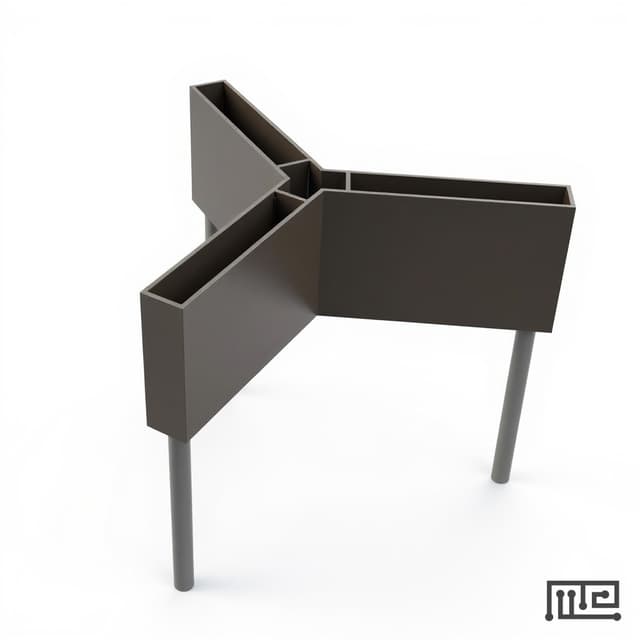
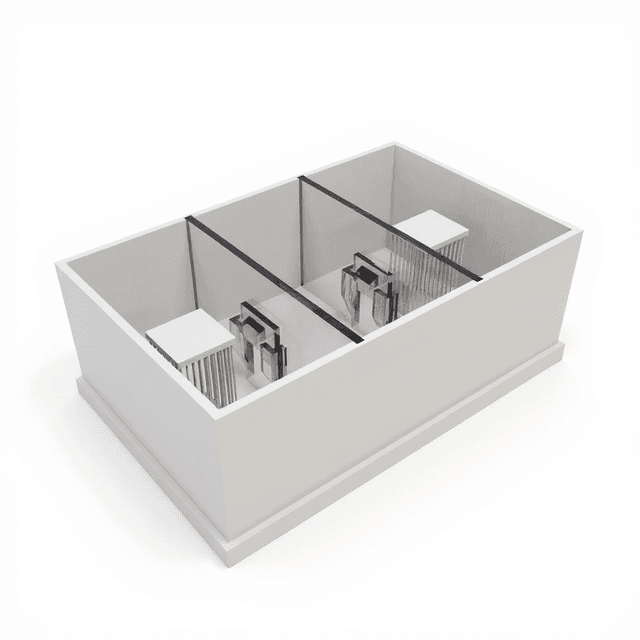
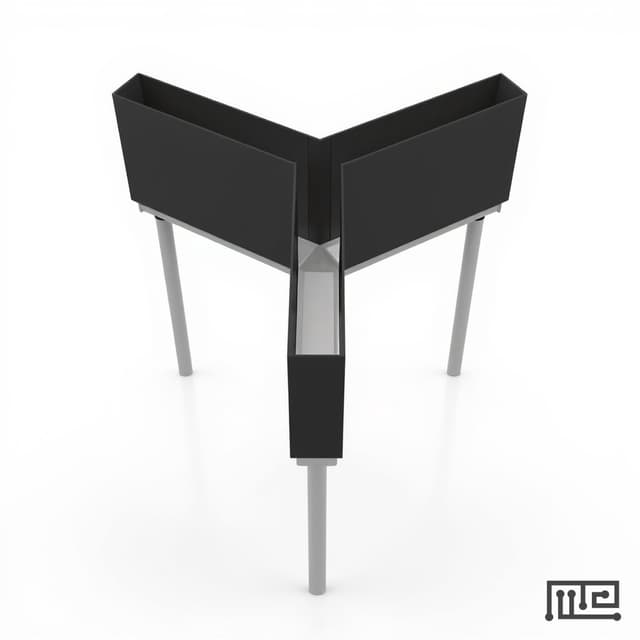
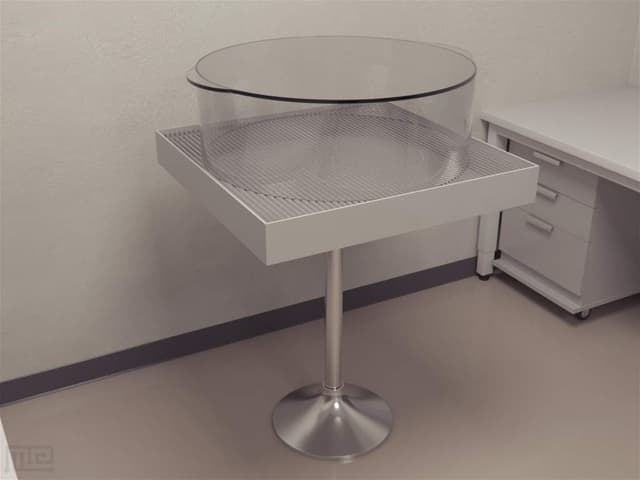
Canine DNMS test apparatus
Behavioral testing apparatus for evaluating working memory and cognitive function in canine subjects through delayed non-match to sample protocols.

Louise Corscadden, PhD
Director of Science · ConductScience
Ask Louise about Canine DNMS test apparatus fit, setup, configuration, or quote prep.
Already working with us? Sign in to connect this with My Scientist.
Key Specifications
Full details →- Model fit
- Dog
- SKU family
- CS-958196
- Shipping box
- 65.0 x 36.0 x 27.0 cm
- Ordering
- Online checkout and quote request available
- Category
- Behavioral Mazes
- Build notes
- Confirm accessories, station layout, and support needs before purchase
The Canine DNMS (Delayed Non-Match to Sample) test apparatus is a specialized behavioral testing system designed for cognitive assessment in canine subjects. This apparatus enables systematic evaluation of working memory, learning capacity, and cognitive flexibility through controlled delayed matching paradigms.
The system provides standardized protocols for assessing spatial and object recognition memory in dogs, supporting research applications in comparative cognition, neuropsychology, and behavioral pharmacology. The apparatus facilitates reproducible testing conditions essential for longitudinal studies and cross-subject comparisons in canine cognitive research.
How It Works
The DNMS protocol operates on the principle of delayed matching to assess working memory capacity. During the sample phase, the subject is presented with a stimulus object or spatial location. After a variable delay interval, the subject must select the non-matching alternative from a choice array, demonstrating retention of the sample information across the delay period.
The apparatus controls stimulus presentation timing, delay intervals, and response recording to maintain standardized testing conditions. Performance metrics include accuracy rates across different delay intervals, response latencies, and learning acquisition curves. The systematic variation of delay periods enables assessment of working memory span and temporal decay characteristics in canine subjects.
Features & Benefits
Behavioral Construct
- Working Memory
- Cognitive Flexibility
- Learning
- Recognition Memory
Automation Level
- semi-automated
Research Domain
- Aging Research
- Behavioral Pharmacology
- Learning and Memory
- Neurodegeneration
- Neuroscience
Species
- Dog
Compatible Tracking Software
- ConductVision
Shipping weight
- 6.06 lb
Shipping box
- L: 65.0 cm
- W: 36.0 cm
- H: 27.0 cm
| Feature | This Product | Typical Alternative | Advantage |
|---|---|---|---|
| Protocol Standardization | Implements standardized DNMS procedures | Custom laboratory setups often require protocol development and validation | Reduces setup time and ensures consistency with established cognitive assessment methods |
| Species-Specific Design | Optimized for canine behavioral requirements | Generic behavioral apparatus may not accommodate canine ergonomics | Enables natural behavioral responses and reduces confounding factors from inappropriate scaling |
| Timing Precision | Controlled delay interval mechanisms | Manual timing methods introduce variability | Maintains accurate temporal parameters essential for working memory assessment validity |
| Data Recording | Integrated response documentation system | Observer-based recording increases subjective interpretation | Provides objective performance metrics and reduces experimenter bias in data collection |
This apparatus offers standardized DNMS testing capabilities with species-appropriate design parameters and integrated timing controls. The system provides objective data recording and supports reproducible cognitive assessment protocols for canine research applications.
Practical Tips
Verify timing mechanism accuracy monthly using external timing reference to maintain delay interval precision.
Why: Accurate temporal parameters are critical for valid working memory assessment across different delay conditions.
Clean stimulus presentation areas after each session to prevent odor contamination that could influence subject responses.
Why: Residual scents may provide unintended cues that compromise cognitive assessment validity.
Conduct habituation sessions before formal testing to establish subject comfort with the apparatus environment.
Why: Reduced novelty stress enables focus on cognitive task demands rather than environmental adaptation.
Record ambient temperature and lighting conditions for each session to identify potential environmental confounds.
Why: Environmental consistency supports reproducible performance measures across testing sessions and subjects.
Monitor subject motivation levels throughout sessions and adjust reward schedules if performance declines significantly.
Why: Reduced motivation can confound cognitive assessment results and lead to false interpretation of memory deficits.
Ensure all mechanical components are properly secured before each session to prevent injury during subject interaction.
Why: Subject safety is paramount and mechanical failures could cause injury or create negative associations with testing.
Setup Guide
What’s in the Box
- Main testing apparatus (typical)
- Stimulus presentation components (typical)
- Response recording system (typical)
- Timing control mechanisms (typical)
- Installation hardware (typical)
- User manual and protocol guide (typical)
- Calibration tools (typical)
Warranty
ConductScience provides a standard one-year manufacturer warranty covering defects in materials and workmanship, with technical support for setup and operation procedures.
Compliance
What delay intervals can be programmed for working memory assessment?
Consult product specifications for available delay range parameters. Most DNMS protocols utilize intervals from 0 seconds to several minutes depending on research objectives.
How is response accuracy measured and recorded?
The system documents correct/incorrect choices and response latencies for each trial. Data output format and recording capabilities should be verified in technical documentation.
What stimulus types are compatible with this apparatus?
The modular design typically accommodates various object stimuli and spatial configurations. Specific stimulus requirements and mounting options are detailed in the user manual.
How many trials per session are recommended for reliable assessment?
Trial number depends on experimental design and subject attention span. Standard protocols often use 10-20 trials per delay condition for statistical reliability.
What subject size range is appropriate for this apparatus?
Consult dimensional specifications for subject accommodation requirements. Design parameters should match the size range of intended canine subjects.
How is inter-trial interval controlled between presentations?
The apparatus includes timing controls for standardized inter-trial intervals. Specific timing capabilities and programming options are detailed in technical specifications.
What maintenance procedures are required for reliable operation?
Regular calibration of timing mechanisms and cleaning of stimulus presentation areas are essential. Complete maintenance schedule is provided in the user documentation.
Have a question about this product?
Have a question? Just ask.
Send it over and we'll email you a personalized answer — no call, no scheduling.
Prefer to talk it through?