Clean Bench_ Horizontal Laminar Flow Cabinet BBS-H
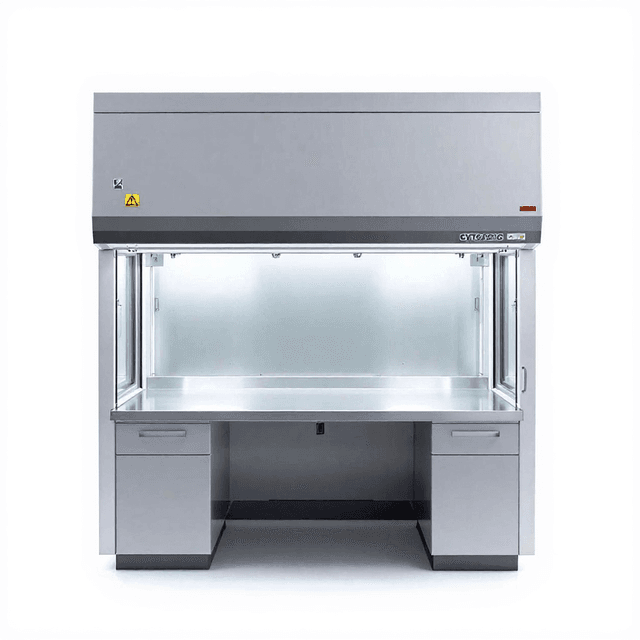
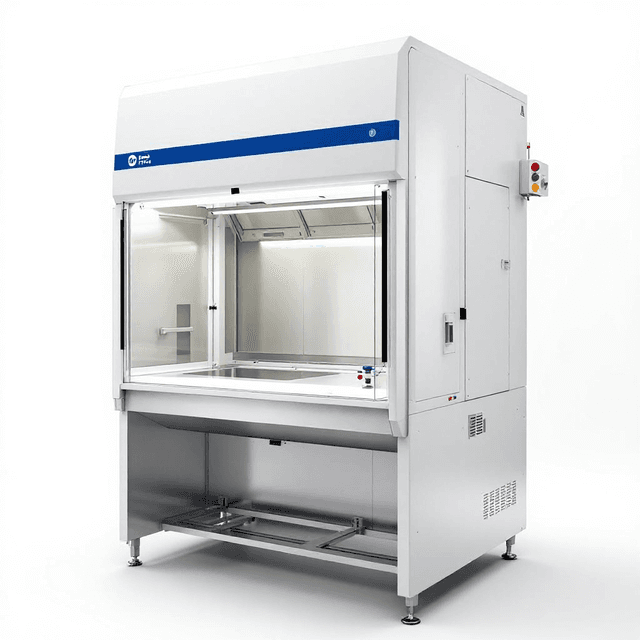
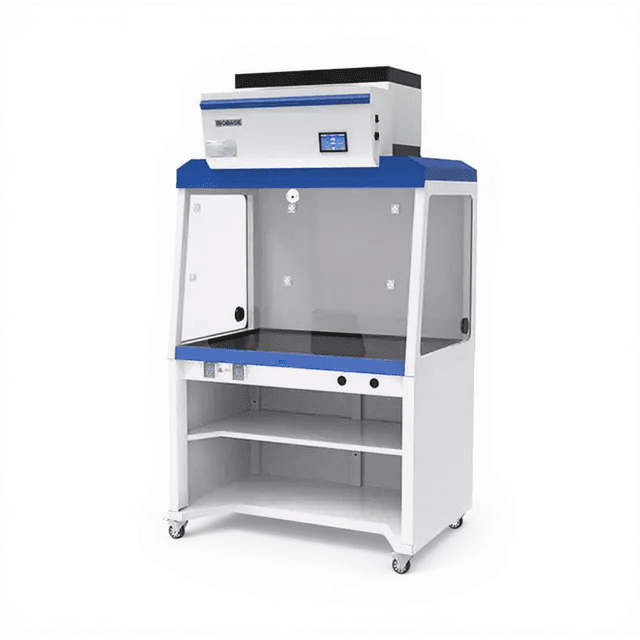
Horizontal laminar flow clean bench with HEPA filtration, three-side acrylic construction, and integrated environmental monitoring for sterile laboratory work.
A laminar flow clean bench protects only the sample. It blows filtered air toward the user, so it is not for infectious or toxic work.

Louise Corscadden, PhD
Director of Science · ConductScience
Ask Louise about Clean Bench_ Horizontal Laminar Flow Cabinet BBS-H fit, setup, configuration, or quote prep.
Already working with us? Sign in to connect this with My Scientist.
Key Specifications
Full details →- Model fit
- Configured during quote
- SKU family
- BB-BBS-H1500
- Shipping box
- 45.0 x 39.8 x 44.8 cm
- Ordering
- Online checkout and quote request available
- Category
- Clean Benches & Fume Hoods
- Build notes
- Acrylic
The Clean Bench Horizontal Laminar Flow Cabinet BBS-H provides a controlled sterile work environment through horizontal laminar airflow technology. This clean bench generates unidirectional HEPA-filtered air that flows horizontally across the work surface toward the operator, creating a particle-free zone for sensitive laboratory procedures requiring contamination control.
The cabinet features three-side transparent acrylic construction with an 8-inch sloped front window in reversal design, allowing optimal access while maintaining laminar flow integrity. Integrated temperature and humidity sensors with inside and outside air quality probes provide continuous environmental monitoring. The LCD touch screen control panel offers power-failure memory function and programmable alarm systems for filter maintenance scheduling.
How It Works
The horizontal laminar flow system operates by drawing ambient air through a pre-filter stage before passing it through a HEPA (High-Efficiency Particulate Air) filter bank. The filtered air is then distributed uniformly across the work surface in a unidirectional horizontal pattern, typically at velocities of 0.3-0.5 m/s. This laminar airflow creates a positive pressure environment within the work zone, continuously sweeping particles and contaminants away from the work surface toward the operator and room environment.
The horizontal flow pattern differs from vertical flow clean benches by directing filtered air parallel to the work surface rather than downward. This configuration provides superior protection for materials and samples while allowing easy access to the work area. Integrated sensors continuously monitor temperature, humidity, and air quality parameters both inside and outside the cabinet, with data displayed on the LCD control panel for real-time environmental assessment.
Features & Benefits
Front Window Slope
- 8 inch slope
Window Configuration
- three side transparent acrylic windows
Front Window Design
- reversal design
Base Cabinet Feature
- equipped with middle partition
Control Panel
- LCD Touch screen
Memory Function
- power-failure memory
Sensors
- temperature and humidity sensors
Air Probes
- inside and outside probe for air pollution detection
Alarm System
- audible and visual alarm for filter changing
Protection Features
- anti-overload, anti-electric shock
Air Flow Type
- horizontal laminar flow
Material
- Acrylic
Display Type
- LCD
Shipping weight
- 254.0 lb
Shipping box
- L: 45.0 cm
- W: 39.8 cm
- H: 44.8 cm
| Feature | This Product | Typical Alternative | Advantage |
|---|---|---|---|
| Airflow Pattern | Horizontal laminar flow with unidirectional HEPA-filtered air | Entry-level models may offer non-laminar or turbulent flow patterns | Laminar flow provides superior contamination control and predictable air patterns for reproducible results. |
| Window Configuration | Three-side transparent acrylic with 8-inch sloped front window | Basic models often feature single front access with limited visibility | Multi-side access improves ergonomics and allows better visualization of samples during procedures. |
| Control Interface | LCD touch screen with power-failure memory | Analog controls with manual switches and basic displays | Digital interface enables precise parameter control and automatic restoration of settings after power interruptions. |
| Environmental Monitoring | Integrated temperature, humidity, and comparative air quality sensors | Limited or no environmental monitoring capabilities | Continuous monitoring supports quality documentation and early detection of performance issues. |
| Safety Features | Anti-overload and anti-electric shock protection with filter change alarms | Basic electrical safety with manual filter monitoring | Automated safety systems reduce maintenance risks and prevent equipment damage from operational errors. |
The Clean Bench BBS-H combines horizontal laminar flow technology with comprehensive environmental monitoring and advanced control features. The three-side acrylic design with LCD touch screen interface provides enhanced usability while integrated sensors support quality control workflows.
Practical Tips
Verify temperature and humidity sensor readings against calibrated reference instruments during initial setup and periodic maintenance.
Why: Accurate environmental monitoring is essential for quality control documentation and process validation.
Monitor the audible and visual filter change alarms rather than relying solely on calendar schedules for HEPA replacement.
Why: Filter life varies with ambient conditions and usage patterns, making condition-based maintenance more reliable than time-based schedules.
Allow the system to operate for 15-30 minutes before beginning work to establish stable laminar flow patterns.
Why: Thermal equilibration and airflow stabilization ensure optimal contamination control performance throughout the work session.
Work at least 6 inches inside the front window opening to stay within the protected laminar flow zone.
Why: Room air currents can disrupt laminar flow near the cabinet opening, compromising sample protection in the transition zone.
Use smoke tubes to visualize airflow patterns if contamination issues arise or after filter changes.
Why: Direct airflow visualization quickly identifies flow disruptions, blockages, or improper filter installation that could compromise sterility.
Never use the clean bench for work involving hazardous chemicals or volatile solvents.
Why: Horizontal flow directs air toward the operator, providing no protection from hazardous vapors and potentially creating dangerous exposure scenarios.
Document environmental sensor readings as part of batch records for procedures requiring environmental control verification.
Why: Environmental data provides traceability for quality investigations and supports regulatory compliance in controlled manufacturing environments.
Setup Guide
What’s in the Box
- Clean Bench Horizontal Laminar Flow Cabinet main unit
- Power cord and electrical connections
- LCD touch screen control panel (integrated)
- User manual and operating instructions
- Filter change maintenance schedule
- Installation hardware (typical)
Warranty
ConductScience provides a standard 1-year manufacturer warranty covering parts and labor, with technical support for installation guidance and operational troubleshooting.
Compliance
What is the difference between horizontal and vertical laminar flow clean benches?
Horizontal flow directs HEPA-filtered air parallel to the work surface toward the operator, providing excellent sample protection with easy access. Vertical flow directs air downward through the work surface, offering better operator protection but potentially more restricted access for larger equipment or procedures.
How do I verify the laminar flow performance is adequate?
Use smoke tubes or airflow visualization methods to confirm unidirectional flow patterns. Particle counting can quantify cleanliness levels, and regular filter integrity testing ensures HEPA performance meets specifications.
What maintenance is required for optimal performance?
Regular filter replacement based on pressure drop measurements or alarm indicators, periodic cleaning of interior surfaces with appropriate disinfectants, and calibration verification of temperature and humidity sensors according to your quality system requirements.
Can this clean bench be used for hazardous chemical work?
No, horizontal laminar flow clean benches are designed for sample protection, not operator protection. The airflow pattern directs air toward the operator, making them unsuitable for hazardous chemical containment. Use appropriate fume hoods for chemical safety applications.
What types of work are most suitable for horizontal flow clean benches?
Ideal for sterile assembly, culture media preparation, aseptic sample handling, and other procedures where sample contamination is the primary concern and operator exposure to hazardous materials is not a factor.
How do the environmental sensors integrate with laboratory data systems?
The LCD control panel displays real-time temperature, humidity, and air quality data. Data logging and integration capabilities should be confirmed in the product datasheet, as connectivity options vary by model configuration.
What is the typical HEPA filter replacement frequency?
Filter life depends on ambient air quality and usage patterns, typically ranging from 6-24 months. The integrated alarm system provides automatic notifications based on pressure drop or operational hours to optimize replacement timing.
Have a question about this product?
Have a question? Just ask.
Send it over and we'll email you a personalized answer — no call, no scheduling.
Prefer to talk it through?
Accessories
Enhance your setup with compatible accessories
Frequently Bought Together