Horizontal Laminar Flow Cabinet(PIVAS)
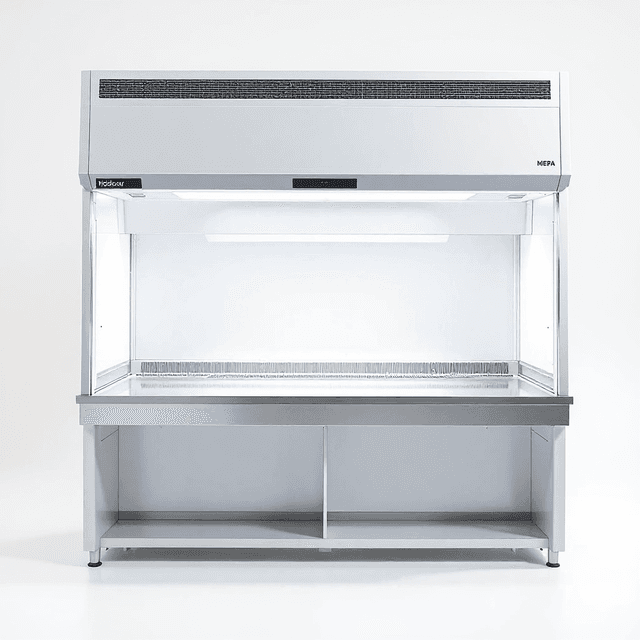
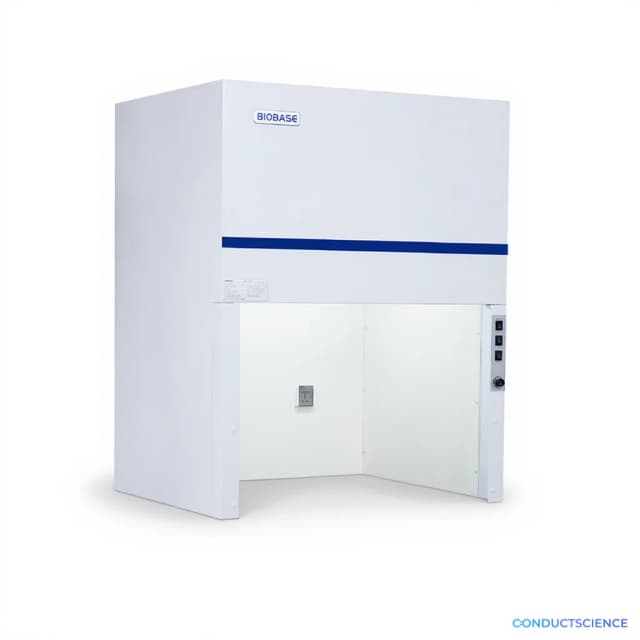
Double-person horizontal laminar flow cabinet with HEPA filtration (99.995% at 0.3μm) and 304 stainless steel work surface for aseptic processing and sterile preparation work.
A laminar flow clean bench protects only the sample. It blows filtered air toward the user, so it is not for infectious or toxic work.

Louise Corscadden, PhD
Director of Science · ConductScience
Ask Louise about Horizontal Laminar Flow Cabinet(PIVAS) fit, setup, configuration, or quote prep.
Already working with us? Sign in to connect this with My Scientist.
Key Specifications
Full details →- Model fit
- Configured during quote
- SKU family
- BIO-0035
- Shipping box
- 174.0 x 150.0 x 81.0 cm
- Ordering
- Online checkout and quote request available
- Category
- Clean Benches & Fume Hoods
- Build notes
- 304 stainless steel
The Horizontal Laminar Flow Cabinet (PIVAS) is a double-person, single-side clean bench designed for aseptic processing and sterile product preparation in pharmaceutical and research environments. The unit provides horizontal laminar airflow at 0.3-0.45 m/s through a HEPA filter achieving 99.995% efficiency at 0.3μm particles, creating a controlled clean work environment within a 1370×550×600mm internal workspace.
The cabinet features 304 stainless steel work surfaces with LCD display controls and maintains illumination levels ≥300lx for precise visual work. The system operates with noise levels ≤65dB(A) and vibration ≤5μm(rms), providing stable conditions for sensitive preparation procedures. Pre-filtration through washable polyester fiber extends HEPA filter life while the anti-bacterial powder coating on the cold-rolled steel body ensures surface hygiene.
How It Works
The horizontal laminar flow cabinet operates on the principle of unidirectional airflow filtration to create a controlled clean environment. Room air enters through the rear-mounted blower system and passes first through a washable polyester fiber pre-filter that removes larger particles and extends the life of the downstream HEPA filter.
The pre-filtered air then flows through a high-efficiency particulate air (HEPA) filter achieving 99.995% removal efficiency for particles 0.3 micrometers and larger. This filtered air is distributed horizontally across the work surface at controlled velocities between 0.3-0.45 m/s, creating a laminar flow pattern that sweeps particles away from the work area toward the front opening.
The horizontal airflow pattern provides product protection by continuously bathing the work surface in clean, filtered air while allowing the operator to work from the front opening. The 304 stainless steel work surface is positioned at an ergonomic 800mm height, with LCD display controls providing system monitoring and adjustment capabilities.
Features & Benefits
Automation Level
- semi-automated
External Size(W*D*H)
- 1500*810*1740mm
Internal Size(W*D*H)
- 1370*550*600mm
Work Surface Height
- 800mm
Airflow Mode
- Horizontal laminar flow
Applicable Number of People
- Double-person single-side
Airflow Velocity
- 0.3~0.45m/s
Material- Working Area
- 304 stainless steel
Material-Main Body
- 1.0mm cold-rolled steel with anti-bacteria powder coating
Pre-Filter
- Polyester fiber, washable
HEPA Filter
- One, 99.995% efficiency at 0.3μm
Noise
- ≤65dB(A)
Illumination
- ≥300lx
Vibration
- ≤5μm(rms)
Brand
- ConductScience
Research Domain
- Analytical Chemistry
- Cell Biology
- Clinical Diagnostics
- Materials Science
- Microbiology
- Pharmaceutical QC
Display Type
- LCD display
Shipping weight
- 225.0 lb
Shipping box
- L: 174.0 cm
- W: 150.0 cm
- H: 81.0 cm
| Feature | This Product | Typical Alternative | Advantage |
|---|---|---|---|
| Work Surface Area | 1370×550mm (0.75 m²) internal workspace | Entry-level models often provide 900-1200mm width with smaller depth | Larger workspace accommodates multiple samples or collaborative work setups while maintaining uniform airflow protection. |
| HEPA Filter Efficiency | 99.995% efficiency at 0.3μm particles | Standard units typically offer 99.99% efficiency | Higher filtration efficiency provides additional margin of safety for critical sterile preparation work. |
| Airflow Control Range | Variable 0.3-0.45 m/s with LCD monitoring | Basic models often have fixed airflow without digital display | Adjustable airflow allows optimization for different procedures while LCD display enables continuous monitoring for documentation requirements. |
| Work Surface Material | 304 stainless steel construction | Economy units may use powder-coated steel or laminate surfaces | Stainless steel provides superior chemical resistance and easier decontamination for pharmaceutical applications. |
| Pre-filtration System | Washable polyester fiber pre-filter | Disposable pre-filters require regular replacement | Washable pre-filter reduces operating costs and waste generation while maintaining consistent pre-filtration performance. |
| Noise Level | ≤65dB(A) operational noise | Standard units often operate at 68-75dB(A) | Lower noise levels improve operator comfort during extended preparation sessions and laboratory communication. |
This cabinet offers a combination of large workspace area, precise airflow control with LCD monitoring, and high-efficiency filtration in a double-person configuration. The washable pre-filter system and stainless steel construction provide long-term operational advantages for demanding pharmaceutical and research applications.
Practical Tips
Perform airflow velocity measurements at a grid of 6-9 points across the work surface using a calibrated thermal anemometer.
Why: Ensures uniform laminar flow distribution and identifies any areas with inadequate air coverage.
Clean and inspect the washable polyester pre-filter monthly, washing with mild detergent and allowing complete drying before reinstallation.
Why: Regular pre-filter maintenance maintains proper airflow and extends expensive HEPA filter life.
Allow cabinet to operate for 15-30 minutes before beginning sterile work and avoid rapid movements that could disrupt laminar airflow patterns.
Why: Ensures complete air purging and maintains the integrity of the protective airflow barrier.
If airflow velocity drops below 0.3 m/s, first check pre-filter loading before assuming HEPA filter replacement is needed.
Why: Pre-filter restriction is the most common cause of reduced airflow and is easily remedied by cleaning.
Document airflow velocity, illumination levels, and operational parameters in your standard operating procedures for regulatory compliance.
Why: Consistent documentation demonstrates environmental control validation required for pharmaceutical and clinical applications.
Never obstruct the air intake areas and ensure adequate clearance around the cabinet for proper air circulation.
Why: Blocked airflow can cause system overheating and compromises the clean environment integrity.
Position frequently used items toward the rear of the work surface where airflow first enters the clean zone.
Why: Takes advantage of the cleanest air region and minimizes downstream contamination risk to other work areas.
Monitor the LCD display regularly for system alerts and maintain a log of operational parameters for trend analysis.
Why: Early detection of performance changes allows proactive maintenance before critical system failures occur.
Setup Guide
What’s in the Box
- Horizontal laminar flow cabinet (main unit)
- Pre-installed HEPA filter
- Pre-installed washable polyester pre-filter
- LCD display control panel
- User manual and operating instructions
- Installation and setup guide (typical)
- Airflow verification certificate (typical)
Warranty
ConductScience provides a standard one-year manufacturer warranty covering defects in materials and workmanship, with technical support for installation guidance and operational troubleshooting.
Compliance
What is the difference between horizontal and vertical laminar flow for my application?
Horizontal flow provides product protection by directing filtered air across the work surface away from the operator, ideal for sterile compounding. Vertical flow provides personnel protection by pulling air downward, better for hazardous materials handling.
How often should the HEPA filter be replaced?
HEPA filter replacement depends on usage intensity and environmental particle loading, typically every 2-5 years. Monitor airflow velocity and pressure differential indicators; replacement is needed when airflow cannot be maintained within 0.3-0.45 m/s specification.
Can this cabinet handle volatile solvents or chemicals?
This unit is designed for particulate control, not chemical fume extraction. Volatile solvents require a chemical fume hood with appropriate exhaust ventilation. Consult material compatibility with 304 stainless steel work surface before use.
What airflow verification is required for qualification?
Verify airflow velocity at multiple points across the work surface using calibrated anemometer, confirming 0.3-0.45 m/s range. Also check airflow uniformity and perform smoke pattern visualization to confirm laminar flow characteristics.
How do I maintain sterility of the work surface?
Clean the 304 stainless steel surface with 70% isopropanol or other validated disinfectant before each use. Allow the cabinet to run for 15-30 minutes after cleaning to purge any residual particles before beginning sterile work.
What room requirements are needed for installation?
Ensure adequate clearance around air intakes, level flooring, and appropriate electrical supply. Room should have minimal air turbulence and be located away from high-traffic areas to maintain clean environment integrity.
Can I modify the internal workspace configuration?
The 304 stainless steel work surface provides a fixed configuration optimized for laminar airflow patterns. Contact technical support before making modifications that could disrupt airflow uniformity across the 1370×550mm work area.
How does this compare to biosafety cabinets for cell culture?
This horizontal flow cabinet provides product protection through laminar airflow but does not contain biological agents like a biosafety cabinet. For non-hazardous cell culture work requiring sterile conditions, horizontal flow is often preferred for ergonomic access.
Have a question about this product?
Have a question? Just ask.
Send it over and we'll email you a personalized answer — no call, no scheduling.
Prefer to talk it through?
Accessories
Enhance your setup with compatible accessories
Replacement Parts & Consumables
Frequently Bought Together
Upgrade Options