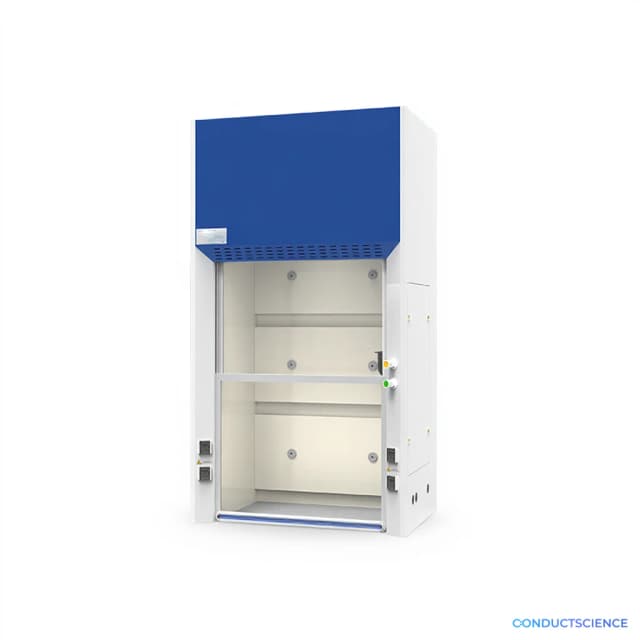
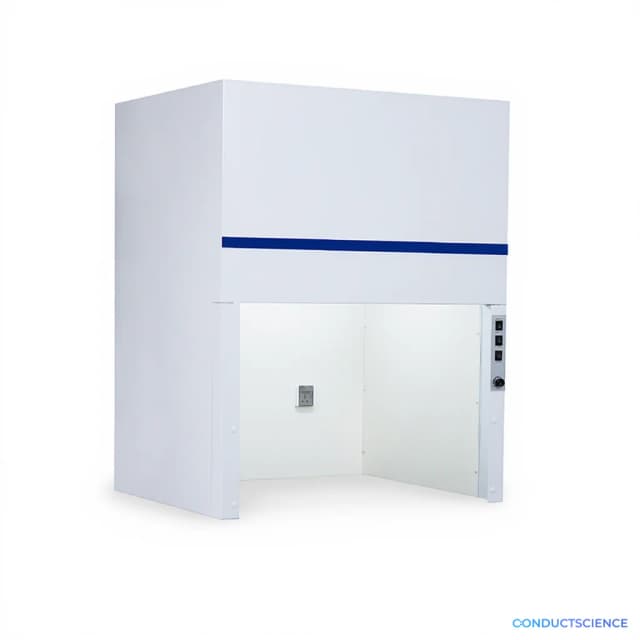
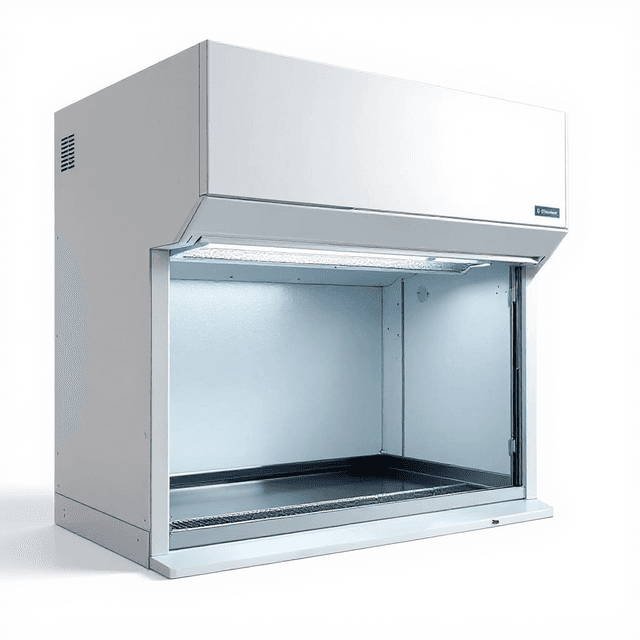
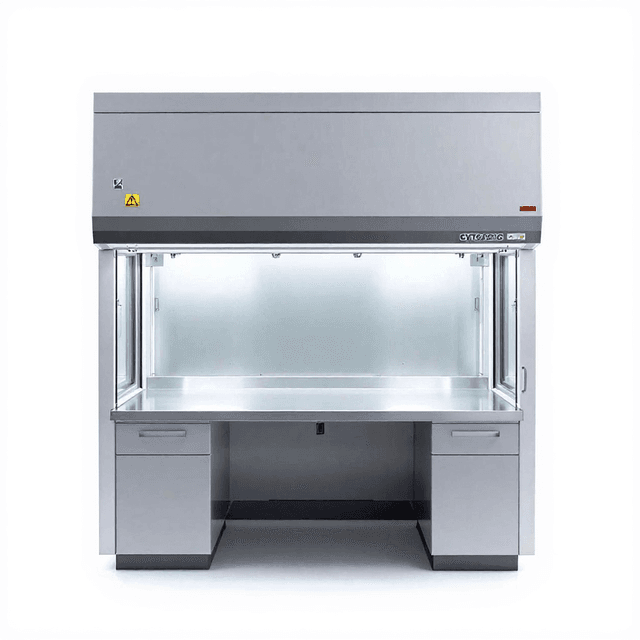
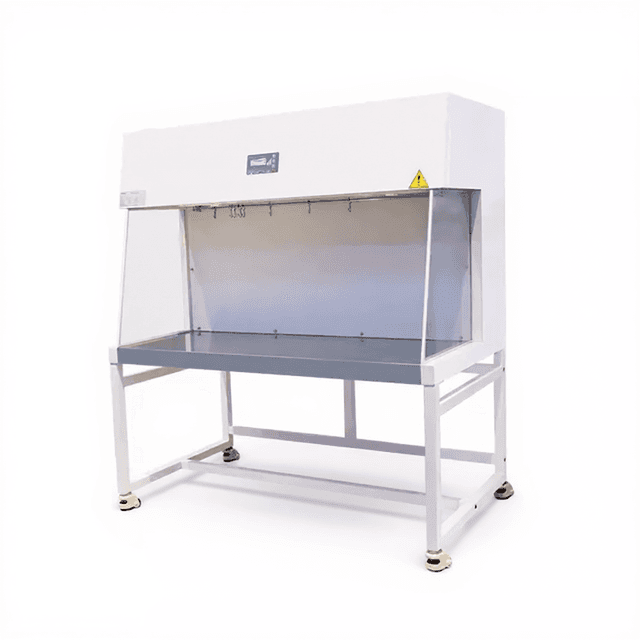
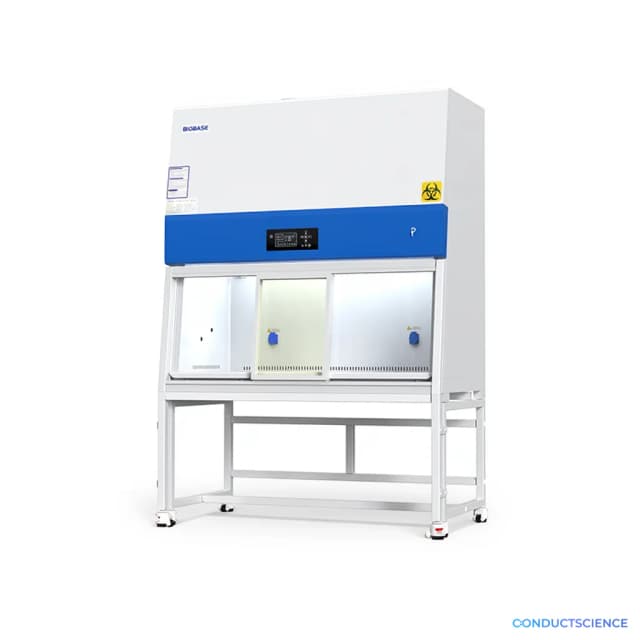
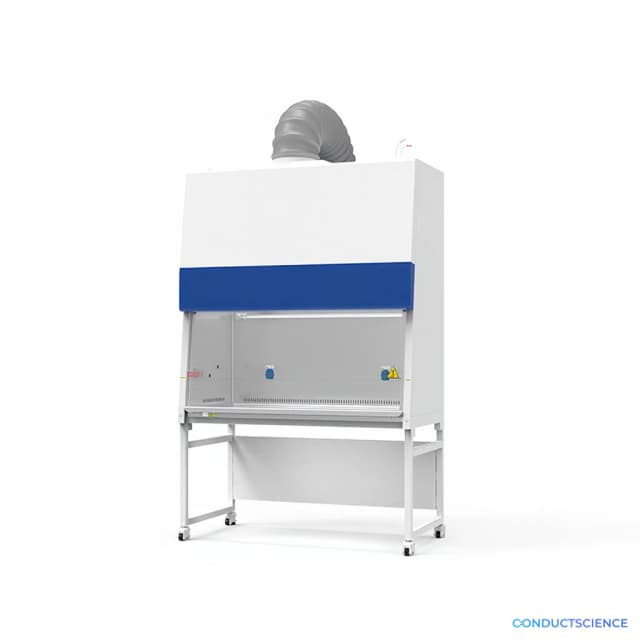
Ducted Fume Hood FH700(L) FH1000(L) FH1100(L) FH1200(L) FH1300(L) FH1500(L) FH1800(L)
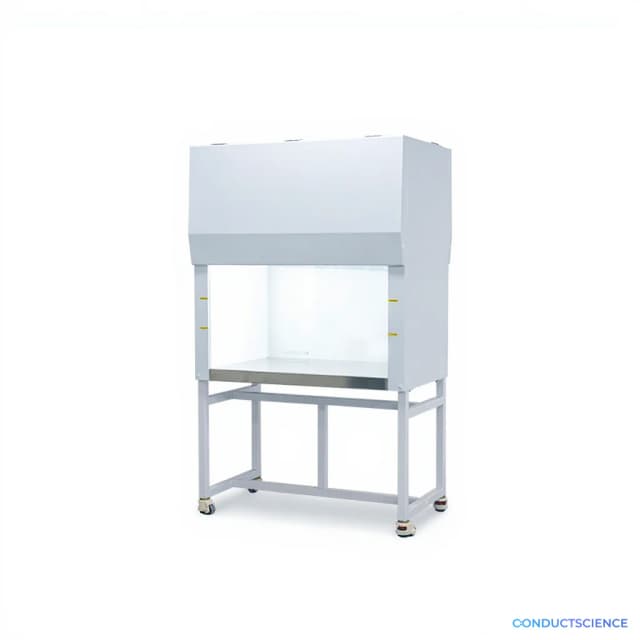
Chemical containment ventilation system available in seven widths (700-1800mm) for safe handling of hazardous vapors and particulates in laboratory environments.

Louise Corscadden, PhD
Director of Science · ConductScience
Ask Louise about Ducted Fume Hood FH700(L) FH1000(L) FH1100(L) FH1200(L) FH1300(L) FH1500(L) FH1800(L) fit, setup, configuration, or quote prep.
Already working with us? Sign in to connect this with My Scientist.
Key Specifications
Full details →- Model fit
- Configured during quote
- SKU family
- BIO-0053
- Shipping box
- 42.0 x 43.6 x 38.0 cm
- Ordering
- Online checkout and quote request available
- Category
- Clean Benches & Fume Hoods
- Build notes
- Confirm accessories, station layout, and support needs before purchase
The Ducted Fume Hood series provides chemical containment and ventilation for laboratory procedures involving hazardous vapors, particulates, and aerosols. These units utilize negative pressure airflow to capture and exhaust contaminants away from the operator's breathing zone, maintaining a controlled work environment for chemical handling operations.
Available in seven width configurations from 700mm to 1800mm, the series accommodates varying workspace requirements and throughput demands. Each model offers both tabletop and integral mounting options, with internal working dimensions ranging from 580×570×835mm to 1380×720×835mm. The ducted design requires connection to an external exhaust system for proper ventilation performance.
How It Works
Ducted fume hoods operate on the principle of capture velocity and containment airflow to remove hazardous contaminants from the work surface. Air enters through the sash opening and flows across the work surface at controlled velocities, typically 0.4-0.6 m/s face velocity, creating negative pressure within the cabinet relative to the laboratory environment.
The airflow pattern is designed to capture contaminants at their source and transport them through the exhaust plenum to the external ductwork system. Baffles and airfoil designs optimize flow distribution across the work surface, minimizing turbulence that could allow contaminant escape. The exhaust system maintains continuous negative pressure, ensuring directional airflow from the laboratory into the hood under normal operating conditions.
Containment effectiveness depends on proper sash position, appropriate face velocity, and absence of cross-drafts from room air currents, HVAC systems, or personnel movement that could disrupt the capture airflow pattern.
Features & Benefits
Automation Level
- manual
FH1000(L)
- FH1100(L)
FH1200(L)
- FH1300(L)
FH1500(L)
- FH1800(L)
External Size(W*D*H)mm(Tabletop Type)
- 700*650*1260
1000*800*1260
- 1100*800*1260
1200*800*1260
- 1300*800*1260
1500*800*1260
- 1800*800*1260
External Size(W*D*H)mm(Integral Type)
- 700*650*2000
1000*800*2000
- 1100*800*2000
1200*800*2000
- 1300*800*2000
1500*800*2000
- 1800*800*2000
Internal Size(W*D*H)mm
- 580*570*835
880*720*835
- 980*720*835
1080*720*835
- 1180*720*835
Brand
- ConductScience
Research Domain
- Analytical Chemistry
- Environmental Monitoring
- Industrial Hygiene
- Materials Science
- Microbiology
- Pharmaceutical QC
- Toxicology
Shipping weight
- 29.98 lb
Shipping box
- L: 42.0 cm
- W: 43.6 cm
- H: 38.0 cm
| Feature | This Product | Typical Alternative | Advantage |
|---|---|---|---|
| Width Range Options | Seven configurations from 700mm to 1800mm | Entry-level models often offer 3-4 standard widths with limited customization | Comprehensive size range accommodates diverse laboratory layouts and workflow requirements without compromising on standardized performance characteristics |
| Mounting Flexibility | Both tabletop (1260mm height) and integral (2000mm height) options | Many models offer single mounting configuration requiring specific bench or floor installation | Installation versatility allows integration with existing laboratory furniture or dedicated installations based on space constraints |
| Internal Work Height | Consistent 835mm internal height across all widths | Variable work heights often compromise ergonomics in smaller or larger models | Standardized ergonomics and equipment compatibility maintained regardless of selected width for consistent user experience |
| Construction Standardization | Consistent external depth profiles with proportional scaling | Varies by model with different depth requirements complicating laboratory planning | Simplified facility integration and planning with predictable dimensional relationships across the product range |
This series provides comprehensive width options with consistent ergonomic design and flexible mounting configurations. The standardized internal height and proportional scaling approach simplifies laboratory planning while accommodating diverse workspace requirements from individual analytical procedures to high-throughput operations.
Practical Tips
Measure face velocity at 6-inch grid pattern across sash opening during commissioning and annual recertification.
Why: Uniform velocity distribution ensures consistent containment performance across the entire work surface area.
Clean interior surfaces weekly with appropriate solvents and inspect sash seals quarterly for wear or damage.
Why: Regular cleaning prevents chemical buildup that could affect airflow patterns while seal integrity maintains containment effectiveness.
Keep sash at lowest practical position during work and avoid rapid sash movements that create air turbulence.
Why: Proper sash position optimizes face velocity while minimizing turbulence that could compromise containment performance.
Never block exhaust baffles with equipment or materials and maintain clear airflow pathways across work surface.
Why: Unobstructed airflow is essential for proper capture velocity and prevents accumulation of hazardous vapors in work zone.
Monitor for unusual airflow patterns using smoke tubes if containment performance appears compromised.
Why: Visual airflow verification helps identify problems such as ductwork blockages or room pressure imbalances affecting containment.
Document airflow measurements and containment test results for regulatory compliance and performance trending.
Why: Systematic documentation enables early detection of performance degradation and supports compliance with laboratory safety standards.
Setup Guide
What’s in the Box
- Ducted fume hood cabinet (typical)
- Sash assembly with counterbalance system (typical)
- Internal lighting fixture (typical)
- Exhaust collar and connection hardware (typical)
- Installation and operation manual (typical)
- Airflow measurement guide (typical)
Warranty
ConductScience provides a one-year manufacturer warranty covering defects in materials and workmanship, with technical support for installation guidance and performance optimization. Extended warranty options and service contracts are available for critical applications requiring guaranteed uptime.
Compliance
References
Background reading relevant to this product:
What face velocity should be maintained for proper containment performance?
Maintain average face velocity of 0.4-0.6 m/s across the sash opening, measured at multiple points with sash at normal working position. Higher velocities may create turbulence while lower velocities reduce containment effectiveness.
How do I select the appropriate width for my application?
Choose width based on simultaneous users, equipment size, and workflow requirements. Single-operator analytical work typically requires 1000-1200mm, while multiple users or large equipment may require 1500-1800mm widths.
What exhaust system requirements are needed for proper operation?
Exhaust system must provide sufficient airflow to maintain design face velocity, typically 150-400 CFM per linear foot of hood width depending on sash opening. Consult product datasheet for specific airflow requirements by model.
Can the hood handle acids and organic solvents safely?
Standard construction materials are selected for chemical compatibility with common laboratory solvents and acids. For highly corrosive applications or specific chemical compatibility requirements, consult product datasheet for material specifications.
How frequently should containment performance be verified?
Perform annual containment testing using smoke visualization and face velocity measurements. Monthly visual inspections and quarterly airflow checks are recommended for critical applications or high-usage environments.
What clearances are required around the installation?
Maintain minimum 6 inches clearance on sides for service access and ensure adequate space above for ductwork connections. Front clearance should accommodate full sash opening without obstruction from benches or equipment.
How does room air currents affect hood performance?
Cross-drafts from HVAC systems, doorways, or personnel movement can disrupt containment airflow. Position hood away from high-traffic areas and ensure room air change rates are balanced with hood exhaust requirements.
Have a question about this product?
Have a question? Just ask.
Send it over and we'll email you a personalized answer — no call, no scheduling.
Prefer to talk it through?
Frequently Bought Together
Upgrade Options