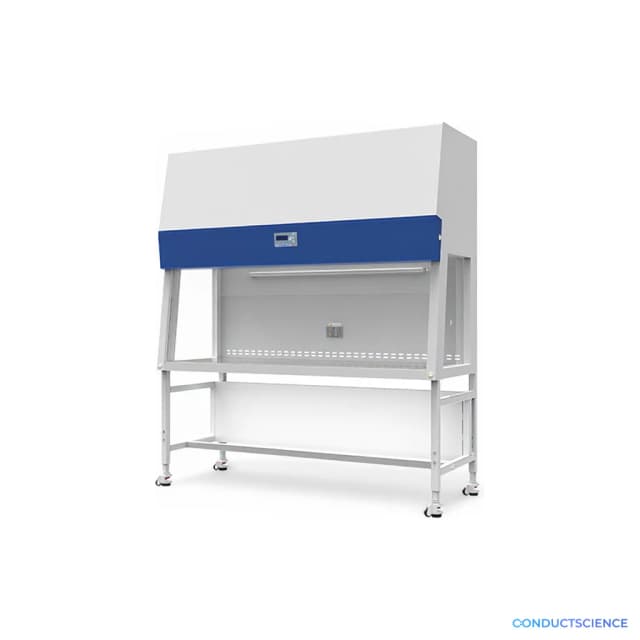
Ducted Fume Hood
Single-user ducted fume hood with variable air velocity control (0.3-0.8 m/s) and 1850 m³/h exhaust capacity for chemical vapor containment in laboratory applications.

Louise Corscadden, PhD
Director of Science · ConductScience
Ask Louise about Ducted Fume Hood fit, setup, configuration, or quote prep.
Already working with us? Sign in to connect this with My Scientist.
Key Specifications
Full details →- Model fit
- Configured during quote
- SKU family
- BIO-0961
- Shipping box
- 84.7 x 98.0 x 66.0 cm
- Ordering
- Online checkout and quote request available
- Category
- Clean Benches & Fume Hoods
- Build notes
- Confirm accessories, station layout, and support needs before purchase
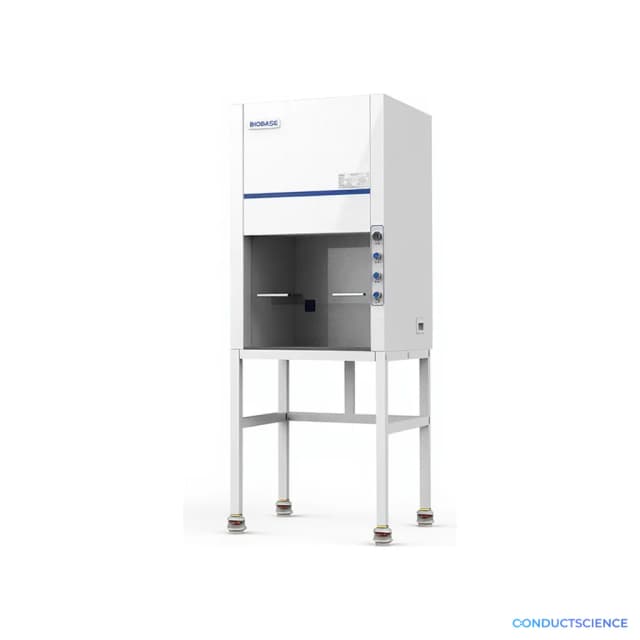
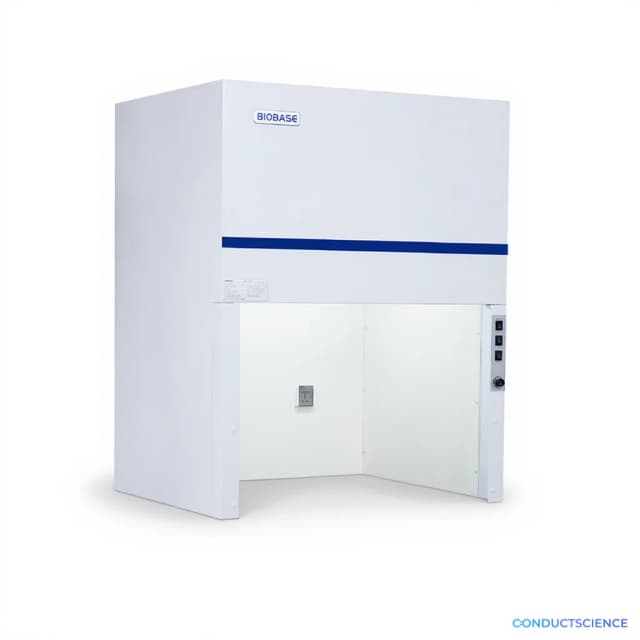
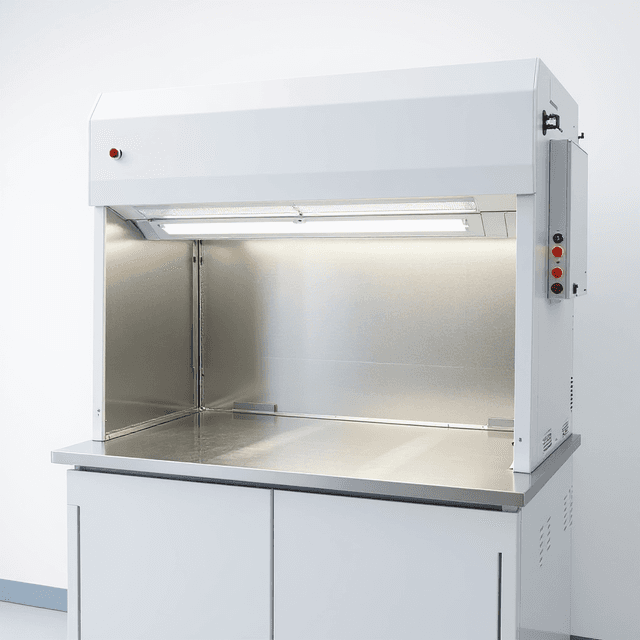
The Ducted Fume Hood provides chemical vapor containment and operator protection for laboratory work involving hazardous substances. This single-user benchtop unit features variable air velocity control (0.3-0.8 m/s) with 1850 m³/h exhaust capacity to maintain proper containment while accommodating different experimental requirements. The integrated design includes LED illumination and electrical outlets within the work chamber.
The hood operates with low noise levels (≤65 dB(A)) suitable for laboratory environments requiring acoustic control. The 490mm maximum sash opening provides access to the work area while maintaining containment integrity. Built-in safety features include splash-proof electrical outlets rated for up to 500W load power to support laboratory equipment within the containment area.
How It Works
The ducted fume hood operates on the principle of directional airflow to capture and exhaust chemical vapors at their source. Air enters through the front opening and is drawn across the work surface by the exhaust system, creating a containment zone that prevents vapor escape into the laboratory environment. The variable air velocity control (0.3-0.8 m/s) allows adjustment of containment performance based on the volatility and hazard level of materials being handled.
The 1850 m³/h exhaust capacity maintains consistent air exchange within the work chamber while the low-noise operation (≤65 dB(A)) minimizes laboratory disruption. Internal LED lighting provides adequate visibility without introducing heat that could affect vapor generation rates. The integrated electrical system supplies power to equipment within the contained workspace while maintaining vapor containment integrity through splash-proof outlet design.
Features & Benefits
Shipping weight
- 29.98 lb
Shipping box
- L: 84.7 cm
- W: 98.0 cm
- H: 66.0 cm
| Feature | This Product | Typical Alternative | Advantage |
|---|---|---|---|
| Exhaust Capacity | 1850 m³/h fixed capacity | Entry-level models often provide 1200-1500 m³/h capacity | Higher exhaust volume ensures effective vapor removal even with multiple chemical sources active simultaneously |
| Air Velocity Control | Variable control from 0.3-0.8 m/s | Fixed velocity units offer single operating point | Allows optimization for different chemical hazards while reducing energy consumption during low-risk procedures |
| Electrical Integration | 500W socket load with splash protection | Basic models provide limited electrical capacity | Supports operation of analytical instruments within the contained workspace without external power routing |
| Noise Level | ≤65 dB(A) operation | Standard units often operate at 70-80 dB(A) | Enables use near sensitive instruments and maintains comfortable laboratory acoustic environment |
| Work Area Access | 490mm maximum sash opening with 810mm work height | Compact units may offer smaller openings | Provides adequate access for equipment manipulation while maintaining ergonomic work positioning |
| Installation Type | Desktop integral design | Some units require dedicated stands or mounting systems | Enables installation on existing benches without extensive facility modifications or additional support structures |
This fume hood combines effective containment performance with practical laboratory integration through variable air velocity control, adequate electrical capacity, and low noise operation. The benchtop design provides professional-grade vapor containment without requiring dedicated facility modifications.
Practical Tips
Verify face velocity measurements monthly using a digital anemometer at multiple points across the sash opening to ensure uniform airflow distribution.
Why: Uneven airflow can create dead zones where vapors may not be effectively captured.
Clean the work surface and interior walls weekly with appropriate solvents to prevent chemical buildup that could affect airflow patterns.
Why: Chemical residues can create surfaces that interfere with smooth air movement and vapor capture.
Keep the sash at the lowest practical position during work to minimize the opening area while maintaining adequate access for procedures.
Why: Smaller openings improve containment effectiveness and reduce the air volume that must be conditioned.
Never use the hood as storage space for chemicals or equipment when not actively working, and avoid rapid movements near the sash opening.
Why: Clutter disrupts airflow patterns while sudden movements can create turbulence that compromises containment.
If you detect chemical odors during normal operation, immediately check face velocity and perform smoke tube testing to identify airflow disruption.
Why: Odor detection indicates containment failure that requires immediate investigation to maintain safe working conditions.
Document face velocity measurements and any adjustments to air velocity settings to maintain consistent experimental conditions across studies.
Why: Airflow variations can affect chemical vapor behavior and may introduce variability in experimental results.
Position equipment at least 15cm back from the sash opening to ensure adequate capture velocity around chemical sources.
Why: Equipment placed too close to the opening may not be within the effective capture zone of the airflow pattern.
Inspect electrical outlets monthly for chemical damage or corrosion, and ensure splash guards remain intact and properly positioned.
Why: Chemical exposure can degrade electrical components and create safety hazards within the contained workspace.
Setup Guide
What’s in the Box
- Ducted fume hood main unit
- 12W LED lamp
- Splash-proof electrical outlets (national standard three core)
- Power cable
- Installation hardware (typical)
- User manual and safety guidelines (typical)
- Performance specification sheet (typical)
Warranty
ConductScience provides a standard 1-year manufacturer warranty covering defects in materials and workmanship, with technical support for installation guidance and performance optimization.
Compliance
References
Background reading relevant to this product:
What air velocity should I maintain for different types of chemical work?
Use 0.3-0.5 m/s for low-volatility chemicals and routine procedures, 0.5-0.7 m/s for moderate-risk solvents, and 0.7-0.8 m/s for highly volatile or toxic compounds. Higher velocities may cause turbulence that reduces containment effectiveness.
How do I verify the hood is providing adequate containment?
Perform smoke tube testing at the sash plane to visualize airflow patterns. Smoke should be drawn smoothly into the hood without reversal or escape. Measure face velocity at multiple points to ensure uniform airflow distribution.
What equipment can I safely operate inside the hood?
The 500W socket load limit accommodates most benchtop analytical instruments, hot plates up to medium capacity, and small centrifuges. Avoid equipment that generates significant heat or airflow that could disrupt containment patterns.
How often should I test the hood's performance?
Conduct face velocity measurements monthly and full containment testing annually or after any exhaust system modifications. Visual smoke testing should be performed whenever you notice unusual odors or suspect containment issues.
What maintenance is required for optimal performance?
Clean the work surface and interior weekly with appropriate solvents, inspect and clean the LED light monthly, and schedule annual exhaust system inspection. Replace or clean any filters in the connected exhaust system as recommended by the facility.
Can this hood handle perchloric acid or other special hazards?
This standard ducted hood is designed for general chemical work. For perchloric acid, specialized wash-down systems and dedicated exhaust are typically required. Consult your safety officer for specific hazardous material requirements.
How does the low noise operation benefit my laboratory?
The ≤65 dB(A) operation allows use near sensitive analytical instruments without acoustic interference and enables normal conversation levels, improving laboratory communication and reducing fatigue during extended use.
What ducting requirements are needed for installation?
The exhaust system must provide at least 1850 m³/h capacity with appropriate static pressure to overcome ductwork resistance. Consult with facility engineers to ensure adequate exhaust performance and proper discharge location.
Have a question about this product?
Have a question? Just ask.
Send it over and we'll email you a personalized answer — no call, no scheduling.
Prefer to talk it through?
Upgrade Options