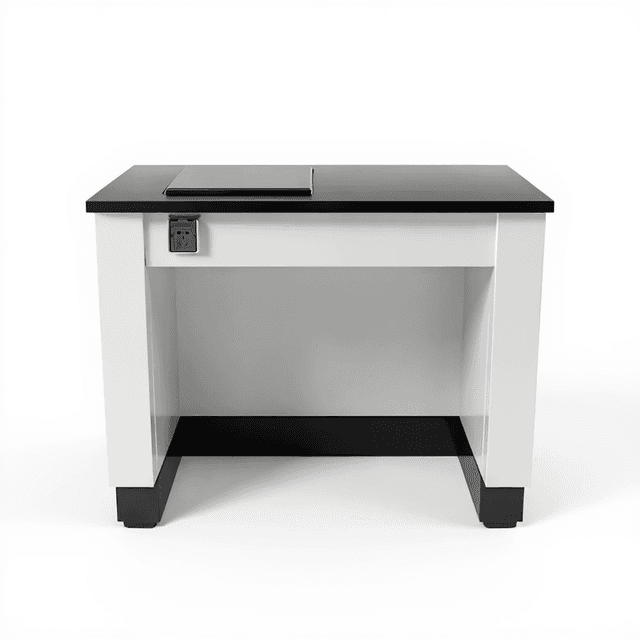
Class II B2 Biological Safety Cabinet - 6ft
Class II Type B2 biological safety cabinet with 6-foot working width and 100% exhaust design for containment of biological agents and toxic substances in multi-user laboratory environments.

Louise Corscadden, PhD
Director of Science · ConductScience
Ask Louise about Class II B2 Biological Safety Cabinet - 6ft fit, setup, configuration, or quote prep.
Already working with us? Sign in to connect this with My Scientist.
Key Specifications
Full details →- Model fit
- Configured during quote
- SKU family
- BIO-BSC-1800IIB2
- Shipping box
- 42.0 x 43.6 x 38.0 cm
- Ordering
- Online checkout and quote request available
- Category
- Clean Benches & Fume Hoods
- Build notes
- Confirm accessories, station layout, and support needs before purchase
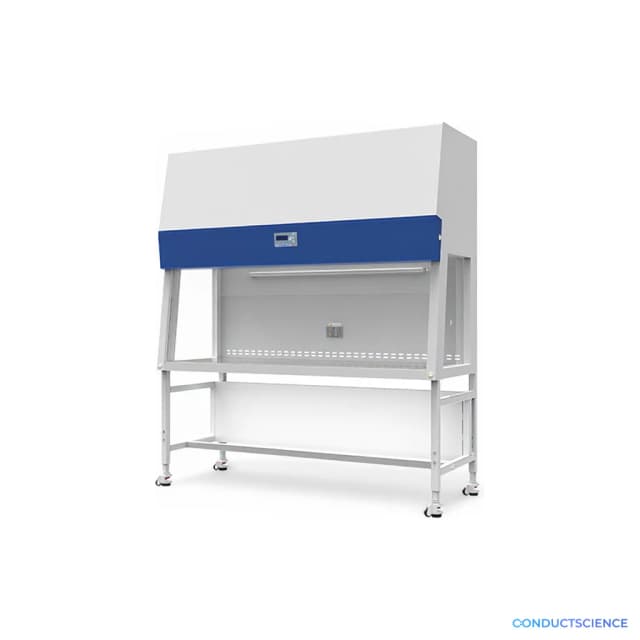
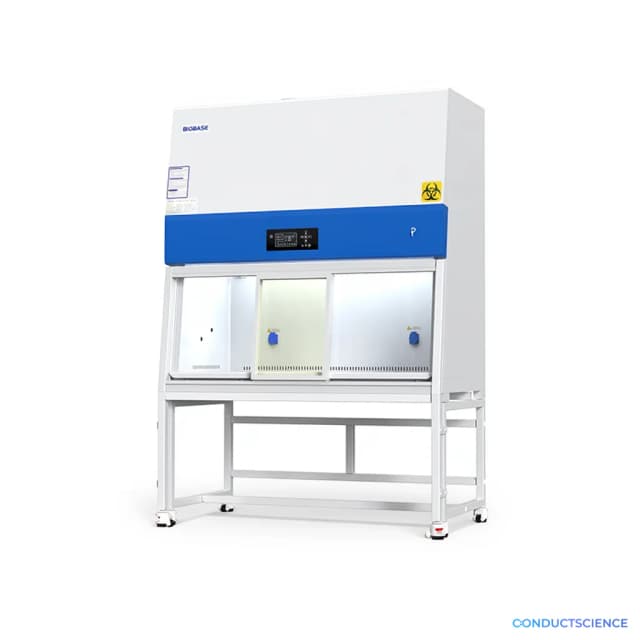
The Class II Type B2 Biological Safety Cabinet provides 6 feet of working width for multi-user research environments requiring containment of biological agents. This cabinet features 100% total exhaust design with no recirculation of filtered air back to the laboratory, making it suitable for work with toxic chemicals, radionuclides, and volatile substances in combination with microbiological agents.
The cabinet maintains negative pressure within the work area through directional airflow patterns that protect personnel, product, and environment. Internal dimensions of 1625 x 600 x 660 mm provide substantial workspace for complex procedures, while the integrated 40W UV lamp with timer enables surface decontamination during non-operational periods.
How It Works
Class II Type B2 biological safety cabinets operate through laminar airflow patterns that create three levels of protection. Room air is drawn through the front opening at a minimum velocity to prevent aerosol escape (personnel protection). This air, along with downflow air, passes through the work surface and is exhausted through HEPA filtration without recirculation (environmental protection).
The downflow air originates from HEPA-filtered supply air that creates a sterile work environment (product protection). Unlike Type A cabinets, the B2 design exhausts 100% of the air volume to the outside through a dedicated exhaust system, preventing any recirculation of potentially contaminated air back into the laboratory space. This total exhaust design enables safe handling of volatile toxic chemicals and radionuclides in addition to biological agents.
Negative pressure is maintained throughout the work chamber through precise airflow balance, while the stainless steel construction and coved corners facilitate decontamination. The integrated UV lamp provides supplemental surface sterilization during non-operational periods.
Features & Benefits
Automation Level
- semi-automated
Research Domain
- Analytical Chemistry
- Cancer Research
- Cell Biology
- Environmental Monitoring
- Microbiology
- Pharmaceutical QC
Shipping weight
- 390.0 lb
Shipping box
- L: 42.0 cm
- W: 43.6 cm
- H: 38.0 cm
| Feature | This Product | Typical Alternative | Advantage |
|---|---|---|---|
| Working Width | 6 feet (1625 mm internal width) | Standard models typically offer 4 feet working width | Accommodates larger equipment setups and enables multi-user operations in team research environments |
| Exhaust Design | 100% total exhaust with no recirculation | Type A cabinets recirculate 70% of filtered air | Enables safe handling of volatile chemicals and radionuclides alongside biological agents |
| Internal Workspace Depth | 600 mm working depth | Compact models often provide 500-550 mm depth | Accommodates deeper equipment and provides more manipulation space for complex procedures |
| UV Decontamination | 40W UV lamp with programmable timer | Basic models may lack UV systems or use manual switching | Enables automated surface sterilization scheduling without manual intervention between work sessions |
| Power Requirements | 1300W power specification | Smaller cabinets typically require 800-1000W | Supports high-performance airflow systems necessary for maintaining containment in larger workspace volumes |
This 6-foot Type B2 cabinet combines maximum workspace with total exhaust capability for handling volatile chemicals alongside biological agents. The 1625 mm internal width and automated UV decontamination system support demanding multi-user research environments requiring both space and safety.
Practical Tips
Schedule annual NSF/ANSI 49 certification and maintain detailed airflow measurement records for regulatory compliance.
Why: Certification ensures containment performance meets safety standards and validates proper installation.
Replace UV lamp annually or after 9000 hours of operation to maintain effective surface decontamination intensity.
Why: UV output degrades over time, reducing sterilization effectiveness for work surface preparation.
Allow 15 minutes of airflow stabilization before beginning work and avoid rapid arm movements that disrupt containment.
Why: Stable airflow patterns are essential for maintaining the protective barrier between user and work materials.
Never block the exhaust grilles or front air intake with equipment or materials during operation.
Why: Airflow obstruction compromises containment performance and can create hazardous exposure conditions.
If airflow alarms activate, immediately stop work and contact qualified service technicians before resuming operations.
Why: Airflow disruptions indicate potential containment failure that could expose personnel to hazardous materials.
Document all chemical usage and maintain material safety data sheets for exhaust system compatibility assessment.
Why: Chemical compatibility data ensures exhaust system materials can handle specific volatile compounds safely.
Wipe down all interior surfaces with appropriate disinfectants before and after each use session.
Why: Regular surface decontamination prevents cross-contamination between experiments and maintains sterile conditions.
Setup Guide
What’s in the Box
- Class II Type B2 Biological Safety Cabinet main unit
- 40W UV lamp assembly
- Control panel and timer system
- Installation hardware and leveling feet
- User manual and certification documentation
- Exhaust connection components (typical)
- Airflow testing ports and accessories (typical)
Warranty
ConductScience provides a 1-year manufacturer warranty covering defects in materials and workmanship, along with technical support for installation guidance and operational questions.
Compliance
References
Background reading relevant to this product:
What exhaust airflow rate is required for proper Type B2 operation?
Type B2 cabinets require dedicated exhaust systems capable of handling 100% of the cabinet's airflow volume. Consult product datasheet for specific CFM requirements and exhaust connection specifications.
Can this cabinet handle volatile organic solvents and formaldehyde?
Yes, the 100% exhaust design with no air recirculation makes Type B2 cabinets suitable for volatile chemicals, unlike Type A cabinets that recirculate filtered air.
How often does the cabinet require certification testing?
Annual certification per NSF/ANSI 49 standards is recommended, with additional testing after cabinet relocation or major maintenance procedures.
What is the minimum face velocity required for containment?
Face velocity specifications vary by certification standard. Consult the cabinet's certification data for specific velocity measurements and acceptance criteria.
Can multiple users work simultaneously in this 6-foot cabinet?
The 1625 mm internal width can accommodate two users, but proper technique training is essential to maintain airflow patterns and avoid cross-contamination between work areas.
What type of exhaust ductwork connection is required?
Type B2 cabinets require rigid ductwork connection to a dedicated exhaust system. Flexible connections may disrupt airflow patterns and compromise containment.
How does the UV lamp timer function for decontamination cycles?
The 40W UV lamp includes programmable timer controls for automated decontamination scheduling between work sessions, with typical exposure times based on surface sterilization requirements.
Have a question about this product?
Have a question? Just ask.
Send it over and we'll email you a personalized answer — no call, no scheduling.
Prefer to talk it through?