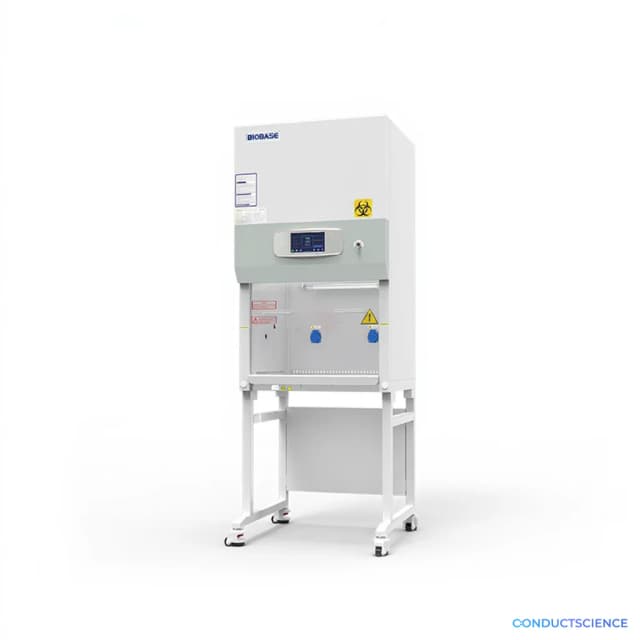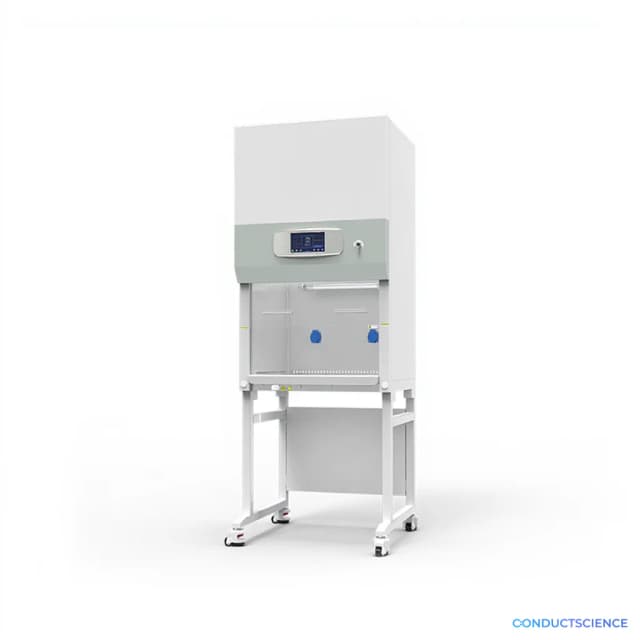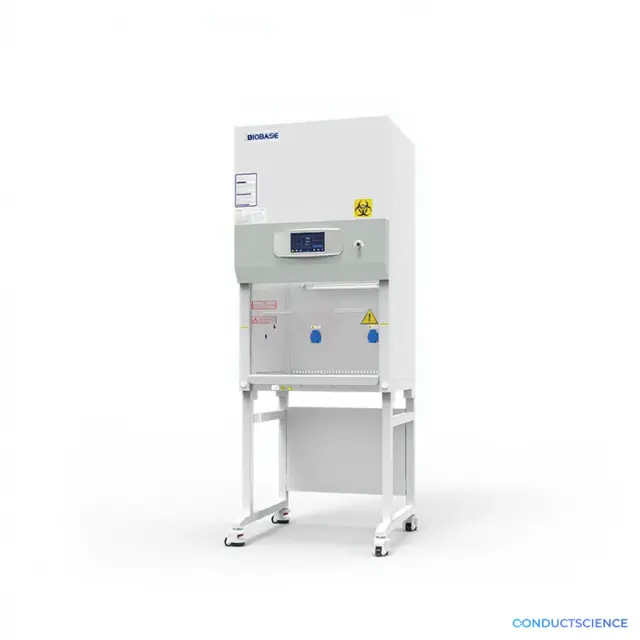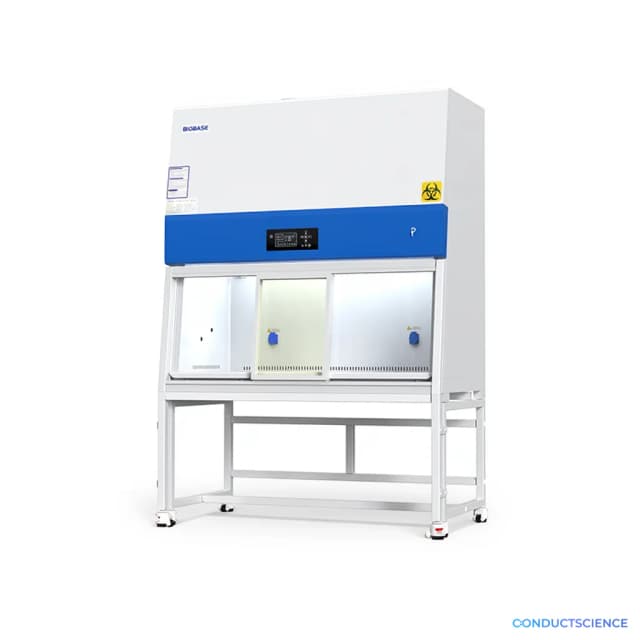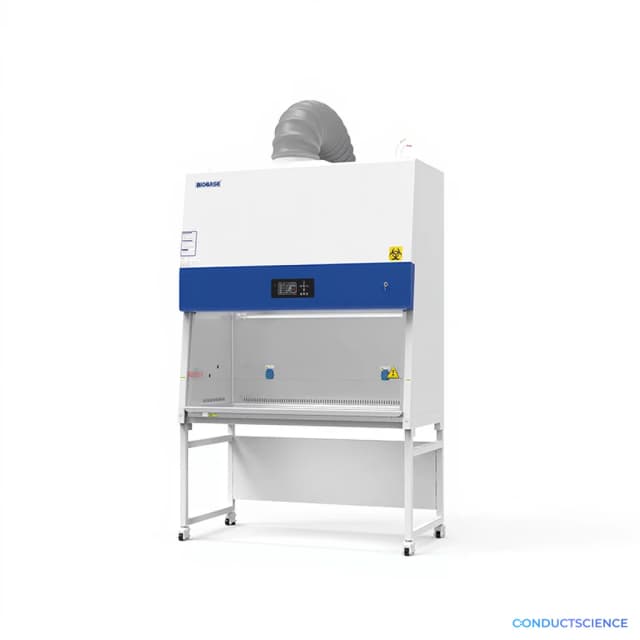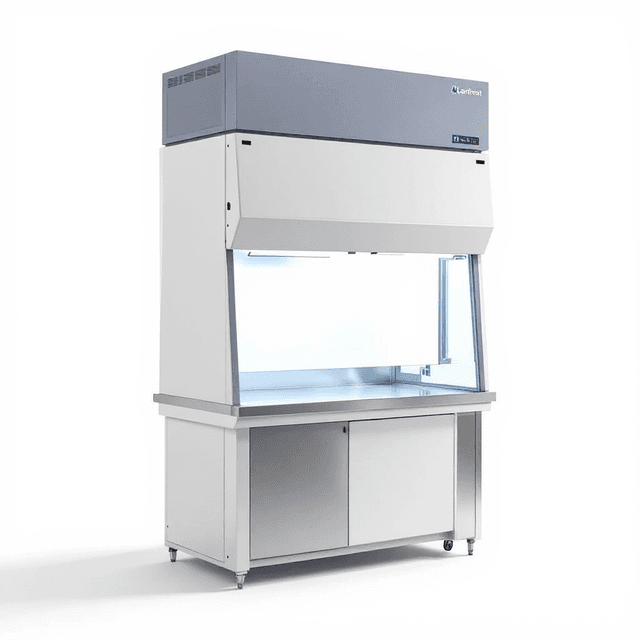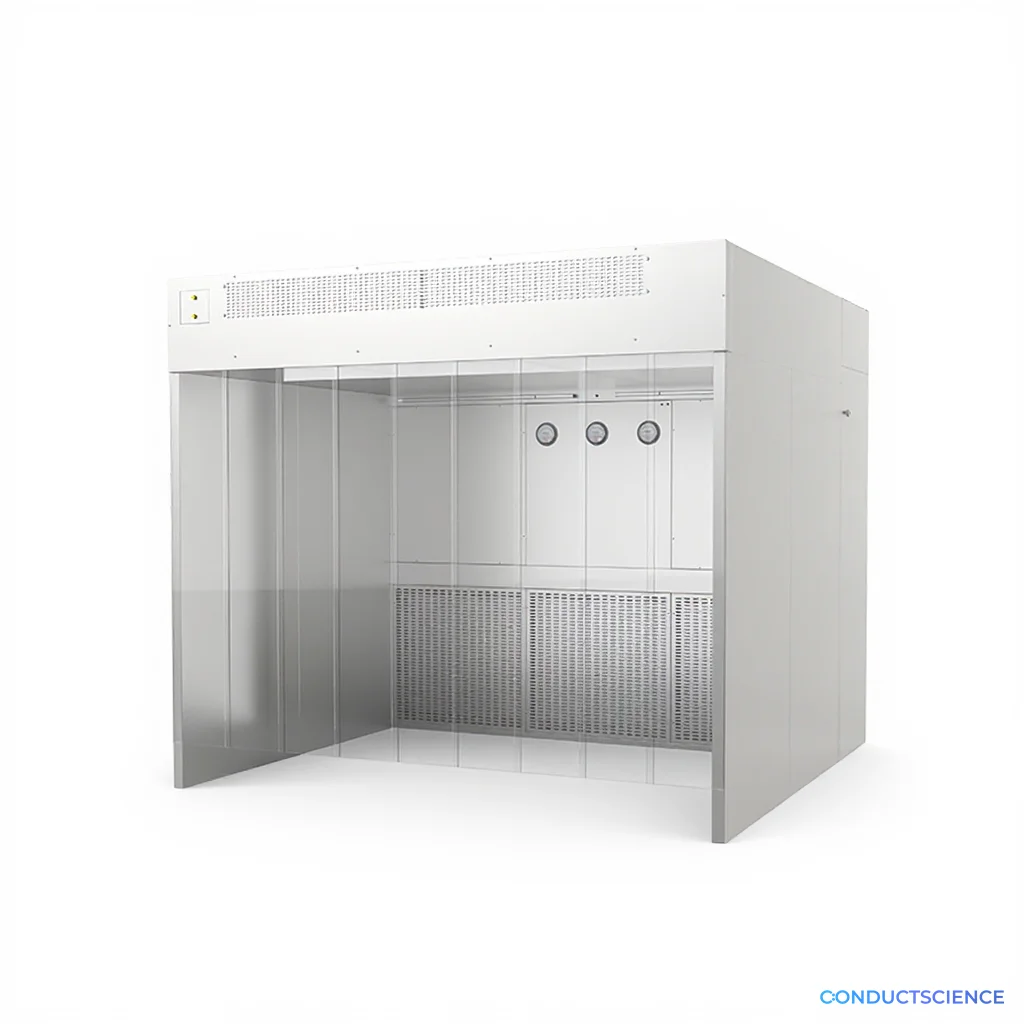
Dispensing Booth (Sampling & Weighing Booth)
ISO 5 (Class 100) clean-air booth for filling, weighing, and sampling of raw materials and compounds.
Three-stage HEPA filtration at 99.995% (0.3 μm); downflow air velocity 0.3–0.6 m/s; all-stainless-steel construction. Available in 1200 mm, 1800 mm, and 2400 mm working widths.

Louise Corscadden, PhD
Director of Science · ConductScience
Ask Louise about Dispensing Booth (Sampling & Weighing Booth) fit, setup, configuration, or quote prep.
Already working with us? Sign in to connect this with My Scientist.
Key Specifications
Full details →- Model fit
- 3 selectable configurations
- SKU family
- Assigned during quote
- Shipping box
- 42.0 x 43.6 x 38.0 cm
- Ordering
- Online checkout and quote request available
- Category
- Clean Benches & Fume Hoods
- Build notes
- Stainless steel
The dispensing booth provides an ISO 5 (Class 100) clean-air environment for filling, refilling, weighing, and sampling of raw materials and compounds in pharmaceutical and research settings. A vertically directed downflow air pattern — combined with three-stage filtration (pre-filter, medium-efficiency filter, and HEPA at 99.995% efficiency at 0.3 μm) — removes airborne particles and powder dust before they can contaminate the product or reach the operator.
An intelligent control system with automatic frequency adjustment maintains stable air velocity between 0.3–0.6 m/s regardless of filter loading. Three differential pressure gauges provide real-time filter condition monitoring, and an integrated alarm system alerts operators when replacement is required. The smooth stainless-steel construction — with rounded wall-to-floor transitions that eliminate particle traps — is designed for pharmaceutical-grade cleaning protocols.
UV sterilization (253.7 nm) and integrated LED lighting (≥500 lux) are standard across all three models. Working widths of 1200 mm, 1800 mm, and 2400 mm cover bench-scale weighing, pilot-batch dispensing, and full production sampling requirements.
Technical Parameters
| Parameter | BB-BKDB-1200 | BB-BKDB-1800 | BB-BKDB-2400 |
|---|---|---|---|
| Clean Level | ISO 5 (Class 100), Class A | ISO 5 (Class 100), Class A | ISO 5 (Class 100), Class A |
| HEPA Efficiency | 99.995% @ 0.3 μm | 99.995% @ 0.3 μm | 99.995% @ 0.3 μm |
| Air Velocity | 0.3–0.6 m/s (adjustable) | 0.3–0.6 m/s (adjustable) | 0.3–0.6 m/s (adjustable) |
| Supply Air Volume | ≤7,500 m³/h | ≤7,500 m³/h | ≤7,500 m³/h |
| Exhaust Air Volume | ≤2,250 m³/h | ≤2,250 m³/h | ≤2,250 m³/h |
| Work Area (W×D×H) | 1200×1200×2000 mm | 1800×1800×2000 mm | 2400×1800×2000 mm |
| External Dimensions (W×D×H) | 1300×1700×2400 mm | 1900×2300×2400 mm | 2500×2400×2400 mm |
| Power Consumption | 500 W | 1000 W | 1700 W |
| UV Lamp | 30 W × 1 (253.7 nm) | 40 W × 1 (253.7 nm) | 30 W × 2 (253.7 nm) |
| LED Lighting | 14 W × 4 | 16 W × 4 | 16 W × 2 & 14 W × 4 |
| Illumination | ≥500 lux | ≥500 lux | ≥500 lux |
| Noise Level | ≤75 dB | ≤75 dB | ≤75 dB |
| Pressure Gauges | 3 | 3 | 3 |
| Electrical Outlets | 2 | 2 | 2 |
| Material | Stainless steel | Stainless steel | Stainless steel |
| Power Supply | AC 220V±10% 50/60 Hz (110V±10% 60 Hz optional) | ||
| Gross Weight | 420 kg | 750 kg | 840 kg |
How It Works
The Class II B2 design operates on a 100% total exhaust principle where all air entering the work chamber is drawn downward through the work surface and exhausted through ULPA filtration without recirculation. Room air enters through the front opening at a controlled velocity of 0.53 m/s, creating an inward airflow barrier that prevents aerosols from escaping the cabinet.
Dual ULPA filters remove particles with 99.9995% efficiency at 0.12 micrometers, including bacteria, viruses, and submicron particles. The downflow air velocity of 0.33 m/s provides product protection by creating a laminar flow pattern that sweeps contaminants away from the work surface and prevents cross-contamination between samples.
Environmental sensors continuously monitor temperature and humidity conditions within the work chamber, while the UV sterilization system provides surface decontamination through 30W germicidal irradiation. The LED illumination system delivers uniform lighting exceeding 1000 Lux across the work surface for optimal visibility during detailed manipulations.
Features & Benefits
Clean Level
- ISO 5 (Class 100), Class A
HEPA Filter Efficiency
- 99.995% at 0.3 μm
Air Velocity
- 0.3–0.6 m/s (adjustable)
Supply Air Volume
- ≤7,500 m³/h (adjustable)
Exhaust Air Volume
- ≤2,250 m³/h (adjustable)
Noise Level
- ≤75 dB
Illumination
- ≥500 lux (LED)
UV Sterilization
- 253.7 nm, with timer
Power Supply
- AC 220V±10% 50/60 Hz (110V±10% 60 Hz optional)
Material
- Stainless steel
Work Area (W×D×H)
- BB-BKDB-1200: 1200×1200×2000 mm
- BB-BKDB-1800: 1800×1800×2000 mm
- BB-BKDB-2400: 2400×1800×2000 mm
External Dimensions (W×D×H)
- BB-BKDB-1200: 1300×1700×2400 mm
- BB-BKDB-1800: 1900×2300×2400 mm
- BB-BKDB-2400: 2500×2400×2400 mm
Power Consumption
- BB-BKDB-1200: 500 W
- BB-BKDB-1800: 1000 W
- BB-BKDB-2400: 1700 W
Gross Weight
- BB-BKDB-1200: 420 kg
- BB-BKDB-1800: 750 kg
- BB-BKDB-2400: 840 kg
Shipping weight
- 275.0 lb
Shipping box
- L: 42.0 cm
- W: 43.6 cm
- H: 38.0 cm
| Feature | This Product | Typical Alternative | Advantage |
|---|---|---|---|
| Filtration Efficiency | 99.9995% efficiency at 0.12 micrometers with dual ULPA filters | Entry-level models often use HEPA filtration with lower efficiency ratings | Superior submicron particle removal ensures complete containment of viral particles and ultrafine aerosols. |
| Air Handling Design | 100% total exhaust with no recirculation | Class II A cabinets recirculate 70% of filtered air | Eliminates risk of volatile chemical or radioactive material accumulation in the work environment. |
| Environmental Monitoring | Integrated LCD display for temperature and humidity tracking | Basic models often lack environmental sensors | Real-time condition monitoring ensures protocol compliance and documentation requirements are met. |
| Illumination System | LED lighting delivering 1000+ Lux uniformly | Fluorescent lighting systems with lower intensity and uneven distribution | Enhanced visibility for detailed manipulations and reduced eye strain during extended work sessions. |
| Work Chamber Size | 940 x 600 x 660 mm internal dimensions | Compact models offer smaller work areas | Generous workspace accommodates multiple samples and larger equipment while maintaining containment. |
| UV Sterilization | 30W UV lamp with programmable timer function | Many models lack UV sterilization or use lower wattage lamps | Automated surface decontamination reduces manual cleaning requirements and cross-contamination risk. |
This cabinet combines maximum containment through 100% exhaust design with advanced monitoring and sterilization capabilities. The dual ULPA filtration system and comprehensive environmental controls make it well-suited for high-risk microbiological work requiring complete aerosol containment and precise environmental documentation.
| Model | SKU | Listed price | Status | Shipping box |
|---|---|---|---|---|
| BB-BKDB-2400 | BB-BKDB-2400 | $27,990.00 | Available | 42.0 x 43.6 x 38.0 cm |
| BB-BKDB-1800 | BB-BKDB-1800 | $24,990.00 | Available | 42.0 x 43.6 x 38.0 cm |
| BB-BKDB-1200 | BB-BKDB-1200 | $11,690.00 | Available | 42.0 x 43.6 x 38.0 cm |
Practical Tips
Verify airflow velocities monthly using calibrated anemometers at multiple points across the work opening to ensure uniform containment performance.
Why: Airflow variation across the opening can create containment gaps that compromise safety.
Clean work surfaces with appropriate disinfectants after each use and perform weekly deep cleaning of interior surfaces including side walls and rear plenum.
Why: Accumulated contamination can interfere with airflow patterns and create secondary contamination sources.
Allow cabinet to run for 15 minutes before beginning work to establish stable airflow patterns and environmental conditions.
Why: Thermal equilibration ensures consistent containment performance and environmental monitoring accuracy.
Position materials at least 4 inches from the front grill to maintain proper inward airflow and prevent disruption of containment barriers.
Why: Objects placed too close to the front opening can create turbulence that compromises personnel protection.
Never operate the cabinet with the sash raised above the maximum 480mm opening or with the airflow alarm system disabled.
Why: Excessive sash height or disabled alarms eliminate critical safety warnings for containment failure.
If environmental readings become unstable, check for air leaks around the sash tracks and door seals that could affect internal conditions.
Why: Air infiltration can disrupt both containment performance and environmental sensor accuracy.
Document all environmental conditions, UV exposure times, and maintenance activities in a logbook for certification and regulatory compliance.
Why: Comprehensive documentation demonstrates proper operation and maintenance for safety audits and certifications.
Replace UV lamps annually regardless of apparent function since germicidal output decreases significantly over time even when the lamp appears operational.
Why: UV output degradation reduces sterilization effectiveness while maintaining visible light output that can mask performance loss.
Setup Guide
What’s in the Box
- Class II B2 Biological Safety Cabinet main unit
- ULPA filter set (dual filters)
- UV sterilization lamp (30W)
- LCD display module
- LED lighting system
- Power cable and electrical connections
- Installation and operation manual
- Filter certification documentation
- Airflow calibration certificate (typical)
Warranty
ConductScience provides a comprehensive 1-year manufacturer warranty covering all components and performance specifications. Technical support includes installation guidance, maintenance protocols, and troubleshooting assistance for optimal cabinet performance throughout the warranty period.
Compliance
What makes Class II B2 different from other biological safety cabinet types?
Class II B2 cabinets provide 100% total exhaust with no air recirculation, making them suitable for work with volatile toxic chemicals and radioactive materials in addition to biological agents. Unlike Class II A cabinets that recirculate filtered air, all chamber air is expelled through external exhaust.
How often do ULPA filters need replacement?
ULPA filter replacement depends on usage intensity and particle load, typically ranging from 12-24 months. Monitor pressure differential across filters and replace when airflow velocities cannot be maintained within specification or when particle penetration testing indicates decreased efficiency.
Can this cabinet be used for cell culture work?
Yes, the cabinet provides appropriate sterile conditions for cell culture through ULPA filtration and UV surface sterilization. However, ensure work protocols are compatible with the 100% exhaust design and verify that culture media and reagents are not adversely affected by airflow patterns.
What external exhaust requirements are needed?
The cabinet requires connection to a dedicated building exhaust system capable of handling the total air volume with appropriate negative pressure. Consult with facility engineers to ensure exhaust capacity matches cabinet specifications and local building codes.
How is containment performance verified?
Containment is verified through annual certification testing including airflow velocity measurements, smoke pattern visualization, and particle challenge tests. Personnel protection is assessed using tracer aerosols to confirm proper inward airflow at the work opening.
What maintenance is required between certifications?
Daily: UV lamp operation check and work surface cleaning. Weekly: Exterior cleaning and airflow alarm function test. Monthly: Environmental sensor calibration check and filter pressure differential monitoring. Record all maintenance activities for certification documentation.
Can the UV system damage laboratory materials?
UV irradiation can degrade plastics, rubber materials, and some metal finishes over time. Use UV sterilization cycles only when the work chamber is empty and avoid prolonged exposure of equipment and supplies to UV radiation.
What happens if power is interrupted during operation?
Power interruption stops airflow immediately, compromising containment. Install uninterruptible power supply (UPS) systems for critical applications and establish protocols for safely securing work and materials in the event of power failure.
Have a question about this product?
Have a question? Just ask.
Send it over and we'll email you a personalized answer — no call, no scheduling.
Prefer to talk it through?
Upgrade Options