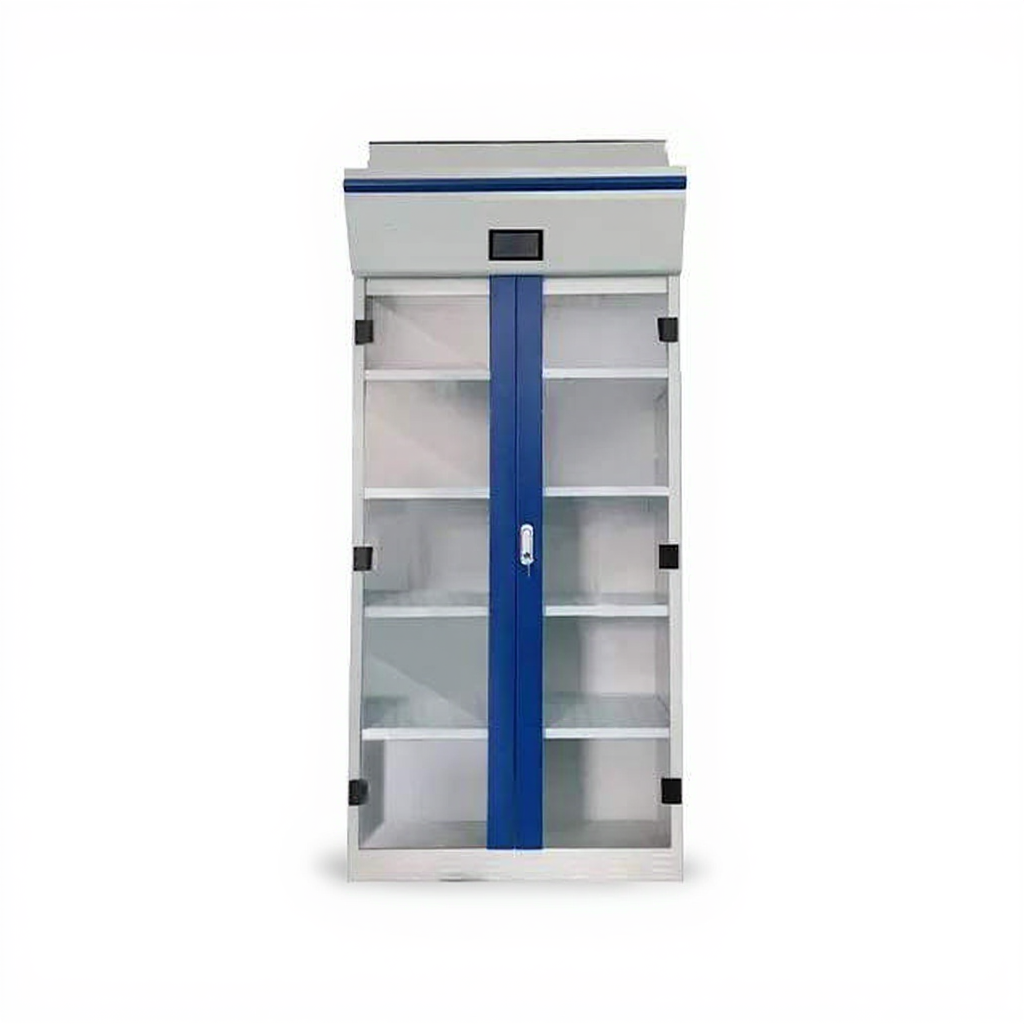
Clean Medicine Storage Cabinet
Environmental storage cabinet with transparent acrylic construction, integrated HEPA and activated carbon filtration, and LCD touchscreen monitoring for pharmaceutical and research material storage.

Louise Corscadden, PhD
Director of Science · ConductScience
Ask Louise about Clean Medicine Storage Cabinet fit, setup, configuration, or quote prep.
Already working with us? Sign in to connect this with My Scientist.
Key Specifications
Full details →- Model fit
- Configured during quote
- SKU family
- BB-BK-C800
- Shipping box
- 45.0 x 39.8 x 44.8 cm
- Ordering
- Online checkout and quote request available
- Category
- Clean Benches & Fume Hoods
- Build notes
- transparent acrylic
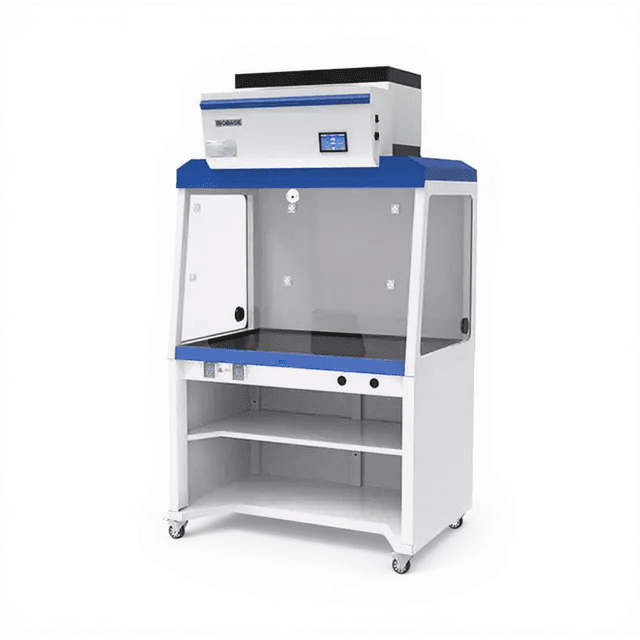
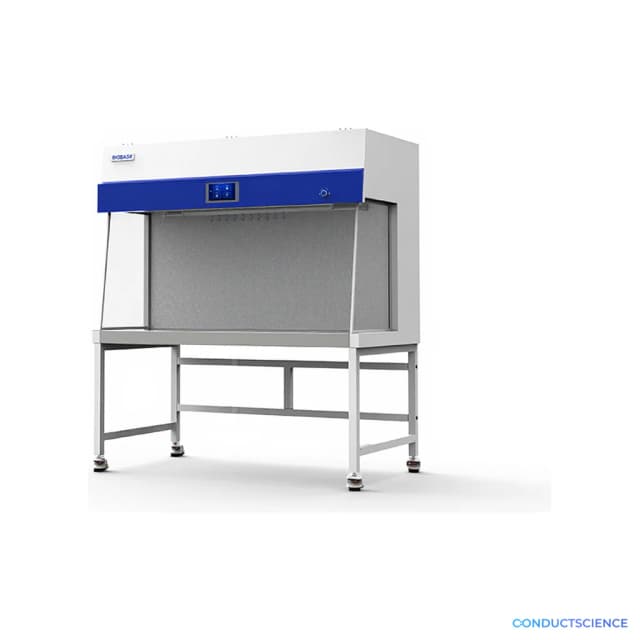
The Clean Medicine Storage Cabinet provides controlled environmental storage for pharmaceutical materials with integrated air filtration and continuous monitoring capabilities. Constructed from transparent acrylic with three-side viewing windows and an 8-inch slope front window, this cabinet enables visual inventory management while maintaining controlled storage conditions. The unit incorporates HEPA and activated carbon filtration systems with internal air circulation monitoring to maintain clean storage environments for temperature and humidity-sensitive materials.
The cabinet features LCD touchscreen controls for parameter monitoring, with temperature and humidity sensors providing continuous environmental tracking. Built-in alarm systems deliver audible and visual alerts for temperature excursions or filtration system status changes. A power-failure memory function maintains settings during electrical interruptions, while anti-overload and anti-electric shock protection features ensure safe operation in laboratory environments.
How It Works
The Clean Medicine Storage Cabinet operates through integrated environmental control and air filtration systems to maintain optimal storage conditions. HEPA filtration removes particulate contaminants from circulating air, while activated carbon filtration addresses gaseous contaminants and odors that could affect stored materials. Temperature and humidity sensors continuously monitor internal conditions, with data displayed on the LCD touchscreen interface.
Air quality monitoring probes track filtration performance by measuring particulate levels inside and outside the storage compartment. The transparent acrylic construction allows visual inspection of stored materials while maintaining environmental separation. When parameters exceed preset limits, the alarm system activates audible and visual alerts to notify users of condition changes requiring attention.
The power-failure memory function preserves programmed settings during electrical interruptions, ensuring continuity of monitoring parameters when power is restored. The middle partition in the base cabinet provides organizational flexibility for different material types while maintaining overall environmental control throughout the storage space.
Features & Benefits
Control Panel
- LCD Touch screen
Memory Function
- power-failure memory function
Front Window Angle
- 8 inch slope
Window Design
- Three side transparent acrylic windows with front window reversal design
Base Cabinet
- equipped with middle partition
Sensors
- temperature and humidity sensors
Air Detection
- inside and outside probe for indoor air pollution and filter conditions
Alarm System
- audible and visual alarm
Protection Features
- anti-overload, anti-electric shock
Filtration Technologies
- ['activated carbon', 'HEPA filters', 'specialty media']
Automation Level
- semi-automated
Material
- transparent acrylic
Display Type
- LCD
Research Domain
- Analytical Chemistry
- Clinical Diagnostics
- Microbiology
- Pharmaceutical QC
Shipping weight
- 79.37 lb
Shipping box
- L: 45.0 cm
- W: 39.8 cm
- H: 44.8 cm
| Feature | This Product | Typical Alternative | Advantage |
|---|---|---|---|
| Visual Access Design | Three-side transparent acrylic windows with 8-inch slope front access | Basic cabinets often have limited or no visual access to contents | Enables inventory monitoring without opening storage compartment, maintaining environmental stability while tracking material status. |
| Environmental Monitoring | Integrated temperature and humidity sensors with LCD touchscreen display | Entry-level storage units may lack continuous monitoring capabilities | Provides real-time documentation of storage conditions critical for pharmaceutical stability and quality control protocols. |
| Air Filtration Technology | Dual HEPA and activated carbon filtration with performance monitoring | Standard cabinets typically offer passive storage without active air treatment | Removes both particulate and gaseous contaminants that could compromise stored materials, with monitoring to verify effectiveness. |
| Alarm and Safety Systems | Audible and visual alarms with anti-overload and anti-shock protection | Basic units often lack comprehensive alarm systems | Immediately alerts users to condition changes and provides safety protection, preventing material loss and ensuring operator safety. |
| Power Management | Power-failure memory function maintains settings during interruptions | Standard units may lose programmed parameters during power loss | Ensures continuity of monitoring protocols and alarm thresholds without manual reprogramming after power restoration. |
The Clean Medicine Storage Cabinet combines transparent construction for visual management with active environmental control and air filtration. The integrated monitoring system with LCD touchscreen interface provides real-time parameter tracking and alarm capabilities. The dual filtration technology addresses both particulate and gaseous contamination while maintaining documentation capabilities required for regulated environments.
Practical Tips
Verify sensor calibration quarterly using certified temperature and humidity references, documenting results for quality system requirements.
Why: Maintains measurement accuracy required for pharmaceutical storage documentation and regulatory compliance.
Monitor air quality probe readings to determine filter replacement timing rather than relying solely on time-based schedules.
Why: Optimizes filter usage based on actual performance degradation rather than arbitrary intervals.
Allow newly stored materials to equilibrate for 2-4 hours before considering storage conditions stable.
Why: Temperature and humidity sensors need time to reflect true conditions after introducing new materials or opening the cabinet.
If alarms activate frequently, check door seals and verify the cabinet is not placed near heat sources or air vents.
Why: External environmental factors can overwhelm the cabinet's ability to maintain stable internal conditions.
Record environmental parameters at the beginning and end of each shift to establish baseline performance trends.
Why: Trending data helps identify gradual system degradation before it affects stored materials.
Ensure proper ventilation around the cabinet and never obstruct air intake or exhaust ports.
Why: The filtration system requires adequate airflow for proper operation and heat dissipation from electronic components.
Organize stored materials to maximize visual inspection capability through the transparent windows without requiring frequent opening.
Why: Minimizes air exchange events that can disrupt environmental stability and reduce filtration efficiency.
Clean acrylic surfaces weekly with appropriate non-abrasive cleaners to maintain visibility and prevent static buildup.
Why: Clean surfaces enable proper visual inspection while preventing electrostatic attraction of particulates to viewing windows.
Setup Guide
What’s in the Box
- Clean Medicine Storage Cabinet (main unit)
- LCD touchscreen control panel (typical)
- HEPA filter cartridge (typical)
- Activated carbon filter cartridge (typical)
- Temperature sensor probe (typical)
- Humidity sensor probe (typical)
- Air quality monitoring probes (internal and external) (typical)
- Power cable and adapter (typical)
- Installation and operation manual (typical)
- Calibration certificate (typical)
Warranty
ConductScience provides a standard one-year manufacturer warranty covering defects in materials and workmanship, with technical support available for setup, calibration, and troubleshooting assistance.
Compliance
What temperature and humidity ranges can this cabinet maintain?
Consult the product datasheet for specific temperature and humidity operating ranges. The cabinet includes calibrated sensors with LCD display and programmable alarm thresholds for critical parameter monitoring.
How often do the HEPA and activated carbon filters need replacement?
Filter replacement intervals depend on usage conditions and air quality. The internal air quality monitoring probes track filtration performance, indicating when efficiency degrades and replacement is needed.
Can the cabinet maintain stable conditions during power outages?
The power-failure memory function preserves settings, but active filtration and temperature control require continuous power. Consider uninterruptible power supply (UPS) backup for critical applications.
Is the touchscreen interface compatible with laboratory information management systems?
Consult product specifications for data export capabilities and communication protocols. The LCD touchscreen provides local monitoring and control of environmental parameters.
What maintenance procedures are required for optimal performance?
Regular tasks include filter replacement based on monitoring data, sensor calibration verification, and cleaning of acrylic surfaces. The air quality monitoring system helps determine maintenance intervals.
How does this compare to standard laboratory refrigerators for pharmaceutical storage?
This cabinet provides room temperature controlled storage with air filtration, unlike refrigeration units. It offers visual access through transparent construction and specialized air quality monitoring not found in standard refrigerators.
Have a question about this product?
Have a question? Just ask.
Send it over and we'll email you a personalized answer — no call, no scheduling.
Prefer to talk it through?
Accessories
Enhance your setup with compatible accessories