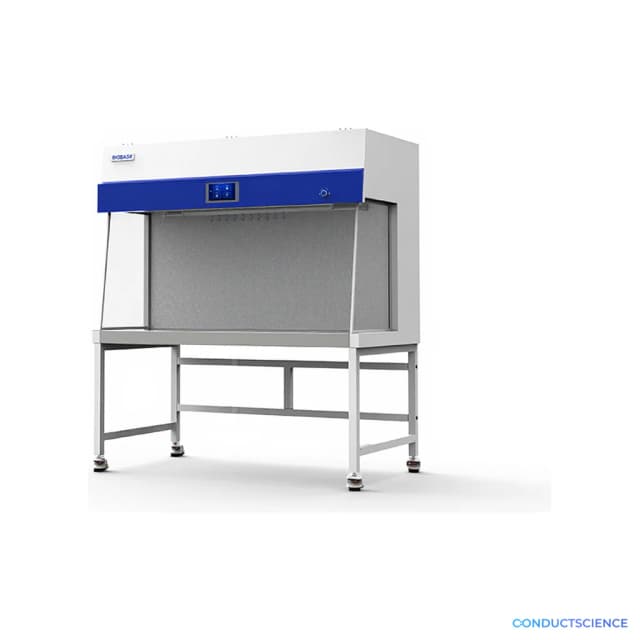
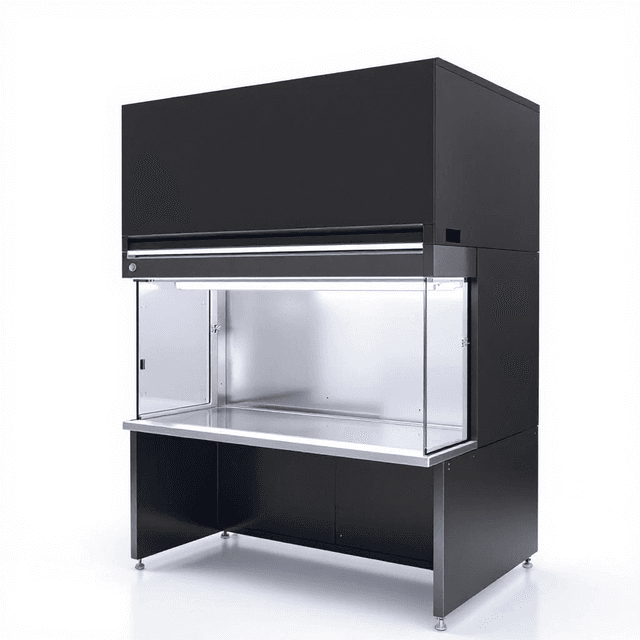
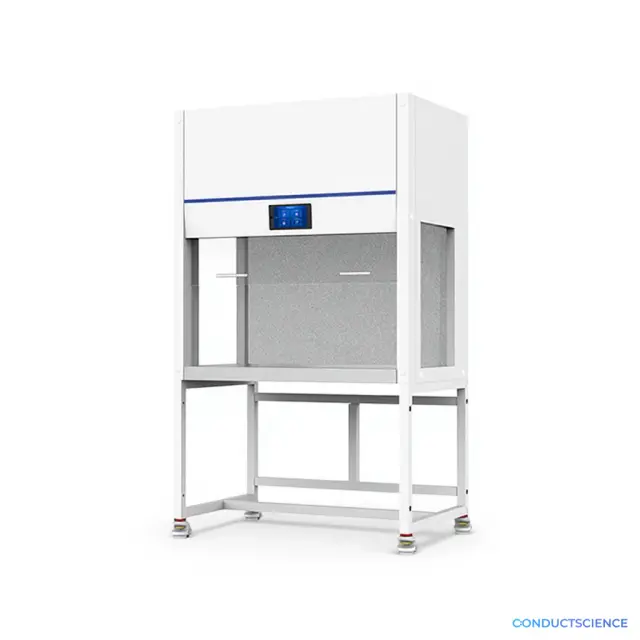
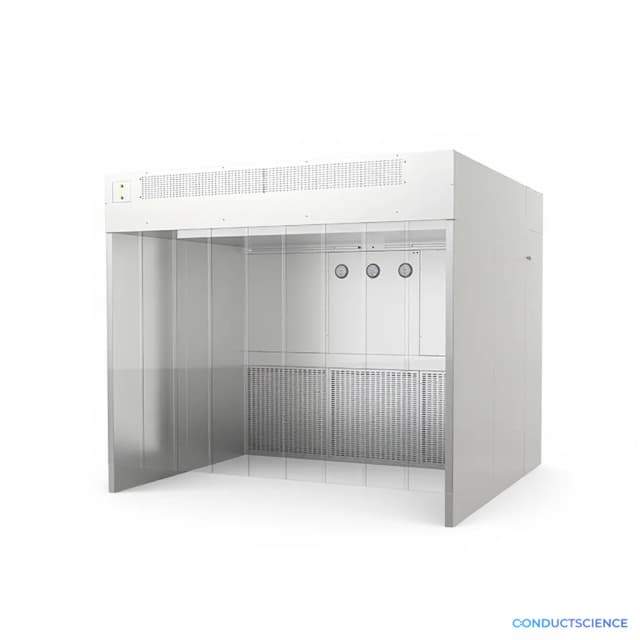
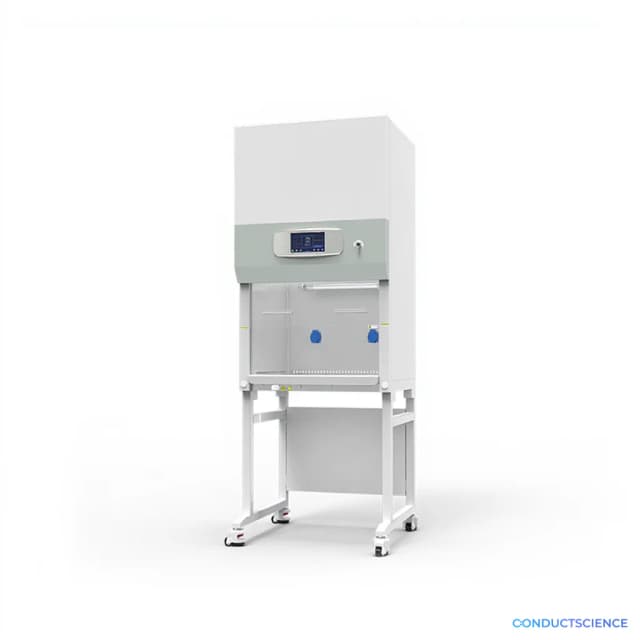
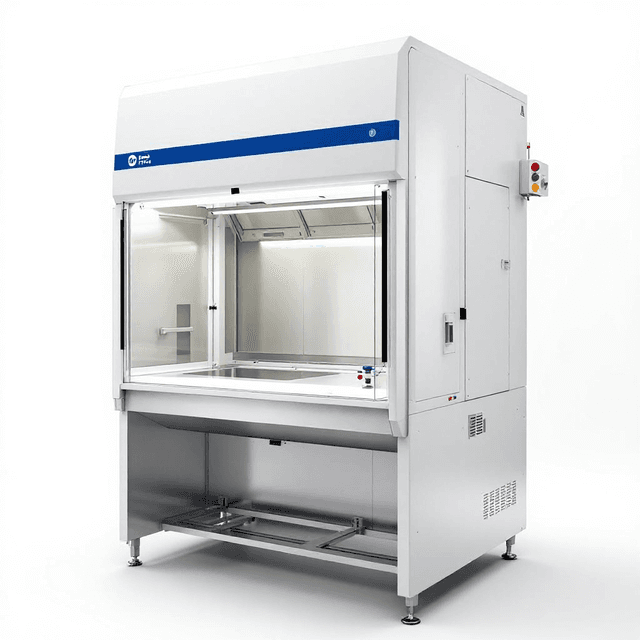
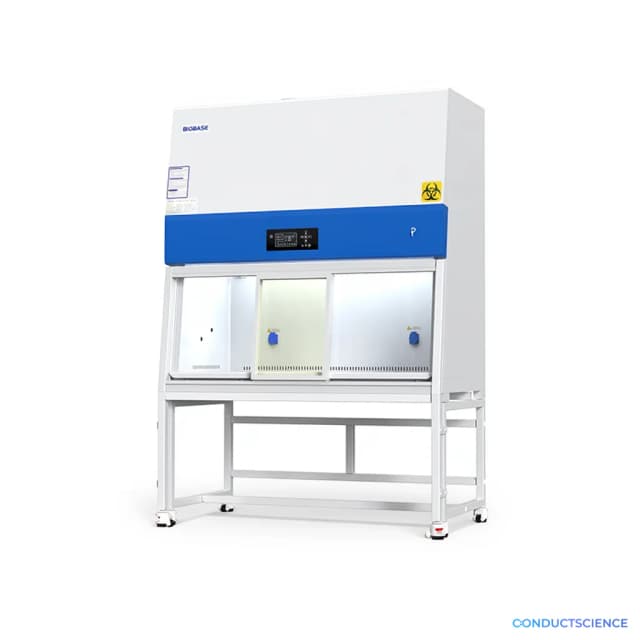
Horizontal Laminar Flow Cabinet
Horizontal laminar flow cabinet with HEPA filtration providing sterile work surfaces for sample preparation and manipulation in controlled environments.
A laminar flow clean bench protects only the sample. It blows filtered air toward the user, so it is not for infectious or toxic work.

Louise Corscadden, PhD
Director of Science · ConductScience
Ask Louise about Horizontal Laminar Flow Cabinet fit, setup, configuration, or quote prep.
Already working with us? Sign in to connect this with My Scientist.
Key Specifications
Full details →- Model fit
- Configured during quote
- SKU family
- BIO-0038
- Shipping box
- 169.0 x 80.0 x 80.8 cm
- Ordering
- Online checkout and quote request available
- Category
- Clean Benches & Fume Hoods
- Build notes
- Confirm accessories, station layout, and support needs before purchase
The Horizontal Laminar Flow Cabinet provides unidirectional HEPA-filtered airflow for protecting work surfaces from particulate contamination. This clean bench design delivers sterile working conditions through high-efficiency particulate air filtration with 99.995% efficiency at 0.3 micrometers, maintaining consistent airflow velocity between 0.30-0.45 m/s across the work surface.
Available in multiple sizes ranging from 700x500x600mm to 1700x500x800mm internal dimensions, the cabinet accommodates various sample preparation and manipulation tasks requiring contamination control. The LCD display provides real-time monitoring of operating parameters, while the washable polyester fiber pre-filter extends HEPA filter life by capturing larger particles before final filtration.
How It Works
The horizontal laminar flow cabinet operates by drawing ambient air through a pre-filtration system before passing it through a high-efficiency particulate air (HEPA) filter. The polyester fiber pre-filter captures larger particles and extends HEPA filter life, while the main HEPA filter removes 99.995% of particles at 0.3 micrometers, the most penetrating particle size.
Filtered air is distributed uniformly across the work surface in a horizontal laminar flow pattern at velocities of 0.30-0.45 m/s. This unidirectional airflow creates a positive pressure environment that sweeps contaminants away from the work area toward the front opening. The laminar flow design minimizes turbulence that could recirculate particles back onto the work surface.
The LCD display monitors system performance parameters including airflow velocity and filter status. The work surface height of 750-800mm provides ergonomic access while maintaining proper airflow dynamics across the protected work zone.
Features & Benefits
Automation Level
- manual
BBS-H1100(Previous name: BBS-DDS)
- BBS-H1300(X)
BBS-H1500(Previous name: BBS-SDS)
- BBS-H1800(X)
External Size(W*D*H)
- 800*808*1690mm
1100*810*1740mm
- 1300*808*1690mm
1500*810*1740mm
- 1800*808*1890mm
Internal Size(W*D*H)
- 700*500*600mm
1000*550*600mm
- 1200*500*600mm
1400*550*600mm
- 1700*500*800mm
Work Surface Height
- 750mm
800mm
- 750mm
Airflow Velocity
- 0.30~0.45m/s
Pre-Filter
- Polyester fiber, washable
HEPA Filter
- One, 99.995% efficiency at 0.3μm
Brand
- ConductScience
Research Domain
- Analytical Chemistry
- Cell Biology
- Environmental Monitoring
- Food Science
- Microbiology
- Pharmaceutical QC
Display Type
- LCD display
Shipping weight
- 133.0 lb
Shipping box
- L: 169.0 cm
- W: 80.0 cm
- H: 80.8 cm
| Feature | This Product | Typical Alternative | Advantage |
|---|---|---|---|
| HEPA Filter Efficiency | 99.995% at 0.3μm | Entry-level models often specify 99.97% efficiency | Higher filtration efficiency reduces contamination risk for critical sample preparation |
| Size Options | Five configurations from 700mm to 1700mm width | Limited size selection in many product lines | Allows precise matching to laboratory space and throughput requirements |
| Airflow Control | Adjustable velocity 0.30-0.45 m/s with LCD monitoring | Fixed airflow settings without real-time display | Enables optimization for specific applications while providing performance verification |
| Pre-filtration System | Washable polyester fiber pre-filter | Disposable pre-filters or no pre-filtration | Reduces operating costs and extends HEPA filter service life |
This cabinet offers high-efficiency filtration with multiple size configurations and adjustable airflow control. The combination of washable pre-filtration and LCD monitoring provides both operational economy and performance verification for quality-controlled environments.
Practical Tips
Verify airflow velocity at multiple points across the work surface quarterly using a calibrated anemometer.
Why: Ensures uniform protection across the entire work zone and documents performance for quality records.
Clean and inspect the washable pre-filter monthly, replacing it when washing no longer restores airflow.
Why: Maintains optimal airflow patterns and prevents HEPA filter overloading.
Keep movements slow and deliberate within the work zone to avoid disrupting laminar airflow patterns.
Why: Rapid movements create turbulence that can compromise the sterile field protection.
Position frequently used materials at the rear of the work surface where airflow first enters the sterile field.
Why: Maximizes protection by placing critical items in the cleanest air zone.
If airflow velocity decreases, check pre-filter loading before assuming HEPA filter replacement is needed.
Why: Pre-filter restriction is the most common cause of airflow reduction and is easily corrected.
Document LCD display readings during each use session for quality control records.
Why: Provides traceability of operating conditions for regulated environments and troubleshooting.
Never use this cabinet for work with hazardous chemicals or biological agents requiring containment.
Why: Horizontal flow directs air toward the operator and provides no protection from chemical or biological hazards.
Setup Guide
What’s in the Box
- Horizontal laminar flow cabinet main unit
- HEPA filter (installed)
- Polyester fiber pre-filter (installed)
- Power cable
- User manual and operating instructions
- Performance certification documentation (typical)
Warranty
ConductScience provides a standard one-year manufacturer warranty covering components and workmanship, with technical support for installation and operational guidance.
Compliance
What is the actual particle removal efficiency across different size ranges?
The HEPA filter provides 99.995% efficiency at 0.3 micrometers, which represents the most penetrating particle size. Efficiency is typically higher for both larger and smaller particles, but consult the product datasheet for complete efficiency curves.
How do I verify that airflow velocity remains within specification?
Use a calibrated anemometer to measure velocity at multiple points across the work surface. Measurements should be taken at the plane of use, typically 6 inches above the work surface, and should fall within the 0.30-0.45 m/s range.
What maintenance schedule is required for optimal performance?
Pre-filters should be inspected monthly and washed when visibly loaded. HEPA filters typically require annual replacement, though this depends on usage and environmental conditions. The LCD display will indicate when service is needed.
Can this cabinet be used for work with volatile chemicals?
This is not a fume hood and does not provide chemical protection. It is designed for particulate contamination control only. Use appropriate fume extraction for chemical work.
How does the cabinet handle different sample types and containers?
The horizontal airflow accommodates various container sizes within the work zone dimensions. Tall items should not obstruct airflow patterns, and work should be performed in the laminar flow field.
What documentation is provided for quality system compliance?
The cabinet typically includes factory performance certification and operational manuals. Additional qualification testing may be required for regulated environments, depending on specific requirements.
Have a question about this product?
Have a question? Just ask.
Send it over and we'll email you a personalized answer — no call, no scheduling.
Prefer to talk it through?
Accessories
Enhance your setup with compatible accessories
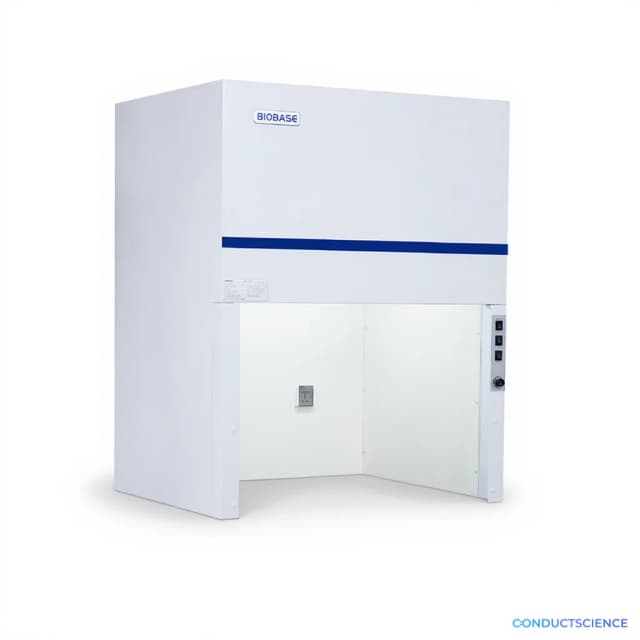
Replacement Parts & Consumables
Frequently Bought Together
Upgrade Options