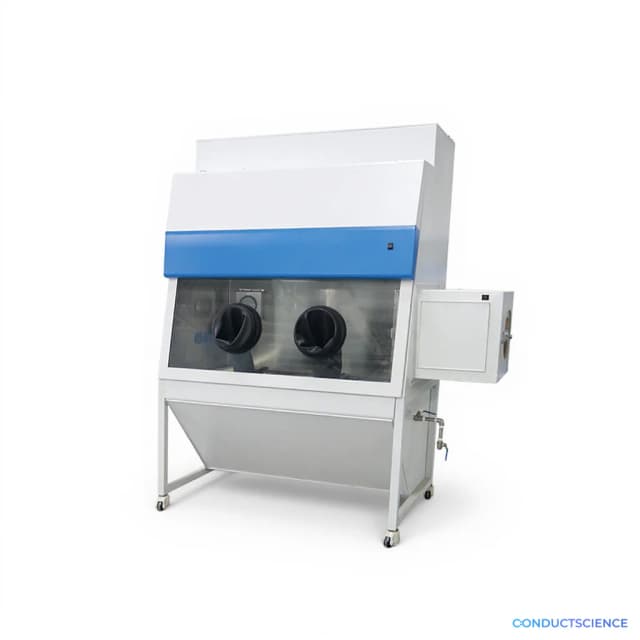
Vertical Laminar Flow Cabinet
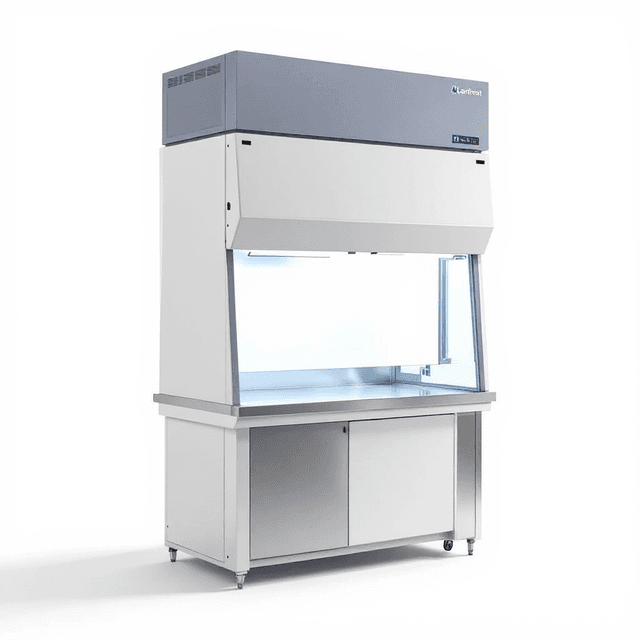
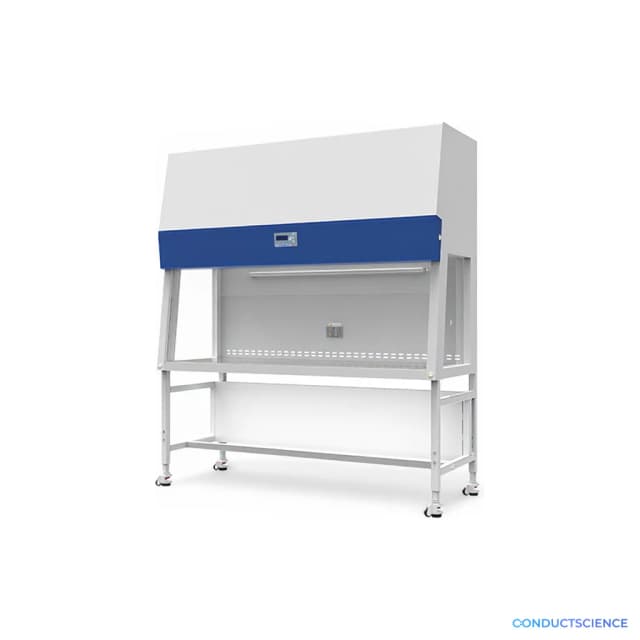
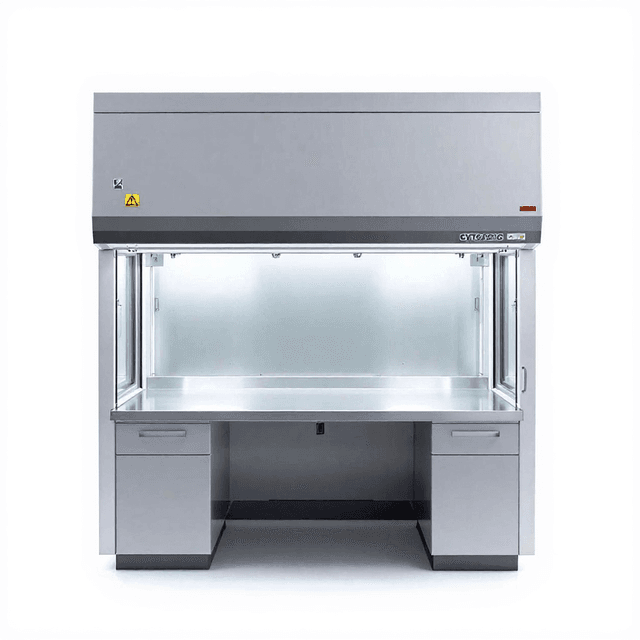
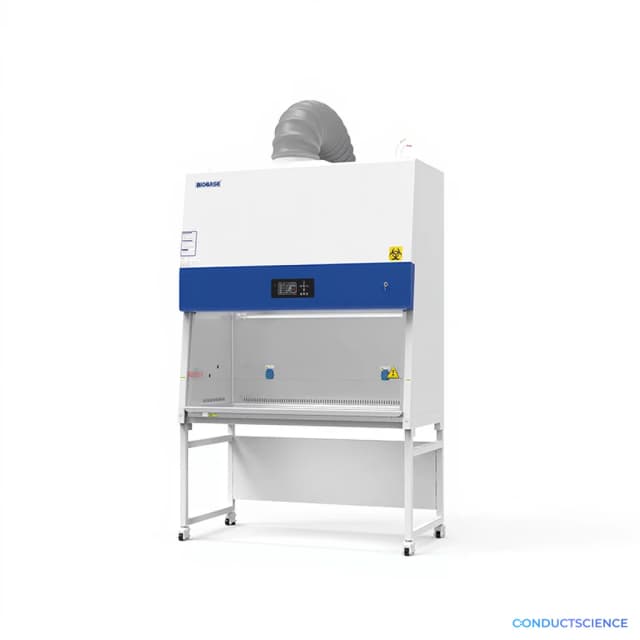
Vertical laminar flow cabinet providing ISO Class 5 sterile conditions through HEPA-filtered downward airflow for aseptic laboratory operations and cell culture work.
A laminar flow clean bench protects only the sample. It blows filtered air toward the user, so it is not for infectious or toxic work.

Louise Corscadden, PhD
Director of Science · ConductScience
Ask Louise about Vertical Laminar Flow Cabinet fit, setup, configuration, or quote prep.
Already working with us? Sign in to connect this with My Scientist.
Key Specifications
Full details →- Model fit
- Configured during quote
- SKU family
- _old_BIO-0032
- Shipping box
- 196.0 x 130.0 x 75.0 cm
- Ordering
- Online checkout and quote request available
- Category
- Clean Benches & Fume Hoods
- Build notes
- Confirm accessories, station layout, and support needs before purchase
The Vertical Laminar Flow Cabinet provides ISO Class 5 (Class 100) sterile working conditions through HEPA-filtered vertical airflow for aseptic laboratory operations. The unit delivers consistent downward airflow at 0.30-0.45 m/s velocity through a single HEPA filter with 99.995% efficiency at 0.3 micrometers, creating a contamination-controlled workspace measuring 1200×645×625mm internal dimensions.
Key operational features include motorized front window control, LCD display for system monitoring, and colony contamination levels maintained at ≤0.5 CFU/30 minutes. The cabinet operates with minimal vibration (≤5 micrometers rms) and noise levels (≤65 dB(A)) while providing ≥300 lux illumination for detailed work visibility. Pre-filtration through polyester fiber extends HEPA filter life and maintains consistent performance in cell culture, microbiology, and pharmaceutical preparation applications.
How It Works
Vertical laminar flow cabinets operate on the principle of unidirectional airflow to create a sterile workspace. Room air is drawn through a polyester fiber pre-filter to remove larger particulates, then passes through a HEPA filter positioned at the top of the cabinet. The HEPA filter removes 99.995% of particles 0.3 micrometers and larger through mechanical filtration mechanisms including impaction, interception, and diffusion.
Filtered air flows vertically downward at controlled velocity (0.30-0.45 m/s) creating a laminar flow pattern that sweeps contaminants away from the work surface. The motorized front window maintains proper airflow dynamics while allowing operator access. The downward airflow pattern continuously removes particles generated within the workspace, maintaining ISO Class 5 conditions with colony counts ≤0.5 CFU per 30 minutes.
The LCD display monitors critical parameters including airflow velocity, filter status, and operational hours to ensure consistent performance. Low vibration operation (≤5 micrometers rms) prevents disturbance of sensitive cell culture work, while adequate illumination (≥300 lux) provides clear visibility for detailed manipulations.
Features & Benefits
Automation Level
- semi-automated
External Size(W*D*H)
- 1300*750*1960mm
Internal Size(W*D*H)
- 1200*645*625mm
Work Surface Height
- 750mm
Max Opening
- 430mm
Airflow Velocity
- 0.30~0.45m/s
Pre-filter
- Polyester fiber
HEPA Filter
- One, 99.995% efficiency at 0.3μm
Front Window
- Motorized
Noise
- ≤65dB(A)
Illumination
- ≥300lx
Vibration
- ≤5μm(rms)
Safety
- Colonies number ≤0.5CFU/30min
Clean Level
- ISO level 5(Class 100)
Brand
- ConductScience
Research Domain
- Cell Biology
- Clinical Diagnostics
- Developmental Biology
- Immunology
- Microbiology
- Pharmaceutical QC
Display Type
- LCD display
Shipping weight
- 218.0 lb
Shipping box
- L: 196.0 cm
- W: 130.0 cm
- H: 75.0 cm
| Feature | This Product | Typical Alternative | Advantage |
|---|---|---|---|
| HEPA Filter Efficiency | 99.995% efficiency at 0.3μm | Basic models often provide 99.97% minimum efficiency | Higher efficiency removes smaller particles for enhanced sterile conditions in critical applications. |
| Front Window Control | Motorized window positioning | Manual sash positioning is common in entry-level units | Maintains consistent airflow dynamics without requiring manual adjustment during operation. |
| Airflow Monitoring | LCD display with system monitoring | Basic models may have simple indicator lights | Real-time parameter monitoring enables proactive maintenance and performance verification. |
| Contamination Control | ≤0.5 CFU/30 minutes specification | Standard models may not specify colony count limits | Quantified contamination levels provide measurable sterility assurance for critical work. |
| Vibration Control | ≤5μm rms vibration specification | Entry-level units may lack vibration specifications | Low vibration operation essential for microscopy work and sensitive cell culture manipulations. |
| Pre-filtration System | Polyester fiber pre-filter included | Some basic models lack pre-filtration | Extends HEPA filter life and maintains consistent performance by removing larger particles first. |
This cabinet combines high-efficiency HEPA filtration (99.995% at 0.3μm) with motorized window control and comprehensive monitoring through LCD display. The specified contamination levels (≤0.5 CFU/30 minutes) and low vibration operation (≤5μm rms) support demanding sterile applications requiring quantified performance verification.
Practical Tips
Verify airflow velocity across multiple points on the work surface using a calibrated anemometer every 6 months or after filter replacement.
Why: Ensures uniform air distribution and identifies areas where airflow may be compromised by filter loading or equipment placement.
Replace the polyester fiber pre-filter when it becomes visibly loaded with particles or shows signs of discoloration.
Why: Pre-filter maintenance prevents HEPA filter loading and maintains designed airflow velocity throughout the filter's service life.
Allow the cabinet to operate for at least 15 minutes before beginning sterile work to establish stable airflow patterns.
Why: Initial operation period ensures the workspace reaches specified contamination levels and airflow velocity stabilizes.
Position materials and equipment to avoid blocking airflow patterns, keeping items at least 6 inches from the sides and back of the work area.
Why: Unobstructed airflow maintains the laminar flow pattern essential for effective contamination control throughout the workspace.
If the LCD display shows airflow velocity below 0.30 m/s, check pre-filter loading and inspect for obstructions in the work area.
Why: Low airflow velocity indicates filter resistance or blocked air paths that compromise sterile conditions.
Document airflow velocity measurements and contamination testing results in a maintenance log for performance trending.
Why: Performance trending helps identify gradual degradation and supports predictive maintenance scheduling.
Never use the cabinet for work involving volatile solvents or toxic chemicals that require fume extraction.
Why: Laminar flow cabinets recirculate air and do not provide chemical containment or exhaust ventilation for hazardous vapors.
Clean the work surface and interior walls with appropriate disinfectant after each use, allowing complete evaporation before closing the front window.
Why: Regular cleaning prevents biofilm formation and maintains sterile conditions while preventing chemical residues from affecting subsequent work.
Setup Guide
What’s in the Box
- Vertical laminar flow cabinet main unit
- Pre-installed HEPA filter
- Pre-installed polyester fiber pre-filter
- Power cord
- User manual and installation guide
- Performance certification documentation (typical)
- Filter replacement schedule reference (typical)
Warranty
ConductScience provides a standard 1-year manufacturer warranty covering defects in materials and workmanship with comprehensive technical support for installation and operational guidance.
Compliance
What is the actual particle removal efficiency of the HEPA filter?
The HEPA filter provides 99.995% efficiency at 0.3 micrometers, which exceeds the minimum 99.97% requirement for true HEPA filtration and effectively removes bacteria and most fungal spores.
How do I verify that airflow velocity remains within specifications?
Use a calibrated anemometer to measure velocity at multiple points across the work surface. Readings should consistently fall within 0.30-0.45 m/s. The LCD display provides ongoing monitoring of system performance.
What maintenance schedule is required for optimal performance?
Monitor pre-filter loading based on visual inspection and replace when discolored. HEPA filter replacement depends on usage but typically ranges from 2-5 years. Consult product datasheet for specific replacement indicators.
Can this cabinet be used for both cell culture and microbiological work?
Yes, the ISO Class 5 environment with ≤0.5 CFU/30 minutes contamination levels supports both applications. However, dedicated cabinets are recommended when working with pathogenic organisms to prevent cross-contamination.
What is the maximum size of equipment that can be used inside the cabinet?
Internal dimensions are 1200×645×625mm with working height of 750mm and maximum front window opening of 430mm. Equipment must not obstruct airflow patterns or exceed these dimensional constraints.
How does the motorized front window affect sterile conditions?
The motorized window maintains consistent airflow dynamics by controlling the opening size, preventing the airflow disruption that can occur with manual sash positioning and helping maintain the designed air velocity profile.
Is this cabinet suitable for handling volatile chemicals or solvents?
No, this is a laminar flow cabinet designed for particulate contamination control, not chemical fume containment. Volatile chemicals require a chemical fume hood with appropriate exhaust ventilation.
What documentation is provided for validation in regulated environments?
The cabinet includes performance certification documentation showing airflow velocity, HEPA filter efficiency, and contamination testing results. Additional validation testing may be required based on specific regulatory requirements.
Have a question about this product?
Have a question? Just ask.
Send it over and we'll email you a personalized answer — no call, no scheduling.
Prefer to talk it through?
Accessories
Enhance your setup with compatible accessories
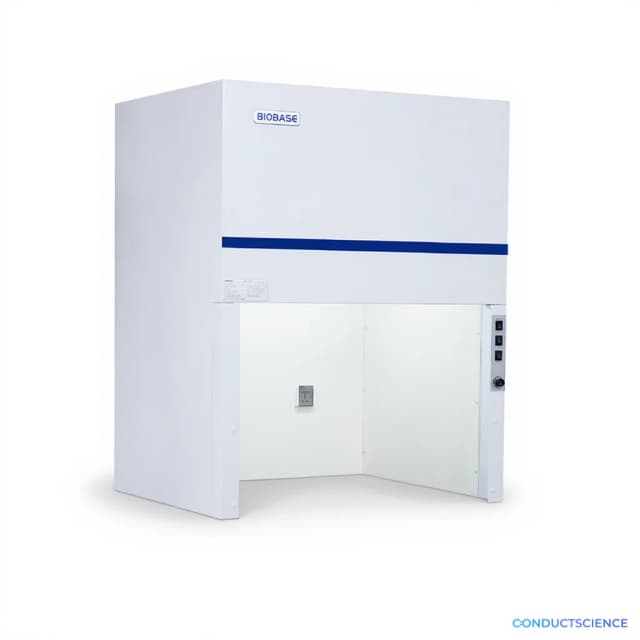
Replacement Parts & Consumables
Frequently Bought Together
Upgrade Options