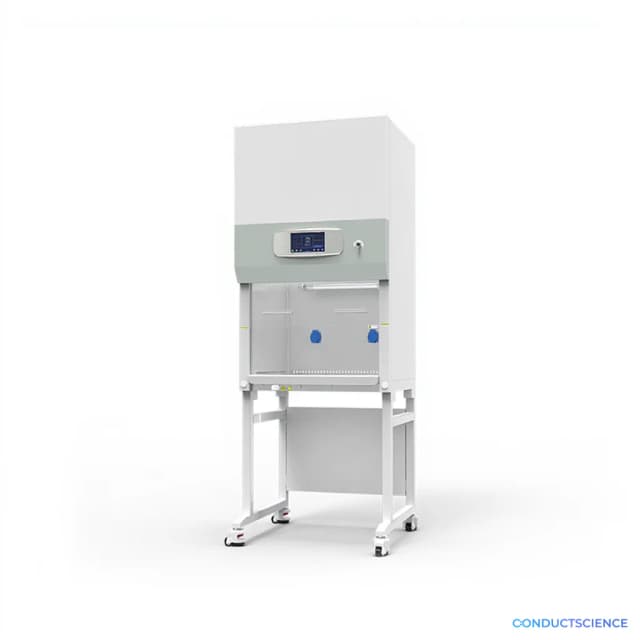
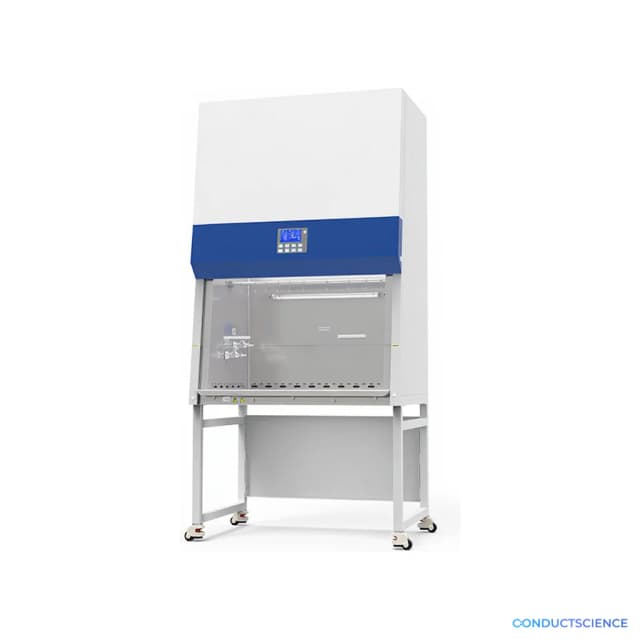
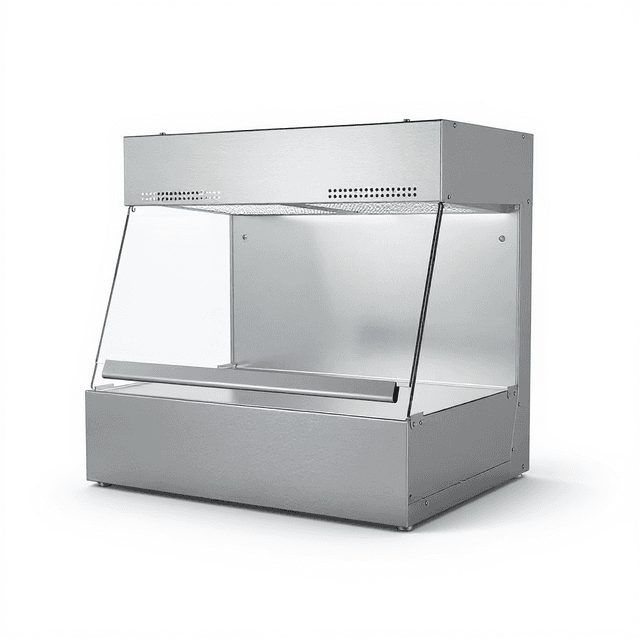
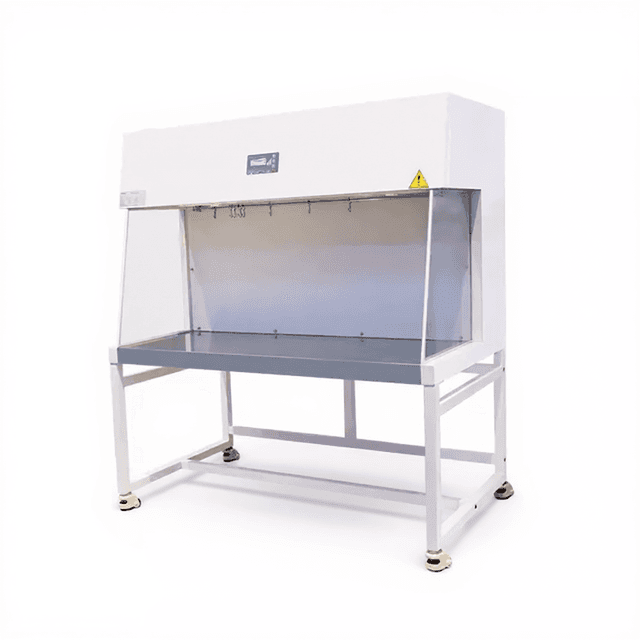
Pro Series Class II B2 Biological Safety Cabinet
Class II B2 total exhaust biological safety cabinet with dual ULPA filtration for handling hazardous biological materials and volatile chemicals in research applications.

Louise Corscadden, PhD
Director of Science · ConductScience
Ask Louise about Pro Series Class II B2 Biological Safety Cabinet fit, setup, configuration, or quote prep.
Already working with us? Sign in to connect this with My Scientist.
Key Specifications
Full details →- Model fit
- Configured during quote
- SKU family
- BIO-0010
- Shipping box
- 225.5 x 110.0 x 75.0 cm
- Ordering
- Online checkout and quote request available
- Category
- Clean Benches & Fume Hoods
- Build notes
- Confirm accessories, station layout, and support needs before purchase
The Pro Series Class II B2 Biological Safety Cabinet provides total exhaust containment for handling hazardous biological materials and volatile chemicals in research laboratories. This cabinet exhausts 100% of the air through dual ULPA filtration systems, preventing recirculation of contaminated air into the laboratory environment. The motorized front window with two-layer laminated toughened glass provides operator protection while maintaining ergonomic access to the work surface.
Designed for applications requiring protection of personnel, product, and environment, the cabinet features dual ULPA filters with 99.9995% efficiency at 0.12 micrometers and integrated filter life indicators. The down-flow and inflow velocities are precisely controlled to maintain containment while providing laminar airflow conditions. Available in three work surface widths (940mm, 1350mm, and 1700mm) to accommodate varying throughput requirements and laboratory space constraints.
How It Works
Class II B2 biological safety cabinets operate on the principle of total exhaust containment, where 100% of the air within the work chamber is filtered and exhausted to the outside environment. The cabinet maintains three levels of protection through controlled airflow patterns: personnel protection via inward airflow through the work opening, product protection through ULPA-filtered downflow, and environmental protection through total exhaust of contaminated air.
Air enters the work chamber through the front opening at 0.53±0.025 m/s, creating a protective barrier that prevents aerosols from escaping. Simultaneously, ULPA-filtered air flows downward at 0.33±0.025 m/s across the work surface, maintaining sterile conditions for sample manipulation. All air within the cabinet passes through dual ULPA filters with 99.9995% efficiency at 0.12 micrometers before exhaust, ensuring complete removal of biological contaminants and chemical vapors.
The motorized front window automatically adjusts to maintain optimal airflow velocities while providing ergonomic access. The two-layer laminated toughened glass construction with UV protection ensures operator safety while maintaining visibility of work processes. Integrated filter life indicators monitor ULPA filter performance to ensure continued containment effectiveness.
Features & Benefits
Automation Level
- semi-automated
BSC-1500IIB2-Pro
- BSC-1800IIB2-Pro
External Size(W*D*H)
- 1100*750*2255mm
1500*770*2290mm
- 1875*795*2280mm
Internal Size(W*D*H)
- 940*600*655mm
1350*600*660mm
- 1700*600*660mm
Tested Opening
- Safety height 200mm(8)
Max Opening
- 420mm(17)
500mm(20)
- 480mm(20)
Inflow Velocity
- 0.53±0.025m/s
Down Flow Velocity
- 0.33±0.025m/s
ULPA Filter
- Two, 99.9995% efficiency at 0.12μm, filter life indicator
Front Window
- Motorized, two-layer laminated toughened glass≥6mm, anti UV
Noise
- ≤ 67dB
UV Lamp
- 30W*1
Brand
- ConductScience
Research Domain
- Cancer Research
- Cell Biology
- Environmental Monitoring
- Microbiology
- Pharmaceutical QC
- Toxicology
Shipping weight
- 265.0 lb
Shipping box
- L: 225.5 cm
- W: 110.0 cm
- H: 75.0 cm
| Feature | This Product | Typical Alternative | Advantage |
|---|---|---|---|
| Exhaust Configuration | 100% total exhaust with dual ULPA filtration | Many models use partial exhaust or recirculation systems | Eliminates cross-contamination risks and allows safe handling of volatile chemicals |
| ULPA Filter Efficiency | 99.9995% efficiency at 0.12 micrometers | HEPA filtration at 99.97% efficiency is common in entry-level models | Provides superior submicron particle retention for enhanced containment |
| Window Operation | Motorized front window with automatic positioning | Manual window adjustment is standard in basic models | Maintains optimal airflow velocities automatically while improving operator convenience |
| Filter Monitoring | Integrated filter life indicators | Many units require manual pressure differential monitoring | Provides real-time filter performance data to prevent containment failures |
| Work Surface Options | Three width configurations from 940mm to 1700mm | Limited size options in some product lines | Accommodates varying throughput requirements and laboratory space constraints |
The Pro Series offers total exhaust containment with precise airflow control and automated window positioning. The dual ULPA filtration system and integrated monitoring capabilities provide enhanced safety margins for critical containment applications.
Practical Tips
Verify airflow velocities monthly using a calibrated anemometer at multiple measurement points across the work opening.
Why: Airflow velocity directly affects containment performance and early detection prevents safety compromises.
Operate the UV lamp for 30 minutes after each work session to maintain surface sterility.
Why: Regular UV exposure prevents microbial buildup on work surfaces between chemical decontamination cycles.
Allow the cabinet to operate for 5 minutes before beginning work to establish stable airflow patterns.
Why: Stable airflow conditions are essential for reliable containment and sterile work environment.
Never block the rear exhaust plenum or front air grilles during operation.
Why: Airflow obstruction can create turbulence that compromises both containment and product protection.
Document filter pressure drop readings weekly to track performance degradation trends.
Why: Trending data helps predict optimal filter replacement timing before containment failure occurs.
If airflow alarms activate, verify that the motorized window is properly positioned and no obstructions are present.
Why: Window position directly affects inflow velocity and is the most common cause of airflow deviations.
Setup Guide
What’s in the Box
- Class II B2 biological safety cabinet main unit
- Installation and operation manual
- ULPA filter certification documents (typical)
- Exhaust connection hardware (typical)
- Power cable and electrical specifications (typical)
Warranty
ConductScience provides a standard one-year manufacturer warranty covering defects in materials and workmanship, with technical support available for installation guidance and operational questions.
Compliance
What exhaust requirements are needed for proper operation?
The cabinet requires connection to an external exhaust system capable of handling 100% of the cabinet's airflow volume at the specified velocities. Consult the installation manual for specific CFM requirements based on cabinet size.
How often should ULPA filters be replaced?
Filter replacement frequency depends on usage and contamination load, typically ranging from 1-3 years. The integrated filter life indicators provide real-time monitoring to determine optimal replacement timing.
Can the cabinet handle volatile organic solvents?
Yes, the total exhaust design makes it suitable for volatile chemicals, but ensure adequate exhaust system capacity and consider fire safety requirements for flammable solvents.
What certification testing is required after installation?
Standard certification includes airflow velocity verification, ULPA filter integrity testing, containment verification using smoke patterns, and noise level measurement.
How does the motorized window affect containment?
The motorized window automatically maintains optimal opening height for proper airflow velocities, with safety interlocks preventing operation outside specified parameters.
What maintenance is required beyond filter replacement?
Routine maintenance includes weekly UV lamp operation for surface decontamination, monthly airflow velocity checks, and annual professional certification testing.
Have a question about this product?
Have a question? Just ask.
Send it over and we'll email you a personalized answer — no call, no scheduling.
Prefer to talk it through?
Replacement Parts & Consumables