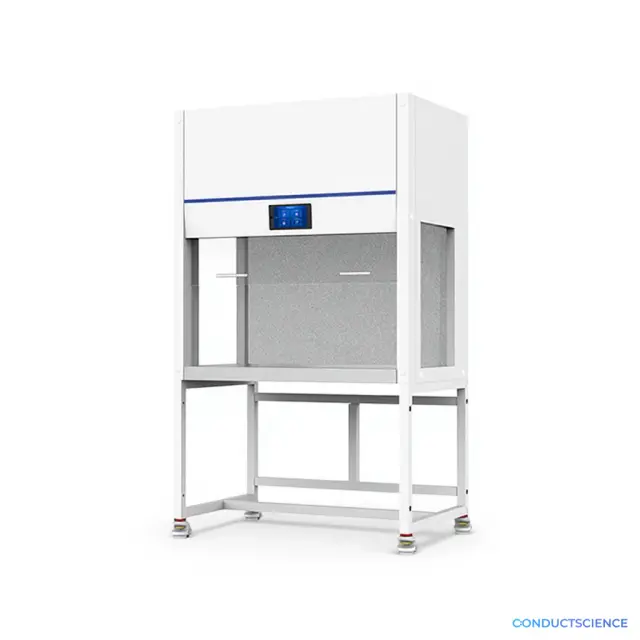
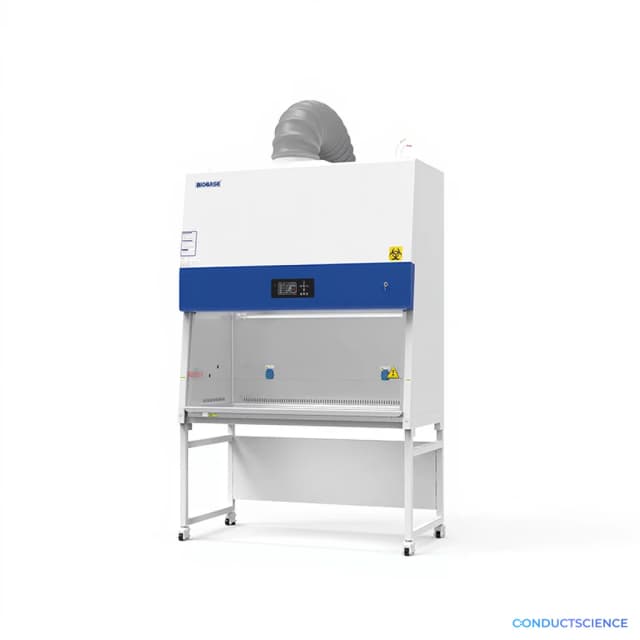
Fume Hood
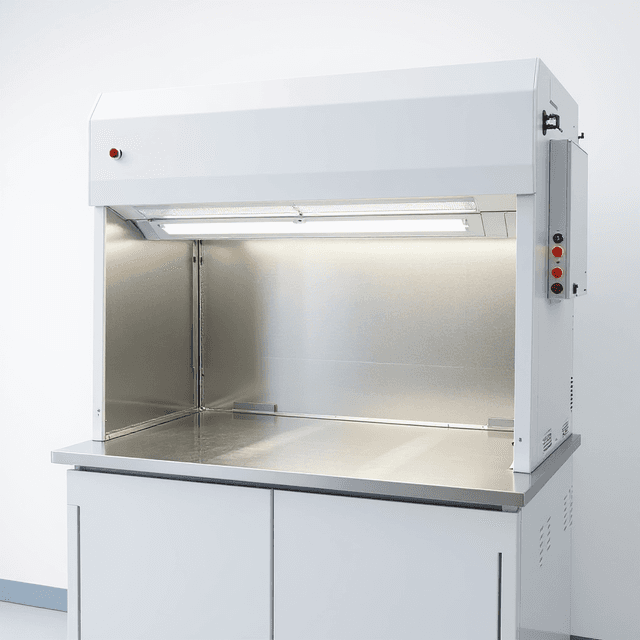
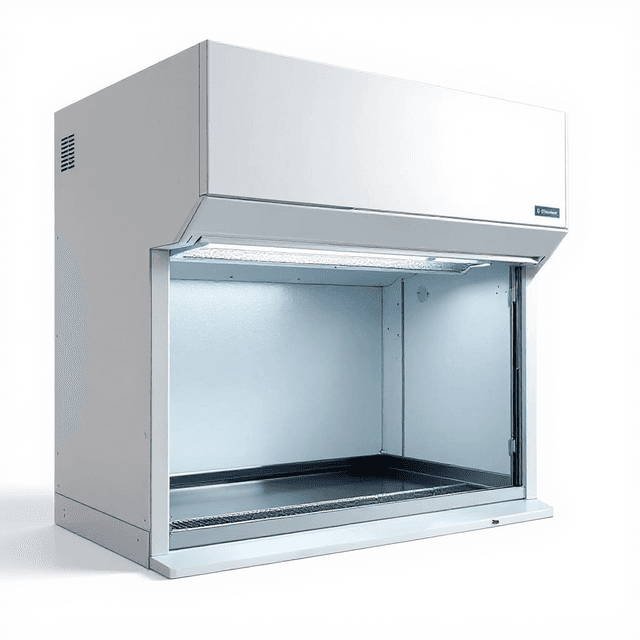
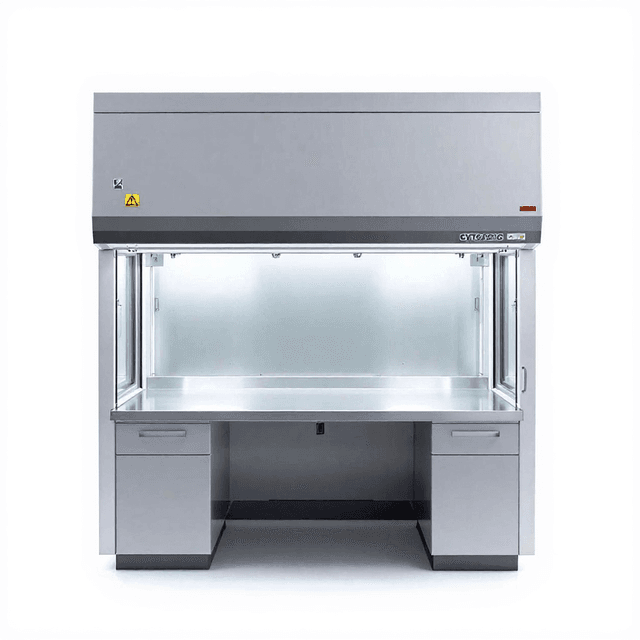
Single-user integral fume hood with 1225 m³/h exhaust capacity and variable air velocity control for safe handling of chemical vapors and hazardous materials in laboratory environments.

Louise Corscadden, PhD
Director of Science · ConductScience
Ask Louise about Fume Hood fit, setup, configuration, or quote prep.
Already working with us? Sign in to connect this with My Scientist.
Key Specifications
Full details →- Model fit
- Configured during quote
- SKU family
- BIO-0056
- Shipping box
- 31.89 x 31.5 x 15.75 cm
- Ordering
- Online checkout and quote request available
- Category
- Clean Benches & Fume Hoods
- Build notes
- Confirm accessories, station layout, and support needs before purchase
The ConductScience BIO-0056 Fume Hood is a single-user laboratory ventilation system designed for chemical handling applications requiring containment of hazardous vapors and particulates. This integral-type unit provides controlled airflow at 1225 m³/h exhaust volume with adjustable air velocity from 0.3 to 0.8 m/s to maintain effective containment while minimizing energy consumption. The system operates at noise levels ≤65 dB(A) for laboratory environments requiring low ambient noise.
The unit features a maximum sash opening of 400mm with an integral tabletop height of 810mm, accommodating standard laboratory glassware and equipment. Standard equipment includes a 4W LED illumination system and splash-proof electrical socket rated for loads up to 500W. The hood operates on standard 220V±10%, 50Hz power supply (110V±10%, 60Hz optional) with 95W base power consumption excluding socket load.
How It Works
The fume hood operates on the principle of controlled airflow to capture and remove hazardous vapors, gases, and particulates from the laboratory workspace. Air is drawn into the hood through the sash opening at a controlled velocity, creating a containment zone that prevents contaminants from escaping into the laboratory environment. The exhaust system maintains negative pressure within the hood chamber, ensuring directional airflow from the laboratory into the hood and through the exhaust ductwork.
The variable air velocity control (0.3-0.8 m/s) allows optimization of containment performance while managing energy consumption. Lower velocities reduce turbulence that could compromise containment, while higher velocities provide enhanced capture for more volatile or hazardous materials. The 400mm maximum sash opening provides operator access while maintaining the air curtain necessary for effective containment. The integral design incorporates the work surface and ventilation components in a single unit, eliminating gaps that could compromise containment integrity.
Features & Benefits
Automation Level
- manual
Number of Users
- Single
Rated Power
- 95W(Not including socket load power, load power cannot exceed 500W)
Exhaust Volume
- 1225m³/h
Air Velocity
- 0.3m/s~0.8m/s
Noise
- ≤65dB(A)
LED Lamp
- 4W
Max Opening
- 400mm(Integral Type)
Tabletop Height
- 810mm(Integral Type)
Standard Accessory
- LED lamp, National standard three core splash proof socket
Optional Accessory
- Base stand, Bench physical and chemical board
Integral Type
- 960*840*1250mm
Brand
- ConductScience
Research Domain
- Analytical Chemistry
- Environmental Monitoring
- Industrial Hygiene
- Materials Science
- Pharmaceutical QC
- Toxicology
Power/Voltage
- 220V±10%, 50Hz(Standard); 110±10%V, 60Hz(Optional)
Weight
- Desktop Type
Shipping weight
- 305.87 lb
Shipping box
- L: 31.89 cm
- W: 31.5 cm
- H: 15.75 cm
| Feature | This Product | Typical Alternative | Advantage |
|---|---|---|---|
| Exhaust Volume | 1225 m³/h fixed exhaust capacity | Entry-level models often provide lower airflow rates | Higher volume ensures effective vapor capture for demanding chemical handling procedures. |
| Air Velocity Control | Variable control from 0.3-0.8 m/s | Basic models often have fixed velocity settings | Adjustable velocity optimizes containment performance while managing energy consumption. |
| Noise Level | ≤65 dB(A) operation | Standard units may operate at higher noise levels | Low noise operation maintains comfortable laboratory environment during extended procedures. |
| Power Consumption | 95W base power (excluding socket load) | Conventional designs often require higher power input | Energy-efficient operation reduces laboratory utility costs while maintaining performance. |
| Work Surface Design | Integral design with 810mm height and 400mm sash opening | Separate bench tops may have different height configurations | Integrated design eliminates containment gaps and provides optimized ergonomic working height. |
The BIO-0056 offers variable air velocity control and high exhaust volume in a compact integral design. The combination of 1225 m³/h airflow capacity with adjustable velocity control provides effective containment while optimizing energy consumption for diverse laboratory applications.
Practical Tips
Verify airflow velocity monthly using traverse measurements across the sash opening to ensure uniform air distribution.
Why: Uneven airflow can create dead zones that compromise containment effectiveness.
Clean the work surface weekly with appropriate laboratory detergents to prevent chemical buildup that could affect airflow patterns.
Why: Chemical residues can create turbulence that disrupts the protective air curtain.
Keep the sash at the lowest practical height during chemical handling procedures to maximize containment efficiency.
Why: Lower sash positions maintain higher face velocities and better containment of vapors.
Perform smoke visualization tests after any maintenance or ductwork modifications to verify proper containment.
Why: Visual confirmation ensures the air curtain is functioning properly before resuming chemical work.
Check exhaust ductwork for obstructions if airflow velocity drops below specification during operation.
Why: Reduced airflow compromises containment and may indicate ductwork blockage or fan malfunction.
Document airflow measurements and velocity readings in laboratory maintenance logs for compliance tracking.
Why: Regular documentation demonstrates proper hood performance for safety inspections and regulatory compliance.
Allow the hood to operate for several minutes before beginning chemical procedures to establish stable airflow patterns.
Why: Startup time ensures the exhaust system reaches steady-state operation for optimal containment performance.
Setup Guide
What’s in the Box
- Fume hood main unit
- 4W LED lamp
- Splash-proof electrical socket
- Installation hardware (typical)
- User manual (typical)
- Airflow calibration certificate (typical)
Warranty
ConductScience provides a standard one-year manufacturer warranty covering defects in materials and workmanship. Technical support includes installation guidance, calibration procedures, and maintenance recommendations.
Compliance
References
Background reading relevant to this product:
What exhaust ductwork requirements are needed for proper installation?
The unit requires connection to laboratory exhaust system capable of maintaining 1225 m³/h airflow. Consult product datasheet for specific ductwork sizing and static pressure requirements.
How is air velocity calibrated and maintained across the operational range?
Air velocity is adjustable from 0.3-0.8 m/s through built-in controls. Regular calibration using hot-wire anemometry or similar methods ensures accuracy across the range.
What types of chemicals can be safely handled in this hood?
Suitable for most organic solvents, acids, and laboratory reagents generating vapors. Not suitable for perchloric acid or hydrofluoric acid without specialized construction. Consult safety data sheets for specific chemicals.
What maintenance procedures are required for optimal performance?
Regular airflow verification, LED lamp replacement as needed, socket inspection, and cleaning of work surfaces. Annual performance testing recommended per laboratory safety protocols.
Can the electrical socket safely power heating mantles and analytical instruments?
The splash-proof socket supports loads up to 500W total. Suitable for most heating mantles, stirrer/hotplates, and small analytical instruments within this power limit.
How does this unit compare to ducted fume hoods in terms of containment performance?
This is a ducted hood requiring connection to building exhaust system. Containment performance depends on proper installation and maintenance of exhaust airflow at specified volume.
What are the space requirements for installation?
Unit dimensions are 960×840×1250mm for integral type. Additional clearance required for exhaust ductwork connection and maintenance access. Optional base stand available for installations without built-in cabinetry.
Have a question about this product?
Have a question? Just ask.
Send it over and we'll email you a personalized answer — no call, no scheduling.
Prefer to talk it through?