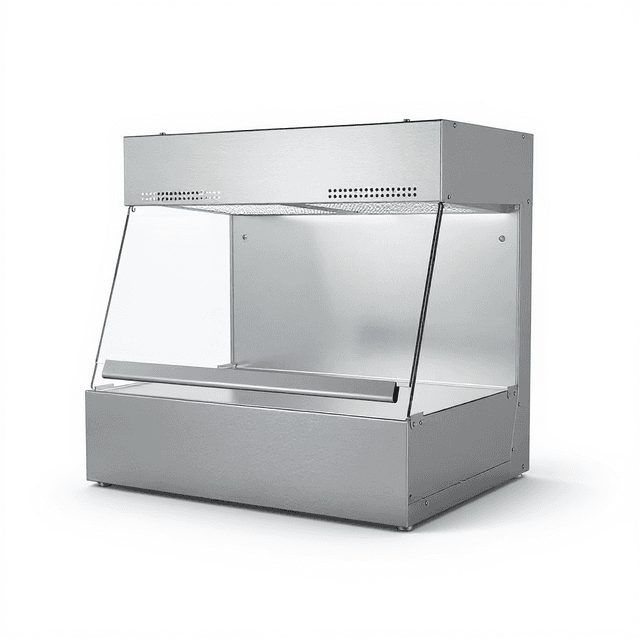
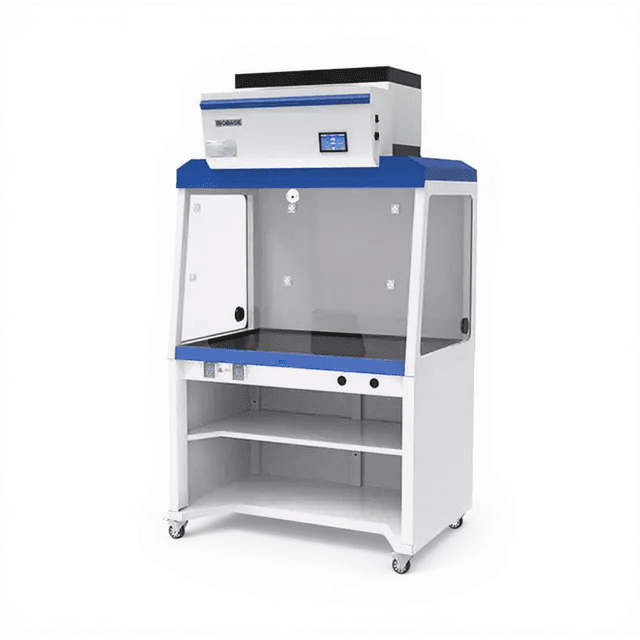
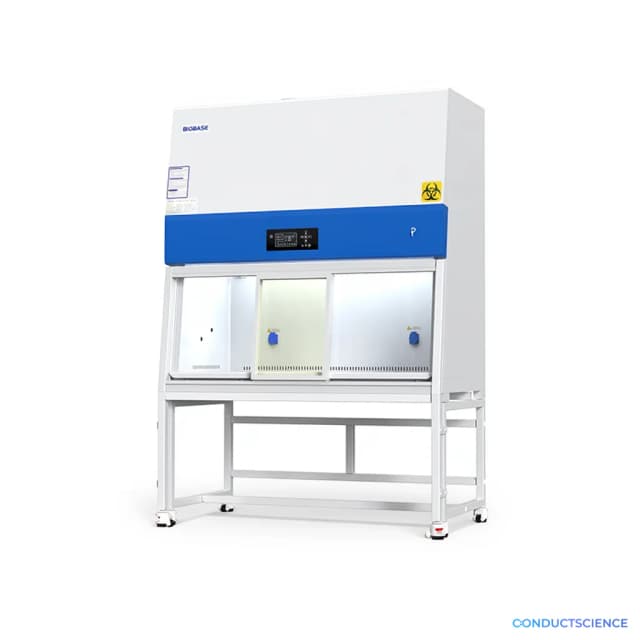
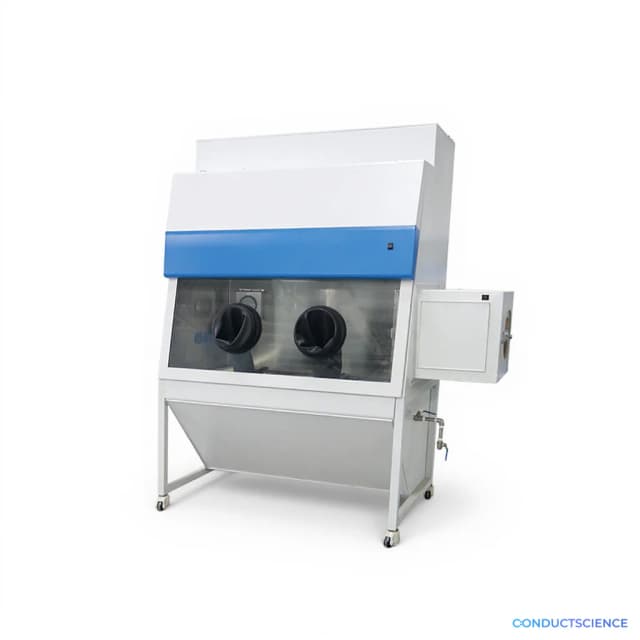
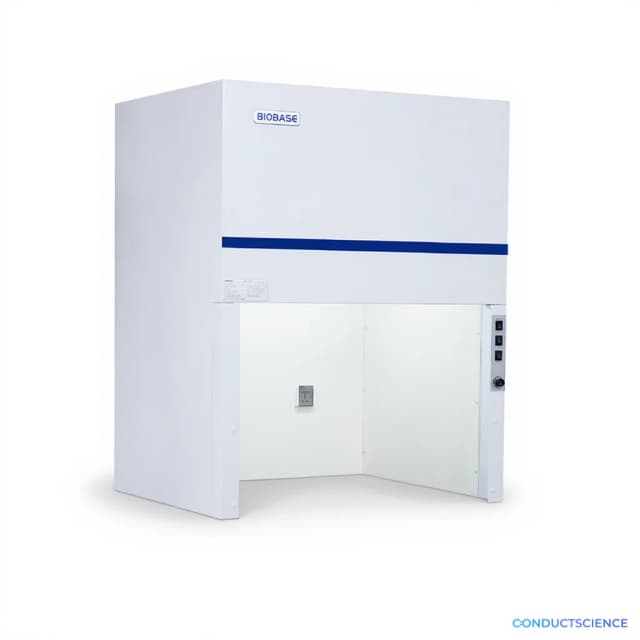
Walk-in Fume Hood FH(W) Series
Walk-in fume hood series providing chemical containment for large-scale laboratory work with variable airflow control (0.3-0.8 m/s) and three width configurations up to 1800mm.

Louise Corscadden, PhD
Director of Science · ConductScience
Ask Louise about Walk-in Fume Hood FH(W) Series fit, setup, configuration, or quote prep.
Already working with us? Sign in to connect this with My Scientist.
Key Specifications
Full details →- Model fit
- Configured during quote
- SKU family
- BIO-0052
- Shipping box
- 225.0 x 120.0 x 80.0 cm
- Ordering
- Online checkout and quote request available
- Category
- Clean Benches & Fume Hoods
- Build notes
- Confirm accessories, station layout, and support needs before purchase
Walk-in Fume Hood FH-W Series
Professional laboratory fume hood designed for safe work with hazardous chemicals and vapors. Features vertical laminar airflow with HEPA filtration and comprehensive operator protection in compliance with laboratory safety standards.
Key Features:
- Vertical laminar airflow design
- HEPA filtration system
- Multiple size configurations
- Durable construction materials
- Safety monitoring systems
- Operator-friendly controls
How It Works
Walk-in fume hoods operate on the principle of directional airflow containment, creating a negative pressure environment that captures and exhausts chemical vapors away from the operator. Air enters the work zone through the face opening at controlled velocities between 0.3-0.8 m/s, establishing a protective barrier that prevents vapor escape into the laboratory space. The exhaust system maintains continuous airflow through the internal work chamber, with volumetric flow rates scaled to the hood width (1150-1850 m³/h).
The containment design incorporates smooth internal surfaces and airflow distribution to minimize turbulence that could compromise vapor capture. Fluorescent lighting systems (12-16W dual fixtures) provide uniform illumination across the work surface while maintaining compatibility with chemical environments. Vibration isolation systems limit mechanical disturbances to ≤5μm amplitude, preventing interference with sensitive analytical procedures conducted within the containment space.
Features & Benefits
Shipping weight
- 300.0 lb
Shipping box
- L: 225.0 cm
- W: 120.0 cm
- H: 80.0 cm
| Feature | This Product | Typical Alternative | Advantage |
|---|---|---|---|
| Work Zone Access | Walk-in design with 1300mm maximum opening | Benchtop models typically limit access to sash opening height | Allows installation and operation of large equipment requiring full-body access for maintenance and operation |
| Internal Work Volume | Up to 1580×550×1670mm internal dimensions | Standard fume hoods often provide less than half the internal volume | Accommodates oversized experimental setups and multiple concurrent procedures within single containment space |
| Airflow Control Range | Variable 0.3-0.8 m/s inflow velocity | Fixed airflow systems common in entry-level models | Enables optimization of containment effectiveness versus energy consumption based on specific chemical hazards |
| Vibration Isolation | ≤5μm amplitude vibration dampening | Basic models often lack vibration control specifications | Supports precision analytical work and sensitive equipment operation within the containment environment |
This walk-in series offers significantly larger work volumes and equipment access compared to benchtop alternatives while maintaining precise airflow control. The variable velocity capability and low-vibration design support both safety containment and analytical precision requirements.
Practical Tips
Measure face velocity at 9-point grid pattern across the opening to identify airflow uniformity and dead zones.
Why: Non-uniform airflow can compromise containment effectiveness and create hazardous vapor accumulation areas.
Clean internal surfaces monthly with appropriate chemical-compatible detergents to prevent vapor absorption and re-emission.
Why: Contaminated surfaces can become secondary emission sources that compromise future experiments.
Position equipment at least 150mm from the face opening to maintain proper airflow patterns around work materials.
Why: Equipment placement too close to the opening can disrupt protective airflow and reduce containment effectiveness.
Install emergency exhaust backup systems or interlock controls to maintain containment during power interruptions.
Why: Loss of exhaust airflow can allow hazardous vapor accumulation and potential exposure risks.
Monitor and log airflow velocities before each experimental session to ensure consistent containment performance.
Why: Airflow variations can affect vapor generation patterns and potential cross-contamination between procedures.
Check for exhaust ductwork obstructions if airflow velocity decreases unexpectedly during operation.
Why: Blocked exhaust pathways reduce containment effectiveness and can cause hazardous vapor buildup.
Setup Guide
What’s in the Box
- Walk-in fume hood assembly (typical)
- Dual fluorescent lighting fixtures (typical)
- Exhaust connection hardware (typical)
- Installation manual (typical)
- Airflow calibration guide (typical)
Warranty
ConductScience provides a standard 1-year manufacturer warranty covering defects in materials and workmanship, with technical support for installation guidance and performance optimization.
Compliance
References
Background reading relevant to this product:
How do I determine the appropriate inflow velocity for different chemical procedures?
Set inflow velocity based on chemical volatility and generation rate. Use 0.3-0.5 m/s for low-volatility solvents and 0.6-0.8 m/s for highly volatile or toxic compounds. Monitor with calibrated anemometer at face opening.
What exhaust system requirements are needed for proper operation?
Dedicated exhaust system must provide specified volumetric flow rates (1150-1850 m³/h) with adequate static pressure to overcome ductwork resistance. Consult product datasheet for specific fan sizing requirements.
Can the hood accommodate analytical balances or other vibration-sensitive equipment?
Yes, vibration dampening limits amplitude to ≤5μm, suitable for most analytical balances. For ultra-microbalances, consider additional isolation platforms within the work zone.
How frequently should airflow performance be verified?
Conduct quarterly face velocity measurements and annual smoke pattern testing. Immediate verification required after any exhaust system modifications or maintenance.
What lighting maintenance is required?
Replace fluorescent tubes when illumination drops below 800 Lux. Clean fixtures quarterly to maintain light transmission through chemical-resistant covers.
Is the hood suitable for perchloric acid work?
Consult product datasheet for chemical compatibility specifications. Perchloric acid applications typically require specialized wash-down systems not standard in this configuration.
Have a question about this product?
Have a question? Just ask.
Send it over and we'll email you a personalized answer — no call, no scheduling.
Prefer to talk it through?
Frequently Bought Together
Upgrade Options