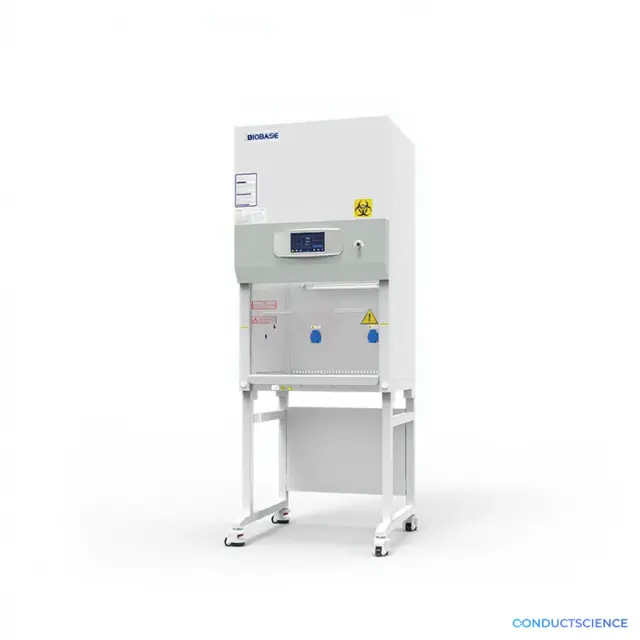
Ducted Fume Hood
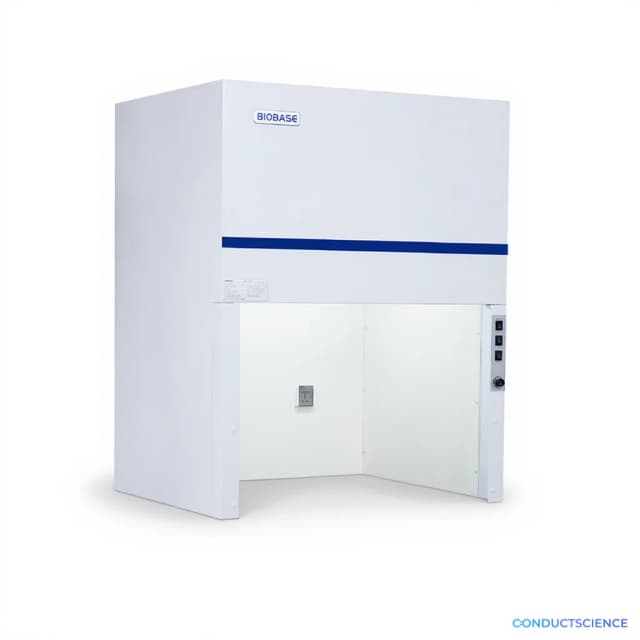
Single-user ducted fume hood with 2300 m³/h exhaust capacity and adjustable air velocity for chemical vapor containment in laboratory environments.

Louise Corscadden, PhD
Director of Science · ConductScience
Ask Louise about Ducted Fume Hood fit, setup, configuration, or quote prep.
Already working with us? Sign in to connect this with My Scientist.
Key Specifications
Full details →- Model fit
- Configured during quote
- SKU family
- BIO-0054
- Shipping box
- 255.0 x 120.0 x 80.0 cm
- Ordering
- Online checkout and quote request available
- Category
- Clean Benches & Fume Hoods
- Build notes
- Confirm accessories, station layout, and support needs before purchase
The Ducted Fume Hood (BIO-0054) is a 1-2 user ventilation system designed to protect laboratory personnel from hazardous chemical vapors and particulates. This unit features a 2300 m³/h exhaust volume with adjustable air velocity from 0.3-0.8 m/s, providing effective containment of airborne contaminants generated during chemical handling, sample preparation, and analytical procedures.
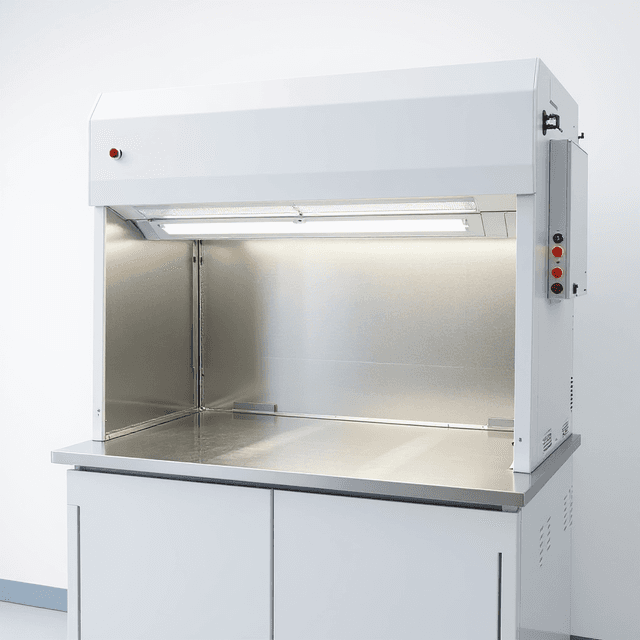
The hood incorporates a 990×605×900mm internal work chamber with 500mm maximum sash opening, LED illumination, and integrated utilities including water supply connections and waterproof electrical outlets. Operating at ≤65dB(A) noise levels with 300W power consumption, this system balances operator protection with laboratory comfort requirements.
How It Works
The ducted fume hood operates on the principle of capture and containment ventilation, drawing contaminated air away from the user's breathing zone through negative pressure differential. The exhaust system generates 2300 m³/h airflow, creating a controlled air velocity of 0.3-0.8 m/s across the sash opening. This airflow pattern prevents hazardous vapors and aerosols from escaping the work chamber into the laboratory environment.
Air enters the hood through the front sash opening and is drawn upward through the work chamber, where it captures chemical vapors generated during laboratory procedures. The contaminated air stream is then directed through the exhaust system and expelled through building ductwork, typically after passing through appropriate filtration or scrubbing systems depending on the chemicals being handled.
The adjustable sash allows operators to optimize the balance between containment effectiveness and workspace accessibility. Lower sash positions increase face velocity for enhanced containment, while higher positions provide better access to equipment and procedures within the work chamber.
Features & Benefits
Automation Level
- manual
Number of Users
- 1~2
Rated Power
- 300W
Exhaust Volume
- 2300m³/h
Air Velocity
- 0.3m/s~0.8m/s
Noise
- ≤65dB(A)
LED Lamp Power
- 12W
Max Opening
- 500mm
Tabletop Height
- 920mm
Standard Accessory
- LED lamp*1, water-proof socket*2, temperature and humidity sensor, water supply cock, water supply f
Optional Accessory
- Armrest*2, gas supply cock, gas supply flow control valve
External Size(W*D*H)
- 1200*800*2550mm
Internal Size(W*D*H)
- 990*605*900mm
Brand
- ConductScience
Research Domain
- Analytical Chemistry
- Environmental Monitoring
- Industrial Hygiene
- Materials Science
- Microbiology
- Pharmaceutical QC
- Toxicology
Power/Voltage
- 220V±10%, 50Hz(Standard); 110±10%V, 60Hz(Optional)
Weight
- 181kg
Shipping weight
- 181.0 lb
Shipping box
- L: 255.0 cm
- W: 120.0 cm
- H: 80.0 cm
| Feature | This Product | Typical Alternative | Advantage |
|---|---|---|---|
| Exhaust Volume | 2300 m³/h | Entry-level units often provide 1500-2000 m³/h capacity | Higher airflow capacity supports more demanding chemical procedures and larger work volumes |
| Work Chamber Size | 990×605×900mm internal dimensions | Compact models typically offer smaller work areas | Larger workspace accommodates standard analytical equipment and multi-step procedures |
| Sash Opening | 500mm maximum opening height | Basic units may limit opening to 400mm or less | Greater access height facilitates equipment placement and manipulation of large apparatus |
| Noise Level | ≤65dB(A) operation | Standard laboratory ventilation often exceeds 70dB(A) | Quieter operation reduces fatigue during extended procedures and improves laboratory acoustics |
| Integrated Utilities | Water supply, electrical outlets, and environmental monitoring | Basic models may require external utility connections | Built-in services reduce setup complexity and provide convenient access to laboratory utilities |
| Power Consumption | 300W total power requirement | Higher-performance units often consume 500W or more | Lower energy consumption reduces operating costs while maintaining adequate containment performance |
This fume hood combines substantial airflow capacity with integrated utilities and quiet operation. The 2300 m³/h exhaust volume and 500mm sash opening provide effective containment for standard chemical procedures while maintaining user accessibility.
Practical Tips
Verify airflow patterns using smoke tubes or other visualization methods quarterly to identify potential dead zones or turbulence within the work chamber.
Why: Visual airflow verification detects containment problems that velocity measurements alone might miss.
Clean the work surface and interior walls weekly with appropriate laboratory detergents to prevent chemical buildup and corrosion.
Why: Regular cleaning prevents accumulation of reactive residues that could create safety hazards or affect airflow patterns.
Keep the sash at the lowest practical position during procedures to maximize face velocity and containment effectiveness.
Why: Lower sash positions increase air velocity across the work opening, improving capture of chemical vapors and aerosols.
Never store chemicals or equipment inside the hood when not in use, and ensure the sash is fully closed when unattended.
Why: Storage in the hood can obstruct airflow patterns and create chemical incompatibility risks.
If face velocity decreases, check for obstructions in the exhaust ductwork and verify that make-up air systems are functioning properly.
Why: Reduced airflow often results from ductwork blockages or inadequate make-up air rather than hood malfunction.
Record temperature and humidity readings from the integrated sensor during procedures requiring environmental documentation.
Why: Environmental conditions can affect chemical reactions and analytical procedures, requiring documentation for quality control.
Position work activities at least 15cm back from the sash opening to ensure adequate capture velocity around the work area.
Why: Working too close to the sash opening can create turbulence that reduces containment effectiveness.
Inspect and clean the LED lamp monthly to maintain consistent illumination levels for detailed laboratory work.
Why: Dust accumulation on lighting reduces visibility and can affect the accuracy of visual observations during procedures.
Setup Guide
What’s in the Box
- Ducted fume hood main unit
- LED lamp (1 unit)
- Waterproof electrical sockets (2 units)
- Temperature and humidity sensor
- Water supply cock
- Water supply connections
- Installation hardware (typical)
- User manual and documentation (typical)
Warranty
ConductScience provides a standard 1-year manufacturer warranty covering defects in materials and workmanship. Technical support is available for installation guidance and operational troubleshooting throughout the warranty period.
Compliance
References
Background reading relevant to this product:
What airflow verification is needed after installation?
Use a calibrated anemometer to measure face velocity at multiple points across the sash opening, ensuring 0.3-0.8 m/s is maintained. Test at various sash positions and verify the 2300 m³/h total exhaust volume through the connected ductwork.
Can this hood handle perchloric acid digestions?
Standard ducted hoods require specialized perchloric acid-rated construction and wash-down systems. Consult product datasheet for chemical compatibility specifications and consider perchloric acid-specific units for routine digestion work.
What maintenance schedule is recommended?
Perform weekly visual inspection of airflow and LED function, monthly cleaning of work surfaces and sash, and annual airflow certification with calibrated instruments. Replace LED lamps as needed and inspect utility connections quarterly.
How does sash position affect containment performance?
Lower sash positions increase face velocity for better containment but reduce workspace access. The 500mm maximum opening balances accessibility with the ability to maintain specified airflow velocities across the work area.
What ductwork requirements are needed for proper operation?
Design ductwork to accommodate 2300 m³/h airflow with appropriate static pressure calculations. Include provisions for make-up air and consider exhaust treatment requirements based on chemicals being handled.
Can optional accessories be retrofitted after installation?
Optional armrests and gas supply connections can typically be added post-installation. Gas supply requires qualified technician installation and appropriate safety shut-off systems per laboratory gas handling protocols.
What temperature limits apply to operation?
Consult product datasheet for specific temperature operating ranges. The integrated temperature sensor monitors work chamber conditions, and excessive heat generation may affect airflow patterns and containment effectiveness.
Have a question about this product?
Have a question? Just ask.
Send it over and we'll email you a personalized answer — no call, no scheduling.
Prefer to talk it through?
Upgrade Options