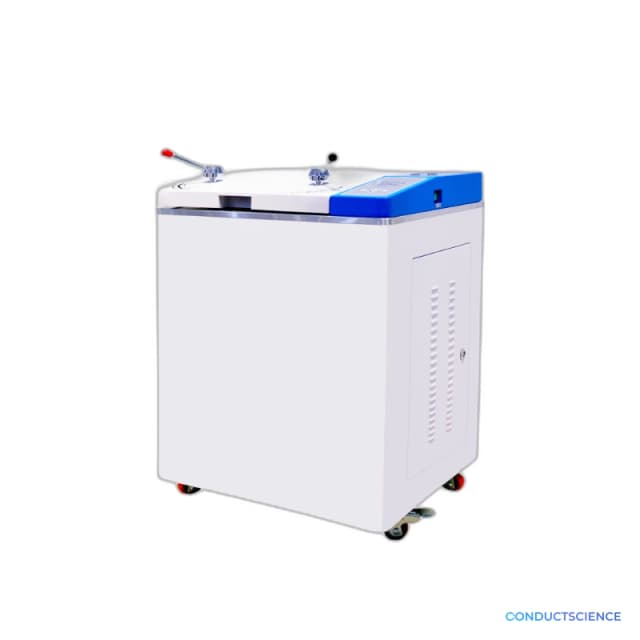
Colorless and color Sample Manual Melting Point Apparatus
Manual benchtop apparatus for precise melting point determination in colorless and colored organic compounds through direct visual observation.
| Automation Level | manual |

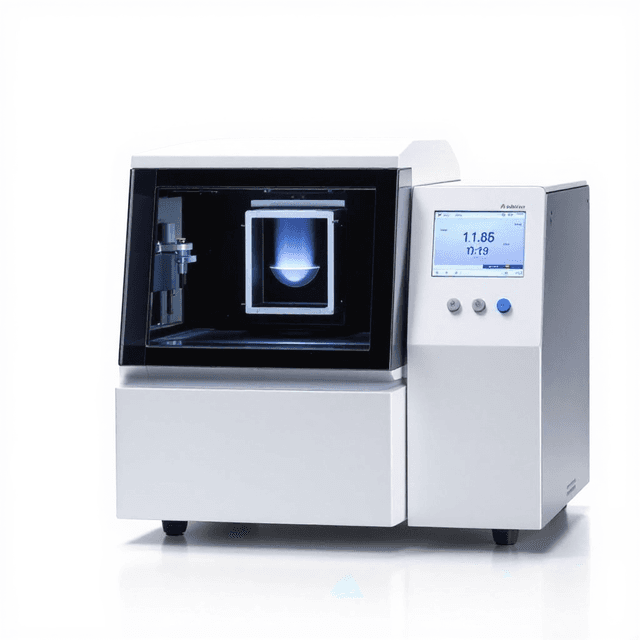
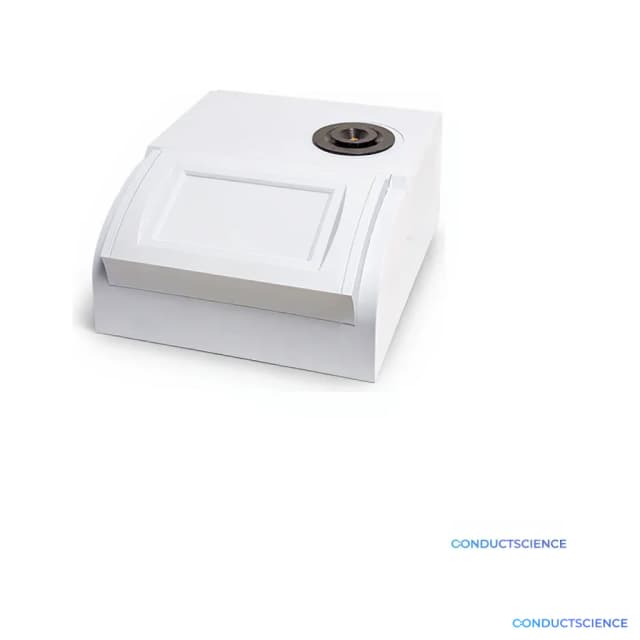
The Colorless and Color Sample Manual Melting Point Apparatus is a benchtop instrument designed for precise determination of melting points in both colorless and colored organic compounds. This manual system provides researchers with direct visual observation of phase transitions, enabling accurate identification and purity assessment of crystalline materials through controlled heating and temperature monitoring.
The compact design accommodates standard laboratory workflows while maintaining the precision required for analytical chemistry applications. The apparatus supports traditional melting point determination methods, allowing researchers to observe sample behavior throughout the heating process and record transition temperatures with confidence.
How It Works
The melting point apparatus operates on the principle of controlled thermal analysis, where solid samples are gradually heated while under direct visual observation. The sample, contained in a thin-walled capillary tube, is positioned within a heating block that provides uniform temperature distribution. As thermal energy is applied, the crystalline lattice structure of the sample begins to break down at the characteristic melting temperature.
Temperature monitoring is achieved through calibrated thermometry, allowing precise correlation between observed phase transitions and actual sample temperature. The transition from solid to liquid phase is observed directly through optical magnification, enabling detection of both initial softening and complete liquefaction. The apparatus design accommodates both colorless and colored samples, with appropriate illumination systems to ensure clear visualization of phase changes regardless of sample optical properties.
Features & Benefits
Automation Level
- manual
Research Domain
- Analytical Chemistry
- Environmental Monitoring
- Food Science
- Industrial Hygiene
- Materials Science
- Pharmaceutical QC
Weight
- 8.0 kg
Dimensions
- L: 23.0 mm
- W: 30.5 mm
- H: 22.0 mm
Comparison Guide
| Feature | This Product | Typical Alternative | Advantage |
|---|---|---|---|
| Operation Type | Manual operation with direct visual observation | Entry-level models may offer basic automation with limited user control | Provides complete researcher control over heating parameters and real-time assessment of complex melting behaviors |
| Sample Compatibility | Designed for both colorless and colored samples | Basic instruments may have limitations with highly colored or opaque samples | Ensures accurate melting point determination regardless of sample optical properties or pigmentation |
| Footprint | Compact 23.0 × 30.5 × 22.0 cm dimensions | Larger automated systems often require more bench space | Fits standard laboratory workstations without requiring dedicated instrument areas |
| Weight | 8.0 kg operating weight | Automated systems typically weigh significantly more | Enables easy repositioning and storage flexibility while maintaining measurement stability |
This manual melting point apparatus provides direct visual observation capabilities with compatibility for both colorless and colored samples in a compact, lightweight design. The manual operation offers complete researcher control over heating parameters and real-time assessment of phase transitions.
Practical Tips
Verify temperature accuracy using certified reference standards such as benzoic acid (122.4°C) and salicylic acid (159°C) at regular intervals.
Why: Regular calibration ensures measurement accuracy and traceability to recognized standards.
Clean the sample viewing area and heating block regularly to prevent contamination from previous samples.
Why: Residual contamination can affect temperature distribution and optical clarity during analysis.
Use consistent sample preparation techniques including particle size and packing density for reproducible results.
Why: Uniform sample preparation minimizes temperature gradients and measurement variability between analyses.
Start heating at ambient temperature and maintain steady heating rates of 1-2°C per minute near the expected melting point.
Why: Controlled heating rates prevent thermal overshooting and enable accurate detection of melting onset.
If melting appears uneven, check capillary tube cleanliness and sample packing uniformity before repeating measurement.
Why: Non-uniform melting often indicates sample preparation issues rather than instrument problems.
Record both initial softening temperature and complete liquefaction temperature to assess sample purity.
Why: Pure compounds show sharp melting points while impure samples exhibit broader melting ranges.
Allow adequate cooling time between measurements and handle heated components with appropriate protection.
Why: Thermal safety prevents burns and ensures accurate temperature readings for subsequent samples.
Setup Guide
What’s in the Box
- Manual melting point apparatus main unit
- Sample capillary tube holder (typical)
- Viewing optics assembly (typical)
- Temperature monitoring system (typical)
- User manual and operation guide (typical)
- Sample capillary tubes starter set (typical)
Warranty
ConductScience provides standard one-year manufacturer warranty covering defects in materials and workmanship, with technical support for operation and maintenance procedures.
Compliance
What temperature range can this apparatus measure accurately?
Consult the product datasheet for specific temperature range specifications. Manual melting point apparatus typically accommodate ranges suitable for most organic compounds encountered in analytical applications.
How is temperature calibration performed and maintained?
Temperature calibration should be verified using certified reference standards with known melting points. Regular calibration checks ensure measurement accuracy and should follow manufacturer protocols detailed in the user manual.
What heating rate provides optimal melting point determination?
Heating rates of 1-2°C per minute are generally recommended for accurate melting point determination. Slower rates near the expected melting point improve precision but extend analysis time.
Can this apparatus handle thermally sensitive compounds?
The manual operation allows researcher control over heating parameters, enabling gentle heating protocols for thermally labile compounds. Sample decomposition can be observed directly through the viewing system.
What sample preparation is required for accurate measurements?
Samples should be finely ground to ensure uniform particle size and packed to 2-3mm height in clean capillary tubes. Proper sample preparation minimizes temperature gradients and improves measurement reproducibility.
How does this compare to automated melting point instruments?
Manual apparatus provide direct visual control and observation but require constant operator attention. Automated systems offer higher throughput and data logging but may lack the flexibility for observing complex melting behaviors.
Have a question about this product?