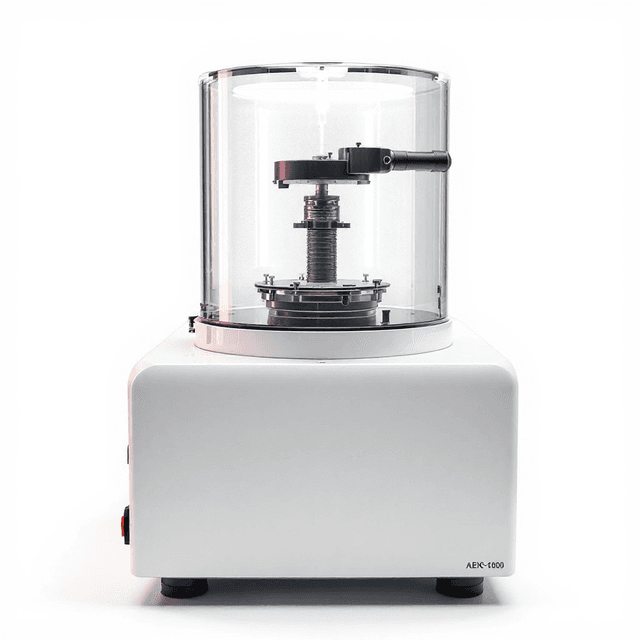
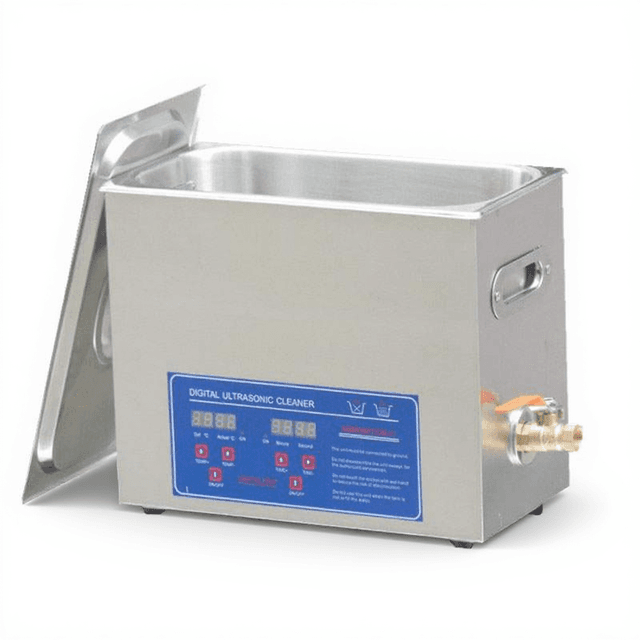
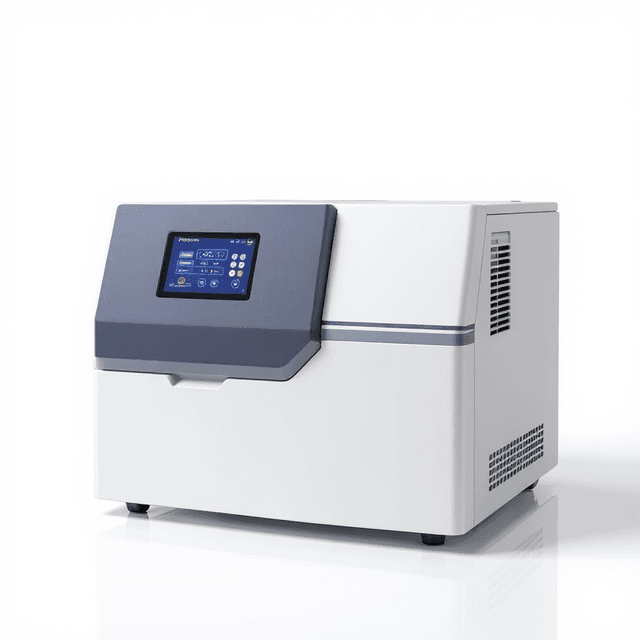
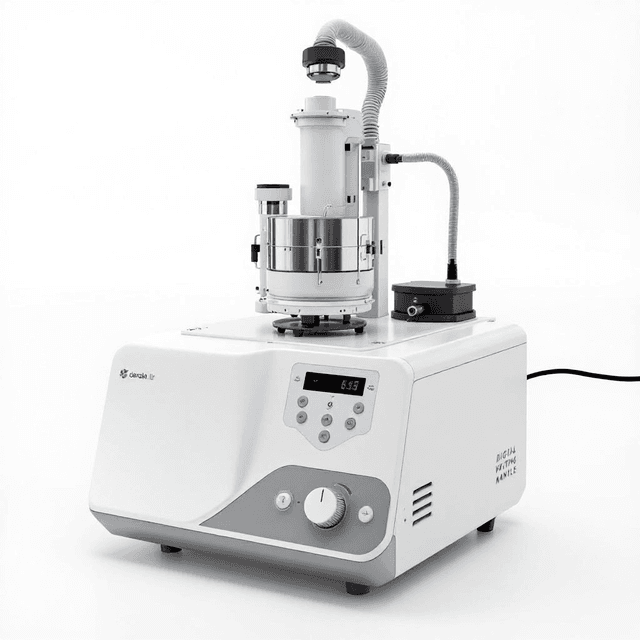
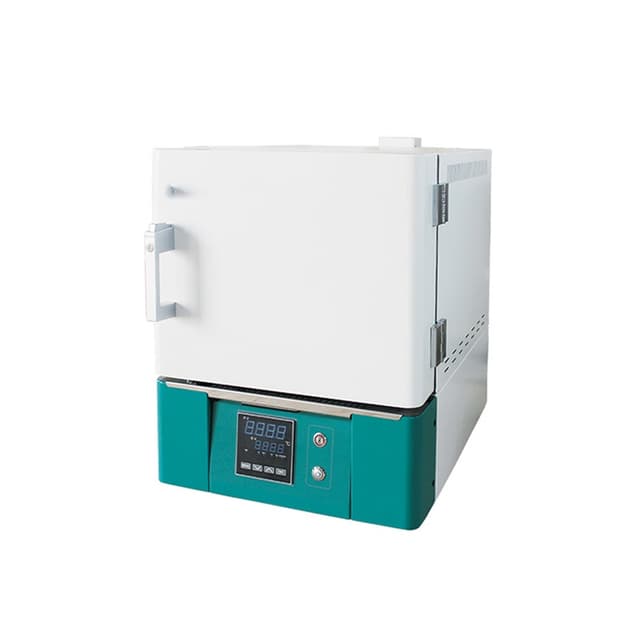
Digital Melting Point Apparatus
Digital melting point apparatus for automated temperature control and precise phase transition determination in chemical analysis applications.

Louise Corscadden, PhD
Director of Science · ConductScience
Ask Louise about Digital Melting Point Apparatus fit, setup, configuration, or quote prep.
Already working with us? Sign in to connect this with My Scientist.
Key Specifications
Full details →- Model fit
- 1 selectable configurations
- SKU family
- BIO-0931
- Shipping box
- 17.0 x 36.0 x 29.0 cm
- Ordering
- Online checkout and quote request available
- Category
- Analytical Instruments
- Build notes
- Confirm accessories, station layout, and support needs before purchase
The Digital Melting Point Apparatus provides precise melting point determination for chemical identification and purity assessment in research and analytical applications. This benchtop instrument enables automated temperature ramping and visual observation of sample phase transitions, supporting workflows in organic synthesis, pharmaceutical development, and materials characterization.
The compact design fits standard laboratory benches while delivering reliable thermal analysis capabilities. Digital temperature control and display eliminate the need for external thermometers, providing consistent heating profiles for reproducible melting point measurements across diverse compound libraries.
How It Works
The digital melting point apparatus operates through controlled thermal analysis of crystalline samples placed in sealed capillary tubes. A programmable heating block provides uniform temperature distribution while digital sensors monitor the thermal profile with precision temperature control. The sample chamber includes optical magnification for visual observation of the solid-to-liquid phase transition.
Temperature ramping follows user-defined profiles, typically 1-10°C per minute, allowing observation of initial melting, complete liquefaction, and thermal decomposition if applicable. Digital temperature display provides real-time monitoring of the heating process, while the optical system enables clear visualization of sample behavior throughout the thermal cycle.
The instrument records onset and completion temperatures for each phase transition, supporting both rapid screening protocols and detailed thermal characterization studies. Built-in calibration functions ensure measurement accuracy across the operational temperature range.
Features & Benefits
Shipping weight
- 11.0 lb
Shipping box
- L: 17.0 cm
- W: 36.0 cm
- H: 29.0 cm
| Feature | This Product | Typical Alternative | Advantage |
|---|---|---|---|
| Temperature Control Method | Digital programmable control system | Manual heating or basic analog controls | Programmable heating profiles ensure reproducible thermal analysis conditions across multiple samples |
| Temperature Monitoring | Real-time digital display | External thermometer requirements | Integrated temperature monitoring eliminates additional instrumentation and reduces measurement uncertainty |
| Sample Observation | Optical magnification system | Basic visual inspection | Enhanced visualization improves accuracy of phase transition determination for precise melting point measurement |
| Instrument Size | 17 x 36 x 29 cm benchtop design | Larger footprint instruments | Compact dimensions maximize laboratory bench space utilization while maintaining full analytical capabilities |
| Calibration Features | Built-in calibration functions | External calibration procedures | Integrated calibration protocols simplify method validation and ensure measurement traceability |
The digital control system and optical viewing capabilities provide enhanced measurement accuracy and reproducibility compared to traditional manual methods. The compact benchtop design integrates advanced thermal analysis features while maintaining laboratory space efficiency.
Practical Tips
Verify temperature accuracy using certified reference standards before each analytical session.
Why: Temperature calibration ensures measurement traceability and method compliance.
Clean the heating block regularly with appropriate solvents to prevent sample cross-contamination.
Why: Contamination can affect thermal conductivity and lead to inaccurate melting point measurements.
Use finely ground, homogeneous samples packed uniformly in capillary tubes for consistent results.
Why: Particle size and packing density directly influence heat transfer and observed melting behavior.
Record heating rate, sample mass, and environmental conditions for each analysis.
Why: Complete documentation enables method reproducibility and supports analytical validation.
If melting ranges appear broad, reduce heating rate or check sample purity.
Why: Impurities and rapid heating can cause apparent melting range expansion.
Use appropriate eye protection when observing samples and handle hot components with care.
Why: The heating block reaches elevated temperatures and sample decomposition may release vapors.
Allow the instrument to equilibrate at ambient temperature before starting analysis.
Why: Temperature equilibration ensures stable baseline conditions for accurate measurements.
Setup Guide
What’s in the Box
- Digital melting point apparatus main unit
- Power adapter and cord
- Capillary tube holder assembly (typical)
- Set of glass capillary tubes (typical)
- Temperature calibration standards (typical)
- User manual and quick start guide
- Calibration certificate
Warranty
ConductScience provides a one-year manufacturer warranty covering defects in materials and workmanship. Technical support includes application guidance and troubleshooting assistance throughout the warranty period.
Compliance
What temperature range and heating rate options are available?
Consult product datasheet for specific temperature range and heating rate specifications. The digital control system typically supports programmable ramping from 1-10°C per minute.
How many samples can be analyzed simultaneously?
The heating block accommodates multiple capillary tubes for parallel analysis. Consult product specifications for exact sample capacity.
What calibration standards are recommended for temperature verification?
Use certified reference materials with known melting points spanning your analytical range. Common standards include benzoic acid (122°C) and caffeine (236°C) for pharmaceutical applications.
Can the instrument handle thermally sensitive or volatile compounds?
Yes, sealed capillary tubes contain volatile samples during heating. Consider using shorter heating cycles or lower ramping rates for thermally labile compounds.
What sample preparation requirements apply?
Samples should be finely ground and uniformly packed in clean capillary tubes. Particle size affects heat transfer and can influence observed melting behavior.
How does this compare to traditional melting point methods?
Digital temperature control provides more consistent heating profiles than manual methods, while optical magnification improves observation accuracy compared to simple visual inspection.
What maintenance procedures are required?
Regular calibration verification, cleaning of the heating block, and replacement of worn capillary tubes maintain measurement accuracy and extend instrument life.
Have a question about this product?
Have a question? Just ask.
Send it over and we'll email you a personalized answer — no call, no scheduling.
Prefer to talk it through?