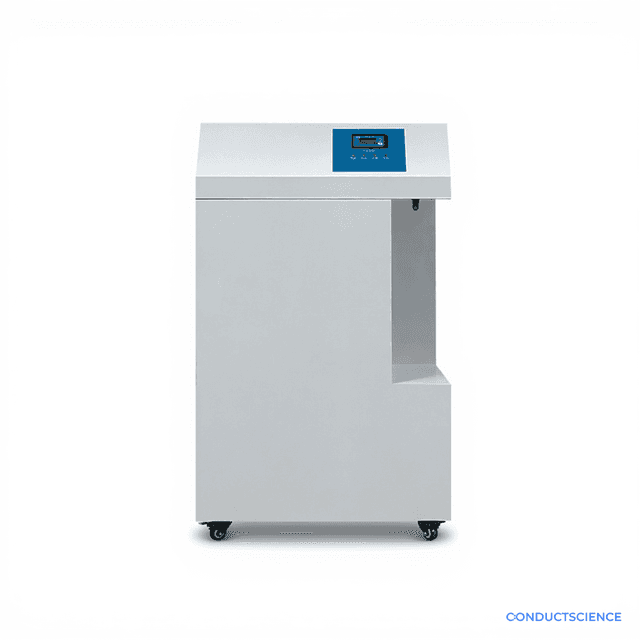
Laboratory Water Purifier - 80L/H
Five-stage water purification system producing Type I ultrapure water (18.25 MOhm-cm) at 80 L/H capacity for analytical and biological applications.

Louise Corscadden, PhD
Director of Science · ConductScience
Ask Louise about Laboratory Water Purifier - 80L/H fit, setup, configuration, or quote prep.
Already working with us? Sign in to connect this with My Scientist.
Key Specifications
Full details →- Model fit
- Configured during quote
- SKU family
- BIO-WP-80
- Shipping box
- 42.0 x 43.6 x 38.0 cm
- Ordering
- Online checkout and quote request available
- Category
- Benchtop Instruments
- Build notes
- Confirm accessories, station layout, and support needs before purchase
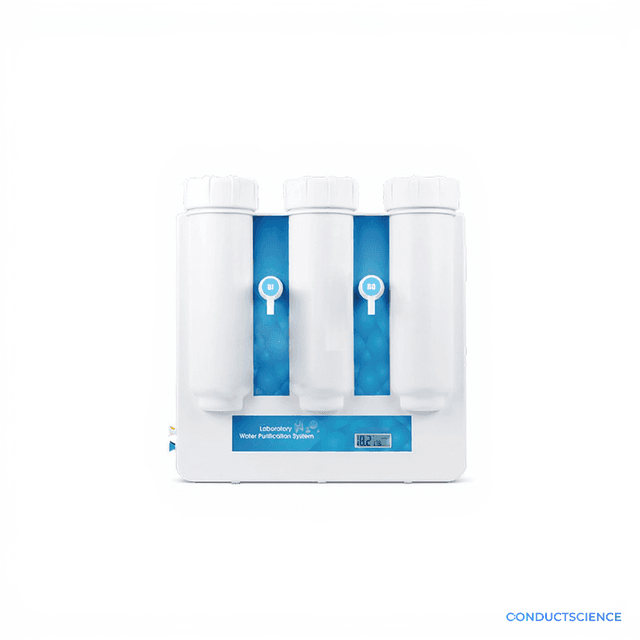
The Laboratory Water Purifier - 80L/H delivers Type I ultrapure water through a five-stage purification process, converting municipal tap water to 18.25 MOhm-cm resistivity water suitable for critical analytical applications. The system combines pretreatment, reverse osmosis, ion exchange, ultrafiltration, and UV sterilization to remove ionic, organic, and microbial contaminants.
With an 80 L/H output capacity and real-time water quality monitoring, this benchtop system provides continuous ultrapure water for HPLC mobile phases, spectrophotometric blanks, cell culture media preparation, and molecular biology protocols. The integrated monitoring system displays resistivity values, ensuring consistent water quality for sensitive analytical procedures and biological applications.
How It Works
The five-stage purification process begins with pretreatment filtration to remove sediment and chlorine, protecting downstream components from fouling and oxidative damage. Municipal tap water then passes through a reverse osmosis membrane, which removes 95-99% of dissolved salts, organic compounds, and microorganisms through selective permeability.
The third stage employs mixed-bed ion exchange resins to capture residual ionic species, reducing conductivity to ultrapure levels. Ultrafiltration follows, using a 0.2-micron membrane to remove pyrogens, bacteria, and high molecular weight organics. The final UV sterilization stage provides 254 nm germicidal irradiation to inactivate microorganisms and break down residual organic compounds through photolysis.
Real-time resistivity monitoring continuously measures water quality at the point of use, displaying conductivity values to verify Type I specifications. The system maintains consistent output quality through automatic monitoring of each purification stage and alert notifications when consumable replacement is required.
Features & Benefits
Automation Level
- semi-automated
Research Domain
- Analytical Chemistry
- Cell Biology
- Clinical Diagnostics
- Environmental Monitoring
- Microbiology
- Molecular Biology
- Pharmaceutical QC
Shipping weight
- 36.75 lb
Shipping box
- L: 42.0 cm
- W: 43.6 cm
- H: 38.0 cm
| Feature | This Product | Typical Alternative | Advantage |
|---|---|---|---|
| Output Capacity | 80 L/H continuous production | Entry-level systems often provide 10-30 L/H capacity | Higher throughput reduces wait times and supports multiple concurrent users in busy laboratories. |
| Water Quality | 18.25 MOhm-cm Type I specification | Basic systems may achieve 1-10 MOhm-cm resistivity | Ultra-high purity meets requirements for trace analysis and sensitive biological applications. |
| Purification Stages | Five-stage comprehensive process | Simple systems often use 2-3 purification steps | Multiple stages ensure removal of diverse contaminant classes including ions, organics, and microorganisms. |
| Feed Water Source | Direct municipal tap water connection | Some systems require pre-treated or distilled water input | Eliminates need for separate pre-purification step, reducing operational complexity and costs. |
| Quality Monitoring | Real-time resistivity display | Basic models may lack continuous monitoring | Immediate quality verification ensures consistent results and alerts to maintenance needs. |
| Water Grade Options | Type I and Type III output selection | Single-grade systems produce only one water quality | Flexibility to select appropriate grade for specific applications optimizes consumable usage. |
This system combines high-capacity production with comprehensive purification technology, delivering laboratory-grade water through multiple quality stages. The integration of real-time monitoring with dual-grade output provides operational flexibility for diverse analytical and biological applications.
Practical Tips
Verify resistivity meter calibration monthly using certified conductivity standards appropriate for the 18.25 MOhm-cm range.
Why: Accurate resistivity measurement is critical for confirming Type I water specifications.
Replace ion exchange cartridges when resistivity drops below 15 MOhm-cm, even if the system alert has not activated.
Why: Proactive replacement prevents degradation of downstream purification stages and maintains consistent quality.
Flush dispensing lines with 100-200 mL before collecting water for critical applications like HPLC or molecular biology.
Why: Line flushing removes stagnant water and ensures fresh ultrapure water reaches collection containers.
If output flow rate decreases significantly, check pretreatment filter for sediment loading and replace if necessary.
Why: Clogged prefilters restrict flow and can cause pressure buildup that damages downstream components.
Record resistivity readings in laboratory notebooks or data systems for each water collection session.
Why: Documentation provides traceability for analytical results and helps identify trends in system performance.
Install a pressure relief valve if connecting to high-pressure municipal water supplies above 80 psi.
Why: Excessive inlet pressure can damage internal components and create safety hazards from component failure.
Use the Type III output for equipment rinsing and glassware washing to conserve Type I water for critical applications.
Why: Selective usage optimizes cartridge life and reduces operating costs while maintaining appropriate quality for each use.
Sanitize the UV lamp chamber quarterly and replace the UV bulb annually or when intensity drops below 70% of rated output.
Why: UV effectiveness decreases with lamp age and fouling, compromising microbial control and organic degradation.
Setup Guide
What’s in the Box
- Laboratory Water Purifier main unit
- Pretreatment filter cartridge
- Ion exchange cartridge
- Ultrafiltration membrane
- Feed water connection kit (typical)
- Power cord
- User manual and maintenance guide
- Quality monitoring display
- Installation hardware (typical)
Warranty
ConductScience provides a one-year manufacturer warranty covering defects in materials and workmanship, with technical support for installation, operation, and maintenance procedures.
Compliance
What is the difference between Type I and Type III water output options?
Type I water (18.25 MOhm-cm) undergoes complete five-stage purification for critical applications like HPLC and molecular biology, while Type III water bypasses final polishing stages for general laboratory use.
How frequently do the purification cartridges require replacement?
Replacement frequency depends on feed water quality and usage volume. The system monitors cartridge performance and provides alerts when replacement is needed, typically every 6-12 months for ion exchange resins.
Can this system handle high-chlorine municipal water supplies?
Yes, the pretreatment stage includes activated carbon filtration specifically designed to remove chlorine and chloramines that could damage the RO membrane.
What is the recovery ratio of the reverse osmosis stage?
Consult product datasheet for specific recovery ratios, which vary based on feed water quality and system optimization settings.
How does the UV sterilization stage affect organic contaminants?
The 254 nm UV lamp provides germicidal action against microorganisms and photolytic degradation of organic compounds, particularly those with aromatic rings.
Is the system compatible with laboratory information systems?
Consult product datasheet for data connectivity options and compatibility with laboratory data management systems.
What backup procedures are recommended if the system requires maintenance?
Consider maintaining emergency water supplies or implementing scheduled maintenance during low-usage periods to ensure continuous laboratory operations.
Have a question about this product?
Have a question? Just ask.
Send it over and we'll email you a personalized answer — no call, no scheduling.
Prefer to talk it through?
Accessories
Enhance your setup with compatible accessories
Upgrade Options