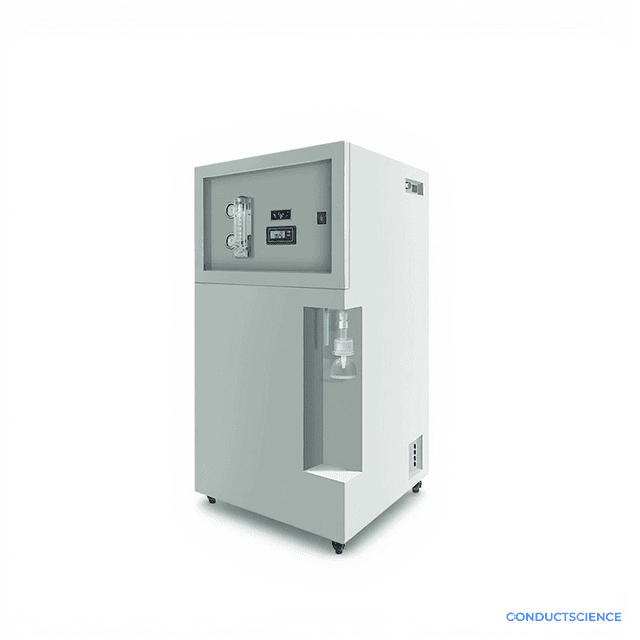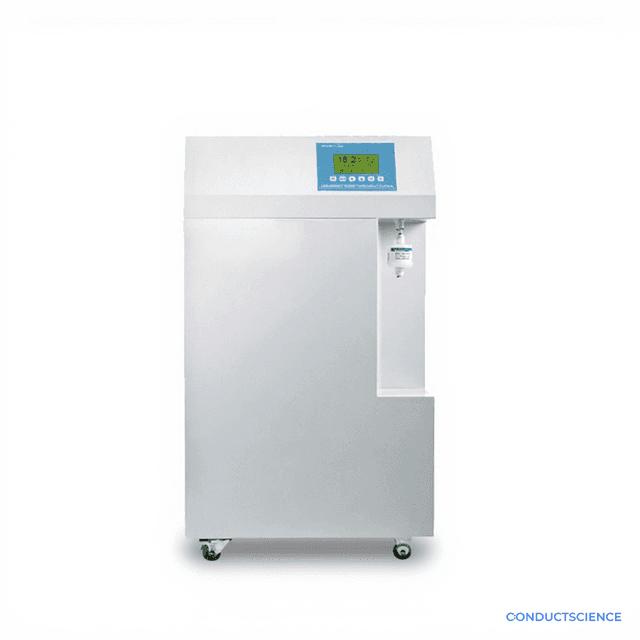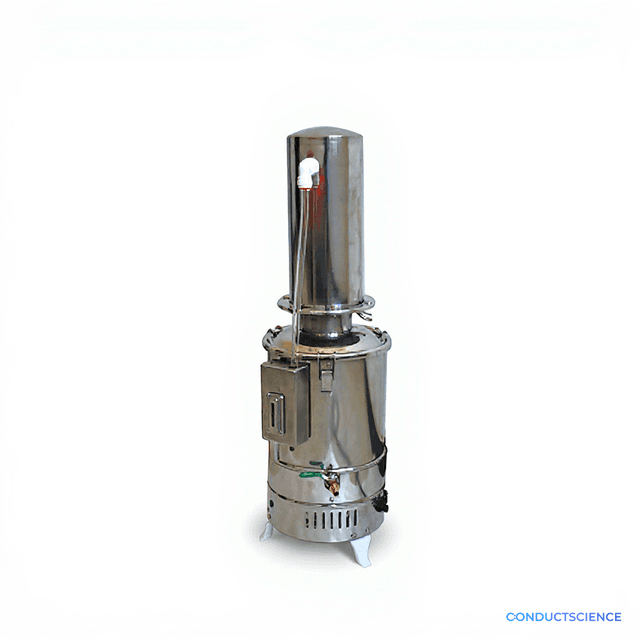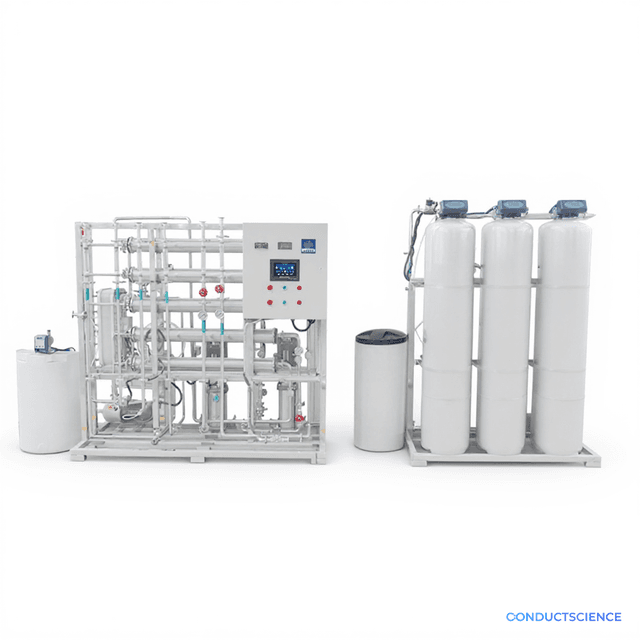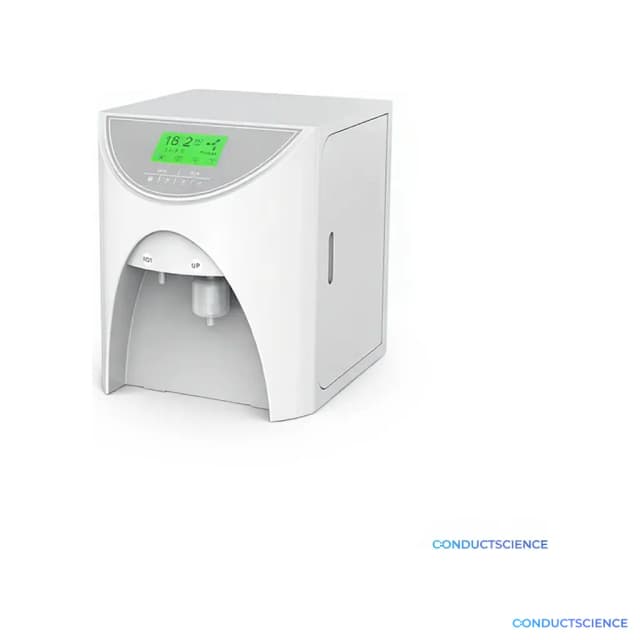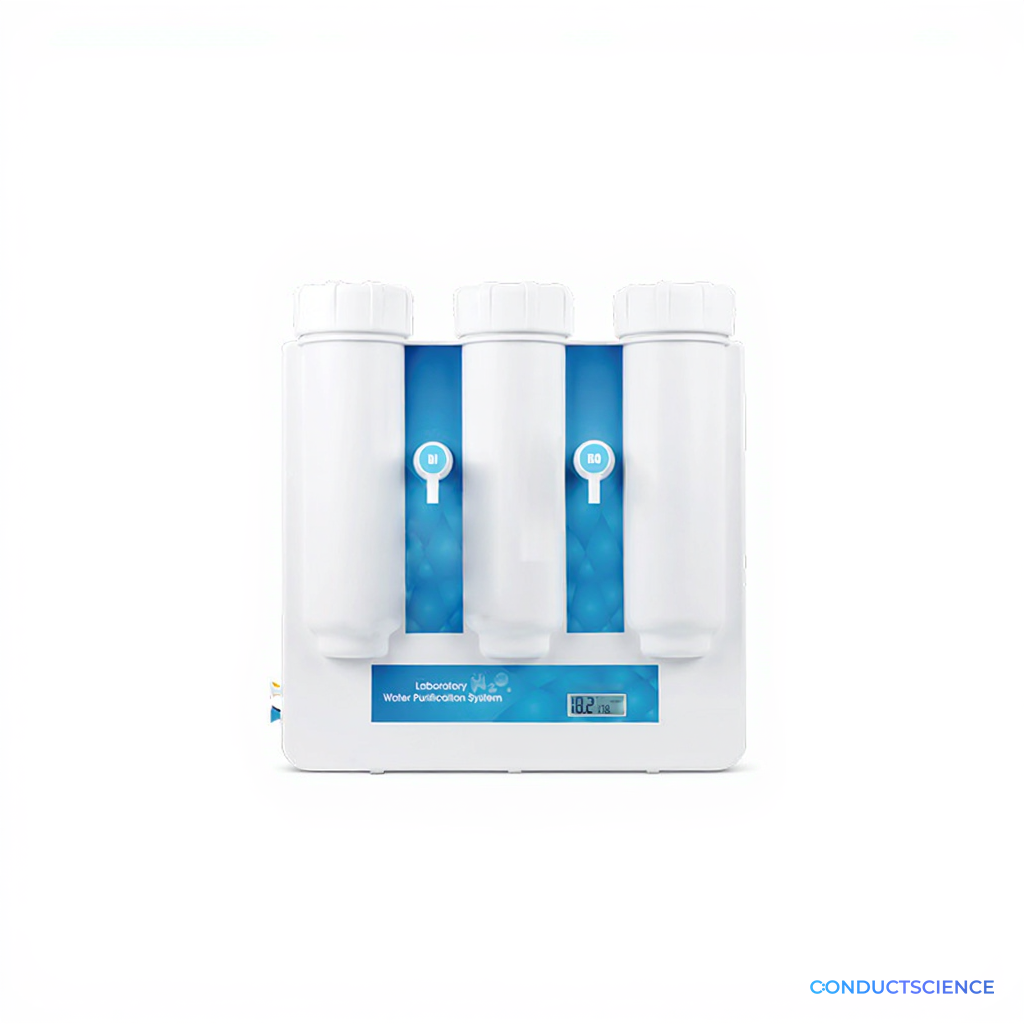
Water Purifier(Automatic RO/Dl Water) 10L/H 20L/H 30L/H
Automated RO/DI water purification system providing laboratory-grade pure water in three production capacities (10-30 L/H) for research and analytical applications.

Louise Corscadden, PhD
Director of Science · ConductScience
Ask Louise about Water Purifier(Automatic RO/Dl Water) 10L/H 20L/H 30L/H fit, setup, configuration, or quote prep.
Already working with us? Sign in to connect this with My Scientist.
Key Specifications
Full details →- Model fit
- Configured during quote
- SKU family
- BIO-0727
- Shipping box
- 50.0 x 41.0 x 27.0 cm
- Ordering
- Online checkout and quote request available
- Category
- Water Purifiers
- Build notes
- Confirm accessories, station layout, and support needs before purchase
The Water Purifier (Automatic RO/DI Water) is a bench-top water purification system designed for laboratory applications requiring high-purity water. The system employs reverse osmosis (RO) and deionization (DI) technologies to remove contaminants, dissolved solids, and ionic species from source water. Available in three production capacities (10L/H, 20L/H, 30L/H), this automated system provides continuous water purification for research laboratories, analytical testing facilities, and quality control operations.
The compact footprint (50 × 41 × 27 cm) allows for benchtop installation while maintaining sufficient production capacity for routine laboratory operations. The automatic operation reduces manual intervention requirements and maintains consistent water quality output for applications where water purity directly impacts experimental results and analytical accuracy.
How It Works
The water purification system operates through a two-stage process combining reverse osmosis and deionization technologies. In the first stage, reverse osmosis uses a semi-permeable membrane under pressure to remove dissolved solids, organics, bacteria, and pyrogens from the feed water. The RO membrane blocks particles larger than water molecules while allowing pure water to pass through, effectively removing 95-99% of dissolved contaminants.
The second stage employs deionization through ion exchange resins that remove residual ionic species not eliminated by the RO process. Mixed-bed resins containing both cation and anion exchange sites capture remaining dissolved ions, producing water with very low conductivity. The combination of RO and DI technologies achieves higher purity levels than either method alone.
Automated controls monitor system performance and manage the purification cycle, including membrane flushing and resin regeneration cycles to maintain consistent output quality. The system continuously monitors water quality parameters and adjusts operation to maintain specified purity levels throughout the production cycle.
Features & Benefits
Automation Level
- fully-automated
Research Domain
- Analytical Chemistry
- Cell Biology
- Clinical Diagnostics
- Environmental Monitoring
- Microbiology
- Pharmaceutical QC
Shipping weight
- 35.0 lb
Shipping box
- L: 50.0 cm
- W: 41.0 cm
- H: 27.0 cm
| Feature | This Product | Typical Alternative | Advantage |
|---|---|---|---|
| Purification Technology | Combined RO/DI two-stage system | Single-stage systems using only RO or only DI | Achieves higher purity levels by addressing both particulate/organic and ionic contamination in sequence. |
| Production Capacity Options | Three capacity options: 10L/H, 20L/H, 30L/H | Fixed capacity models with limited scalability | Allows laboratories to select appropriate production rate matching their specific water demand and usage patterns. |
| Automation Level | Fully automated operation with integrated monitoring | Manual systems requiring operator intervention for regeneration cycles | Reduces labor requirements and maintains consistent water quality without manual monitoring of purification cycles. |
| Footprint Efficiency | Compact 50 × 41 × 27 cm benchtop design | Larger floor-standing units or separate component systems | Maximizes laboratory bench space utilization while maintaining adequate production capacity for routine operations. |
The system provides comprehensive water purification through combined RO/DI technology with flexible production capacities and automated operation. The compact design efficiently utilizes laboratory space while delivering consistent pure water quality for analytical and research applications.
Practical Tips
Verify conductivity meter calibration monthly using certified reference standards to ensure accurate water quality monitoring.
Why: Accurate conductivity measurements are essential for determining when consumables require replacement and validating water purity.
Perform weekly system sanitization and monthly membrane flushing to prevent biofilm formation and maintain optimal performance.
Why: Regular sanitization prevents microbial growth that can compromise water quality and damage system components.
Collect water samples from the point of use rather than the system outlet to account for distribution system contamination.
Why: Sampling at the point of use provides a more accurate assessment of water quality delivered to experimental applications.
Monitor and record daily water production volumes to track system performance trends and predict consumable replacement timing.
Why: Production volume trends indicate membrane fouling or resin exhaustion before water quality parameters exceed acceptable limits.
Install the system away from heat sources and direct sunlight to minimize temperature fluctuations that can affect purification efficiency.
Why: Stable operating temperatures maintain consistent membrane performance and prevent thermal stress on system components.
If water production rate decreases, check feed water pressure and membrane condition before replacing consumables.
Why: Low feed pressure is often the cause of reduced production rates and is easily corrected without component replacement.
Establish baseline conductivity measurements during initial system operation to set appropriate alert thresholds for consumable replacement.
Why: Baseline measurements provide reference points for detecting gradual performance degradation before water quality becomes unacceptable.
Ensure proper electrical grounding and install appropriate circuit protection to prevent electrical hazards during system operation.
Why: Proper electrical installation prevents shock hazards and protects system electronics from power surges or electrical faults.
Setup Guide
What’s in the Box
- Water purification unit (typical)
- Feed water connection kit (typical)
- Power supply and cables (typical)
- Installation hardware (typical)
- User manual and documentation (typical)
- Initial consumable set (typical)
Warranty
ConductScience provides a standard one-year manufacturer warranty covering defects in materials and workmanship. Technical support includes installation guidance, troubleshooting assistance, and maintenance protocols.
Compliance
What water quality parameters can I expect from the RO/DI system?
The system combines reverse osmosis and deionization to remove dissolved solids, organics, and ionic contaminants. Consult the product datasheet for specific conductivity, pH, and total organic carbon specifications.
How do I select the appropriate production capacity for my laboratory?
Calculate your daily water usage including analytical work, equipment cleaning, and buffer preparation. The 10L/H model suits small research groups, while 20-30L/H capacities support higher-throughput analytical laboratories.
What maintenance is required for consistent performance?
Regular maintenance includes monitoring water quality parameters, replacing RO membranes and DI resins according to usage, and performing system sanitization. The automated controls indicate when consumables require replacement.
Can this system handle variable feed water quality?
The RO/DI combination can process typical municipal water supplies, but extremely hard water or high chlorine levels may require pre-treatment. Consult specifications for acceptable feed water parameters.
How does this compare to distillation systems?
RO/DI systems typically produce water faster and more energy-efficiently than distillation, while achieving comparable purity levels for most laboratory applications. They also operate continuously without heating requirements.
What is the expected consumable replacement frequency?
RO membranes typically require replacement every 6-12 months, while DI resins may need replacement every 3-6 months, depending on feed water quality and usage volume. Monitor conductivity readings for replacement indicators.
Can the system integrate with laboratory data management systems?
The system includes monitoring capabilities for water quality parameters. Consult product specifications for data output options and connectivity features for laboratory information systems.
Have a question about this product?
Have a question? Just ask.
Send it over and we'll email you a personalized answer — no call, no scheduling.
Prefer to talk it through?
Upgrade Options