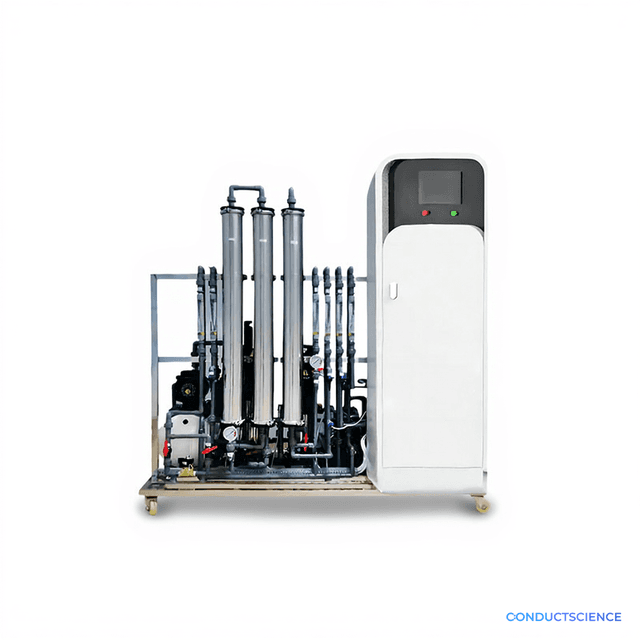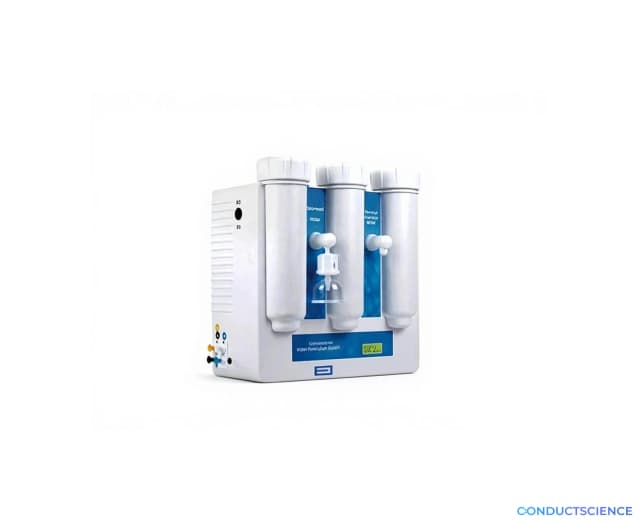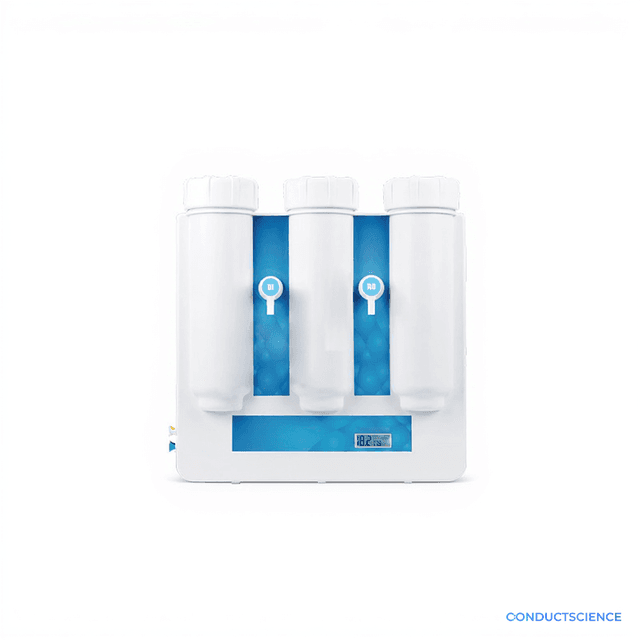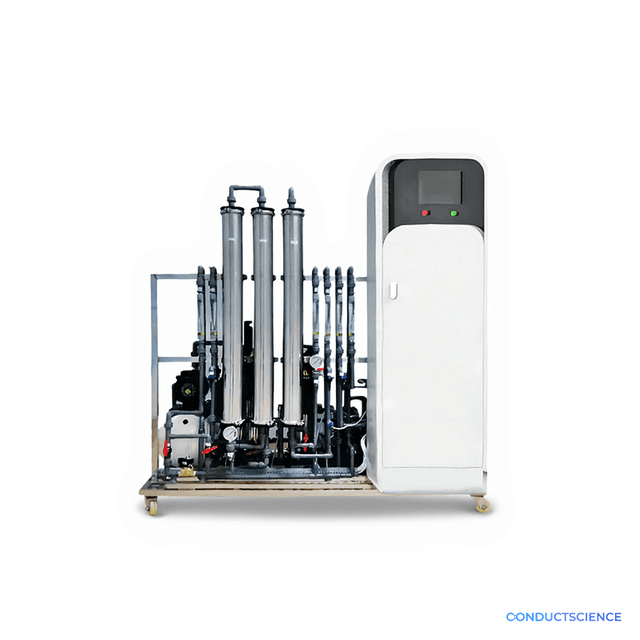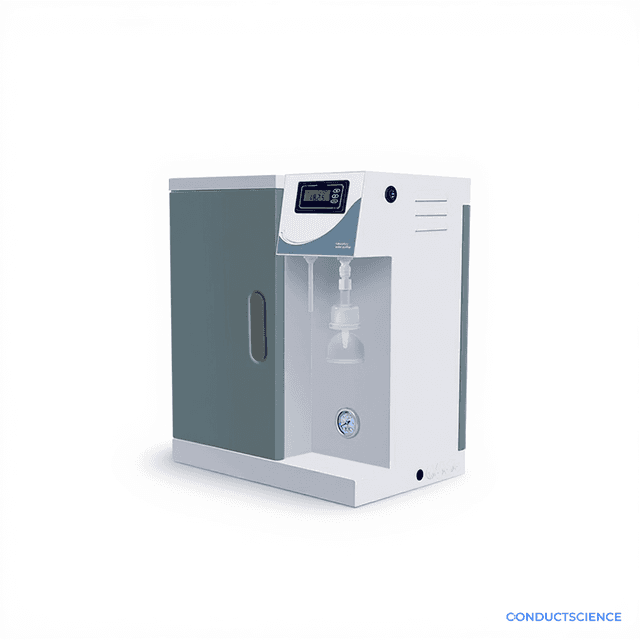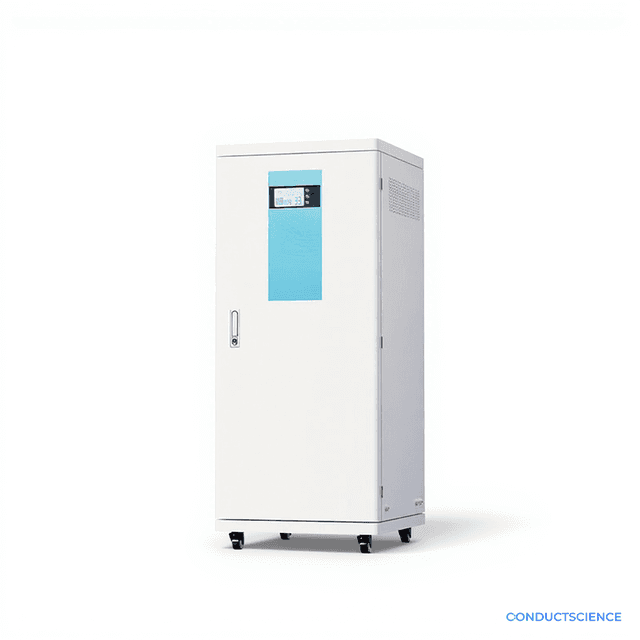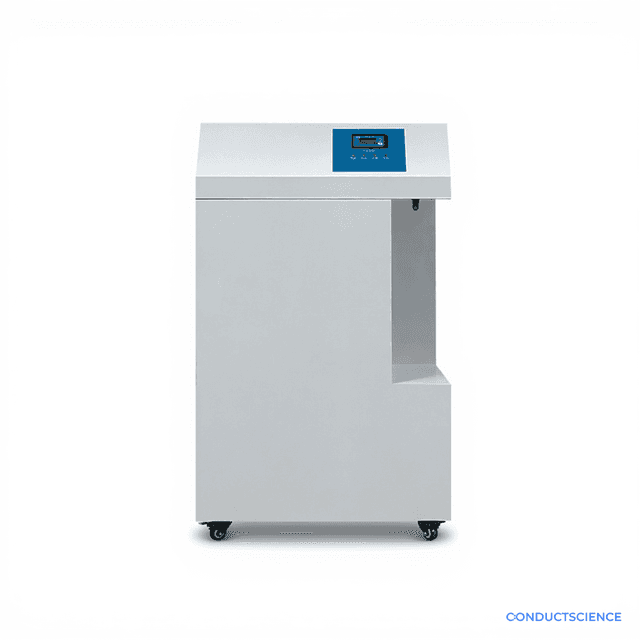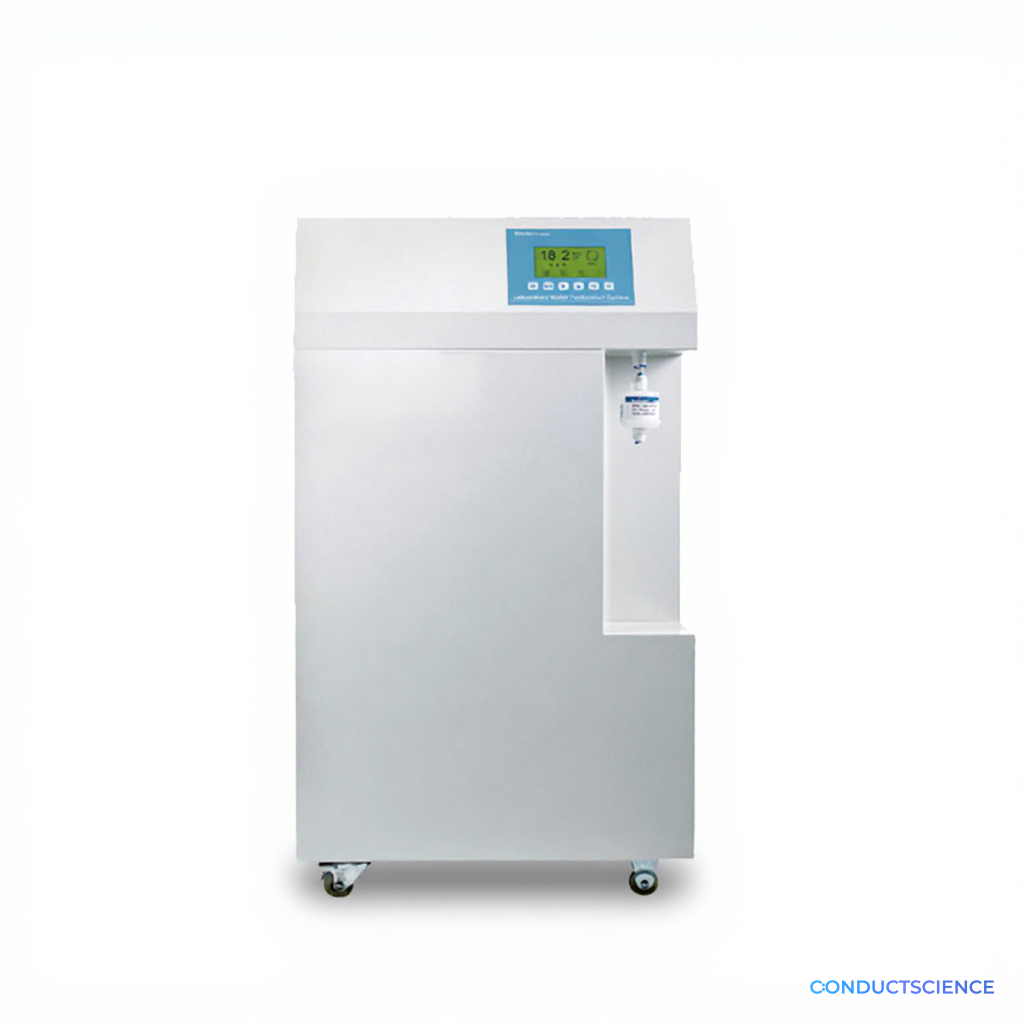
Water Purifier Medium Type(Automatic RO/Dl Water) 45 L/H 63 L/H 94 L/H 125 L/H
Automatic RO/DI water purification system producing laboratory-grade water at selectable flow rates from 45-125 L/H for analytical and research applications.

Louise Corscadden, PhD
Director of Science · ConductScience
Ask Louise about Water Purifier Medium Type(Automatic RO/Dl Water) 45 L/H 63 L/H 94 L/H 125 L/H fit, setup, configuration, or quote prep.
Already working with us? Sign in to connect this with My Scientist.
Key Specifications
Full details →- Model fit
- Configured during quote
- SKU family
- BIO-0720
- Shipping box
- 111.0 x 64.0 x 54.0 cm
- Ordering
- Online checkout and quote request available
- Category
- Water Purifiers
- Build notes
- Confirm accessories, station layout, and support needs before purchase
The Water Purifier Medium Type delivers purified water through automatic reverse osmosis (RO) and deionization (DI) processes for laboratory applications. This system produces Type I/Type II water quality suitable for analytical procedures, buffer preparation, and equipment cleaning. Available in multiple flow rate configurations (45, 63, 94, and 125 L/H), the system combines membrane filtration with ion exchange to remove contaminants, dissolved solids, and organic compounds from feed water.
The automated operation reduces manual intervention while maintaining consistent water quality output. The compact benchtop design (111 x 64 x 54 cm) integrates into existing laboratory infrastructure without requiring extensive plumbing modifications. Built-in monitoring systems track water quality parameters and system performance to ensure reliable operation in research environments.
How It Works
The system employs a multi-stage purification process combining reverse osmosis membrane filtration with deionization technology. Feed water first passes through pre-filtration stages to remove particulates and chlorine that could damage downstream components. The RO membrane removes dissolved salts, organic compounds, and microorganisms by forcing water molecules through a semi-permeable barrier under pressure.
Following membrane filtration, the water undergoes deionization through mixed-bed ion exchange resins that capture remaining ionic contaminants. The automated control system monitors conductivity and other quality parameters, triggering regeneration cycles or maintenance alerts when performance thresholds are reached. Multiple flow rate options accommodate varying laboratory demand while maintaining consistent water quality output.
Features & Benefits
Automation Level
- fully-automated
Research Domain
- Analytical Chemistry
- Cell Biology
- Clinical Diagnostics
- Environmental Monitoring
- Microbiology
- Pharmaceutical QC
Shipping weight
- 90.0 lb
Shipping box
- L: 111.0 cm
- W: 64.0 cm
- H: 54.0 cm
| Feature | This Product | Typical Alternative | Advantage |
|---|---|---|---|
| Flow Rate Options | Multiple selectable rates from 45-125 L/H | Fixed flow rate models typically offer single output configuration | Allows matching system capacity to actual laboratory demand without over-sizing or under-capacity issues |
| Automation Level | Fully automated RO/DI operation with self-monitoring | Basic systems often require manual regeneration and quality testing | Reduces operator workload and maintains consistent performance without manual intervention |
| Purification Technology | Combined RO/DI multi-stage process | Single-stage systems may use only DI or only RO technology | Comprehensive contaminant removal addresses both dissolved salts and organic compounds in single system |
| Installation Footprint | Compact benchtop design (111 x 64 x 54 cm) | Larger systems may require dedicated utility rooms or extensive plumbing | Integrates into existing laboratory space without major infrastructure modifications |
This system combines automated operation with flexible flow rate selection and comprehensive RO/DI purification technology. The benchtop design and multi-stage process provide laboratory-grade water quality with minimal installation requirements and reduced manual maintenance compared to basic purification systems.
Practical Tips
Verify conductivity meter calibration monthly using certified reference standards to ensure accurate quality monitoring.
Why: Drift in conductivity measurements can lead to false quality alarms or undetected water quality degradation.
Replace pre-filters according to pressure differential readings rather than fixed schedules to optimize consumable life.
Why: Filter loading varies with feed water quality and actual replacement needs may differ from theoretical schedules.
Establish regular water quality testing protocols using independent verification methods beyond built-in monitoring.
Why: External validation confirms system performance and provides documentation for quality assurance requirements.
Monitor system pressure readings during operation as sudden changes indicate potential membrane fouling or valve issues.
Why: Pressure anomalies often provide early warning of performance problems before water quality degradation becomes apparent.
Document baseline performance parameters during initial installation for future troubleshooting reference.
Why: Baseline data enables detection of gradual performance changes that might not trigger automatic alarms.
Install appropriate drainage and leak detection systems around the unit to prevent water damage from potential leaks.
Why: Water system failures can cause significant damage to laboratory equipment and interrupt research operations.
Setup Guide
What’s in the Box
- Water purification system main unit
- Power cord and electrical connections
- Feed water connection fittings (typical)
- Output water tubing and dispensing valve (typical)
- Pre-filter cartridges (typical)
- User manual and installation guide
- Water quality test kit (typical)
- Maintenance schedule documentation (typical)
Warranty
ConductScience provides a standard one-year manufacturer warranty covering defects in materials and workmanship, with technical support available for installation and operational guidance.
Compliance
What water quality specifications does this system achieve?
Specific conductivity, TOC, and bacterial count limits depend on the configuration selected. Consult product datasheet for detailed specifications as performance varies with feed water quality and flow rate selection.
How frequently do consumables require replacement?
Replacement intervals for pre-filters, RO membranes, and DI resins depend on feed water quality and usage volume. The system provides monitoring alerts when performance thresholds indicate maintenance is required.
Can the system operate continuously or requires scheduled downtime?
The automated design supports continuous operation with programmed regeneration cycles occurring during low-demand periods. Scheduled maintenance windows may be required for consumable replacement.
What feed water quality is required for optimal performance?
The system accepts municipal tap water meeting basic potability standards. Pre-treatment may be recommended for feed water with high chlorine, hardness, or sediment levels to extend component life.
How does output quality compare between different flow rate models?
All flow rate configurations use the same purification technology and achieve comparable water quality. Higher flow rates may require more frequent consumable replacement due to increased throughput.
What data logging and documentation capabilities are included?
The system includes quality monitoring with parameter tracking. Specific data export formats and logging intervals should be confirmed in the product specifications.
Have a question about this product?
Have a question? Just ask.
Send it over and we'll email you a personalized answer — no call, no scheduling.
Prefer to talk it through?
Upgrade Options