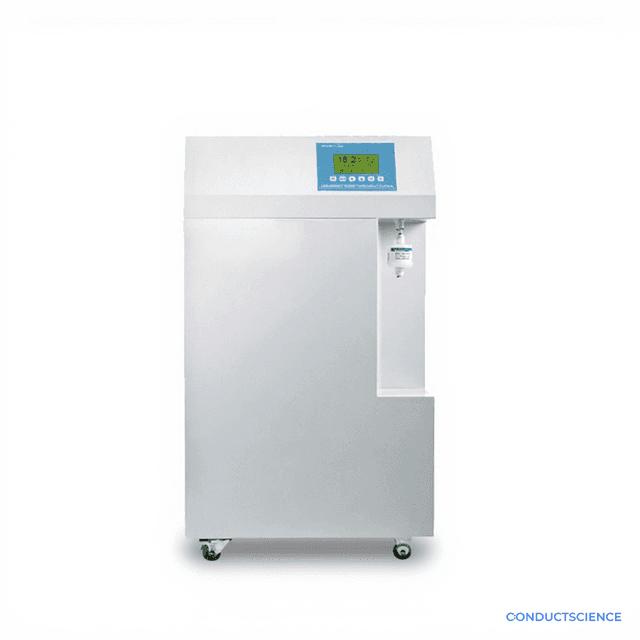
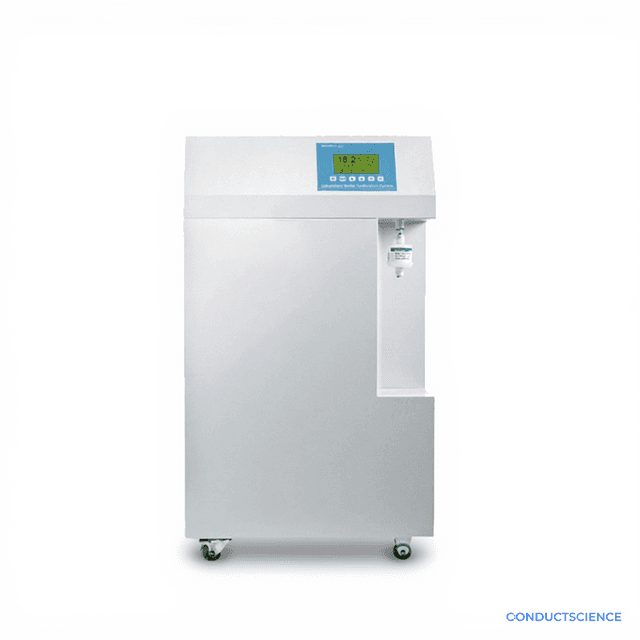
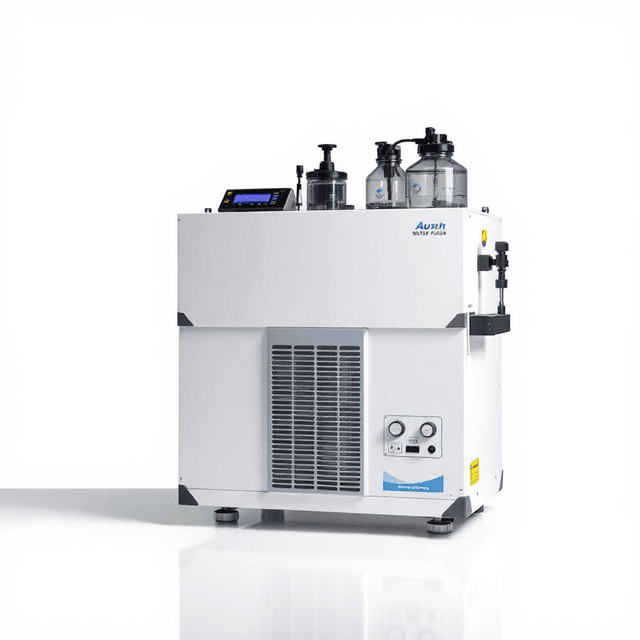
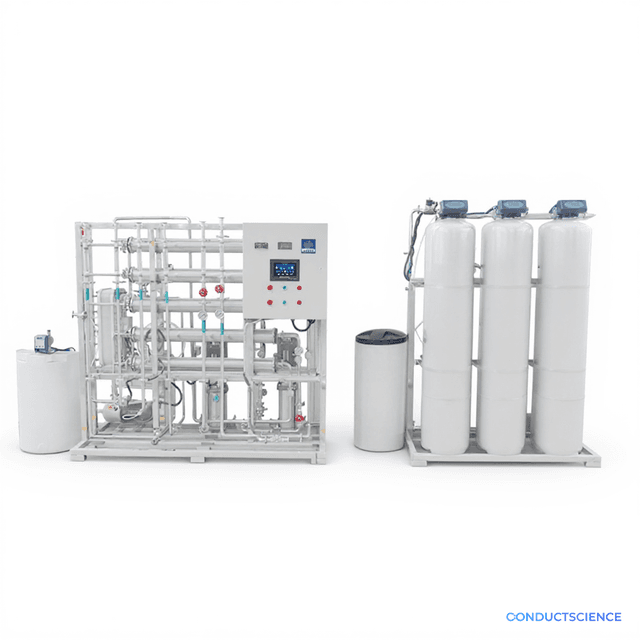
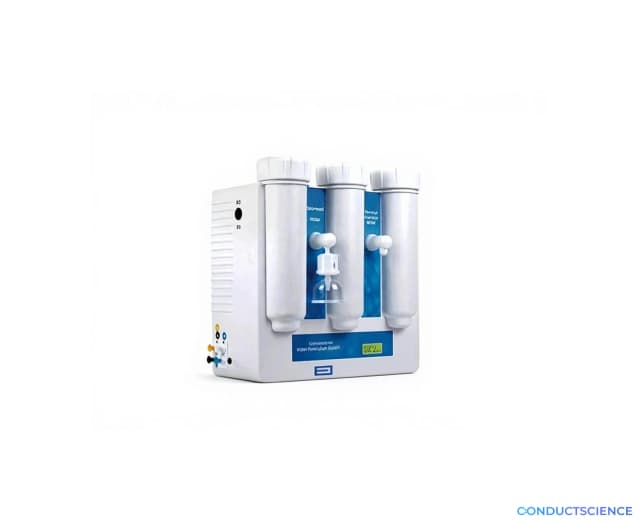
Ultrapure EDI Laboratory Water Purifier 300L/h 500L/h 1000L/h
Four-stage water purification system producing 10-18.2 MΩ·cm deionized water at capacities from 300-1000L/h with automated PLC control and touchscreen interface.

Louise Corscadden, PhD
Director of Science · ConductScience
Ask Louise about Ultrapure EDI Laboratory Water Purifier 300L/h 500L/h 1000L/h fit, setup, configuration, or quote prep.
Already working with us? Sign in to connect this with My Scientist.
Key Specifications
Full details →- Model fit
- Configured during quote
- SKU family
- BIO-0711
- Shipping box
- 180.0 x 150.0 x 80.0 cm
- Ordering
- Online checkout and quote request available
- Category
- Water Purifiers
- Build notes
- Confirm accessories, station layout, and support needs before purchase
The Laboratory Water Purifier delivers high-quality deionized water for critical research applications through a comprehensive four-stage purification system. The system integrates preprocessing, reverse osmosis, electrodeionization (EDI), and final polishing components to achieve water resistivity of 10-18.2 MΩ·cm with >99% desalination efficiency.
Available in three production capacities (300L/h, 500L/h, 1000L/h at 25°C), the system features PLC automatic control with full-color touchscreen operation for precise monitoring and adjustment. The high water utilization rate of ≥60% minimizes waste while maintaining consistent output quality. Multiple outlet options include standard DI water with optional RO water tapping points to support diverse laboratory workflows.
How It Works
The purification process begins with preprocessing to remove suspended solids and chlorine through PP filtration elements. Feed water then passes through the reverse osmosis module, where semi-permeable membranes reject dissolved salts and organic compounds, achieving the primary desalination step with >99% efficiency.
The RO permeate enters the electrodeionization (EDI) unit, which combines ion exchange resins with electrical regeneration to remove remaining ionic species without chemical regenerants. DC current continuously regenerates the resin beds while selectively removing cations and anions, producing high-resistivity water. The final polishing stage ensures consistent 10-18.2 MΩ·cm output quality through additional ion exchange treatment.
PLC control systems monitor conductivity, flow rates, and pressure parameters throughout the process, automatically adjusting operation to maintain water quality specifications. The integrated control interface provides real-time system status and allows operator adjustment of production parameters.
Features & Benefits
Automation Level
- semi-automated
SCSJ-II-500L
- SCSJ-II-1000L
Water Output Type
- DI water outlet*1, RO water outlet can be optional
Water Output Speed
- 300L/h/set(25℃)
500L/h/set(25℃)
- 1000L/h/set(25℃)
Equipment Host Size(L*W*H)
- 1500*800*1800mm
Water Utilization Rate
- ≥60%
Desalination Rate
- ≥99%
Control Mode
- PLC automatic control, full color touch screen operation
Producing Water Quality
- 10~18.2MΩ.cm
Component
- Preprocessing device, reverse osmosis device, EDI device and pure water supply device
SCSJ-II-300L
- SCSJ-II-500L
PP Filter Element
- 6(6 months)
6(6 months)
- 6(6 months)
Brand
- ConductScience
Research Domain
- Analytical Chemistry
- Cell Biology
- Clinical Diagnostics
- Environmental Monitoring
- Materials Science
- Microbiology
- Pharmaceutical QC
Power/Voltage
- AC380V±10%, 50/60Hz
Shipping weight
- 1011.44 lb
Shipping box
- L: 180.0 cm
- W: 150.0 cm
- H: 80.0 cm
| Feature | This Product | Typical Alternative | Advantage |
|---|---|---|---|
| Water Utilization Efficiency | ≥60% utilization rate with minimal waste generation | Entry-level systems often operate at 30-50% efficiency | Reduced operational costs and environmental impact through higher conversion efficiency of feed water to purified product. |
| Control Interface | PLC automatic control with full-color touchscreen operation | Manual controls with basic LED displays | Automated monitoring reduces operator intervention and provides comprehensive system status for quality assurance documentation. |
| Purification Stages | Four-stage system: preprocessing, RO, EDI, and polishing | Basic systems may offer 2-3 stages without EDI | Comprehensive contaminant removal ensures consistent ultrapure water quality without chemical regeneration requirements. |
| Production Capacity Range | 300L/h, 500L/h, or 1000L/h options at 25°C | Fixed capacity systems with limited scalability | Scalable options accommodate varying laboratory demands from small research groups to high-throughput facilities. |
| Filter Service Life | Six PP elements with 6-month replacement intervals | Monthly or quarterly filter replacement schedules | Extended service intervals reduce maintenance frequency and operational disruption while maintaining effective pre-treatment. |
| Outlet Configuration | Standard DI outlet with optional RO water tapping | Single outlet systems requiring separate equipment for different purity levels | Dual access points provide flexibility for applications requiring different water quality grades from a single system. |
The system combines automated PLC control with comprehensive four-stage purification to deliver consistent ultrapure water at high utilization efficiency. The scalable capacity options and dual outlet configuration address diverse laboratory requirements through a single integrated platform.
Practical Tips
Verify output water resistivity daily using a calibrated conductivity meter, comparing readings with the touchscreen display for accuracy validation.
Why: Regular calibration verification ensures measurement accuracy for quality assurance documentation and early detection of system drift.
Monitor PP filter pressure differential through the control interface and replace all six elements simultaneously when approaching the 6-month service interval.
Why: Uniform filter replacement maintains consistent pre-treatment performance and prevents system imbalance that could affect water quality.
Establish first-draw protocols by discarding initial water output each day before collecting water for critical applications.
Why: First-draw flushing removes any overnight contamination or stagnation effects, ensuring optimal water quality for sensitive analytical procedures.
Configure the PLC system to log hourly water quality and production parameters for trend analysis and regulatory documentation.
Why: Continuous data logging provides evidence of consistent operation and enables proactive maintenance scheduling based on performance trends.
If resistivity drops below specifications, check system pressure and flow rates first before assuming component failure.
Why: Pressure and flow variations often indicate upstream issues that can be corrected without component replacement, saving time and costs.
Ensure proper grounding of the electrical system and verify emergency shutdown procedures are clearly posted near the control interface.
Why: EDI systems use DC current for ion removal, making proper electrical safety protocols essential for operator protection.
Install separate storage tanks for DI and optional RO water outlets to buffer production capacity during peak demand periods.
Why: Storage buffering prevents system overload and maintains consistent water availability during high-usage periods or temporary maintenance.
Schedule annual professional service to inspect EDI modules and RO membranes for performance optimization and longevity.
Why: Professional maintenance identifies wear patterns and optimization opportunities that extend component life and maintain peak efficiency.
Setup Guide
What’s in the Box
- Main purification system with all four processing stages
- PLC control unit with full-color touchscreen interface
- Six PP filter elements (installed)
- Power supply cables and electrical connections
- Plumbing fittings and outlet connections
- Installation and operation manual
- System startup and maintenance documentation (typical)
Warranty
ConductScience provides standard one-year manufacturer warranty covering system components and technical support for installation and operational guidance.
Compliance
References
Background reading relevant to this product:
What is the difference between the DI water outlet and optional RO water outlet?
The standard DI water outlet provides final purified water at 10-18.2 MΩ·cm resistivity after complete four-stage processing. The optional RO water outlet taps intermediate-purity water after reverse osmosis treatment but before EDI polishing, suitable for applications not requiring ultrapure specifications.
How frequently do the PP filter elements require replacement?
The six PP filter elements have a 6-month service life under normal operating conditions. Replacement frequency may vary based on feed water quality and system usage patterns. Monitor pressure differential and water quality indicators to optimize replacement timing.
Can the system operate continuously or does it require downtime?
The PLC automatic control enables continuous operation with real-time monitoring and adjustment. Planned maintenance for filter replacement and system cleaning may require brief downtime, but the automated control minimizes operational interruptions.
What feed water quality is required for optimal performance?
The preprocessing stage is designed to handle typical municipal water supplies. For optimal performance and component longevity, feed water should meet basic potable water standards. Consult product datasheet for specific feed water parameter requirements.
How is water quality monitored and documented?
The touchscreen interface provides real-time conductivity monitoring and system parameter display. The PLC control system can log operational data for quality assurance documentation and trend analysis of water production.
What is the significance of the ≥60% water utilization rate?
The 60% utilization rate indicates that at least 60% of feed water becomes purified product, with less than 40% discharged as concentrate waste. This efficiency reduces operational costs and minimizes waste stream disposal compared to conventional systems.
Can the system be integrated with existing laboratory water distribution networks?
Yes, the dual outlet configuration allows integration with existing distribution systems. The DI outlet can connect to central distribution loops, while the optional RO outlet provides local access for intermediate-purity applications.
What backup or redundancy options are available for critical applications?
The system's automated control and monitoring reduce failure risks, but critical applications may benefit from parallel system installation or external water storage tanks to ensure continuity during maintenance periods.
Have a question about this product?
Have a question? Just ask.
Send it over and we'll email you a personalized answer — no call, no scheduling.
Prefer to talk it through?
Upgrade Options