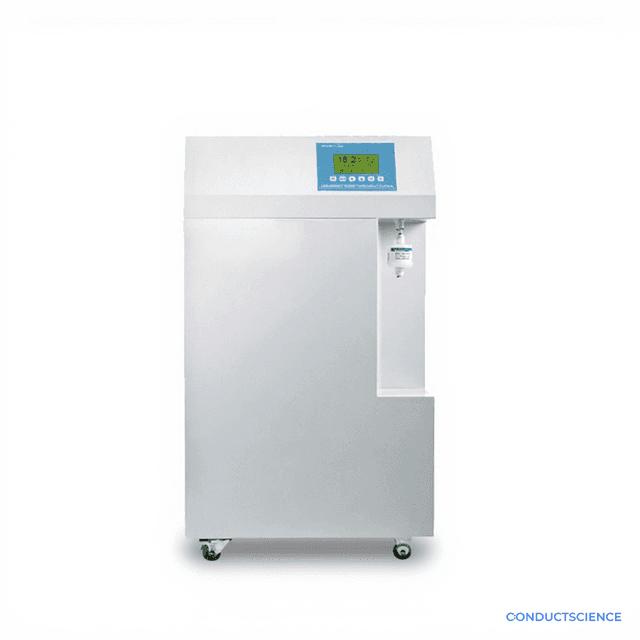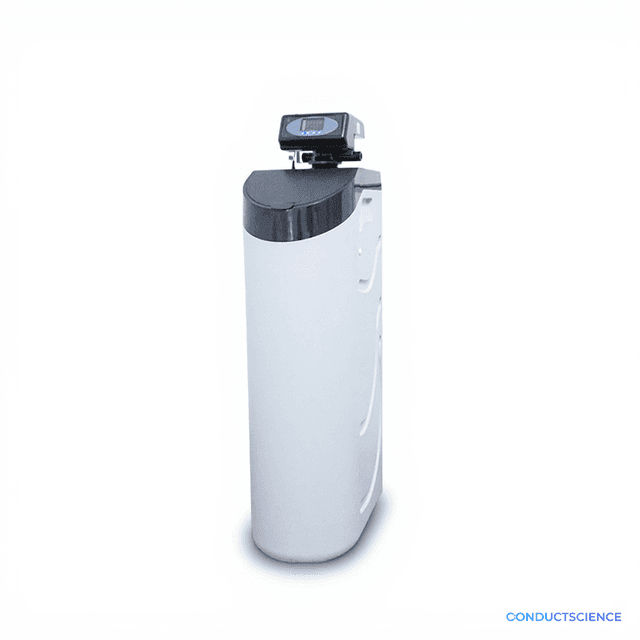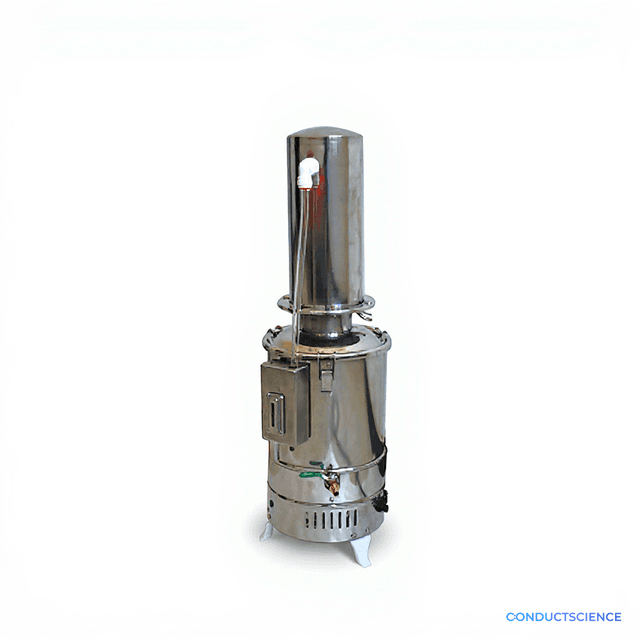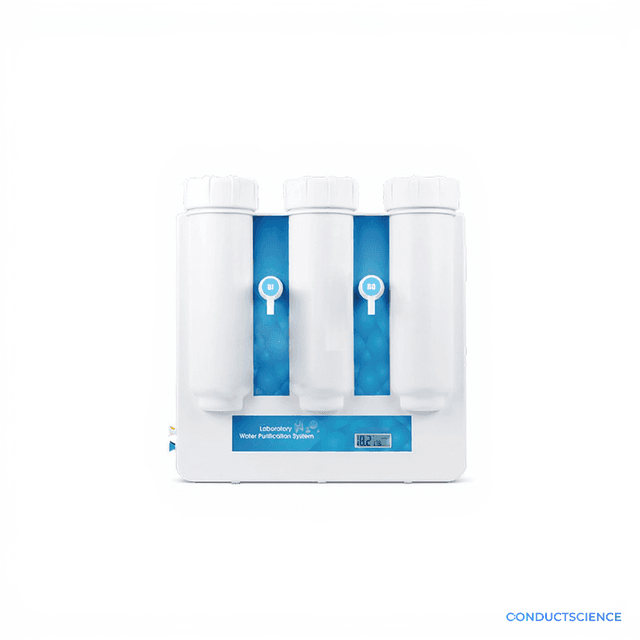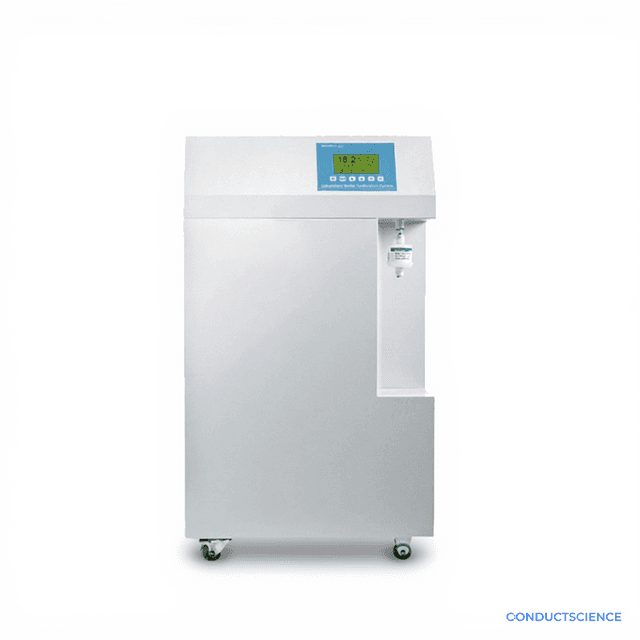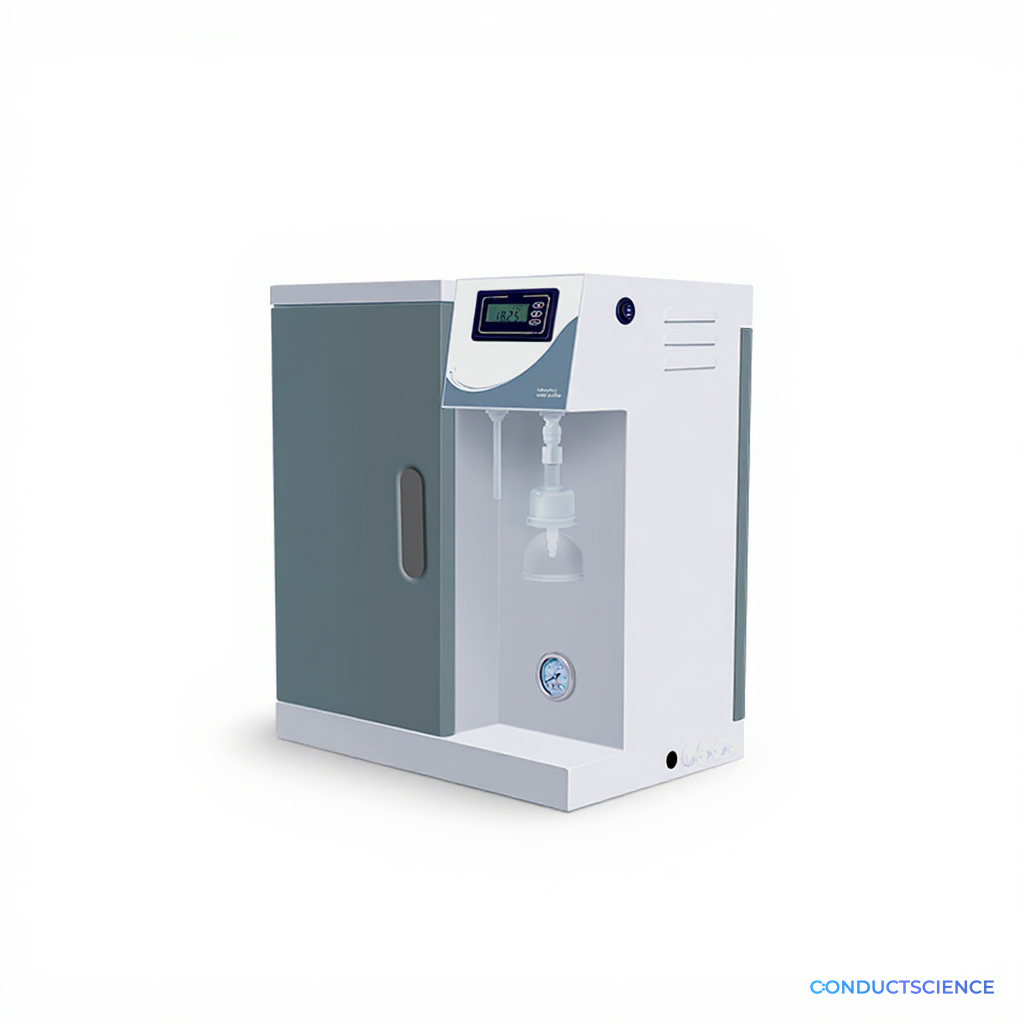
Water Purifier Medium Type (Automatic RO Water) 45/63/94125 L/H
Automatic reverse osmosis water purification system with selectable flow rates (45-94.125 L/H) for laboratory applications requiring consistent high-quality water production.

Louise Corscadden, PhD
Director of Science · ConductScience
Ask Louise about Water Purifier Medium Type (Automatic RO Water) 45/63/94125 L/H fit, setup, configuration, or quote prep.
Already working with us? Sign in to connect this with My Scientist.
Key Specifications
Full details →- Model fit
- Configured during quote
- SKU family
- BIO-0717
- Shipping box
- 111.0 x 64.0 x 54.0 cm
- Ordering
- Online checkout and quote request available
- Category
- Water Purifiers
- Build notes
- Confirm accessories, station layout, and support needs before purchase
The Water Purifier Medium Type is an automatic reverse osmosis (RO) water purification system designed for laboratory applications requiring consistent high-quality water. This system provides three selectable flow rates (45, 63, and 94.125 L/H) to accommodate varying research demands, from routine sample preparation to continuous-flow applications. The compact design (111 × 64 × 54 cm) enables integration into standard laboratory bench configurations while delivering reliable water purification through automated RO technology.
The system employs reverse osmosis membrane technology to remove dissolved solids, organic contaminants, and microorganisms from source water. Automatic operation minimizes user intervention while maintaining consistent water quality parameters. The medium-capacity design serves laboratories with moderate to high water consumption requirements, supporting multiple concurrent applications without compromising flow rates or water quality specifications.
How It Works
Reverse osmosis operates by applying pressure to force water molecules through a semi-permeable membrane while rejecting dissolved salts, organic compounds, and microorganisms. The RO membrane contains pores approximately 0.0001 micrometers in diameter, effectively blocking contaminants larger than water molecules. Feed water pressure overcomes the natural osmotic pressure gradient, driving pure water permeation through the membrane while concentrating rejected contaminants in the retentate stream.
The automatic control system monitors system pressure, flow rates, and membrane performance to maintain optimal operating conditions. Pressure sensors and flow controllers adjust pump operation to sustain the selected flow rate while preventing membrane damage from excessive pressure. The system incorporates pre-filtration stages to remove larger particles and chlorine that could damage the RO membrane, extending membrane life and maintaining consistent water quality.
Product water quality depends on membrane integrity, operating pressure, temperature, and feed water composition. The system continuously produces purified water during operation, with excess production capacity allowing for storage or immediate use. Automatic flush cycles prevent membrane fouling and maintain long-term performance stability.
Features & Benefits
Automation Level
- fully-automated
Research Domain
- Analytical Chemistry
- Cell Biology
- Environmental Monitoring
- Materials Science
- Microbiology
- Pharmaceutical QC
Shipping weight
- 90.0 lb
Shipping box
- L: 111.0 cm
- W: 64.0 cm
- H: 54.0 cm
| Feature | This Product | Typical Alternative | Advantage |
|---|---|---|---|
| Flow Rate Options | Three selectable rates: 45, 63, and 94.125 L/H | Fixed single flow rate or fewer selectable options | Accommodates varying laboratory demands without requiring multiple systems or compromising efficiency. |
| System Automation | Fully automatic operation with integrated controls | Manual operation or semi-automatic systems requiring user intervention | Reduces labor requirements and ensures consistent performance during extended operations. |
| Installation Footprint | Compact bench-top design (111 × 64 × 54 cm) | Larger floor-standing units or wall-mounted systems | Integrates into existing laboratory space without requiring dedicated utility areas or extensive modifications. |
| Flow Rate Range | Up to 94.125 L/H maximum capacity | Lower maximum flow rates in similar footprint systems | Supports laboratories with higher water consumption requirements while maintaining quality specifications. |
This system combines medium-capacity water production with automated operation and compact design. The three selectable flow rates provide operational flexibility for laboratories with varying water quality requirements and consumption patterns.
Practical Tips
Monitor product water conductivity regularly to verify membrane performance and determine calibration needs.
Why: Conductivity measurements provide early indication of membrane degradation before water quality affects experimental results.
Replace pre-filter cartridges according to pressure differential measurements rather than fixed time schedules.
Why: Pressure-based replacement optimizes filter utilization while preventing membrane damage from excessive fouling.
Select the lowest flow rate that meets your application requirements to maximize membrane life and water quality.
Why: Lower flow rates reduce membrane stress and improve contaminant rejection efficiency for better long-term performance.
Check feed water pressure first when experiencing flow rate reductions or quality issues.
Why: Insufficient supply pressure is the most common cause of performance problems and is easily corrected.
Establish baseline conductivity measurements after installation and track trends over time.
Why: Trending data enables predictive maintenance and ensures water quality remains within acceptable limits for your applications.
Install appropriate air gap protection in the drain connection to prevent backflow contamination.
Why: Air gaps prevent sewer gases and contaminants from entering the system through the concentrate discharge line.
Allow the system to flush for several minutes after periods of non-use before collecting water for critical applications.
Why: Flushing removes stagnant water from internal lines that may have accumulated contaminants during idle periods.
Setup Guide
What’s in the Box
- Water purification system main unit
- Feed water connection kit (typical)
- Drain connection hardware (typical)
- Power cable
- Operation manual
- Pre-filter cartridges (typical)
- System performance certificate (typical)
Warranty
ConductScience provides standard manufacturer warranty coverage for one year from date of installation, including technical support for system operation and maintenance guidance.
Compliance
What water quality parameters can this system achieve?
Consult product datasheet for specific conductivity, total dissolved solids, and microbiological specifications. Performance depends on feed water quality and membrane condition.
How do I select the appropriate flow rate for my application?
Choose 45 L/H for intermittent use and sample preparation, 63 L/H for moderate continuous applications, or 94.125 L/H for high-demand laboratory operations requiring sustained water production.
What feed water quality is required for optimal performance?
The system requires municipal water quality with chlorine levels appropriate for RO processing. Consult specifications for acceptable temperature, pressure, and total dissolved solids ranges in feed water.
How frequently does the RO membrane require replacement?
Membrane life depends on feed water quality, usage patterns, and maintenance practices. Monitor water quality output and system pressure to determine replacement intervals.
Can the system operate continuously for extended periods?
Yes, the automatic operation design enables continuous water production during extended experimental procedures without user intervention or performance degradation.
What maintenance procedures are required?
Regular maintenance includes pre-filter replacement, system sanitization, and membrane performance monitoring. Consult operation manual for specific maintenance schedules and procedures.
Is the system compatible with existing laboratory plumbing?
The system connects to standard laboratory water supplies and drain systems. Verify feed water pressure and drain capacity meet system requirements before installation.
Have a question about this product?
Have a question? Just ask.
Send it over and we'll email you a personalized answer — no call, no scheduling.
Prefer to talk it through?
Upgrade Options