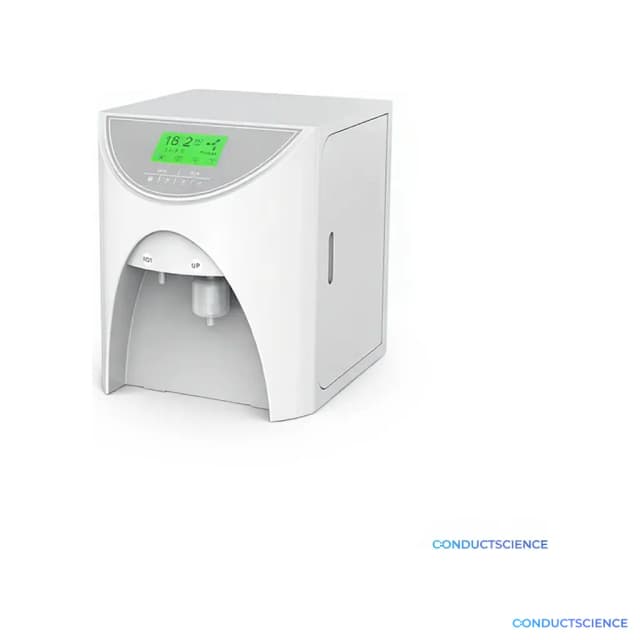
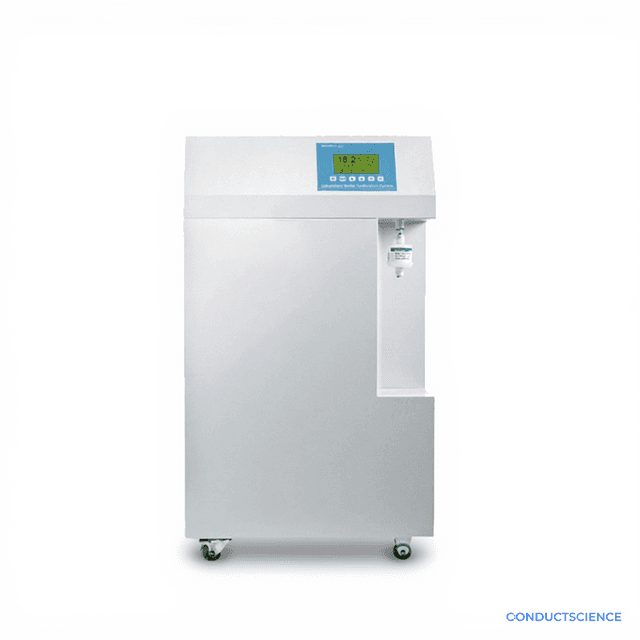
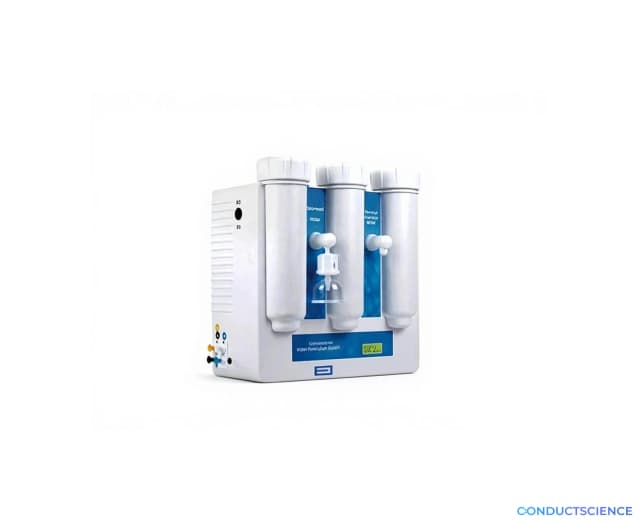
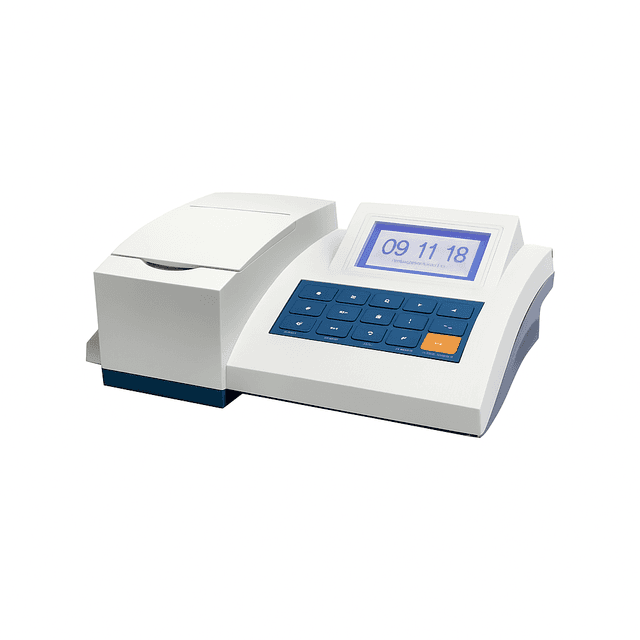
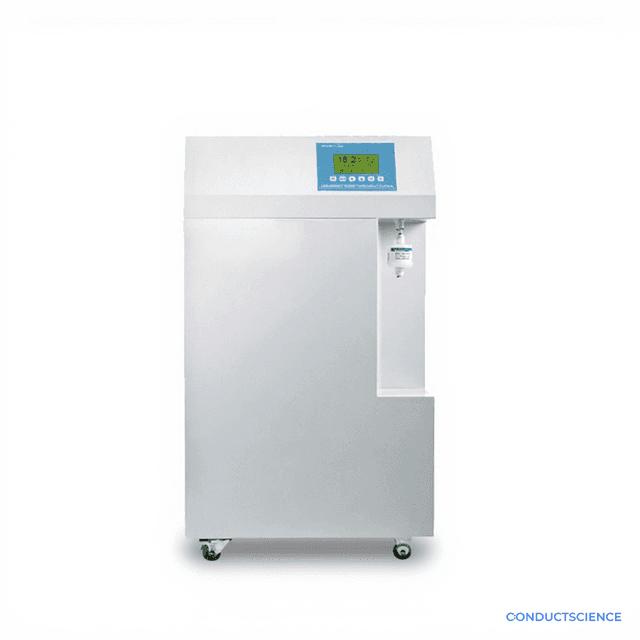
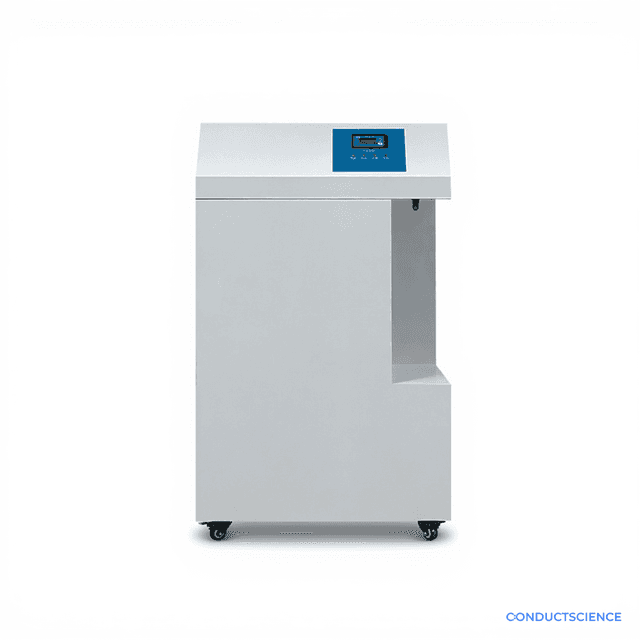
Ultrapure Water Purifier (Semi-Automated)
Laboratory-grade water purification system producing high-quality purified water for analytical applications and research protocols requiring low-conductivity, contaminant-free water.

Louise Corscadden, PhD
Director of Science · ConductScience
Ask Louise about Ultrapure Water Purifier (Semi-Automated) fit, setup, configuration, or quote prep.
Already working with us? Sign in to connect this with My Scientist.
Key Specifications
Full details →- Model fit
- Configured during quote
- SKU family
- BIO-0713
- Shipping box
- 46.1 x 38.6 x 48.1 cm
- Ordering
- Online checkout and quote request available
- Category
- Water Purifiers
- Build notes
- Confirm accessories, station layout, and support needs before purchase
The Ultrapure Water Purifier is a laboratory-grade water treatment system designed to produce high-quality purified water for analytical and research applications. The system removes contaminants including ions, organics, bacteria, and particulates to generate water suitable for sensitive analytical procedures, buffer preparation, and equipment rinsing where water quality directly impacts experimental outcomes.
With compact benchtop dimensions, the system integrates into laboratory workflows requiring consistent access to purified water. The purification process addresses the critical need for low-conductivity, low-organic water in applications where trace contaminants can interfere with assay performance, analytical measurements, or cell culture protocols.
How It Works
Water purification employs multiple treatment stages to remove different classes of contaminants. Initial filtration removes particulates and chlorine through activated carbon adsorption. Ion exchange resins remove dissolved ionic species by exchanging sodium and chloride ions for hydrogen and hydroxide ions, producing deionized water with low conductivity.
Additional treatment stages may include reverse osmosis membranes that remove organic molecules and remaining ions through selective permeation, and UV sterilization that deactivates microorganisms through DNA damage. The combination of these technologies produces water with reduced ionic, organic, and microbial content suitable for analytical applications.
Water quality monitoring through conductivity measurement provides real-time feedback on purification performance, with conductivity values indicating the concentration of dissolved ionic species remaining in the treated water.
Features & Benefits
Automation Level
- semi-automated
Research Domain
- Analytical Chemistry
- Cell Biology
- Clinical Diagnostics
- Environmental Monitoring
- Microbiology
- Pharmaceutical QC
Shipping weight
- 26.5 lb
Shipping box
- L: 46.1 cm
- W: 38.6 cm
- H: 48.1 cm
| Feature | This Product | Typical Alternative | Advantage |
|---|---|---|---|
| Physical Footprint | Compact benchtop design (46.1 × 38.6 × 48.1 cm) | Larger systems often require floor mounting or dedicated utility connections | Enables flexible laboratory placement without infrastructure modifications |
| Installation Requirements | Point-of-use benchtop installation | Central systems require plumbing infrastructure and distribution networks | Reduces installation complexity and provides immediate access to purified water |
| System Weight | 26.5 kg total weight | Varies by model and capacity | Manageable weight for laboratory relocation while indicating substantial treatment capacity |
| Treatment Approach | Multi-stage purification process | Single-stage systems may offer limited contaminant removal | Addresses diverse contaminant classes for comprehensive water treatment |
The system combines compact benchtop dimensions with multi-stage purification technology, offering point-of-use water treatment in a manageable form factor. The 26.5 kg weight suggests substantial treatment capacity while maintaining laboratory portability for flexible installation.
Practical Tips
Verify conductivity monitoring accuracy using certified reference standards periodically.
Why: Ensures quality measurements remain traceable to recognized standards for documentation and compliance.
Replace consumables before quality parameters decline below specification limits.
Why: Prevents contamination of experiments due to degraded water quality during extended use periods.
Flush system after extended shutdown periods before collecting product water for experiments.
Why: Removes stagnant water that may have accumulated contaminants during idle periods.
Document water quality measurements with batch records for analytical traceability.
Why: Provides evidence of water quality for regulatory audits and experimental validation.
Monitor conductivity trends to predict consumable replacement timing before quality decline.
Why: Prevents experimental disruption due to unexpected water quality degradation.
Ensure proper electrical grounding and avoid water contact with electrical connections.
Why: Prevents electrical hazards in laboratory environments where water spills may occur.
Setup Guide
What’s in the Box
- Ultrapure water purifier main unit
- Power adapter and cord
- Water inlet connection fittings (typical)
- Product water tubing (typical)
- Initial consumable cartridge set (typical)
- User manual and installation guide
- Quality certificate (typical)
Warranty
ConductScience provides a standard one-year manufacturer warranty covering defects in materials and workmanship, with technical support available for installation guidance and troubleshooting assistance.
Compliance
References
Background reading relevant to this product:
What water quality parameters can this system achieve?
Specific conductivity, TOC, and bacterial specifications vary by system configuration. Consult product datasheet for guaranteed performance parameters and quality certifications.
How frequently do consumables require replacement?
Replacement intervals depend on feed water quality and usage volume. Monitor quality indicators and replace cartridges when performance declines below specification.
Can the system connect to existing laboratory water lines?
System accommodates standard laboratory water supply connections. Verify supply pressure and quality requirements for optimal performance.
What ongoing maintenance is required?
Routine maintenance includes consumable replacement, system sanitization, and quality monitoring. Follow manufacturer schedule for preventive maintenance procedures.
Is the system suitable for biological applications?
System produces water appropriate for many biological applications. Verify endotoxin levels and sterility requirements for specific cell culture or microbiological protocols.
How does output quality compare to bottled laboratory water?
Point-of-use purification eliminates storage contamination and provides consistent quality. Compare specifications to bottled water grades for specific application requirements.
Can the system operate continuously?
System supports continuous operation with appropriate consumable replacement schedule. Monitor performance during extended use periods.
Have a question about this product?
Have a question? Just ask.
Send it over and we'll email you a personalized answer — no call, no scheduling.
Prefer to talk it through?
Upgrade Options